[0:06]Bismillahi Rahmani Raheem. Dear students, have a nice day. Hope you will be fine and best of your health. This is Dr. Sajid Mahmud Rao, Division of Science and Technology, University of Education, Lahore. Today, we are talking about a brief overview on the classification of the natural products.
[0:24]In previous session, we have discussed about the plant sources, pharmacological applications, in vitro analysis and neutraceutical products of alkaloids, steroids, lignans and carotenoids, saprins and anthocyanins, carbohydrates and terpenoids. So, in this session, we will discuss the importance, applications, pharmacological as well as different pharmaceutical brands and their isolation sources of xanthones, coumarins, flavonoids, glycosides, polyketides, tannins and stilbenoids.
[1:03]Let's see what are the xanthones. Xanthones are one of the biggest class of compounds in natural product chemistry. Xanthones are secondary metabolites and their structures are related to that of flavonoids. They are polyphenolic heterocyclic compounds. You can see over here, the structures of xanthones, which consist of two phenyl groups. The second molecule is gartinin, which consist of a large number of polyhydroxyl and polyphenolic groups.
[1:31]So, first of all, we discuss the different sources and uses of xanthone molecules. Xanthone is found in different families of the plants and that families are, Boneci, Gluesi, Podostiacy and others. They are also found in some species of the genus I, some xanthones are found in the pericard of the mangosteen fruit, that is called Garcinia mangostana, as well as in the bark of different plants.
[2:01]Xanthones are used as antioxidant, anti-tumor, anti-allergic, anti-inflammatory, anti-bacterial, anti-fungal and anti-viral activities. The second molecule is gratinin. Now we see its sources and uses. Gratinin is found in the plant of Garcinia mangostana, and it is used in autopathy, apoptosis and the growth of human urinary bladder, cancer cell lines.
[2:34]Xanthones are soluble in water and they are mostly soluble in hot water due to the presence of hydroxyl group in phenyl group. Now, let's see how the xanthones are identified. So, xanthones in methanolic and petroleum ether extract is detected by antimony trichloride. It shows greenish blue color. Take a sample in ferric chloride solution gives formations of bluish black precipitates, which indicates the presence of xanthone phytoconstituents. When we see its sources, xanthones are secondary metabolites commonly occurring in fungi, lichen and higher plant families such as Gentianaceae, Guttiferae, Moraceae, Clusiaceae and Polygalaceae. When we see its biological activities, it is used as anti-inflammatory activity due to the presence of magniferin and it is used as hypoglycemic activity due to the presence of bellydyfolin, and it is used as insect repellent activity and mutagenic activity, which is due to the presence of swearthinia phytoconstituents.
[3:44]These are the phytoconstituents which fall in the category of xanthone molecules. You can see over here three phytoconstituents. The first molecule is gambogic acid, which is rich with anti-tumor activity. The second molecule is mangiferin, which is rich with anti-inflammatory activity. The third molecule is mangostin, which is rich with anti-bacterial activity. Now we see the sources of these molecules as well as their other pharmacological applications.
[4:14]The first molecule is gambogic acid. Gambogic acid is dried from the brownish or orange resin from Garcinia plant. It is used in its acid form as a novel anti-cancer agent that inhibits cell proliferation, angiogenesis and metastasis, ability to detoxify, kill parasites and stop bleeding as a hemostatic agent.
[4:43]The second molecule is mangiferin. Mangiferin is also known as Mangifera indica, which is extracted from the mango peels, as well as it is found in the genera Celasia and Cyclopia. It is used for the productions against chronic disorders, and treatment of the acute ailments, anti-oxidants, anti-infectious, anti-diabetic, anti-athrocycalotic and cardiovascular effects to enhance the cognitive brain functions.
[5:44]Xanthones can also be used in the field of medicinal applications as well as in fertilizers. You can see over here the molecule sulphonated xanthones, which are used as cytotoxicity agent in cancer cell lines. The second molecule is seven chloro-1,2,3-trihydroxy-6-methoxyxanthone, which is used as anti-proliferative activity against the human intestinal adenocarcinoma cell lines. The second activity is fertilizers activity in which crude extract of Swertia is used insect repellent activity, and Hooker extract is used as anti-microbial activity.
[6:26]Now we discuss some important pharmaceutical brands, in which phytoconstituents that have fall in the category of xanthones have been formulated and evaluated in different dosage form. So, let's see the first brand, the name of that brand is Mangosteen. It is manufactured by Advanced Physician Formulas and we take its dose 500 mg per day. So, this brand is formulated in capsule dosage form, that is serving as 60 capsules per container. This brand is used to immune system enhancer and it is used energy production as well as antioxidant activity. The second brand is GCM-50 in this brand Garcinia mangostana extract is used as active extract. It is formatted by the health care formula and we take its 50% pure extract in capsule dosage form. It is formulated in capsule dosage form that serving for contain 90 capsules. So, it is used as obesity anti-obesity medicines. The last brand is Mangosteen pericarp. It is manufactured by Mojo Body and we take its dose 1500 mg per day to 1800 mg per day. And it can, it is formulated in capsule dosage form. So it can be taken three capsule per day. It is used as anti-inflammatory properties, it is used as anti-oxidant properties, combats free radicals as well as boost immunity. Let's see what are the coumarins. Coumarins are the organic compounds containing six two-membered rings, which fused with each other, one benzene ring and the other one contains alkenes and ester functional groups. You can see over here three examples of the combinene molecules, and these are the phytoconstituents which fall in the category of coumarins. The first molecule is Warfarin. Second molecule is psoralen, and the third one is xanthotoxin. Now we see the uses and isolation sources of these phytoconstituents. Warfarin is isolated from coumarin source and it is used as an anti-coagulant agent, which is used for blood thinner. Warfarin reduces the formations of blood clots. Warfarin is used to prevent blood clots in veins and arteries. The second molecule is psoralen. psoralen is isolated from Ficus carica, Hemimorphina, as well as Funucolum valgaris. It is used in different skin diseases, like that of vitiligo and eczema. The third molecule is xanthotoxin, which is isolated from Ami majus and it is also used for the treatment of skin diseases, and that includes vitiligo and eczema.
[9:27]Coumarins are mostly soluble in ether, diethyl ether, chloroform, oil, pyridine, soluble in ethanol. Coumarins are insoluble in water but active drugs are 0.17 g per 100 ml. Now we see the identification test of coumarin molecules and check how these molecules are identified. The first test is test with ammonia. In this test, two to three drops of ammonia is taken on filter paper and added few drops of aqueous extract of drug. It changes into green fluorescence color, which indicates the presence of coumarin molecules. The second test is taken with hydroxyl amine hydrochloride. In this test, we take ethereal extract of drug, then added one drop of saturated alcoholic hydroxyl amine hydrochloride, and added one drop of alcoholic potassium hydroxide. Then we heat it and then cooled. After that, acidify it with 0.5 normal hydrochloric acid. Then added 1% weight by volume ferric chloride. The overall results is violet coloration, which indicates the presence of coumarin molecules.
[10:43]These are some other sources from which xanthone molecules are isolated, and these sources are Tonka bean, spath, Coumaron, Ordata, and levender. Xanthone molecules also have biological activities. It is used for the regulations of plant growth and metabolites. It is also used as anti-coagulant, that is warfarin, and anti-TB, that is psoralen. There are different phytoconstituents which are present in different sources. Other phytoconstituents are psoralen, that is found in the leaf and root of plants. And bergapten is found in the leaf of plants. The other applications, it is also used as excipients, as a sweetener, flavor, stabilizers, odor masker, used in organic dyes. It is also used in photoreductase catalyst.
[11:39]Xanthones are used in the formations and evaluation of different pharmaceutical dosage form. So, you can see over here some important and famous products that have been launched, in which different xanthones are used as phytoconstituents. The first brand is Coumadin, it is manufactured by Bristol-Myers Squibb and we take its dose one mg to five mg. It is formulated in the form of tablet dosage form, and it has anti-coagulant activity, that is called blood thinner activity.
[12:13]The second brand is diflucan, which is manufactured by Pfizer and we take its dose three mg to 12 mg per day. It is formulated in different pharmaceutical dosage form, which includes tablet, capsule, syrup and cream dosage form. It is used as an anti-fungal agent.
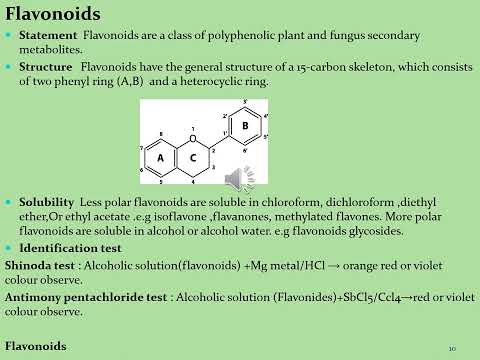
[12:33]Let's see what are the flavonoids. Flavonoids are a class of polyphenolic plants and fungus secondary metabolites. Flavonoids are a group of plants metabolites, though to provide health benefits through cell signaling pathways and anti-oxidant effects. These molecules are found in variety of roots and vegetables. Flavonoids are polyphenolic molecules containing 15 carbon atoms and are soluble in water. They consist of two benzene rings connected by a short three carbon chain. One of the carbon chain in this chain is connected to a carbon in one of the benzene ring. Either through an oxygen bridge or directly, which gives the third middle ring. The flavonoids can be divided into six major subtypes, which includes chalcones, flavones, isoflavones, flavanones, antha xanthines and anthocyanins. Many of these molecules, particularly the anthoxanthins, give rise to the yellow colors of some petals, while anthocyanins are often responsible for the red color or buds and the purple red color of autumn leaves. Flavonoids are abundant in plants in which they perform several functions. They are essential pigments for producing the colors needed to attract the pollinating insects. In higher plants, the flavonoids are also required for UV filtration. Nitrogen fixation, cell cycle inhibition and as chemical messengers. Flavonoids secreted by a plants roots and they symbiotic relationship between the rizia and certain vegetables, such as peas, clover and beans. You can see over here the basic skeleton of the flavonoid molecules.
[14:22]Flavonoids are soluble in less polar solvent, high polar solvent and combinations of the organic and water solvents. So, we can see over here the molecules which are less soluble fractions, that are isoflavones, flavones, methylated flavones, and these are soluble in chloroform, dichloromethane, diethyl ether and ethyl acetate. So, now we discuss the flavonoids which are rich with alcoholic and alcoholic water solutions, that are flavonoids glycosides. Flavonoids are identified by using Shinoda test and antimony pentachloride. The first test, in this test, alcoholic solutions of flavonoid is taken with magnesium metal, hydrochloric acid. It gives the orange red or violet color, which indicates the presence of flavonoid molecules. In antimony pentachloride test, alcoholic solution of flavonoid is added to the antimony pentachloride and carbon tetrachloride solutions. It gives red or violet color, which indicates the presence of flavonoid molecules.
[15:33]These are the sources of flavonoids, which includes onions, ginger, celery, parsley are rich sources of flavonoids. The other sources of flavonoids are tea, citrus fruit, citrus fruit juices, berries, red wines, apples and legumes. Flavonoids are used as anti-allergic, anti-inflammatory, anti-oxidant, anti-microbial, anti-bacterial, anti-fungal, anti-viral, anti-cancer and anti-diarrheal activities. So, you can see over here some biological activities of flavonoids that are very general, and these are anti-oxidant, anti-inflammatory and anti-allergic. Now, we discuss some important phytoconstituents that fall in the category of xanthones. And these have very rich pharmaceutical applications. You can see over here, anti-oxidant is due Quercitin. Anti-inflammatory is due to hesperidin, rutin, anti-allergic is due to kaempferol. Now, we discuss in details the sources and uses of querstine. Querstine is found in many plants and foods, such as red wine, onions, green tea, apples, berries, ginkgo biloba, buckwheat, tea has a large amount of Querstine. Querstine is most commonly taken by mouth to treat conditions of the heart and blood vessels and prevent cancer. It is also used for arthritis, bladder infections and diabetes, but there is limited scientific evidence to support these uses. So, the second molecule that is kaempferol. Kaempferol is isolated from apples, onions, leeks, citrus fruits, grapes, red wines, ginkgo biloba, and can be used as a strong anti-oxidant and helps to prevent oxidative damage of our cells, lipids and DNA. Kaempferol seems to prevent artery atherosclerosis by inhibiting the oxidation of low density lipoproteins and the formations of platelets in the blood.
[17:44]Xanthones are used in the industry of food, in fertilizers as well as pharmaceutical industries. You can see over here citrus fruit, red wine, strawberries are used in food industries. And rokipprag is used as fertilizers, and ginkgo biloba is the major and very brand common neutraceutical products, which is used in pharmaceutical sectors. Now, we can see over here some important pharmaceutical products and brands that have been launched in the market in which different flavonoids molecules are used as a phytoconstituents. The first brand is flavoxate, it is manufactured by Fink Pharmaceuticals, and we take its dose 500 to 1000 mg per day. And it is formulated in tablet dosage form, so it is used as anti-inflammatory drug.
[18:35]The second brand is Genistein in this, it is manufactured by Hangzhou Pharmaceuticals. We take its dose 200 mg to 300 mg per day. This product is formulated in capsule dosage form, and we take it as anti-bacterial agent. The next brand is Daidzin. It is manufactured by Handan Jinan Pharmaceuticals, and we take its dose 250 mg to 300 mg. And it is formulated in tablet dosage form. So, this brand or product is taken as anti-oxidant drug.
[19:10]Let's see what are the glycosides. Glycosides are the phytoconstituents that has been derived from the plant sources, and glycoside is any molecule in which a sugar group is bonded through its anomeric carbon atom to another group and to form glycosidic bonds via oxygen atom or sulfur atom. So, the sugar group is known as the glycone part and the non-sugar group is generally known as the aglycone part. Basically, aglycone part is the general group of this molecules. So, you can see over here in the structures of cardiac glycoside, which is the general structures of this molecule. In this structures, glycosides as a glucose moities are substituents are attached to the basic structures of the sugar molecules. So, this linkage is due to the presence of oxygen atom, and this oxygen atom is generally known as anomeric oxygen atom, and the carbon which is attached to this oxygen atom is called the anomeric carbon atom. Similarly, most of the glycosides are the glucose is also attached with the alkaloids or the terpenoids molecules, and we can see those molecules as a terpenoidal glycosides or the alkaloidal glycosides. So, you can see over here further two more structures, that is salicin and glucovanillin. In salicin, the glucose moity is attached with the methanolic groups and in glucovanillin, the glucose moity is attached with the benzaldehyde or methoxybenzaldehyde group. So, in these two groups, the basic glucose moity is attached with the anomeric oxygen or the anomeric carbon atoms.
[20:54]Salicin is isolated from willow Salix bark. It is found in the bark of Populus species and the leaves of the willows and Populus. It is also found in Castoreum. It is used as an analgesic agent, anti-inflammatory and anti-pyretic drugs. The second molecule that is glucovanillin, it is isolated from vanilla beans, and it is used as anti-microbial, anti-oxidant, anti-mutagenic and anti-sickle cell disease active drugs.
[21:27]Let's see the solubility of glycosides. Since glycosides have two part, one is aglycone part and the other is glycone part. Aglycone part is insoluble in water while glycone part is water soluble, but overall, glycosides are water soluble and insoluble in organic solvents. Let's see the identification test of glycosides. Glycosides can be identified by two test, that are Libermann Buchard test, and the other is Keller-Kiliani test. So, in the first test, we take two ml of extract and added two ml of acetic acid and two ml of chloroform, then cool the solutions and then added concentrated sulfuric acid. In the results, green color showed the entity of aglycone, that is the steroidal part of glycosides. So, in this way, the glycosides are indicated. The second test is Keller-Kiliani test. In this test, a solution of glacial acetic acid, that is four ml, with the one drop of 2% ferric chloride mixture was mixed with the 10 ml of aqueous plant extract and one ml of concentrated sulfuric acid is added. In the results, a brown ring formed between the junctions of the two layer, which indicates the presence of cardial steroidal glycosides. When we see the sources of glycosides, these are isolated from Digitalis family, Senna leaves and Senna pods, and Bearberry. The biological activity when we see, it behaves as cardio tonic agent, which is due to the presence of digitalis glycosides. And it behaves as laxatives due to the presence of anthraquinone glycosides, and it works as anti-inflammatory agent due to the presence of glycyrrhizin glycosides. So, many other phytoconstituents are also present within the glycosides, and that phytoconstituents are rutin, querstin and hesperidin.
[23:29]Glycosides are also used for the treatment of heart failure as well as it is used as novel anti-neoplastic agents, a large range of antibiotics are prepared from glycosides. So, now we can see some important pharmaceutical brands which have been launched to the market on the basis of different phytoconstituents that fall in the category of glycosides. So, the first brand is Bioflavonoids. It is manufactured by Douglas Laboratories and we take its dose 250 mg orally every 12 hours or three times a day. It is formulated in orally tablet dosage form and capsule dosage form, which take orally. So, it is used to enhance the actions of vitamin C, to support blood circulations, as an anti-oxidant, and to treat allergies, viruses, or arthritis and other inflammatory conditions. The second brand is Ginkgo Biloba Certified Extract. It is manufactured by life extension wateries, and we take its dose as one capsule per day. It is formulated in the capsule dosage form, and it is used to support brain health, memory and circulations.
[24:36]This is another brand that have been launched by the Alien Nutraceuticals, and the name of this brand is Black Cohosh. We take its dose one capsule per day, and it is formulated in capsule dosage form. It is rich with pharmaceutical applications and medicinal applications because it is used a large number of diseases that includes menopause relief, headache, hot flashes, mood changes, sleep problems, heart palpitations, night sweats, as well as vaginal dryness.
[25:13]Let's see what are the polyketides. Polyketides are a large group of metabolites found in the bacteria, fungi and plants, which are synthesized from acyl coenzyme precursors. So, polyketides are a diverse class of compounds that are often created by series of molecular enzymes, which either contain alternating carbonyl or methylene groups, that is in the form of C double bond O and CH2.
[25:39]So, you can see over here two examples of the phytoconstituents that fall in the category of polyketides. And these two phytoconstituents are natamycin and geldanamycin. Now, let's see what is the natamycin. Natamycin, also known as pimarcine, is an anti-fungal medication used to treat fungal infections around the eye. This includes infections of the eyelids, conjunctiva and cornea. It is also used as eye drops. Natamycin is also used in the food industry as a preservative, however, these have some allergic reaction by its using as an oral dosage form. So, the second molecule is geldanamycin. Let's see what is the functions and the uses of the geldanamycin. Geldanamycin is a 1,4-benzoquinone, anamycine anti-tumor antibiotic that inhibits the functions of HSP-90 by binding to the unusual ADP and ATP binding pocket of the proteins. HSP-90 client proteins play important roles in the regulations of the cell cycle, cell growth, cell survival, apoptosis, angiogenesis and oncogenesis.
[26:49]Polyketides are insoluble in water, however, these are soluble in organic solvents and that solvents are chloroform, methanol and dimethyl sulfoxide. Now we see the identification test through which how can we observe and confirm the presence of polyketides. In the first test, we take the sample that is 5 mg and added two ml of sulfuric acid and shake gently. If reddish brown color produced, then it means the erythromycin is present, that is the class of polyketides. The second test, we we take 5 mg of sample extract and added 5 ml of zanthohydroil and heat on water bath. If red color produced, then it means polyketides are present.
[27:35]Polyketides are isolated from different sources. The main sources from which polyketides are isolated and extracted are for bacteria, fungi, plants, certain marine animals. Polyketides also have some biological activities, and these work as antibiotics, anti-fungal, cancer chemotherapeutics and anti-parasitic effect. So, you can see over here some important phytoconstituents. And these phytoconstituents are macrolides, ansamycins, polyenes, picromycin, geldanamycin and natamycin. Now, we discuss its uses and importance turn by turn. So, the first molecule is macrolides. Macrolides are a class of natural products that consist of a large macrocyclic lactone ring to which one or more deoxygenated sugars, usually, cladinose and d-ososamine may be attached. The lactone rings are usually 14, 15 and 16 membered. Macrolides belong to the polyketide class of natural products. The second molecule is ansamycins. Ansamycins is a family of bacterial secondary metabolites that show anti-microbial activity against many gram positive and gram negative bacteria, and includes various compounds, including strepto vericines and rifamycins. The next molecule is picromycin. Picromycin was studied by Brockmann and Hackel in 1951, and was the first antibiotic macrolide to be isolated. Picromycin is synthesized through a type 1 polyketide synthe system in streptomyces venesola, a species of gram positive bacterium in the genus streptomyces. The next two phytoconstituents that are geldanamycin and natamycin have been discussed previously.
[29:36]Polyketides also have some applications. These are also used as immune suppressants. They are also used as cholesterol lowering agents. Now, we discuss some important pharmaceutical brands which have been launched on the basis of phytoconstituents that fall in the category of polyketides. So, the name of first brand is erythrosine. It is manufactured by Pfizer nutraceuticals, and we take its dose 500 mg per day. This brand has been formulated in tablet dosage form, and it is used in pneumonia conditions. It is used as ear infections and bronchitis. The next molecule is amphotericin B, which is manufactured by Biopotri Nutraceuticals, and we take its dose 50 mg per day. It is formulated in injection dosage form, and it works as anti-fungal agents.
[30:19]Let's see what are the tannins. Tannins are a class of polyphenolic biomolecules that bind to and precipitate proteins and various other organic compounds, including amino acids and alkaloids. They mainly contain more than five hydroxyl groups. In addition to tanning leather, tannins are used in photography as mordants in dying, clarifying wine and beer by precipitating proteins out of them, and as as astringent in medicines. Tannins are found commonly in the bark of trees, wood, leaves, buds, stems, fruits, seeds, roots and plant galls. So, the tannins also called tannic acid, any of a group of pale yellow to light brown, amorphous substances in the form of powder, flakes or a spongy mass, widely distributed in the plants, they used chiefly in tanning leather, dying fabric, making ink and in various medical applications. So, you can see over here two important examples that fall in the category of tannins, and these are the phytoconstituents that are gallic acid and the basic skeleton of tannins in which different polyhydroxy groups are condensed with each other and known as general structures of the condensed tannins.
[31:43]So, let's see the sources and uses of gallic acid. Gallic acid is a trihydroxybenzoic acid, a type of phenolic acid, found in gallnuts, sumac, hazel tea leaves, oak bark and other plants. The chemical formula of gallic acid is C6H2OH3COOH. It is found both free and as a part of hydrolyzable tannins. So, gallic acid is used as anti-oxidants and helps to protect our cells against oxidative damage. Gallic acid was found to show cytotoxicity against cancer cells, without harming healthy cells. Gallic acid is also used for the treatment of diabetes mellitus.
[32:36]Due to the presence of hydroxyl group in the basic skeleton of the tannin molecules, these are easily soluble in water as well as in organic solvents. The organic solvents which are used for the solubility of tannin molecules are methanol, ethanol, butanol, ethyl acetate and chloroform. Now we see the identification test. This test is carried out by using Goldbeater skin test. It is carried out when a small piece of Goldbeater skin, membrane prepared from the intestine of an ox, is soaked in 20% hydrochloric acid, rins with distilled water and placed in a solution of tannin for five minutes. A brown or black color is produced on the skin due to the presence of tannins, which indicates the presence of tannin molecules.
[33:21]The second test is phenazone test. This test is carried out when a mixture of aqueous extract of a drug and sodium acid phosphate is heated and cooled, and filtered. A solution of phenazone is added to the filtrate. A bulky colored precipitate is formed, which indicates the presence of tannin molecules. Tannins are found in most part of the plants, and these plants are Potentilla erecta. In which tannins are found in the roots of these plants. Second plant is Syzygium cumini. In this plant, the tannins are found in the bark of the plants. The next plant is Acacia nilotica. In this plant, the tannins are found in the pod of this plant. Tannins is also active agents, which is due to the presence of potentilla erecta. In this plant, it is have anti-viral, anti-inflammatory activity. The second plant, Krameria triandra, in this plant anti-bacterial and anti-diarrheal activity is found. The next plant is Syzygium cumini. Anti-asthma and anti-ulcer activities is found in this plant. So, we discuss some important phytoconstituents, their uses and isolation sources. The first phytoconstituents is tannic acid. Tannic acid is a common mordant used in the dyeing process for cellulose fibers, such as cotton, often combined with alum and iron. Nowadays, tannic acid is applied typically for the treatment of cold sores, diaper rashes, fever blisters and poison ivy. Tannic acid is also taken by mouth as oral drug and applied directly for bleeding, chronic diarrhea, dysentery, bloody urine, painful joints, as well as persistent cough and cancer. The second molecule that is ellagitannins. Ellagitannins are used and isolated from as bioactive polyphenols that are found in some fruits, nuts and seeds, such as pomegranates, black raspberries, raspberries, strawberries, walnuts and almonds. These are used as a universal phytoconstituents or these the universal nature of these mechanism in common forms of cancer, just that pomegranates, ellagitannins, which have been tested in both prostate and colon cancer cells by search groups, and also be useful dietary agents for the prevention and treatment of other forms of cancer, such as breast cancer. So, here we discuss some important phytoconstituents, their uses and isolation sources. The first phytoconstituents is tannic acid. Tannic acid is a common mordant used in the dyeing process for cellulose fibers, such as cotton, often combined with alum and iron. Nowadays, tannic acid is applied typically for the treatment of cold sores, diaper rashes, fever blisters and poison ivy. Tannic acid is also taken by mouth as oral drug and applied directly for bleeding, chronic diarrhea, dysentery, bloody urine, painful joints, as well as persistent cough and cancer. The second molecule that is ellagitannins. Ellagitannins are used and isolated from as bioactive polyphenols that are found in some fruits, nuts and seeds, such as pomegranates, black raspberries, raspberries, strawberries, walnuts and almonds. These are used as a universal phytoconstituents or these the universal nature of these mechanism in common forms of cancer, just that pomegranates, ellagitannins, which have been tested in both prostate and colon cancer cells by search groups, and also be useful dietary agents for the prevention and treatment of other forms of cancer, such as breast cancer.
[36:29]Now, we discuss some important pharmaceutical brands that have been launched on the basis of phytoconstituents that fall in the category of tannins. The first brand is Ultra Slim, it is manufactured by Vitamin Company Nutraceuticals, and we take its dose two to three tablet per day. It is formulated in tablet dosage form, it is used in obesity, means it is used in weight loss. The second brand is Spasfon. It is manufactured by Hiemont Pharma Nutraceuticals, and it is taken six tablets per day. It is formulated in tablet dosage form, and it is used in as anti-spasmodic agents.
[37:10]Let's see what are the stilbenoids. Stilbenoids are family of polyphenols known for the complexity of their structures and for their diverse biological activities. Occur with a limited but heterogeneous distributions in the plant kingdom. The most prominent stilbene containing plant family is Vitaceae. It is represented by the famous wine producing grape, that is, viscidavenifera. Is one of the richest sources of novel stilbenes currently known, with other families, such as Gentianaceae and Fabaceae. Stilbenoids are hydroxylated diverse and derivative of stilbenes. They have C6-C2 and C6 structures. In biochemical terms, they belong to the family of phenylpropanoids. Dear students, you can see over here two important phytoconstituents that fall in the category of stilbenoids. And these phytoconstituents are pterostilbene and e-stilbene. Now we discuss its sources and uses.
[38:09]Pterostilbene is a polyphenol, a type of molecule that occurs in plants, particularly small berries and nuts. Blueberries are a particular rich sources of pterostilbenes. Although it is found in grapes, pterostilbenes does not survive in the formations of wine process. So, pterostilbene is used in the disease of Alzheimer. It is also used as in the disease of atherosclerosis, diabetes, high blood pressure, high cholesterol and insulin resistance. The second molecule is e-stilbene. It is not found from the natural sources, however, it is synthesized by a coupling reactions of hydrobenzene and styrene using a palladium 2 catalyst. This reaction is carried out and synthesized by Mizoroki-Heck reactions. Mizoroki-Heck reactions undergoes reactions typically of alkenes. E-stilbene is used in the manufacturers of dyes and optical brighteners, and also as a phosphor and scintillator.
[39:17]Stilbenoids as a phytoconstituents and natural products are insoluble in water, however, these are soluble in organic solvents, that includes methanol, ethanol, butanol, ethyl ester and chloroform. Now we see over here some important identification test that confirm the presence of stilbenoids molecules. The first test is ferric chloride test. It is carried out when we take sample and then added ferric chloride solutions, give the reddish brown color, which indicates the presence of stilbenoids. The second test is performed by bromine water test. In this test, we take sample and added bromine water, which gives the white precipitates, which indicates the presence of stilbenoids.
[39:59]One of the most important stilbenoid producing plant is Japanese Knotweed, but they are also found in pine, peanuts, cranberries, jack fruits and spruce. Stilbenoids also have some biological activities, they have anti-microbial activity, anti-inflammatory activity, anti-oxidant activity. Now we discuss some important phytoconstituents that fall in the category of stilbenoids. And these phytoconstituents are polyphenols, polysaccharides and some other miscellaneous compounds. Stilbenoids reduce markers of oxidative stress and inflammations, lower systolic blood pressures at high dosage and has various medicinal properties. Dear students, now we discuss some important pharmaceutical brands that have been launched on the basis of phytoconstituents that fall in the category of stilbenoids. The first brand is Omega Women. It is manufactured by WSN, and we take its dose 250 mg per day. This brand or product is formulated in orally tablet dosage form and capsule dosage form, which take orally. So, it is used as anti-cancer and anti-oxidant agents.
[41:14]The next brand is Mushroom optimizer, which is manufactured by Jarrow Formulas Nutraceuticals. We take its dose 300 mg per day. It is formulated in capsule dosage form. It is used as anti-microbial and anti-bacterial agents. The last brand is Benolea, FLA 943. It is manufactured by Frutarom Nutraceuticals, and we take its dose 300 mg per day. It is formulated in capsule dosage form, and it is used as anti-microbial and anti-viral agents.
[41:47]Dear students, these are some important assignments and quiz, which you would have to submit after the delivery of this lectures within four to five days. The first assignment is, explain isolation, separation, purification and structure, elucidation of glycirin glycosides. The second assignment is, give chemical synthesis and biosynthesis of warfarin. And third assignment is, discuss the natural sources, uses and pharmaceutical products of glycosides and xanthones.
[42:19]Dear student, thank you so much for your kind attention. So please feel free to contact in case of any queries. Okay. Allah Hafiz. Bye.


