[0:00]Have you ever walked down a street and wondered how the simple footpath beside you came into existence? Today, we use footpaths every day without thinking twice, but their history is actually quite fascinating and deeply connected to how cities evolved over time. Long before modern cities existed, roads were not designed for organized movement. In ancient times, people, animals, and carts all shared the same space. Streets were often muddy, crowded, and chaotic. There was no clear separation between pedestrians and vehicles, which made walking both uncomfortable and dangerous. The concept of separating walking space began to appear in ancient civilizations like Rome. The Romans were among the first to design structured roads, and in many of their cities, they built raised pathways along the sides of streets. These early versions of footpaths helped protect pedestrians from traffic and dirt. Some Roman streets even had stepping stones that allowed people to cross without getting their feet wet. However, after the fall of the Roman Empire, much of this organized urban planning disappeared. During the Middle Ages, streets once again became messy and overcrowded. People threw waste onto roads, and walking was far from pleasant. There was still no proper system to separate pedestrians from carts and animals. The real transformation began during the 18th and 19th centuries, especially in rapidly growing cities like London and Paris. As industrialization increased, cities became more crowded, and the need for safer, cleaner streets became urgent. This is when modern footpaths started to take shape. In London, authorities began paving sidewalks with stone and raising them slightly above the road level. This not only protected pedestrians from mud and waste, but also clearly defined walking space. Over time, curbs were introduced, which are the raised edges you see today separating the road from the footpath. Paris also played a major role in shaping modern urban design. During the 19th century, large-scale city planning projects redesigned streets to include wide sidewalks, making walking safer and more comfortable. This idea quickly spread to other cities around the world. As automobiles became popular in the 20th century, footpaths became even more important. With faster and heavier vehicles on the road, separating pedestrians was no longer just about comfort; it became a matter of safety. Governments started enforcing strict rules to ensure that every road included proper sidewalks. In modern times, footpaths are not just about walking, they are designed with accessibility in mind. You'll notice ramps for wheelchairs, textured surfaces for visually impaired people, and wider spaces for heavy pedestrian traffic. In many cities, footpaths are also used for street vendors, trees, benches, and even cycling lanes. Interestingly, the design of footpaths also reflects a city's culture and priorities. In some places, wide and clean sidewalks encourage walking and social interaction. In others, poorly maintained footpaths show a lack of urban planning. Today, as cities focus more on sustainability and reducing pollution, footpaths are becoming even more important. Encouraging people to walk instead of using vehicles helps reduce traffic and improve air quality. So, the next time you walk on a footpath, remember that it's not just a simple strip of pavement. It's the result of centuries of urban development, designed to make cities safer, cleaner, and more livable for everyone.
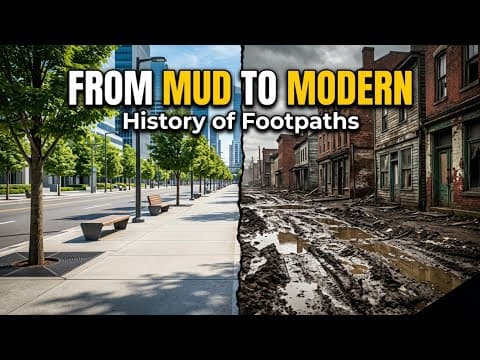
The History of Footpaths: How Sidewalks Changed Cities Forever
Why It Exists
4m 0s545 words~3 min read
YouTube auto captions
Transcript source
YouTube auto captions
This transcript was extracted from YouTube's auto-generated caption track. The transcript below is server-rendered so it can be read, searched, cited, and shared without opening the original YouTube player.
Pull quotes
[0:00]Have you ever walked down a street and wondered how the simple footpath beside you came into existence?
[0:00]Today, we use footpaths every day without thinking twice, but their history is actually quite fascinating and deeply connected to how cities evolved over time.
[0:00]Long before modern cities existed, roads were not designed for organized movement.
[0:00]There was no clear separation between pedestrians and vehicles, which made walking both uncomfortable and dangerous.
Use this transcript
Related transcript hubs
Watch on YouTube
Share
MORE TRANSCRIPTS


