[0:10]It's something you've surely felt before, that quiet shift inside you, when you start to think differently. Suddenly, things you used to agree with feel off. Conversations that once felt normal start to sound... empty. And the people around you? They notice. They might not say it directly, but you can feel it, that subtle tension, those half-smiles that don't quite reach their eyes. You changing makes them uncomfortable. Because when someone starts to wake up, it reminds everyone else that they're still asleep. And here's the hard truth: waking up isn't glamorous. It's not sunshine and peace and daily affirmations. It's messy. It's lonely. It's looking at your reflection and realizing you've been built from ideas that were never yours. You start questioning why you do what you do, why you chase what you chase, and why you feel guilty when you finally stop pretending. That's where the real work begins, not in building something new, but in tearing down everything false. Most people avoid that kind of honesty like it's fire. They'd rather live half-alive, repeating the same patterns, because at least it's familiar. But if you're here, something in you has already started burning. And there's no going back once the fire starts. Because once you see how deeply your mind has been shaped by parents, teachers, friends, systems, you can't unsee it. You can only decide whether you'll keep being a product of your conditioning or finally take control of your own design. Mastering your mind means facing the chaos inside you, not suppressing it, not sugarcoating it, but standing in it until you stop flinching. Growth doesn't come from comfort. It comes from being stripped bare and choosing to rebuild with your own hands. You stop begging for life to get easier. You start demanding that you get stronger. And that shift changes everything. But here's where the cost starts to show. Because when you begin thinking for yourself, you automatically become a threat to everything built on conformity. People will misunderstand you. They'll call you arrogant, distant, even cold. But what's really happening is that your freedom is reminding them of their cage, and that's something most people can't stand to see. When you start seeing through the fog of conditioning, something irreversible happens. you can't unsee it. The moment you realize how much of your identity was built to please, to fit in, to feel safe... something deep inside starts to crumble. That's the bridge from the last chapter of awakening to the next, destruction. Because mastering your mind doesn't begin with adding new ideas; it begins with subtraction. You have to burn away everything false before what's real can survive the fire. And that's where the death of your old self begins, quietly, painfully, necessarily. You see, most people think they can build strength while still holding on to their old comforts. They want the wisdom without the sacrifice. But your old self, the one built from fear, guilt, and external validation, will fight for its life. It will whisper that you're changing too fast, that you're risking too much, that maybe ignorance wasn't so bad after all. That voice isn't evil; it's scared. It's the part of you that spent years depending on the approval of others to feel real. And when you take that away, your mind starts shaking. It feels like death because in a way it is. The death of the old self means stepping into a void with no guarantees. It's the silence after you stop obeying external voices and before your own voice becomes clear. Most people can't stand that silence. They run back to the noise, to systems, beliefs, routines that tell them what to think. But mastery demands that you stay in that silence long enough for truth to emerge. You stand there, stripped of identity, and realize you were never the roles you played. You were never the opinions others had about you. You were the awareness underneath, the witness that's been watching all along. And here's the thing: this death doesn't happen once. It's a cycle, one that keeps repeating as you rise. Every time you expand, another layer of the false self has to fall away. Each time you evolve, something you once clung to must die. Maybe it's a belief you've outgrown, maybe it's a relationship built on your old energy, maybe it's a version of yourself that once felt safe. You'll mourn those parts. You'll feel lost for a while. But you'll also feel something new, a strange, fierce peace that comes from realizing you're no longer hiding behind borrowed identities. And that's the price of mastering your mind: it costs you every illusion that once made you feel secure. You lose the comfort of certainty, but you gain something infinitely greater, self-trust. You stop living like a puppet pulled by unseen strings and start moving like a creator shaping reality from within. It's terrifying, yes. But it's also sacred. Because in the ashes of your old self, a new awareness is born, one that doesn't need approval, doesn't beg for meaning, and doesn't fear standing alone. That's the beginning of true mental mastery: when everything that was built for survival dies, and what remains is consciousness, raw, unbreakable, and entirely your own. There's a strange quiet that follows the death of your old self. Not the kind of quiet that feels peaceful at first, the kind that feels heavy, like the silence after a storm. You've burned the bridges that once tied you to false security, and now you stand in the open, surrounded by space that feels too wide, too empty. It's disorienting, almost cruel. But that emptiness? That's the real beginning of mastery. Because in the absence of noise, the mind has no choice but to face itself, naked, restless, and unguarded. That's where the next chapter begins: walking alone. Solitude isn't a punishment. It's the training ground of strength. When you're stripped of validation, you learn to generate your own. When there's no one left to tell you who you are, you start defining it for yourself. And it's uncomfortable, because there's no applause here, no comforting feedback loop to reassure you that you're "doing it right." Most people can't handle that kind of silence. They run back to their distractions, to the warmth of the crowd, to the illusion of connection. But if you're serious about mastering your mind, you have to stay. You have to walk through the loneliness until it stops being loneliness and becomes presence. That's where you start hearing the truth, the real truth, not the one others repeat to feel safe. You begin noticing how most people's minds are crowded, noisy, constantly searching for something outside themselves to fill the void. But your solitude becomes your laboratory. It's where you study your patterns, dissect your fears, and observe your thoughts like weather passing through the sky. You begin to understand that thoughts aren't enemies; they're signals. And mastery isn't about silencing the mind, it's about becoming the observer who no longer gets lost in it. Still, this path comes at a price. As your awareness deepens, you start to see how much of the world runs on avoidance, avoidance of pain, of silence, of truth. You notice it in conversations that never go beyond small talk, in lives spent chasing comfort rather than depth. And once you see it, you can't unsee it. The gap between you and the collective widens. You try to explain what you're feeling, but words fall flat. The more awake you become, the less you fit in. People might say you've changed, and they'll be right. But they'll never understand that what died wasn't your warmth or empathy, it was your need to belong to illusions. That's the lonely irony of mastering your mind: the higher you rise in clarity, the more misunderstood you become. Yet in that loneliness, something profound unfolds. You start realizing that solitude isn't the absence of love, it's the presence of truth. You stop craving company and start craving alignment. You no longer fear the quiet because it's no longer empty. It's alive, it's full of energy, insight, and creative power. And one day, you look around and realize that walking alone was never really about being alone. It was about walking with your true self, finally unburdened by everything false. And that, more than anything else, is the price and the reward of mastering your mind completely. After you've learned to stand alone, truly alone, something inside you changes. Your vision sharpens. The fog that once clouded your perception begins to clear, and you start seeing the patterns that rule the world. You notice how most people aren't really living; they're just functioning. You see how comfort has become the new religion, and mediocrity it's god. And now, because you've walked through solitude and stripped away illusions, you can see how dangerous that comfort really is. Mastering your mind doesn't end with solitude; it demands a fight. Not with others, but with the gravitational pull of collective mediocrity that wants to drag you back into its sleep. The war isn't loud. It's subtle, psychological, constant. Every day you'll feel its pressure, the temptation to go back to being easy, agreeable, predictable. Mediocrity doesn't scream at you; it seduces you. It offers safety, applause, belonging. It whispers, "Relax... you've done enough." But mastery doesn't relax. It stays awake. Because the moment you stop guarding your awareness, the old self tries to crawl back, disguised as "balance," "stability," or "normal life." You start convincing yourself that maybe it's okay to shrink again, that maybe peace means being quiet. That's how mediocrity wins: not by defeating you, but by convincing you to stop trying. You'll notice this war everywhere, in conversations that dull your mind, in social media feeds that reward conformity, in institutions that punish independent thought. You'll see people who once inspired you now settling for mediocrity because they were too afraid to lose their comfort. You'll realize how often brilliance is mocked while complacency is celebrated. That's when you'll understand the cost of mental mastery. It isolates you from a world that worships convenience. You start to feel like a foreigner in your own culture, a misfit among those still hypnotized by the ordinary. But you can't hate the mediocre; that's another trap. The moment you hate them, you descend to their level. Mastery requires compassion, but not compromise. You can understand why most people stay asleep, fear, comfort, exhaustion, and still refuse to join them. You can love humanity without surrendering to its illusions. Because if you want to master your mind, you must learn to see mediocrity for what it is: the collective defense mechanism of people afraid of their own potential. It's not evil. It's inertia. It's the voice that says: Don't change; you'll make the rest of us uncomfortable. And you will make them uncomfortable. That's the point. Your clarity will disturb those still clinging to confusion. Your strength will feel like arrogance to those who've never built their own. You'll be judged for walking differently, for thinking freely, for refusing to pretend. They'll say you're distant, cold, too serious. But what they're really saying is; "You remind me of everything I'm avoiding." That's the invisible cost of mastery: you stop belonging to places that never required truth to belong. There will be moments when you'll want to go back. To be liked again. To be understood. You'll miss the warmth of the crowd, even if it was shallow. But every time you consider it, your mind, now clear, now sovereign, will remind you that comfort is too small a cage for someone who's tasted freedom. You'll start to see that fitting in means dying a slow, quiet death of the spirit. And the price of that kind of death is far higher than the loneliness of freedom. So you keep walking. You stay awake. You keep choosing truth, even when it costs you connection. And in time, the war shifts. It's no longer about resisting mediocrity, it's about transcending it. You stop fighting shadows and start embodying light. You stop arguing with ignorance and start living as an example of what's possible. That's when the real power of mental mastery begins to reveal itself, not in dominance or control, but in serenity. The world still tries to pull you down, but it no longer reaches you. You've become untouchable, not because you've escaped the world, but because you've stopped belonging to its illusions. And though it has cost you nearly everything, belonging, comfort, acceptance, what remains is worth far more: the clarity of an unshakable mind that answers only to truth. Now, if you truly want to master your mind, understand what you're asking for. You're not asking for happiness, you're asking for clarity. You're not asking for control, you're asking for liberation. And liberation means loss. It means letting go of every false identity, every comforting lie, every easy answer. You'll be tested again and again until nothing can control you anymore, not fear, not praise, not the opinions of others. But once you reach that point, something incredible happens. You stop chasing peace, you become it. You stop seeking truth, you embody it. You realize the price was never too high. Because everything you lose on this path was never really yours. The only thing that remains is what can't be taken: your mind, your awareness, your unshakable core. And that... is everything.
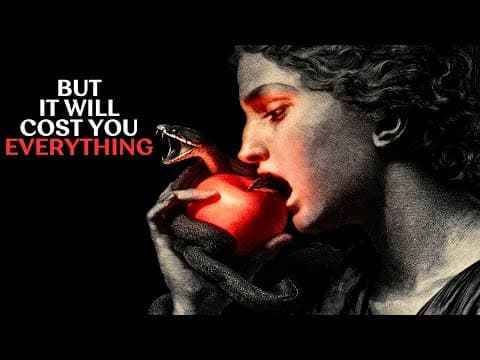
How to Master Your Mind Completely
Sehnend
15m 3s2,262 words~12 min read
YouTube auto captions
Transcript source
YouTube auto captions
This transcript was extracted from YouTube's auto-generated caption track. The transcript below is server-rendered so it can be read, searched, cited, and shared without opening the original YouTube player.
Pull quotes
[0:10]It's something you've surely felt before, that quiet shift inside you, when you start to think differently.
[0:10]They might not say it directly, but you can feel it, that subtle tension, those half-smiles that don't quite reach their eyes.
[0:10]Because when someone starts to wake up, it reminds everyone else that they're still asleep.
[0:10]It's looking at your reflection and realizing you've been built from ideas that were never yours.
Use this transcript
Related transcript hubs
Watch on YouTube
Share
MORE TRANSCRIPTS


