[0:18]Do you want power? It's a strange question, right? It kind of feels wrong. We tend to think of wanting power as something only comic book villains do. That's probably partly because we're tragically familiar with abuses of power. I know I've seen it up close, and maybe you have too. In fact, statistics would tell me you probably have too. One in four women experience severe physical abuse in their lifetimes from an intimate partner. Three out of four employees say that the worst or most stressful part of their job is their boss. Now, even if you're fortunate enough not to have seen or experienced abusive power in a workplace setting or in a domestic setting, I know you've seen it in the news. We all see it all the time every day. It's in pop culture, all through political politics of every stripe and color. I mean, just in recent history, we've seen a president try to subvert justice using his position, uh intimidate those who tried to call him out, sabotage and try to steal from an opponent's campaign and minimize and deny his play and blame his behavior on others. Nixon, I'm talking about Richard Nixon, just to be clear. Um, I could tell you that the patterns of behavior that I saw during more than 200 interviews with perpetrators of power-based crimes are nearly identical to so much of the civil and cultural discourse that we see today. Just recently, we all got a front row seat and watched in horror as a man used positional and physical power to kneel on George Floyd's neck for nearly nine minutes while he died crying out for his mother. All of these things are connected by a common thread. A pernicious desire for or expression of power. But I didn't actually come here to talk to you about all of that. I actually came here to tell you that I want power. And in fact, you want power. Right now, at this very moment, you and I are both trying to obtain more power, whether we realize it not or whether we realize it or not. Maybe you're not convinced. But what if I turn this question around? Do you want to be powerless? In the mid-1500s, Thomas Hob said that power is a man's current means to obtain some future good. The word power comes from the Latin possy, which means to be able. And it is also where we get the English word possibility. You see, power is not wrong, it's simply to be able to create possibility. We could simply define it as power is to be able to affect outcomes or people in a desired direction. There's my pursuit of power. My pursuit of power is based on my partner, Captain Marvel and I and our desire to obtain future good for Hulk and for Black Widow. We want our children to have the power to dream and to learn and to create and to achieve and to build and to love. And in my best moments, I want that for every child in my community. But what does that really mean? What exactly is power? How do I get more and how do I use it in such a way that every person, rich or poor, religious or irreligious, black or white is empowered by my actions, given more potential to affect the outcomes of their lives? In order to sort through some of these questions, let's tap three quick hooks into the conversation that I think will help us give us something to hang our thoughts on. Uh hook number one, identify. What exactly are the types of power? Hook number two, understand. How does power really work? And hook number three, of course, how do we put this all into action and use power well? First of all, types of power. What are the types of power? What are the things in society that help us to influence the outcomes of our lives and our family's lives? Well, the most obvious, of course, is money. You have to have money to influence outcomes. But what about education, position, a a skill, a specialized skill set or a trade, internal power, heart, those kind of things that happen on the inside, self-esteem and and uh a work ethic and and love. What about an influential network? Even spiritual belonging or religious belonging. These are all things that most of us use on a regular basis, one or more of these things, to influence or affect the outcomes of our lives. There's one that we hear a lot about, but we don't, I don't think understand as much. And so I want to take a couple of extra minutes on that, and that's cultural or social privilege. Now, privilege is a type of power and don't let the word privilege bother you or make you feel defensive. Not all types of privilege are illegitimate and even illegitimate privilege is not always, usually, in fact, not your individual fault if you have it. It's the result of larger social uh uh evolutions. Now, uh privilege, it can manifest in several different ways. I remember talking to John, and I was in a little police department interview room and John says to me, I didn't yell. I don't have to yell. I just shot my pistol into the floor to get her attention because she wouldn't listen. I mean, she's supposed to listen, you're a preacher, you know what the Bible says. The husband's the head, the wife is the tail. By the way, the Bible doesn't say that. But John had male privilege. He'd been given by society a greater degree of ability to influence and control outcomes. And if you're a man like me and you live in a society where your culture has given default authority and leadership, decision-making uh a power to men, then you have male privilege, regardless of how you use that privilege. And you should understand, we should all recognize that if our culture has historically done that, then our traditions, our social and legal structures, our economic structures, our religious beliefs, all of these things, our gender roles, they've all evolved over time to mirror and to reinforce that privilege. White privilege is the same way. If a society builds its foundations on a presumption of the superiority of people with light colored skin, then its legal and social institutions, its implicit biases, its societal roles, everything, all of these things are interconnected, and they evolve over time to give certain people power and to keep certain people from power. Class privilege is another important one, or we could call this socio-economic privilege. This is typically inherited, but it's normally one of the more powerful types of privilege because it's a combination of several types of power, including occupation, income, and education. Now, this is not an exhaustive list of all the types of power. I'm sure you could add to the list. But these are some of the things in society that move the needle. The things that help ordinary people like you and like me influence the outcomes of our lives. But how do they really work? How do these types of power really work? We've got to understand power. These types of power are not just laying around on the street for anybody to pick up and use anytime they want. or to have complete access to. There are social and cultural institutions that maintain and guide uh the flow of access to power. You can think of these as the gatekeepers of power. And it all starts early on in childhood development through family structures. The landmark adverse childhood experiences study showed that people who experience significant levels of household dysfunction, abuse, or neglect, had much higher risks of negative health and well-being outcomes. When you destabilize or you interrupt childhood development in a traumatic way, you take power from that child, and the results can be catastrophic and often the impacts are generational in nature. And it's important to recognize that childhood development it cannot be interrupted. And sometimes this happens, this trauma can happen at a society-wide level through things like slavery or mass incarceration. Sometimes it happens at a microcosm level through individual situations like domestic violence. Uh what about civil structures? This would include governing bodies, things like your state legislature, your HOA even, anything that makes policy in your community or affects policy in your community, but it also includes things like schools and libraries and public services. These impact people's access to power. What about judicial structures? This includes the justice system and law enforcement in your community, and how the law is enforced, and how breaking the law is punished has a profound impact on who has power in society. That's why we have to have a a meticulous examination and an ongoing appraisal or feedback loop for justice structures, our judicial structures in our communities because historically, judicial structures tend to tip in favor of those in society with means, who already have power, and to see the harshest impacts in the communities that are already most disadvantaged. Of course, we can't leave out economic structures, right? Financial institutions and employers control access to capital, which is a major form of power and a gateway to many other types of power. Now, all of these structures exaggerate the principle of compounding, that power compounds. In other words, just like wealth begets wealth, power gets begets power. Individuals or communities who have power typically have more access to or even outright control the means of producing and consolidating exponentially more power. While individuals or communities who have little power have to typically work around the system in order to gain access to power. They may have to have a benefactor who has power who can help, or they simply have to overpower the system through sheer numbers in order to actually increase their power. Now, that interaction that we're talking about there is core to our understanding of power because by definition, power involves an interplay or an interaction between one or more parties, or excuse me, two or more parties, that is either antagonistic or mutualistic. In an antagonistic context, power is used to overpower, coerce, dominate, control. In a mutualistic context, power is used to influence, inspire, collaborate, uh help. Now, an antagonistic use of power is always inefficient, and it costs all parties involved, resulting in a net loss of human potential. Individuals or communities who are forced to function for an extended period of time in an antagonistic context where they have less power, experience what's called toxic stress. And that leads to uh destructive outcomes, including escalated violence, physical and mental health challenges, and even a complete loss of identity. Individuals and communities who are on the more powerful side of this antagonistic context, also experience loss though. They may get more gross power in the short term, but over the course of the long term, they pay an awful price, including they lose the potential of sustainability and collaboration. Now, that doesn't mean that antagonistic power is never necessary. Sometimes you have to overpower, sometimes you have to intimidate. But antagonistic power is typically not necessary for the reasons that are often used to justify its use. Usually uh the justifications and believe me, I've heard more than my fair share of justifications for abusive power. And they usually involve an exaggerated claim for the need of self-preservation or self-defense or a scarcity of resources. But the truth is, a scarcity of resources, there's almost never been a true scarcity of resources, not in the world, not in individual settings. There's almost always a scarcity of imagination, of innovation, of collaboration, of empathy. Now, on the other hand, mutualistic power is efficient, and it benefits all parties involved, resulting in a multiplication of human potential. Everybody ends up with more power in the long term. So, how do we use power well? How do we take that understanding and put it into action? It all starts when we acknowledge the reality of power struggle. And that nobody has the same starting line in life. There is no such thing as a pure meritocracy. There's no such thing as pulling yourself up by your own bootstraps. You have to have help, you have to have luck, you have to have opportunity, you have to have community. And that should motivate all of us to raise a hand and say, I will use my power, whatever that power is, to help and empower those with less power than I have. Along the way, we may have to learn or relearn the difference between antagonistic and mutualistic context. I spend a lot of time talking to companies and to individuals about uh what mutualistic behavior really looks like, what mutualistic use of power looks like, what mutualistic leadership looks like. We understand that as we're doing that kind of individual work to become empowering people, in order to see widespread uh empowerment and widespread distribution of power, it takes collective action. And so that means we have to support reforms or institutions that help balance power in society. I want you to ask with me, what if? What if instead of one out of four women experiencing severe physical abuse, what if it was four out of four men holding each other and themselves accountable to respectfully partner with the women in their lives? What if instead of three out of four employees saying that their bosses was the worst part of their jobs, what if it was four out of four bosses raising a hand and saying I commit to becoming an empowering leader and being there in a mutualistic way for my team? What if instead of 20% of the US population having 77% of the wealth, what if we lived in a world where we proactively funneled excess back into the lives and businesses and communities of those who struggle to gain access to capital? What if all of us woke up every day with gratitude and humility and confidence and determination to know what our power is and to use it well? Thank you.
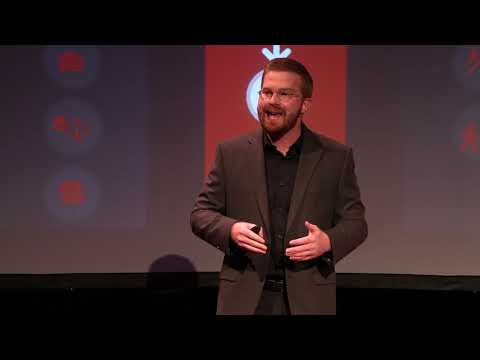
Power in society: Who has it, how to get it, and how to use it well | Andy Wallace | TEDxWilsonPark
TEDx Talks
15m 42s2,397 words~12 min read
YouTube auto captions
Transcript source
YouTube auto captions
This transcript was extracted from YouTube's auto-generated caption track. The transcript below is server-rendered so it can be read, searched, cited, and shared without opening the original YouTube player.
Pull quotes
[0:18]One in four women experience severe physical abuse in their lifetimes from an intimate partner.
[0:18]Three out of four employees say that the worst or most stressful part of their job is their boss.
[0:18]Now, even if you're fortunate enough not to have seen or experienced abusive power in a workplace setting or in a domestic setting, I know you've seen it in the news.
[0:18]Um, I could tell you that the patterns of behavior that I saw during more than 200 interviews with perpetrators of power-based crimes are nearly identical to so much of the civil and cultural discourse that we see today.
Use this transcript
Related transcript hubs
Watch on YouTube
Share
MORE TRANSCRIPTS


