[0:03]In December 1941, the Japanese Imperial Army launched a full-scale invasion of the Philippines, a U.S. colony at the time. Within weeks, Manila fell, marking the beginning of a brutal occupation. Japanese forces imposed harsh measures, including forced labor and summary executions to crush resistance. By 1942, over 200,000 Filipino and American POWs were subjected to the Bataan Death March, where thousands died from starvation, disease, or execution. This occupation set the stage for widespread atrocities. Under Japanese rule, martial law stripped Filipinos of basic rights. Curfews, censorship, and forced labor became daily realities. The Kempetai, Japan's military police, conducted raids to eliminate dissent, torturing or executing suspected guerrillas. Food shortages worsened as supplies were diverted to Japanese troops, leading to widespread starvation. By 1943, over 500,000 Filipinos had died from famine or violence. This systemic oppression fueled underground resistance movements. To quell resistance, the Japanese military employed public executions as psychological warfare. Civilians were rounded up and shot en masse for alleged guerrilla ties. In Manila's Plaza Miranda, bodies were left on display as warnings. Survivors recall soldiers bayoneting infants to save bullets. Over 100,000 Filipinos were executed during the occupation. These atrocities were meticulously documented by clandestine photographers, later used as evidence in war crime trials. As Allied forces advanced in 1945, Japanese troops enacted the Manila Massacre—a scorched-earth campaign killing 100,000 civilians in weeks. Homes were torched with families inside; hospitals were raided and patients slaughtered. The Santo Domingo Church Massacre saw 300 burned alive. U.S. troops liberating the city found streets littered with corpses. This remains one of WWII's worst urban atrocities, yet it's often overshadowed by European theater narratives. The Japanese military established 'comfort stations' across the Philippines, enslaving 1,000+ Filipino women and victims as young as 12 were abducted or deceived with promises of work. They endured rape by dozens of soldiers daily, with many dying from abuse or suicide. Military documents prove this was a systematic operation, not isolated incidents. Less than 20% of Filipino 'comfort women' survived the war; those who did faced lifelong trauma and stigma. Maria (a pseudonym), kidnapped at 14, described her ordeal: 'Up to 30 men raped me daily. If I resisted, they burned my arms with cigarettes.' Victims were given numbers instead of names and starved into submission. Many contracted STDs or bore children from rape. Japanese doctors forcibly aborted pregnancies without anesthesia. Survivor testimonies reveal identical patterns across occupied Asia, disproving claims of voluntary prostitution. Despite threats of execution, survivors confided in priests, doctors, and guerrilla fighters. Clandestine networks documented crimes using smuggled paper and makeshift ink. Father Lalor, an Irish priest in Manila, hid over 200 victim accounts inside church walls. These records, later unearthed by U.S. war crimes investigators, provided irrefutable evidence of mass rape and torture by unit commanders. Filipino guerrillas like the Hukbalahap risked their lives to gather evidence. They photographed mass graves, intercepted military orders, and smuggled survivors to safety. In 1944, partisans uncovered a buried ledger listing 'comfort women' transport routes, proving Tokyo's direct involvement. These efforts were pivotal in the 1946 Tokyo Trials, where General Yamashita was hanged for war crimes—though many higher officials escaped justice. When U.S. forces liberated Manila in March 1945, they found survivors barely alive in collapsed 'comfort stations.' Mass graves held thousands, including pregnant women, executed to hide evidence. The Red Cross reported 90% of Manila's buildings were destroyed. While some perpetrators faced trial, U.S. Cold War policies allowed many to evade punishment. Survivors received no reparations until grassroots campaigns began in the 1990s. Japan's government still denies institutional responsibility, calling 'comfort women' voluntary. School textbooks omit or minimize the atrocities. In 2021, a Filipino survivor testified at the UN: 'We are not liars. Where is our apology?' Only 34 of the Philippines' 174 documented survivors remain alive today. Their fight mirrors struggles across Asia, where colonial-era crimes remain unresolved. Historians warn that without acknowledgment, such violence risks repetition. PLEASE SUBSCRIBE AND LIKE.
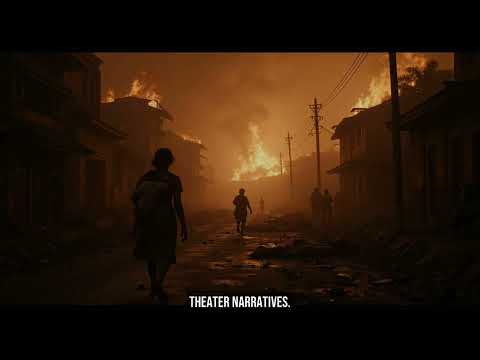
The Untold Stories of Japanese Military Atrocities in the Philippines During WWII
The Unrepentant Empire
5m 9s659 words~4 min read
YouTube auto captions
Transcript source
YouTube auto captions
This transcript was extracted from YouTube's auto-generated caption track. The transcript below is server-rendered so it can be read, searched, cited, and shared without opening the original YouTube player.
Pull quotes
[0:03]In December 1941, the Japanese Imperial Army launched a full-scale invasion of the Philippines, a U.S.
[0:03]Japanese forces imposed harsh measures, including forced labor and summary executions to crush resistance.
[0:03]By 1942, over 200,000 Filipino and American POWs were subjected to the Bataan Death March, where thousands died from starvation, disease, or execution.
[0:03]The Kempetai, Japan's military police, conducted raids to eliminate dissent, torturing or executing suspected guerrillas.
Use this transcript
Related transcript hubs
Watch on YouTube
Share
MORE TRANSCRIPTS


