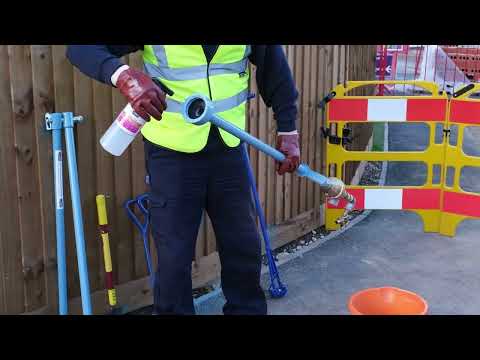
[0:07]Welcome to the calm Network operation and training course provided by Aquam in conjunction with your local water authority. You may have many years experience operating hydrants and extracting water from the network, but do you really know the impact your actions can have on the network? Today's training offers the only online interactive experience for those operatives who want to work in a safe and legal manner when accessing the network. If you are extracting water from the network, this training is for you.
[0:43]This course will teach you how to correctly access the water network, advising you of the correct tools and precautions to use to eliminate transient surge effects. You will be reminded to keep safe, keep the network safe and keep other users of the network safe. At the end of this presentation, you will be required to answer a series of interactive questions based on what you have seen today. After successfully completing the course, you will receive a calm Network training certificate as proof that you have competently understood the training and are authorized to extract water from the network. Water industry are looking into changing surge effects within the water network. Changing surge effects are caused by the incorrect operation of valves, hydrants and pumps. Until recently, it's been difficult to capture these surge effects. However, improvement in technologies have allowed water companies to construct purpose built facilities which enable us to teach new techniques to minimize the effect of incorrect operations.
[2:00]A transient surge is caused when there is a sudden change in water pressure, which causes rapid fluctuations in pressure, producing peaks and troughs throughout the water network. Using large bore standpipes on small water supply pipes causes an instant change in pressure, resulting in transient surges. Water is settled within the pipe. When the hydrant valve is not in use, the pressure is stable and the volume is even throughout. As there is no air within the pipe, water acts like a solid. Opening a valve too fast causes a rapid surge of water from the pipe into the empty adjoining pipe or chamber. This surge can damage both the valve and the pipe the water is originally in, as well as the pipe into which it's flowing due to the change in pressure. By opening the valve slowly, the water gently flows to the open pipe or chamber. Once the valve is open fully, water flows through and pressure equalizes. Water can be extracted in a safe and controlled manner. When a valve is closed rapidly, this causes a water hammer effect. Because the water has nowhere else to go, the pressure causes pipes to burst due to the water hammer effect. By slowly closing the valve, it prevents this water hammer effect, as the water is allowed to flow through the valve. The pressure does not build up, as the water is not being forced to stop, but rather has the effect of putting the brakes on, bringing the flow to a steady stop. Once the valve is closed, the water settles within the pipe. The pressure becomes stable and the volume returns to being even throughout.
[3:55]Transient surges have been attributed to a variety of activities, including valve operation, hydrant operation, pump starts and stops. These transient surges can result in burst pipes, cross-contamination, complaints of dirty, discolored water, pollution to the water course caused by water escaping from the burst pipes. But, as we demonstrate in this film, transient surges can be easily eliminated if we adopt and implement the calm Network methods.
[4:32]Here, we see an incorrect way of operating a hydrant. Perhaps this is how you currently operate. Note the rapid operation using a non-calm network key, which causes a spike on the monitoring screen. The pressure in the system can increase threefold at this point, causing potential damage and discoloration. Using the incorrect method to close a valve, notice the ripple effect captured which shows that a surge is not just a single action, but an ongoing factor until the system settles down. As you can also see from the pressure gauge, the needle spikes. This spiking pressure happens due to the water hammer effect. The calm network key has been specifically designed to assist in slowing down the operation, reducing the likelihood of a transient surge occurring. It also assists with minimizing back strain and muscle injury, as the correct posture is achieved irrespective of the depth of the hydrant. Closure of the hydrant is critical and a reverse operation of the opening. Notice the calm effect this has on the monitor.
[5:49]As you can see from the pressure gauge, the needle stays within a specific range.
[5:59]As part of your terms and conditions of hire, most water authorities request a monthly water meter reading. As you can see from the dial on the meter, they are requesting the black-on-white digits. You can ignore the white-on-red digits as these are part of the cube. It is your responsibility to provide this reading to Aquam. Should you fail to provide your reading, your company may receive a penalty charge. Always provide your standpipe serial number and the meter reading when requested.
[6:41]Always comply with your terms and conditions of hire. This may include providing a monthly meter reading to your water authority Aquam depot. Remember, this is the black-on-white digits only. The benefits of this training go far beyond reducing the number of network failures. By operating within the guidelines set out in this film, you will be preventing a whole host of problems.
[7:15]Have you selected the correct hydrant access point? Using fire hydrants is illegal in the majority of water authority areas. You must have expressed permission of the water authority to use them. Remember, always use a wash out. Fire hydrants should be reserved for the fire services only. Your water authority uses a color-coded system to help identify legal users of its network. Upon collection of your standpipe, some water authorities may provide you with specific instructions of where you can and cannot use a standpipe. Please be aware that you may also need to inform the local highways authority if you intend to erect it in a traffic sensitive area. Always be compliant with the roads and streetworks act. Do you have the correct equipment to access the network? Led lifting keys, cleaning tools and products, metered standpipe and calm network key. Environmental considerations should also be made. Do you know where your waste water is going? Don't let extracted water enter any nearby water courses.
[8:29]Contamination not only has serious consequences for the environment, it is also a criminal offense.
[8:38]There is a lot of important information to take away from this section, so let's have a recap. Aquam is your water authority provider of legal regulated equipment. This can vary in size and is color-coded according to the water authority area you are working in. Before operating a standpipe, you should obtain your calm Network training certificate. Applied for and been receipt of the correct equipment, be wearing the correct PPE.
[9:17]Your safety, the safety of others and that of the environment is paramount. Therefore, you must carry out a risk assessment. Check your surroundings, is it safe to proceed? Have you selected the correct access point, wash out only. Remember, using a fire hydrant without the expressed permission of the water authority is illegal. Have you put in place any necessary signs, barriers, cones? Have you checked you have all the necessary equipment to complete your job? Ensure any water extracted does not enter a water course.
[10:07]Here's a step-by-step guide of how you should operate a hydrant. Firstly, open the wash-out hydrant using the lid lifting keys. Check that you have selected a usable hydrant. If a hydrant has been damaged by misuse or there's a leak, report it. You could potentially be stood on a sinkhole. Again, safety first. Replace the lid, report it, and find another wash-out hydrant. Use the appropriate tools to clear out any debris in the hydrant pit. Remember, never put your hand directly into the pit. Cuts to the skin open yourself up to infections such as HIV, hepatitis and tetanus. Always use a tool with reach, whether this is a gully grabber or an extendable trowel. If the hydrant is filled with liquid, you can drain it with a hog pump. Remember, always attach a hose to the hog pump and direct the liquid towards the drains to ensure you are not spreading potentially stagnant and contaminated water across road surfaces and footpaths. If the hydrant is okay to use, follow these steps. Remove the security cap.
[11:27]Use a calm network method to flush the hydrant, as this will remove any debris from the pipe.
[11:39]Once the water is clear, close the valve, again, using the calm network method.
[11:48]Disinfect both the standpipe and the hydrant pit with a chorose solution. Attach the standpipe using its handles. Do not turn the standpipe by the fitting. Do not apply any bending or sideways load to the standpipe. Ensure it is not cross-threaded on the outlets. Visually inspect the standpipe to ensure that it is fitted correctly prior to turning it on. Set up any other equipment that you may be using, such as hoses. Use your calm network key to open the hydrant in a slow and controlled manner. Remember, do not stand directly over the hydrant, as a surge in pressure may cause serious injury. Open the fitting to allow the water to flow. Remember, you do not need to fully open the valve to obtain water. You can often obtain sufficient flow by part opening it. This reduces the risk of discoloration and damage. Once you have collected the required amount of water, close the fitting. Reverse the process. Close the hydrant in a slow and controlled manner. And finally, remove any attached equipment.
[13:10]Remove the standpipe via the handles. Again, remember, do not stand directly over the hydrant as a surge in pressure could cause serious injury. Disinfect the hydrant pit and standpipe. Replace the security cap.
[13:32]Using the lifting keys, replace the wash-out hydrant lid.
[13:40]Prior to returning your equipment to storage, open the tap on the standpipe and rotate the standpipe through 180°. This will release any water trapped inside the meter. It's important to note that water left inside the meter chamber is at risk of freezing. Water freezing within the meter chamber can cause it to implode as well as explode. This leads to the requirement of a replacement meter for which you will be charged. Once any excess water is released, return it to storage. Remove any other equipment such as barriers and cones, ensuring that you leave the area clean and safe.
[14:29]Let's have a quick recap of what you need to do. Before accessing a hydrant, you should open using lid lifting keys and check whether a prevention security cap has been fitted. Never put your hand directly into a hydrant pit. Use the correct proprietary tools to remove debris and a hog pump to remove excess water.
[14:58]Check for leaks. If the hydrant is leaking, do not use it, report it. Use the calm Network method to flush the hydrant to remove any debris or contaminants from the pipe. Check and disinfect your equipment. Attach the standpipe via the handles. Do not apply any bending or sideways load and ensure it is not cross-threaded on the outlet. Attach any required equipment. Use the calm Network method to open the hydrant in a slow and controlled manner.
[15:40]Extract water into a container or vehicle. Don't let it run to waste. Use the calm Network's method to close the hydrant in a slow and controlled manner. Detach any additional equipment.
[15:59]Remove the standpipe via the handles. Disinfect the hydrant pit. Replace the security cap.
[16:10]Remember to rotate the standpipe to release any trapped water. This helps to prevent frost damage. Replace the hydrant lid using the lid lifting keys. Disinfect your standpipe and any other equipment and return them to storage. Remove any additional equipment, barriers or waste, leaving the area clean and safe. Following these calm network techniques will ensure you are working safely and within the law.
[16:48]Accessing the water network via an illegal hydrant access point is a criminal offense. You can be prosecuted should you be found to be illegally accessing or misusing the network. This can result in a large fine for both you and your company, but can also result in a custodial sentence for breach of the Water Industry Act 1991, or the Fire and Rescue Services Act 2004. Your actions can have a positive effect on you and your company. By maintaining a calm network, using the techniques shown in this training, you are positively contributing to not only achieving those targets, but to reducing the risk of injury to operatives using the network.
[17:48]You will shortly be asked a series of interactive questions based on what you have seen today. We hope you have found this short film helpful and informative. Remember, keep safe, keep the network safe, and keep other users safe.