[0:00]Dark chocolate. The cacao tree was first cultivated by the Omecs in Meso America around 1500 BCE. And the Mayans and Aztecs prized cacao beans so highly they used them as currency. Dark chocolate must contain at least 50% cacao solids, though premium versions go as high as 99%. The percentage indicates how much of the bar comes from the cacao bean versus added sugar. Belgian chocolatiers in the 19th century pioneered the smooth texture we know today by inventing the conching process, which grinds the chocolate for hours or even days. The higher the cacao percentage, the more pronounced the flavor notes become. Some taste fruity, others earthy or nutty, depending on where the beans were grown. Milk chocolate. In 1875, a Swiss chocolatier named Daniel Peter spent eight years trying to combine milk with chocolate, but the water in milk kept causing the mixture to spoil or separate. His breakthrough came when he partnered with his neighbor, Henri Nestle, who had invented powdered milk, and together, they created the first stable milk chocolate. By law, in most countries, milk chocolate must contain at least 10% cacao solids and 12% milk solids. American milk chocolate often has a higher sour tang because Hershey's original recipe used partially lipolyzed milk, a technique that helped preserve it before refrigeration was common. That distinctive flavor became so popular in the U.S. that it's now considered the standard American chocolate taste. White chocolate. Technically, white chocolate isn't chocolate at all, because it contains no cacao solids, only cocoa butter, sugar, and milk. Nestle introduced it commercially in 1930 with the Galac bar in Europe. For decades, purists refused to call it chocolate, and the FDA didn't officially recognize it as such until 2004. White chocolate must contain at least 20% cocoa butter and 14% milk solids. It's incredibly hard to work with because cocoa butter melts at body temperature, making it tricky to mold and shape. Some chocolatiers consider it more of a canvas than a flavor, using it to carry other ingredients like vanilla, matcha, or freeze-dried fruit. Ruby chocolate. Announced in 2017 after more than a decade of development, Ruby chocolate is made from specially processed ruby cacao beans found in Ecuador, Brazil, and Ivory Coast. The beans naturally contain precursors that when processed without fermentation, create a pink color and berry-like flavor. No added coloring or fruit flavoring required. It took Barry Calbout, the Swiss chocolatier, 13 years to figure out how to unlock this flavor profile. Ruby chocolate has a tart, slightly sour taste that some describe as reminiscent of red berries or citrus. It must contain at least 47.3% cocoa products to meet chocolate standards, sitting somewhere between milk and dark chocolate in composition. Blonde chocolate. Also called caramelized white chocolate, this variety was accidentally discovered by French pastry chef Frédéric Bau in 2006, when he left white chocolate in a bain-marie for too long. Instead of burning, the milk solids caramelized, turning the chocolate golden and giving it a rich, toasty flavor with notes of shortbread and salted caramel. Valrona later commercialized it as Dulcey in 2012. The Maillard reaction, the same chemical process that browns meat and toasts bread, transforms the milk proteins and sugars during hours of gentle heating at around 120 degrees Celsius. The result tastes like a cross between white chocolate and butterscotch, with a depth that white chocolate normally lacks. Modica chocolate. This grainy, rustic chocolate comes from the town of Modica in Sicily, where the recipe has remained virtually unchanged since the 16th century, when the Spanish brought it from the Aztecs. Unlike modern chocolate, Modica chocolate is never conched or refined, so the sugar crystals don't dissolve completely, creating a distinctive sandy texture. The cacao is processed at low temperatures, never exceeding 40 degrees Celsius, so the sugars stay crystalline and crunchy. Traditional flavors include cinnamon, vanilla, and chili pepper, just as the Aztecs made it. The bars crumble rather than melt smoothly, and biting into one feels more like eating flavored stone than creamy chocolate. Single origin chocolate. Unlike blended chocolate made from beans sourced from multiple countries, single origin chocolate comes from one specific region or even a single estate. Venezuelan cacao from the Chuao region is considered some of the finest in the world, with only 20 tons produced annually from a small village accessible only by boat. Madagascar beans taste distinctly fruity and acidic, while Ecuadorian Nacional cacao has floral notes. Single origin bars became trendy in the 2000s as the craft chocolate movement took off, similar to what happened with coffee. Chocolatiers began treating cacao like wine, with the soil, climate, and environment affecting the final flavor profile. Gianduja. Created in Turin, Italy during the Napoleonic wars, when a British blockade made cacao scarce and expensive, chocolatiers began mixing ground hazelnuts into chocolate to stretch their supply. Traditional Gianduja contains about 30% hazelnut paste mixed with chocolate, creating a smooth, spreadable texture. It's the sophisticated ancestor of Nutella, which was also invented in Italy after World War II, when cacao was again in short supply. Real Gianduja uses Piedmont hazelnuts, which have more of a delicate, less bitter flavor than other varieties, and the mixture is blended until silky smooth. Raw chocolate. Raw chocolate is made from cacao beans that haven't been roasted, keeping them under 42 degrees Celsius throughout processing to preserve enzymes and antioxidants. The raw food movement popularized it in the 2000s, claiming health benefits from the unprocessed cacao. Traditional chocolate making involves roasting beans at 120 to 140 degrees Celsius to develop flavor and kill bacteria. So raw versions taste much more bitter and astringent, lacking the smooth, developed flavors of roasted chocolate. Some raw chocolate makers use cold pressing or low-temperature fermentation to develop flavor without heat. The texture can be grittier too, since the lower temperatures make it harder to grind the cacao into a smooth paste. Drinking chocolate. Long before chocolate became a solid bar, it was consumed as a beverage. The Mayans and Aztecs drank it cold and bitter, often mixed with chili peppers and cornmeal. When Spanish conquistadors brought cacao to Europe in the 1500s, they added sugar and served it hot, and it became a luxury drink for aristocrats. European drinking chocolate is much thicker and richer than hot cocoa. It's made by melting actual chocolate into milk or water, rather than mixing cocoa powder. French chocolat chaud and Italian cioccolata calda are so thick you can almost eat them with a spoon. The Spanish traditionally served it with churros for dipping, and in Vienna, they topped it with whipped cream and called it Viennese chocolate.
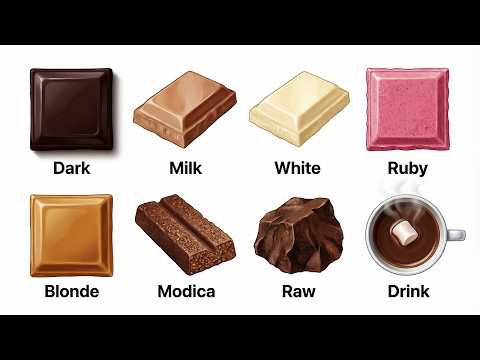
Every Chocolate Explained
FooDiscover
6m 33s1,111 words~6 min read
YouTube auto captions
Transcript source
YouTube auto captions
This transcript was extracted from YouTube's auto-generated caption track. The transcript below is server-rendered so it can be read, searched, cited, and shared without opening the original YouTube player.
Pull quotes
[0:00]The cacao tree was first cultivated by the Omecs in Meso America around 1500 BCE.
[0:00]And the Mayans and Aztecs prized cacao beans so highly they used them as currency.
[0:00]Dark chocolate must contain at least 50% cacao solids, though premium versions go as high as 99%.
[0:00]The percentage indicates how much of the bar comes from the cacao bean versus added sugar.
Use this transcript
Related transcript hubs
Watch on YouTube
Share
MORE TRANSCRIPTS