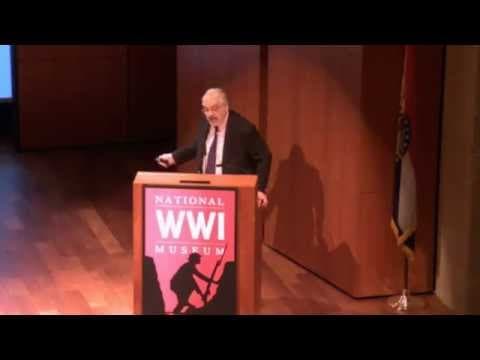
[0:06]Dr. Ronald Suni has various interests, but has spent much of his profession centered on non-Russian nationalities of the Russian Empire and the Soviet Union, particularly those of the South Caucasus, Armenia, Azerbaijan and Georgia. He is the former director of the Eisenberg Institute for historical studies, the Charles Tilly collegiate professor of social and political history at the University of Michigan, and emeritus professor of political science and history at the University of Chicago. And he was the first holder, oh, I should have asked you how to correctly pronounce this name. He was the he is the first holder of the Alex Manugian, excellent, chair in modern Armenian history at the University of Michigan after beginning his career as an assistant professor at Oberlin College. He is a 2013 Berlin Prize fellow at the American Academy in Berlin. And truly, it is our pleasure to have him here for an hour to learn and to listen and to dialogue. Please join me in welcoming Dr. Ronald Suni.
[1:26]Thank you all for coming on this lovely evening. I was listening to some people in the audience, uh, talking about Armenia, the Armenians, and the difficulty of pronouncing and learning Armenian names like Manukyan. And I remember my uncle, who was an accountant, had a a client named Mudich Der Mudichan. And one day Mudich Der Mudichan came to my uncle and said, Charlie, I changed my name. Americans cannot pronounce my name. I changed it. My uncle said, well, what did you change your name to? I am now Mike De Mudi Chan. I tell that story because I'm going to talk about something that is perhaps a bit esoteric, about a part of the world, which you may not be as familiar with as you are with the United States or Western Europe. I'm going to tell the story of why, when, and how the genocide of the Armenians of the Ottoman Empire happened. The way I tell this story is of a moment of historical passage when empires attempted to accommodate themselves to a transforming world in which nations and national states were challenging their sources of power and legitimacy. Yet these empires, like the Russian Empire in 1915, 14, 15, or the Ottoman Empire, were not ready to give in or give up. They were not prepared to surrender to what later would appear to be irresistible pressures of nationalism, popular endowment, and regimes based on equality and merit, rather than, as empires are, on inherited privilege, difference, and hierarchy. Looking back from the future, the collapse of the Ottoman Empire and the emergence of subject nations appears to us to be historically inevitable. But for the actors in those last decades of the 19th century and the first of the 20th century, there were many possible roads that could have been taken. So my talk tonight, and the book on which it is based, investigates those moments of choice when certain political actors might have acted differently, but decided instead to embark on a course that led to devastation and destruction, even the destruction of their own empire. As you guys in the audience may know, the recovery of a difficult past is a challenge to those who would through distorting sophistries deny or minimize the enormity of a human tragedy. You might call such people who deny what happens assassins of memory. Now, nations and states have long been in the business of fabricating, sometimes more honestly than at others, myths and stories of their origins, their golden ages, their heroic deeds, their victories, their triumphs, while eliminating the blemishes of defeats and failures or even mass murders. What appears to be new in our own time is the brazenness of what is claimed, the blatant cynicism of the perpetrators, and the potential reach through mass print and broadcast media and the internet. And so, historians, reluctantly, but inevitably, have been pulled into this war of images and words. And I suppose that's why we have here a national memorial Museum for World War I to set the record straight, to tell what we can know, and to fight against falsifying, falsified myths and images. The only weapon against bad history deployed for political or personal vindication is scrupulous investigation that results in evidence-based narration and analysis of what is possible to know.
[6:14]Reality has a nasty habit of biting back. Well, we know as historians that revision is constant. Maybe it's even necessary. That's what we historians do. That's why we have tenure often because we have to fight against some of the older, more orthodox notions. But in the Armenian case, this revision, this discussion of what happened in 1915, 1916 has led to the creation of two opposing, separate and contradictory narratives, two ways of telling this story that seem to make impossible reconciliation. On the one side, and you might have heard this in the last couple weeks as the Turkish state and its Prime Minister Erdogan have been trying to say there was no genocide, and to justify what happened and explain somehow the disappearance of hundreds of thousands, more than a million of their Armenian subjects. So on one side you have the Turkish state and a few, we can call them historians, I would call them pseudo scholars, who reject the notion of genocide and argue that the tragedy that happened was the result of a reasonable and understandable response of a government to a rebellious and seditious population in time of war and mortal danger to the state's survival. In other words, raison d'etat, reason of state, justified the suppression of rebellion, and mass killing, well, it's explained as the unfortunate residue, or what we now call in the fashionable language, collateral damage of legitimate efforts to establish order behind the lines. This position, which those of us who recognize 1915 as a genocide called denialist, might be summarized as this way, very simply, there was no genocide and the Armenians are to blame for it. They were, in fact, rebellious, seditious subjects, who presented a danger to the Empire and they got what they deserved. Relative peace and harmony, they say, had existed in the Ottoman Empire between the state and religious minorities until outside agitators, usually from the Russian Empire, sometimes American missionaries aroused the nationalist and separatist passions of the Armenians. Still, the denialist claim, despite the existential threat posed by these Armenians and their Russian allies to the survival of the Empire, there was no intention on the part of the Young Turk government to eliminate Armenians as a people. That's one side of the debate. On the other side, many historians sympathetic to the Armenians shied away from explanations that might place any blame on the victims of Turkish policies. Armenian writers, and the majority of scholars defend the case that, yes, there were massive deportations and massacres, and they were ordered by and carried out by the Young Turk authorities, that these events constitute the first major genocide of the 20th century. But for Armenians, because a complex or nuanced account of the background and causes of the genocide seem to them to concede ground to the deniers, many Armenian scholars until recently, have been reluctant to see any rationale, any way to understand the acts of the Young Turks. One great scholar, Armenian, said to me, Ronald, if you try to explain why the Young Turks did what they did, you will rationalize that event and, in turn, you will justify it. When explanation is not offered, or sometimes when it's offered offhand, it usually is what we might call an essentialist argument. That is the argument that, you don't have to explain this. Turks are those kind of people. They're the ones who employ massacre and systematic killing to maintain their imperial dominance, the terrible Turk. Or maybe related arguments that it's their religion. It's Islam that is so violent, or maybe nationalism, nationalism, when you don't have an explanation, you don't know why something happened, it's nationalism. So, in other words, deep indelible cultural characteristics are laying at the bottom of many of these interpretations. Now, the argument I'm going to try to make tonight is different. First of all, in my own research, I discovered that whatever else they were, the Young Turks, the ones who ordered these deportations and massacres were never purely Turkish ethnonationalists. They were never religious fanatics. More accurately, they might be called Ottoman reformers, or you might say modernizers, in their fundamental self-conception. They were primarily state imperialists. They were empire preservers, rather than, as Kemal Ataturk would be 10 years later, founders of an ethnic nation state. For instance, if you look at the map, there was no thought of this empire, of giving up the Arab lands, of Palestine, of Yemen, that they still controlled, or even to eliminate totally their Christian and Jewish subjects. They even tried to gain areas in the Caucasus that were occupied by other nationalities. But over time, the Young Turks came to believe that Muslims, particularly Turks, were the appropriate people to rule the Empire, that Muslims, particularly Turks, were the most trustworthy supporters of the Ottoman state. And they increasingly convinced themselves that egalitarian Ottomanism, that is, that all nationalities, religious groups should have equal rights, which had been a policy of reformers earlier in the Empire.
[13:06]That such Ottomanism was a political fantasy. Moreover, later, the removal of the Armenians, and in the 1920s, the Greeks, would in fact lay the foundation for the relatively homogeneous Muslim Turkish state, which today occupies Anatolia, that peninsula, uh, and is the current Turkish Republic. But that comes later. Kemal's ethno-nationalism attempt to create an ethnically homogeneous Turkish nation, uh, though ultimately that too has been thwarted by the millions of Kurds who have now lived there and have moved into what was historic Armenia. That ambition itself to make a purely Turkish republic would be thwarted by these Kurds, uh, who, indeed, are now in rebellion against the Turkish state. Now, notice that what I want to set up here is a kind of difference between two kinds of states. On the one hand, we have what I call Empire. Empires are states that have institutionalized difference built into the law, into the nature of the state. So different peoples in the Ottoman Empire had different rights and privileges. They were organized in what was called Millets or religious or ethnic communities. And all of those people, marked differently, were in fact subordinate, inferior to the ruling Millet, the ruling nation, namely Muslims, right? So Empire is built on difference and the superiority of some over others. And the fact that some people are superior to others gives those superior people the right to rule over the inferior people. If you think of the example of the British in India, right? It's the British, Europeans, with their guns and railroads and so forth, that have the right, they think, to rule over hundreds of millions of brown skin Indians, right? Until those Indians learn to rule themselves. Empire's think they have a mission civilisatrice, a civilized, that's French, they have civilizing mission to in fact, uh, rule over others. That's very different from the way we imagine the nation state, at least in its ideal type. A nation state is built not on difference between subjects and those who subjugate them, right? But rather on the equality of all citizens and in many nation states, homogeneity of the population, particularly in ethno nation states. So most people in France would be French, in Armenia today, Armenian, in Turkey, Turkish, and so forth. So, on one side, difference, hierarchy and and so forth, on the other, the ideal, if not in practice, but ideal of equality, uh, horizontal equivalence and homogeneity. This empire wanted to maintain the privilege of some over others, rather than make everyone equal as in a nation state, as would happen later. Because the eventual deportations and the mass murder of the Armenians and later in the 1920s, the expulsion of the Greeks would result in the homogeneous population of Muslim Turks, Kurds and Circassians, and the foundation of the Turkish National Republic. Very often, the history of the genocide has either been forgotten totally, it's not taught in Turkish schools, or it's been subsumed into a story of the making of the Republic. This unique moment indeed, which was the foundational crime on which the Republic was formed, has been obliterated from memory. So before I tell, or try to explain why I think genocide happened at this moment, let me tell you briefly what happened in 1915. I want to set the stage by looking briefly at the 2 million or 2.8 million Armenians who were living in the Ottoman lands, most of them peasants and towns people in the sixth provinces of Eastern Anatolia. This area here in Silicia, but mainly in this area here. Armenians were a minority, there were about 15 to 17.5 million inhabitants all together in Anatolia. And Armenians about two and a half million, we'll say roughly, outnumbered by their Muslim neighbors almost everywhere. Though there would be towns or villages here or there or even sections of cities where they were a majority or a plurality. For instance, in the very Eastern city of Van, Armenians were a majority. What came to be known as the first genocide of the 20th century, then, occurred in that area. But those weren't the only Armenians. There were also prosperous Armenians in some of the port cities, Izmir, Trabzon, and most importantly in Constantinople or Istanbul. And there Armenians were very visible. They were successful. The head of the mint, the the the Treasury was an Armenian. The architect of the Sultan was an Armenian. They lived in a certain part of the city, Per, uh, today's Belo in the city. They were very visible, and by their success and their visibility, like many Jews in Eastern Europe or in Germany, they became the source of resentment on the parts of those Muslims below who didn't do as well as these Europeanized Frenchified Armenians in the city. Indeed, for many Muslims, it seemed like the natural order of a Muslim society, where Muslims, believers were on top, and the infidels, the Gavur were below, had been reversed. This status reversal was one of the ingredients that created this resentment that would also feature in genocidal mass murder in 1915. But it's not enough just to give environmental causes of the genocide. I will add a number of things and then try to pull them together in in one simple notion of the how the mentality of the perpetrators was formed. So one has to look then at the Young Turks, those modernizers, those reformers, those empire savers who came to power in 1908, and whose most radical members carried out a coup d'etat against their former comrades in January of 1913, taking over the state. Besides domestic elements in this genocide, there are also international elements.
[20:46]The great powers of Europe, most importantly, Britain and Russia, had ambitions in the Ottoman Empire. Russia would in 1877, 1878, take part of the empire. Uh, the British would manage to convince the Sultan, we won't insist on reforms, if you allow us to have Cyprus. And meanwhile, Greeks were taking islands, uh, the Italians were going to take Libya, uh, and and so forth, all through the last years of the 19th century and the early 20th century. So there's a lot that makes up this mentality. But at the same time, most Armenian in the Ottoman Empire actually supported and were loyal to the Empire. They even fought alongside the Ottomans during World War I against the Russians. Now, some Armenians lived on both sides of this frontier, and Armenians in the Caucasus, in the Russian Empire, indeed fought for the Russians, but tens of thousands of Armenians in the Ottoman Empire put on uniforms, fought and many died defending their own Empire. In late 1914 and early 1915, as the World War began, massacres of Christians, Armenians and Assyrians and even Muslims occurred on that Russo Turkish frontier. But then in early 1915, the Ottomans lost a major battle around here in in the at the place called Sarikamish. And important Young Turk leaders attributed that defeat, not to the generalship of one of the leading Young Turks, Enver Pasha, who indeed sent his exhausted troops into the snows against the Russians and lost almost 50,000 men, but rather attributed that defeat to Armenian treachery, to the Armenians on the other side who were fighting against the Ottoman army. And so, in late February and early March 1915, the Young Turk government, led by Enver and his associate, and this man Talat Pasha, was really the major architect of the genocide, the minister of the Interior, later Grand Vizier. They ordered the disarming of Armenian soldiers and their transfer into labor battalions. The first victims of the state then were the demobilized Armenian soldiers, easily segregated and then systematically killed. Thus by killing the young men, the muscle of the Armenian communities was removed. Almost immediately, the government ordered the systematic movement, deportation of women, children, survivors, old people, uh, civilians from the towns, the cities and villages in the East, ostensibly as a necessary military measure to ensure the security of the rear. Soon Armenians throughout the country were being forced to gather whatever belongings they had, to carry them, if they could afford a horse or a mule, leave their houses at short notice, uh, march through the valleys and mountains of Anatolia, and eventually to end up in the deserts of Syria, here along the Euphrates, where ISIS is today. This exodus of Armenians, hundreds of thousands in time of war, was haphazard and brutal. Irregular forces, local Kurds and Circassians and Chechens, cut down hundreds of thousands of Christians, as civil and military officials watched what was happening. All and condoning them and even punishing those who did not participate. When some Armenians in the city of Van resisted the encroaching massacres, that was seen as a rebellion, as an insurrection, confirming the worst suspicions that the Armenians indeed were a fifth column traders within the body politic. As a result of these events in Van, the leading Armenians, intellectuals, writers, journalists, Parliament deputies, even friends of Talat Pasha, were arrested on April 24th, 1915. Some 200 or so. That's the day we commemorate and have just commemorated as the hundredth anniversary of the Armenian genocide, just the beginning of the genocide. Those intellectuals were marched out of the city into Anatolia, most of them perished as well. Thus the brain of the Armenian community was removed. Women, children, and old men, in town after town, would march until they fell. People would commit suicide, throw themselves into the Euphrates or simply starve to death. Often they were attacked by people who wanted their property, their jewelry or their children. Actually, 1915 was a gendered genocide. As I've already mentioned, the men were killed first, and they died in far greater numbers. Women and children, many of them were taken into the families of local Muslims, sometimes out of mercy, sometimes as concubines or slaves or adopted children. Tens of thousands of orphans would find some refuge in the protection of foreign missionaries. Those who became Muslims, uh, hundreds of thousands of them, are now, their descendants, at least, are coming out, realizing who they are. There was a famous book a few years ago called Anonym, my grandmother by Fetiha Chtin. Uh, and it had a sensational resonance in Turkey. It means that millions of people, Kurds, Arabs, and Turks actually have Armenian ancestry and now are discovering it. By the end of the war, 90% of the Armenians of the Ottoman Empire were gone. A culture and a civilization wiped out, never to return. It's estimated conservatively that between 600,000 and over a million, perhaps a million and a half were slaughtered or died on the marches. Other tens of thousands fled to the north to the relative safety of the Russian Caucasus. These were not unknown events at the time. There were observers, I mentioned the missionaries, there were diplomats, there were German officers allied to the Turks. All of them saw, wrote home about what they were witnessing. But they didn't have a word to describe what is now known as the greatest single atrocity of World War I. There was no word. There was no concept yet to mark the state targeted killing of a designated ethno religious people. At the time, those who needed a word, borrowed it from the Bible and called it Holocaust. My great grandparents were among the victims.
[28:47]The causes of the genocide are multiple, many, long-term and immediate. Now, historians love to gather all the causes they can and seem to throw them at a problem in order to find which ones might stick. Political scientists, and I spent 10 years at the University of Chicago in a political science department, much more prefer what you might call parsimony. That is, finding the essential uh, essential cause to explain everything. And I take what I would call a radical middle position. I stand between political science and history, and I want to bring many of those different causes, international factors, the resentments that exist. The seeing the Armenians as collaborators of the Russians, uh, the land disputes between Kurds, Turks, and Armenians that raged in the area of Eastern Anatolia. All of these causes together to see how these many things were experienced, understood, and made up the mentality of the perpetrators. That is, I'm interested in knowing why certain people did this at a certain moment, and I've developed a concept, which I've called affective disposition, affective disposition. That means to me, the emotional and cognitive universe in which the Young Turks could imagine that they faced an existential threat from a people that earlier they had believed were the Millet Sadika, the loyal Millet, Armenians and Assyrians. And they imagined this threat to be so immediate and so dangerous that they were required, it was necessary to disperse them, to assimilate them, and to murder hundreds of thousands of them. I give the example often of a glass of water. If I had a glass of water here, and it was made of glass, I could say that the disposition of glass is to be brittle. The glass stands there, it's perfectly okay, but if I suddenly knock it by accident onto the floor, it would shatter. It has this shatterability, the disposition to shatter, but it needs causes for it ultimately to be broken into pieces. So this affective disposition and much of the book is about the way in which experiences, historical events, uh, the ambitions of the Young Turks, the ambitions and desires of Armenians themselves, all contributed to this emotional environment in which genocide became possible. One of the things I want to do in the book is not treat Armenians, these 2 million plus people, simply as passive victims. That would be simply unhistorical. I don't want to say that they weren't innocent, in the sense that hardly any of them committed a crime or indeed were traders. A few did defect to the Russians, and those defections were the best confirmation of what the Young Turks already believed about Armenians. They're traders. But what I want to say is, Armenians themselves had desires. They were loyal Ottoman subjects, but they wanted reforms. They wanted protection from their government, against the predations of the Kurds and nomads who had been arguing and indeed seizing their land, stealing women, actually, raping in Eastern Anatolia. And when they couldn't get satisfaction from their own government, as they petitioned dozens of times, on several occasions, they turned to Western powers, the British and the Russians, and asked them to pressure the Sultan, in fact, to help with these reforms. Those efforts by Armenians and the interventions by Europe only increased the sense of humiliation, resentment, and anger of the Sultans, like the Bloody Sultan, Abdul Hamid II, who ruled from 1876 to 1909, and his successors, the Young Turks. So Armenians are real subjects, they're really people who are acting. They they want certain things. When the Young Turks took over the Empire in 1908, the Armenians who had earlier formed revolutionary groups to defend, protect Armenians against the Kurds, particularly, or against lawless Turkish officials, in 1908, when there was promise of a new constitution and a rule of law, the Armenian revolutionary groups and parties gave up their revolutionary aims, and said publicly that we're going to work with the Young Turks to create a lawful society. They joined the parliament. They ran joint electoralists with Young Turks, right up to 1912, just a few years before the genocide. But all the time those resentments, those deep dispositional attitudes were there and were growing. After 1908, after that revolution, Turkey opened up in a bit, society woke up. There was more possibility for expression in newspapers, in organized political parties. Armenians were even granted the right to arm themselves, since for all the centuries before, Muslims had carried arms and were well armed, particularly Kurds, but Armenians had not been allowed. And some Armenians were able, uh, very few, but a number of them to gain some arm protection. But in that new open public sphere, after the Constitution was reinstated, Armenians became even more visible all over the Empire. Church bells were now allowed to ring. Armenians could demonstrate. Women could go to school. The missionary schools were filled by these Christian Armenians. And this, too, created fears in the part of the Muslims. In the 1890s, before that revolution I mentioned, there had already been a series of brutal massacres. We call them the Hamidian massacres after the Sultan Abdul Hamid II. And they perhaps as many as 300,000 Armenians were killed in that massacre, including my mother's, mother's sister and family. And that's one of the reason my mother's mother, as family emigrated to the United States in the, uh, 1890s. But those massacres by the Sultan were what might you might call conservative, exemplary repression. What the Sultan wanted was to keep the Armenians in their place. He wanted them to not to rebel, not to make demands, not to deal with foreigners, but just be quiet and accept the rule of their superior Muslim overlords. That's a very different thing from what happened one year after the 1908, uh, revolution. In that year, in a town down here in Silicia, called Adana, right over there, with the Armenians more visible, Turks in Muslims in that area became frightened that the local Armenians were going to demand their own separate state. Despite the fact that the political party leaders and the church with its headquarters and the patriarchate in Constantinople had said, we don't want a separate state, we want reform within the Empire. The vision of these Turks was that, indeed, they were separatists, they were they wanted to get out of the Empire. And so, a urban riot occurred, a pogrom, in which some 20,000 Armenians were killed. That's also a different event from the kind of repression that occurred in 19 in the 1890s. 1890 is different from 1909. Many Armenians will argue, no, 1890s, 1909, and then the genocide of 1915 are all part of a single pattern. It shows that the Turks were always intending to murder and displace us from our historic homeland. The argument in my book is quite different because I'm going to, I'm arguing, indeed, that 1915 is not exemplary repression, not urban riots and local events, but a deliberate state initiated, revolutionary determination to change the nature of the Empire, change the demography of the Empire and rid them of hundreds of thousands of their own subjects. I believe, and to try to argue in the book, that there would have been no genocide without World War I. That there were alternatives to genocide, including the reform of 1914, had they not gone to war. I also show that even after the Young Turks made the alliance with the Germans to join the central powers, right? Austro-Hungary, Germany, Ottoman Empire together, against the Untant, Britain, France and Russia. Even after they had made that agreement, they still carried on secret negotiations with the British and with the Russians that maybe we'll be on your side if you give us a deal. And indeed, Talat Pasha went to Crimea. We all know where Crimea is nowadays, right? Went to Crimea, where he met the Tsar, Nicholas II, and the Foreign Minister, Sergey Sazonov and said, give us a deal. But the Russians insisted, no, you have to carry out the reforms of 1914. The Young Turks wouldn't do that, and they believed rightly that the Germans would not enforce it, and so they joined the Germans. Had that decision made been made differently, they had reform been decided. Had they been with the Untant instead of the Germans, this genocide would not have occurred. The massacres began in February, March, by May, so many massacres in 1915 had occurred that the British, French and Russians issued a declaration and warned the Ottoman government that they would be held responsible for what was happening to the Armenians. In that diplomatic document, we have for the first time in modern history the phrase crimes against humanity used officially and with the responsibility being placed on perpetrators, crimes against humanity. And this was even before the worst occurrences, the worst killings of the genocide had even occurred.
[40:04]Why call this a genocide? What is a genocide? And why is that term so important to Armenians? The word genocide, of course, was invented by a Polish Jewish jurist, lawyer, Raphael Lemkin, during the Second World War. And it's a term that comes from Latin and Greek, meaning Genos, people, and Cide, side, killing, killing of a people. It conjures up images, and it features in international law as an instance of the most horrendous crime that can be committed by states against designated peoples. The term is so great that all kinds of states now are claiming they have suffered from a genocide. It almost seems like if you want to be a real modern nation state, you not only have to have an opera house and an air force, you also have to have a genocide. Genocide is not the mass killing of people. There's mass killing of people in war, in famines, uh, in all kinds of other the great purges in Russia, the Holodomor in Ukraine. Genocide is not the mass killing of people. It is the mass killing of a people. It is the state initiated and dedicated policy of eliminating a whole cultural, ethno religious or, if you want, racial group. Genocide is therefore the crime of crimes. It it not only murders physically people, but destroys civilization and culture. The Armenian genocide occurred with three prongs that I've outlined. There was dispersal, deportation. Armenians were not to constitute 5%, no more than 5% anywhere in the Empire. It concerned physical murder, mass murder, massacres, and it also, as we now know more and more, it it concerned assimilation. Forced Islamization of hundreds of thousands of people whose ancestors, whose descendants, remain today. When we look at this story, do we learn anything from it? Are there patterns here? Should we be looking for these kinds of affective dispositions of resentment, fear, anger, and eventually hatred? Anger is a powerful emotion, as is fear. Anger is an emotion you feel when someone has done something to you. You might get hit in the face, then you have to act in certain ways. You might sulk away, you might demand an apology, you might punch him in the nose. Fear, of course, is a powerful emotion and often results in irrational behavior. Anxiety is even more dangerous than fear. Anxiety is fear of an objectless future. Fear may have an object, a lion might be charging you. Anxiety is about what you don't yet know about the future, and the Turks had that anxiety. And there's even a more powerful emotion than anger. If anger is what you feel towards someone because of what they've done to you, hatred is the emotion you feel not because of what they've done to you, but who they are. And if it's who they are that's the problem, then the solution is to get rid of them, to eliminate them. The Turks had moved to hatred, to thinking of the Armenians as an existential threat to their future existence, and therefore, they had to be eliminated.
[47:47]I argue, and to try to argue in the book, that there would have been no genocide without World War I. That there were alternatives to genocide, including the reform of 1914, had they not gone to war. I also show that even after the Young Turks made the alliance with the Germans to join the Central Powers, right? Austria-Hungary, Germany, Ottoman Empire together, against the Entente, Britain, France and Russia. Even after they had made that agreement, they still carried on secret negotiations with the British and with the Russians that maybe we'll be on your side if you give us a deal. And indeed, Talat Pasha went to Crimea, we all know where Crimea is nowadays, right? Went to Crimea, where he met the Tsar, Nicholas II, and the Foreign Minister, Sergey Sazonov, and said, give us a deal. But the Russians insisted, no, you have to carry out the reforms of 1914. The Young Turks wouldn't do that, and they believed rightly that the Germans would not enforce it, and so they joined the Germans. Had that decision made been made differently, they had reform been decided, have they been with the Entente instead of the Germans, this genocide would not have occurred. The massacres began in February, March, by May, so many massacres in 1915 had occurred, that the British, French and Russians issued a declaration, and warned the Ottoman government that they would be held responsible for what was happening to the Armenians. In that diplomatic document, we have for the first time in modern history the phrase crimes against humanity used officially and with the responsibility being placed on perpetrators, crimes against humanity. And this was even before the worst occurrences, the worst killings of the genocide had even occurred.
[50:04]Why call this a genocide? What is a genocide? And why is that term so important to Armenians? The word genocide, of course, was invented by a Polish Jewish jurist, lawyer, Raphael Lemkin, during the Second World War. And it's a term that comes from Latin and Greek, meaning Genos, people, and Cide, side, killing, killing of a people. It conjures up images, and it features in international law as an instance of the most horrendous crime that can be committed by states against designated peoples. The term is so great that all kinds of states now are claiming they have suffered from a genocide. It almost seems like if you want to be a real modern nation state, you not only have to have an opera house and an air force, you also have to have a genocide. Genocide is not the mass killing of people. There's mass killing of people in war, in famines, uh, in all kinds of other the great purges in Russia, the Holodomor in Ukraine. Genocide is not the mass killing of people. It is the mass killing of a people. It is the state initiated and dedicated policy of eliminating a whole cultural, ethno religious or, if you want, racial group. Genocide is therefore the crime of crimes. It it not only murders physically people, but destroys civilization and culture. The Armenian genocide occurred with three prongs that I've outlined. There was dispersal, deportation. Armenians were not to constitute 5%, no more than 5% anywhere in the Empire. It concerned physical murder, mass murder, massacres, and it also, as we now know more and more, it it concerned assimilation. Forced Islamization of hundreds of thousands of people whose ancestors, whose descendants, remain today. When we look at this story, do we learn anything from it? Are there patterns here? Should we be looking for these kinds of affective dispositions of resentment, fear, anger, and eventually hatred? Anger is a powerful emotion, as is fear. Anger is an emotion you feel when someone has done something to you. You might get hit in the face, then you have to act in certain ways. You might sulk away, you might demand an apology, you might punch him in the nose. Fear, of course, is a powerful emotion and often results in irrational behavior. Anxiety is even more dangerous than fear. Anxiety is fear of an objectless future. Fear may have an object, a lion might be charging you. Anxiety is about what you don't yet know about the future, and the Turks had that anxiety. And there's even a more powerful emotion than anger. If anger is what you feel towards someone because of what they've done to you, hatred is the emotion you feel not because of what they've done to you, but who they are. And if it's who they are that's the problem, then the solution is to get rid of them, to eliminate them. The Turks had moved to hatred, to thinking of the Armenians as an existential threat to their future existence, and therefore, they had to be eliminated.
[54:47]I argue, and to try to argue in the book, that there would have been no genocide without World War I. That there were alternatives to genocide, including the reform of 1914, had they not gone to war. I also show that even after the Young Turks made the alliance with the Germans to join the Central Powers, right? Austria-Hungary, Germany, Ottoman Empire together, against the Entente, Britain, France and Russia. Even after they had made that agreement, they still carried on secret negotiations with the British and with the Russians that maybe we'll be on your side if you give us a deal. And indeed, Talat Pasha went to Crimea. We all know where Crimea is nowadays, right? Went to Crimea, where he met the Tsar, Nicholas II, and the Foreign Minister, Sergey Sazonov, and said, give us a deal. But the Russians insisted, no, you have to carry out the reforms of 1914. The Young Turks wouldn't do that, and they believed rightly that the Germans would not enforce it, and so they joined the Germans. Had that decision made been made differently, they had reform been decided, have they been with the Entente instead of the Germans, this genocide would not have occurred. The massacres began in February, March, by May, so many massacres in 1915 had occurred, that the British, French and Russians issued a declaration, and warned the Ottoman government that they would be held responsible for what was happening to the Armenians. In that diplomatic document, we have for the first time in modern history the phrase crimes against humanity used officially and with the responsibility being placed on perpetrators, crimes against humanity. And this was even before the worst occurrences, the worst killings of the genocide had even occurred.
[57:04]Why call this a genocide?


