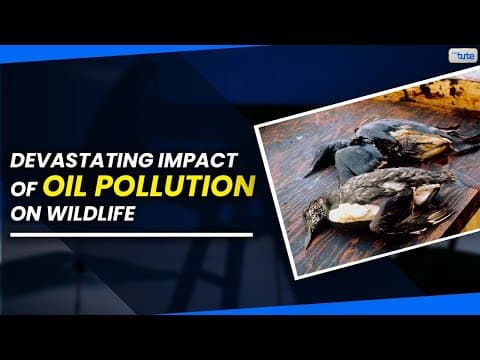
[0:00]Summers and beaches are fantastic combination, aren't they? Our friend John decided to go on a vacation with his family to a nearby beach. Pristine sand, crystal clear water, sunbathing, sand castle. He was thrilled and excited with the very thought of vacation. But the scene was totally different from what he expected. He was greeted by dark, murky water and littered with oil sludge. The fish were lying dead at the shore. The sea words were quoted and covered with oil. He was completely disheartened and started to wonder what was the cause of it. This is the devastating impact of oil pollution, and it is happening all around the world. Today we will be talking about oil pollution, how it is caused, its effects on aquatic life, and most importantly, what we can do to prevent it. Let us begin by understanding what oil pollution is. Oil pollution or oil spill is the release of crude oil or refined petroleum products into the environment, mainly water bodies. Oil spills are caused by accidents during oil extraction, transportation and storage and at times, even deliberate disposal of oil waste. Have you ever tried adding oil over water? What do you notice? Oil forms a layer on top of the water, it does not dissolve in water. Similar is the effect of an oil spill. When oil spills occur in the ocean, the oil does not mix with the water and it spreads on the surface. Because of the thick layer present on the surface, the penetration of sunlight is significantly reduced, affecting the process of photosynthesis and indirectly affecting the whole food chain. Not just the process of photosynthesis, this thick layer of oil reduces the amount of dissolved oxygen in the ocean. The oil covers the birds and the sea mammals. Spilt oil can harm living things because its chemical constituents are poisonous. This can affect organisms both from internal and external exposure. Oil can also smother some small species of fish or invertebrates and coat feathers and fur, reducing birds' and mammals' ability to maintain their body temperatures. During most oil spills, seabirds are harmed and killed in greater numbers than other kinds of creatures. If oil remains on a beach for a while, other creatures, such as snails, clams, and terrestrial animals may suffer. The oil that spills into the ocean can have great impact on people's health who consume seafood. One of the most significant oil spills in history was the Deepwater Horizon oil spill in 2010. This oil spill happened in the Gulf of Mexico and caused severe damage to the marine environment and the local fishing industry. The spill released over 210 million gallons of oil into the ocean and killed thousands of marine animals including dolphins, turtles, and fish. John is now clear with the causes and harmful effects of oil pollution. He started thinking, we cannot live the spilled oil the way it is. Something needs to be done to clear this up. Yes, these oil spills have to be cleaned up and this is not an easy task, my friends. Cleaning up oil spills can be a complex and challenging process, but there are several techniques and strategies that can be used to minimize the environmental impact. Let us now look at some of the common methods used for cleaning up oil spills. Contaminant. As the name suggests, this technique aims to contain the oil in that specific area and prevent it from spreading further. Floating booms and barriers are placed around the spill site or strategically placed to divert the oil to a collection area. Another method is skimming. This method involves using specialized equipment such as skimmers or vacuum trucks to remove the oil from the surface of the water. The equipment can collect the oil and transfer into storage tanks or tankers for proper disposal. The next one is in-situ burning. This method involves burning the oil on the water surface in a controlled manner, to reduce the volume of oil and prevent it from spreading. This method is only used when the weather conditions and spill characteristics are suitable. Bioremediation. This method involves using natural microorganisms to break down the oil into harmless substances. This method is only effective in certain conditions and may take longer to complete. The specific method used for cleaning up an oil spill depends on several factors, including the type and volume of oil, weather conditions, and the location and sensitivity of the affected area. In most cases, a combination of methods is used to ensure effective and efficient cleanup. But there are several ways to prevent oil pollution. One way is to improve safety measures during oil extraction, transportation, and storage. Another way is to develop alternative energy sources that do not rely on fossil fuels. Proper disposal of oil waste is also important preventing oil pollution. John is now completely aware of oil pollution and its harmful effects. He has decided to share this information to the rest of his friends, to help him in this task. We would want you all come up with a catchy oil spill slogan and post it in the comment section below and share this video with your friends and family. If you found this video informative, do hit the thumbs up button. For more such environmental awareness videos, subscribe to our channel, Letstute.
🌊See the Devastating Impact of Oil Pollution on Wildlife | Letstute
Let'stute
5m 4s901 words~5 min read
YouTube auto captions
Transcript source
YouTube auto captions
This transcript was extracted from YouTube's auto-generated caption track. The transcript below is server-rendered so it can be read, searched, cited, and shared without opening the original YouTube player.
Pull quotes
[0:00]This is the devastating impact of oil pollution, and it is happening all around the world.
[0:00]Today we will be talking about oil pollution, how it is caused, its effects on aquatic life, and most importantly, what we can do to prevent it.
[0:00]Oil pollution or oil spill is the release of crude oil or refined petroleum products into the environment, mainly water bodies.
[0:00]Oil spills are caused by accidents during oil extraction, transportation and storage and at times, even deliberate disposal of oil waste.
Use this transcript
Related transcript hubs
Watch on YouTube
Share
MORE TRANSCRIPTS


