[0:03]IPS is an institute established to bridge the skills gap between the industry and the academia.
[0:15]It is a partnership between the University of Port Harcourt and IFP in France. I am Dulu Appah, a Professor of Petroleum and Gas Engineering at the University of Port Harcourt, the director of the Institute of Petroleum Studies and also the PGD Gas Chair at the University of Port Harcourt that researches into natural gas issues. It started in 2003. It is sponsored by NNPC Total Joint Venture partnership. We have the MSC program and we have the PGD program. We started with training people for the petroleum industry for crucial, people that will readily fit in and replace the aging population. This is an education that bridges the gap between the industry and the classroom work. You are taught by IFP, the world expert in petroleum issues, taught by the industry here in Nigeria and then the fact that you are employable. The fact that the people who teach you know your worth and they can easily assess you, it is not just enough to be trained. What is the endgame? Employability, and that's our pride that you stay here, you have the culture we have here, you are employed at the end of the program. This is a program that is the best of the best, and I feel that this is the place to be.
[1:52]The Institute of Petroleum Studies uphold a high standard of learning and a conducive learning environment that supports assimilation. The student teacher ratio allows for personal and direct communication, so students are confident to ask questions and they are sure they will be attended to.
[2:22]With the partnership with IFP Training School, 40% of the MSC lecturers are drawn from the IFP training school, 40% from University of Port Harcourt, and 20% from the industry. This fine mix allows students to have the best relevant learning experience according to international standard.
[2:49]The library provides access to quality print material, be it textbooks, journals, articles, and other e-learning resources. These resources have been written by local and international authors in industry and the academia. The program is divided into five modules. There is a general module, there is the reservoir and geo-sciences module, there is the drilling module, production and project module. The library is always functional and available to lecturers or students who want to carry out research work or just read for leisure.
[3:34]As the technological transformation progresses, IPS goes beyond just the cliche of classroom education, by taking a step further to introduce the students to state of the art software relevant to the energy industry.
[3:50]And so our MSC students at the Institute of Petroleum Studies will learn about reservoir simulation and modeling using Eclipse and static and dynamic multiphase flow using Schlumberger, Olga and pipes in and also production system simulation using Aspen HYSYS, amongst many other softwares. And so these software based projects and exercises that the students are exposed to help to increase the engagement in class and their involvement as well. And so IPS is your go-to institution for sound theoretical and practical knowledge and also exposure to state of the art softwares as it relates to the energy industry.
[4:37]Welcome to IPS laboratory. In IPS, the students are not just taught the theoretical aspects of Petroleum Engineering, they are also taught the practical aspects. Now, in the IPS laboratory, we have a world class lab with high standard equipment. Are you looking for a place to carry out your postgraduate program in petroleum engineering, then search no more because IPS is the right place for you.
[5:10]My name is Francis Fusier, I am a Frenchman working for the French Petroleum Institute called IFP, and I am the coordinator of this master program in Petroleum Engineering and Project Development.
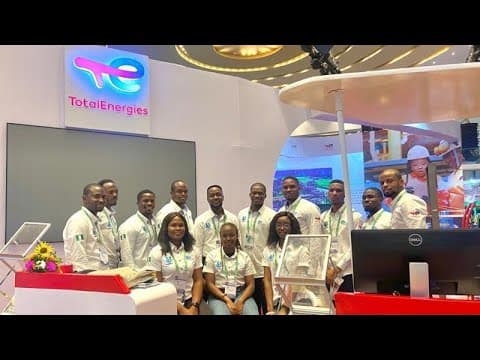
[5:27]We are in the need for high quality engineers to work for the upstream oil and gas industry, and this program was designed in 2003 to achieve such a goal, right? The goal being to take engineers from any domain, right, and to bring them within one year into being efficient, into the oil and gas upstream industry. This program is derived entirely from a IFP school program in France, which is achieving this goal with very, very high success. And we try and we have tried, and we are succeeded into applying this such a program here in Nigeria, in the IPS. This has been possible by the drive of the joint venture NNPC, TotalEnergies, right, to implement this program within the two academic bodies that are the IFP school in France and the University of Port Harcourt in Nigeria. This program is a intensive program which runs over 48 weeks every year. So, as you can see, a number of extra weeks is very minimal, since he aimed to start every year again, right? 48 weeks of lecture, field trips, project, many projects with real data, software, in order for our students, when they come out, to be able to work actively and in a good manner in the upstream oil and gas industry. The purpose of setting up this institute is just to ensure that graduates from this place on graduation don't actually struggle for job. The program is quite intensive and at the end of the program students are well equipped such that they can go anywhere in the world and perform uh exceedingly well. So in terms of job placement, internship, as far as I'm concerned, there is no place like IPS currently in Nigeria and in Africa, and that is why it still remains a high flyer. Since 2003, we have graduated around 400 students. We have a success employment rate around 90% after one year. And we have a high population of Nigerian who actually working in all the oil and gas company in the upstream sector in Nigeria and abroad. This alumni Association, which is very strong, is helping a lot our students to integrate the oil and gas industry, and this allow us to have a extremely high employment rate from our program, which is much higher than any other university in Nigeria and abroad. And this is mainly due to the fact that our program is very practical, it's very intensive and is run by professional. So, this this program is targeted at areas where Total has operational base, at least to give uh credence to you know the the peace they enjoy in their host communities. The curriculum is based on what we do in France, which is a 48 weeks lecture based on four, four modules, geo-sciences and reservoir modules, drilling modules, production module and project modules. We have a lot of project which are group project for each module in order to make sure that all our students are having a very, very good knowledge of the lecture which are being taught. Our degree is a joint degree between University of Port Harcourt and IFP France. IFP stands for Institute Français du Pétrole. It's a government institute in France who delivers diploma all over the world. And which is a very, very well known degree in the oil and gas industry, right? So, all our students are graduated from IFP School, France entirely, and are actually alumni of this association.
[10:34]The Institute of Petroleum Studies, IPS, has been a major game-changer for me. Learning experience has been really fun, especially visits to IOC's, engineering companies, laboratories. What I really love about the school is that we have fun while learning. We translate academics into practical industrial experience. If you're someone like me that love having fun while learning, I think IPS is the best school for you. In every organization, health and safety cannot be overlooked. Here in IPS, we take your safety very serious. We have appropriate protocols and equipment to ensure that the health and safety of the personnel and the students are being kept to the optimum capability. We have fire extinguishers, we have smoke detectors, we have alarms, and we have surveillance cameras to ensure that the health and safety of the personnel are being kept. We have securities at the front gate 24/7, and also in the hostel area. Here at IPS, your safety is our utmost responsibility. Safety for me, safety for you, safety for all. What I love about IPS is the fact that we are not just confined to classroom learning. We also give an opportunity to go for industrial training after our program where we are exposed to practical knowledge of what we have learned in classes, and also we are also given the opportunity to go for field trip. We have one of our field trips, which is the geology field trip, and also have uh the field trip which happens at the end of the program where exposure is given to us and we are taught on how to uh do well logging, and we do well logging using gamma ray log, and then uh we also thought how to know the lithology of the rock and then do the mapping of the various lithology of the rock. I for one was never enthusiastic about doing my master's degree in Nigeria. But once I heard about IPS, it was a game-changer for me. My greatest take away from the institute is the quality and caliber of colleagues I've had an opportunity to work with. Drawn from diverse engineering backgrounds, my colleagues and I have been able to leverage our unique skills and strengths into developing ourselves to become better professionals and individuals. I am enjoying the experience every day, and I would like you to do the same. I've had an exciting time at the Institute of Petroleum Studies. Yes, it is an intense program, but I believe I'm better for it. I like the fact that I'm exposed to hands on practical knowledge alongside teachings from seasoned academia. Here in IPS, we don't just come to class to learn, we also get to learn life skills like collaboration, team-work, working under a very tight schedule. As we say here, there are no idle time. I would advise every young engineer that wants to take up a career in petroleum engineering to come to IPS because there's no better place in Africa and in Nigeria than at the Institute of Petroleum Studies. Being here in IPS has been exactly what I expected and more. As a postgraduate student, I've been exposed to so much knowledge to prepare me for a career in petroleum engineering. I've also had the opportunity to meet with other young professionals, and I've also been able to gain valuable skills that is necessary and that's needed for me to drive in the industry. The Institute of Petroleum Studies creates a system of core values that are shared between the students. Among these core values is team building. Here in IPS, we are encouraged to work in groups for assignments, projects, and presentations, and this prepares us beyond the classroom for the world of work. Because we develop the emotional intelligence to work with the cards we are dealt, and this drastically increases our compatibility with people like-minded or not. And beyond the professionalism of the classroom, we also have the companionship and camaraderie between the students at the hostel residence. And this puts us in this indestructible bubble of happiness and makes us full of high spirits. This IPS is the right environment for learning, and as we know the popular saying, no man is an island. And here in IPS, we drive that home because as we know, the oil and gas industry we can't do it all alone, so we have to be put in teams. And here in IPS, you're taught how to work in teams for your prospective career. My name is Victory Nse. I'm the receptionist in April Hospital. We are in retainership with IPS, and their staffs and students come here for medical attention.
[15:20]We work 24 hours, and we have good staffs.
[15:28]We have good nurses, and um our laboratory is functioning very well. We have good facilities, and we have doctors 24 hours, and we are very good at in handling emergency cases. must choose IPS because they are luckily to find a job, right? In Nigeria, people study to find jobs, right? And we have a high success rate. Like I said, after one year, 90% of our student are employed, are employed, which is much higher than any other program in Nigeria. So, I know the burden of the school fees is somehow on the high side, but obviously, you can understand that if you have a job within one year, you will pay easily back all your expenses that you have accurred during this program. The products have proven to be exceptionally good, industry ready, and has also somehow actualized the vision and mission of establishing the institute, which is primarily to bridge the skill club between the industry and the academy.


