[0:00]I tested 17 boring habits that quietly rebuilt my life. No 5:00 a.m. alarms or intense routines. They all have one thing in common: they're embarrassingly easy, too small to fail. If you only have time for two, check out habits one and five. Those are the ones that make everything else stick. Habit one: I always start with the embarrassingly easy version. Here's what I used to do. I'd set an all or nothing goal for myself, like working out for an hour every day. I used to crush it in the first few days. However, I'd soon get tired, then skip it all together. Then I'd plan to restart soon, but the soon rarely comes. And suddenly, I haven't worked out in weeks. Sound familiar? The problem was that I thought the goal was the workout. It's not. The goal is to become someone who works out. An identity is built on repetition, not intensity. So I flipped it. Instead of committing to an hour at the gym, I committed to something embarrassingly easy. Do 10 pushups. That's it. Some days that led to full workouts. Other days, I'd just do those 10 push-ups. But here's what happened. I never went to zero. I worked out every day, however small. Here is the thing: 100 days of one pushup beats five days of an intense workout that you can't sustain. Because at day 100, you've become a person who exercises every day. Boring habits work because they're too small to fail. Every habit I'm about to share follows this same pattern. Habit two: I drink water before any other drink. If I want coffee, water first. If I want a soda, water first. I started this because I was getting headaches every afternoon and couldn't figure out why. Turns out I was chronically dehydrated. And here's the weird part. Half the time after I drink the water, I don't even want the other thing anymore. My body was confusing thirst for craving. I accidentally dropped like 10 pounds just from not mindlessly drinking calories. My embarrassingly easy version of staying hydrated is to take two sips of water before anything else. It works because my brain can't argue with two sips. My friends think I have a bladder problem. I just have a hydration system. Habit three: I put my phone in another room while sleeping. At night, I used to keep my phone on my nightstand, face down. Here's what I didn't know. Even with your phone face down on the nightstand, your brain stays partially alert. Researchers call it "anticipatory anxiety." Part of your mind is just waiting for it to buzz. That was a revelation into why I slept late and felt like garbage. So now I put my phone in another room when I sleep. This small, boring habit improved my sleep quality more than blue light glasses or 144Hz sounds ever could. Just move the phone to another room. Your sleep cycle will thank you. Habit four: I decide tomorrow's one hard thing before bed. Most of my mornings used to start with decision paralysis. Now I decide tomorrow's one hard thing before bed. Not a to-do list, just one thing, the hardest thing. This is my embarrassingly easy version of productivity planning. Most people wake up and spend the first hour of their sharpest mental energy figuring out what to work on. By the time they decide, they're already running on fumes. I front load the decision when my brain is tired anyway. Then in the morning, I just execute. Deciding is exhausting, doing is easy. When I wake up and the decision is already made, I've removed the part my brain actually fights. One decision written down. That's it. Habit five: I track my core habits daily with just three colors. Most people don't track their habits because tracking feels like homework. I used to be the same. I download some app, use it for three days, then forget it existed. So I built something embarrassingly simple instead. A "never go to zero" habit tracker with just three colors. Green means I did the full version, the ideal day. Yellow means I did the embarrassingly easy version, the bare minimum. Red means I went to zero that day. This tracker takes five seconds to update each night. Here's the part most people get wrong: the goal isn't to do the full version of the habit. The goal is to avoid red. Yellow is a win, because yellow keeps the streak alive. It is infinitely better than zero. Some weeks, my tracker is a mix of yellow and green. Still a perfect week as I showed up every day. Quick thing. The "never go to zero" tracker is part of my annual operating system that I built for effortless consistency. Links in the description if you want to check it out. Habit six: I keep a done list, not just a to-do list. Your brain has this annoying thing called negativity bias. It remembers what's incomplete, but it forgets what's finished. So you end the day looking at your to-do list and noticing that some things are still undone, which can make you feel like a failure. So I flipped it. At the end of each day, I write down what I actually did, not what I planned, but what I finished. Turns out I do way more than I give myself credit for. My embarrassingly easy version of self-motivation is writing down what I finished. It takes 30 seconds, changes how you see your entire day. Some days my done list is replied to emails, ate lunch, played with kid. Bare minimum, but still counts. Habit seven: I eat the same breakfast most days. Breakfast is a decision you make 365 times a year. What if you just made it once? I eat basically the same thing every morning, nothing fancy. A combination of eggs, toast, and tea or oatmeal with fruits. I rotate between these two options. After months, it's automatic now. I no longer waste time thinking about what to have for breakfast. This is my boring version of decision fatigue management. I remove the decision entirely. This habit works because it makes the choice so boring your brain stops treating it as a choice. If you know what I mean. Habit eight: I say no to one thing per week I'd normally say yes to. There was a phase in my life when I used to say yes to almost everything. During my MBA, I'd say yes to every "can you help with this?" Or every invite I didn't really want to attend. Then I started a simple practice: say no to one thing per week that I'd normally say yes to. Not dramatic boundary setting or a full life overhaul, just one small no per week. Sure, I sometimes feel guilty for about 10 minutes, but then I feel free. One conscious no per week adds up to 52 things per year you didn't waste time on. That's dozens of hours reclaimed. Habit nine: I take a 10-minute walk after lunch. My embarrassingly easy version of afternoon energy management is just 10 minutes of moving my legs. This isn't an exercise or a walking meeting, it's just glucose regulation. Here's what happens after you eat: your blood sugar spikes, then it crashes. That's the afternoon slump everyone complains about. A 10-minute walk right after lunch smooths out that spike. This habit is too small to skip. It's too boring to brag about, but it's also too effective to ignore. Habit 10: I read 10 or more pages a day. Reading 10 pages takes about 20 minutes. That's almost 18 books a year with almost no intense effort. My embarrassingly easy version started with one page. Literally one page. Now I do 10, but even one page beats zero pages. You become a reader by never having zero reading days. Habit 11: I send one "thinking of you" message per week. Every week, I send one genuine text to someone I haven't talked to in a while. This isn't networking. So, no ask, no agenda, just reaching out. Over the years, I've realized that relationships don't die in dramatic explosions. They die from slow neglect. One text per week keeps the relationship alive. It works because my brain doesn't argue with one message. I have a calendar reminder that just says, "text someone." No specific person, just someone. Habit 12: I do a 20-minute weekly review every Sunday. This is where everything clicks together at the same time. Every Sunday, 20 minutes. Here's what happens in those 20 minutes. First, I pull up my "never go to zero" tracker. I go over my tracker's dashboard and look for patterns. Then I make one small adjustment if needed. Maybe my easy version of the habit was still too hard, so I make it easier. After that, I look at next week's calendar and I ask one question: Is next week a growth mode week or a survival mode week? Based on that, I decide whether to push for greens or consciously aim for yellows. This is my embarrassingly easy way to stay on track. 20 minutes once a week, same time. Habit 13: I write three sentences before bed. Remember the notes column in my "never go to zero" tracker? This is where it becomes powerful. Every night I write three sentences there: what worked, what didn't, and how I felt. It usually takes 60 seconds or less. And over time, patterns emerge that I'd never notice otherwise. This is my embarrassingly easy version of journaling. Just three sentences in a spreadsheet. I tried elaborate journaling many times before, but failed every time. However, the three sentences in my tracker before bed haven't missed in months. Habit 14: I save a percentage of my income automatically every month. I'm not good at disciplined investing, never have been. So I automated the whole thing. The moment my paycheck hit, a fixed percentage automatically moves to an investment account. This happens before I pay bills, before I buy anything, before I even see the money. The percentage is small enough that what's left covers the month comfortably. I set this up once and completely forgot about it. Checked my portfolio recently and found way more than I expected just sitting there. My embarrassingly easy version of building wealth is making the investment automatic and invisible. This is the best financial decision I ever made. It just took 10 minutes to set up. Habit 15: I close all browser tabs at the end of each day. Open tabs are open loops. Each one is a small, I should do something about this, wait. Your brain tracks them even when you don't realize it. Closing them creates psychological closure. My brain can't argue with clicking X a few times. But the difference in how tomorrow morning feels, significant. Habit 16: I do a two-minute tidy before bed. Every morning you either walk into a space that says "ready to go" or one that says "deal with yesterday's mess first." I wanted the first one without the hassle of actually cleaning every morning. So I do a two-minute tidy just before bed. That's it. I put one thing back where it belongs, wipe my study table, and clear one surface, whatever I can do in two minutes. For me, it's not about having a clean house, it's about how tomorrow morning feels when I see the room. Some nights, my two-minute tidy is literally putting a pen back on the pen stand and calling it done. Still counts, still better than zero. Habit 17: I end the day before I'm completely drained. Ernest Hemingway used to stop writing mid-sentence when he still had energy, when he knew exactly what came next. I thought that was insane when I first heard it. Why would you stop when you're on a roll? Then I tried it. When you work until you're completely depleted, the next morning you have to rebuild momentum from zero. The first hour is just trying to remember where you were. But when you stop mid-flow with a clear next step written down, you come back already energized. No ramp-up time, you just sit down and continue. My embarrassingly easy version of sustainable productivity is to stop before it's empty, not after. Those are the 17 boring habits that quietly rebuilt my life. The trick is to pick three to five of them that you can sustain.
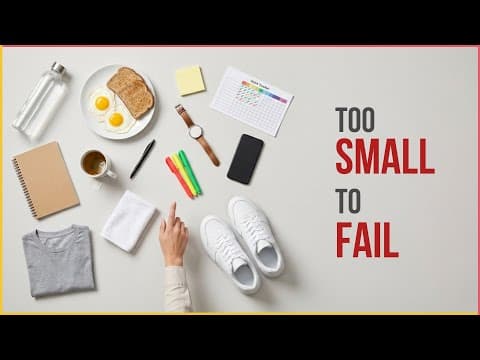
17 Boring Habits That Quietly Rebuilt My Life
Ideas To Thrive
11m 12s2,104 words~11 min read
YouTube auto captions
Transcript source
YouTube auto captions
This transcript was extracted from YouTube's auto-generated caption track. The transcript below is server-rendered so it can be read, searched, cited, and shared without opening the original YouTube player.
Pull quotes
[0:00]They all have one thing in common: they're embarrassingly easy, too small to fail.
[0:00]I'd set an all or nothing goal for myself, like working out for an hour every day.
[0:00]Instead of committing to an hour at the gym, I committed to something embarrassingly easy.
[0:00]Here is the thing: 100 days of one pushup beats five days of an intense workout that you can't sustain.
Use this transcript
Related transcript hubs
Watch on YouTube
Share
MORE TRANSCRIPTS


