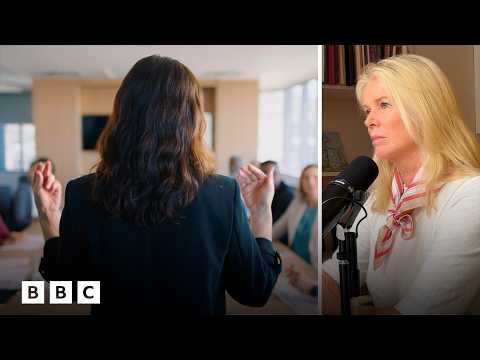
[0:00]as a new mom at the start of the pandemic, I was writing as a business reporter about the high numbers of women who were being forced out of the workforce, millions of them. And I thought to myself, well, this is interesting. And so as a purely data-driven question, I wondered how many women in those millions of women being quote unquote forced out, were actually making a conscious choice because they suddenly were in a position where they were being exposed to what life might be like being home with their kids. This was a story about a very specific sub genre of women deciding to step away. There has been an uptick since the pandemic in women identifying as stay-at-home moms, in the number of women identifying as working part-time from home. female leaders, mothers and non-mothers, were leaving their companies at sort of record rates. So all of the sort of post-pandemic data was bearing out this idea that all of the flexibility, the remote work, people moving away, having more time with their kids, all of it kind of came together in this stew to have, you know, I would say, all of us and especially women sort of recalibrate our priorities. Issie, thank you so much for joining us. I I have to confess as the mother of four children who has juggled careers for the last however many years, this is a subject that is dear to my own heart. Um, you have spoken to women who were doing well professionally, who were kind of thriving professionally, but still made the decision to step away. What did you hear from them about why they were making that decision and why now? These were women who were making an affirmative choice for themselves, right? There are so many other stories that could be told of women who have no choice, right? They either cannot afford child care because it is wildly expensive, um, or they are among the many, many layoffs that we're seeing disproportionately impact women. Uh, this was not that story. This was a story about uh, women who had reached a certain level of success in their careers, and uh, looked around and said, huh, I actually can do this and I want to do this. I want to step away to spend time with my child. I want to step away to start my own consultancy and be my own boss. These were women who were making very conscious choices for themselves, and I think bucking the narrative that when women leave the workforce, it is always something that happens to them. So I I, when I started researching the whole issue of women in business back in 2008, um, I remember coming across a study showing that there were more professional women leaving the workforce than there were joining it for the first time in American history. And I was wondering when I read your piece, part of me kind of thought, oh God, here we go again. This is just a kind of cyclical thing where every sort of 10, 15 years, women decide, okay, we've had enough. We stick it out, we try to make it work, we can't make it work. We're one Sunday evening's tears away from quitting, and so we're taking preemptive action and leaving on our own terms. Does it suggest that we just, however long it takes, we just can't get this right. We can't get the the, I hate the word work life balance, but we can't figure out how to allow professional women to work and have children at the same time, in a way that is satisfying and harmonious for everybody. Yeah, I think there's absolutely something to that. Um, though I will go back to the point that, you know, for a lot of these women, it wasn't necessarily that they didn't feel like they could make it work, right? I spoke with a woman who said, you know, if there is such a thing as having it all, I had it. Um, I spoke with another woman who, you know, she had the means to have nannies and people would say, well, just get another nanny. And it will always stick with me. She said, I don't want another nanny. I want my moments, right? There is no, there is no work life balance that is going to give you all of your time with your kids, if that's what you want. And some of these women, to be honest with you, in my story, are not mothers. Um, they were leaving the workforce for other things. They were leaving for other priorities. Did any of them feel complicated about it, particularly given this moment that we're in where, you know, we're hearing more about the Tradwife aesthetic. There's a push against DEI initiatives. Did any of them feel that actually this for them personally, this was the right time to step back or step away from a career or dial down, but that for women writ large, being on the kind of front lines of the work struggle, that makes it sound like something nobody wants to do, so I totally sympathize with them. But that being on the front lines was actually the place they were needed. Yes, I would say it this was a complicated decision for all of these women to make. Um, and they all wrestled with exactly that, and I think particularly women of color. And so that I I would say is something that weighed on all of them, and what they had to sort of wrestle with was, um, you know, how much do how much of my life and my happiness do I sacrifice, um, for sort of this larger cause, um, to which I have contributed for many years, um, versus how much do I, you know, based on all of that work I've done, get to sort of enjoy the fruits of my labor. Did did any of them say that the men in their lives, if they had men in their lives, felt a similar urge that they too would have liked to have stepped back, or did you think this is a kind of uniquely female and often maternal thing that's going on?
[5:41]I mean, I'm wondering if at the root of some of this not to get too meta about it is that if we as a society valued that action of caregiving, whether it's children or elder parents or communities or whatever it is, more, would men feel that they wanted to take part in it more and we'd get around some of this problem of women still doing the lion's share of housework and child raising. Sure. So I would say that's a that's a great question. Among the women I spoke with, um, most were married, not all were. I think that's actually a misconception since the story came out. A lot of people have said, oh, they could only do this because their husband's make all the money. And for one of the women, she's not married, and for another woman I spoke with, she told me straight up like, I am the primary breadwinner, so this was a conversation between us, but it was not something that I was able to do because my husband was providing for me. Um, to your question of, do men want to do this as well? Um, I didn't get the sense from any of the women who are are married or partnered that, um, this was something that their their husbands were desiring. Um, but the data does suggest that men are feeling this urge as well. Um, so I believe it was the McKinsey Lean In report, um, which showed that, um, women were, you know, in increasing numbers since the pandemic reducing their hours, taking less demanding jobs. They were doing that at much higher rates than men, but the percentage of men expressing that desire, um, and making those choices was growing as well. I mean, clearly, and obviously as you said earlier, there are lots of women for whom this is not a choice at all and they have, you know, they've got to work one if not two jobs, um, just to make an income that they don't have that option. Does the the other sort of societal component of this though, is obviously the more women do choose to step back or step away from the dreaded career ladder, the more the men in their lives are going to make more money, and therefore the more the incentive will be for the woman to step back because the man is making more money, and so he is the one that should carry on working because they need his income. I mean, do they, was that part of the kind of concern that this is a self-perpetuating thing, and that once they have stepped back, did any of them worry about whether if they wanted to step back in again and whether that would be possible? I love this question because yes, I think all of these women worried about what happens to my career long-term. I might want to do this for a few years, do I want to do it forever? And that's where the storytelling element really comes in. That's why a lot of these women, I, you know, you're seeing all of these confessionals on LinkedIn, that's how I found a lot of my, um, subjects. People saying, you know, kind of putting their stamp on this, not saying like, oh, I'm just not working, oh, I'm a stay at home mom, but like this is my this is a move I'm making. This is the power pause, as you described it. The power pause, exactly what I'm getting to. And I can't take credit for that term. That is, um, that was coined by a woman named Neha Roosh who wrote a book of the same name. That book is specifically about, um, about motherhood and women taking a pause. Um, but I think what Neha's getting at, and she put this so eloquently. I hope I'll do the same. But is the idea that if all of us were to sort of societally accept that this can be a period of growth for women, that this is not them giving up, that this is not them being pushed out, that this is not them being a victim, that this is a move that they're making like any other career or personal move, uh, then we can accept them back into the workforce, um, in a way that like honors that. Is there something in the, um, return post, you mentioned COVID earlier. Is there something in the kind of post-COVID return to work mandate that is that could accelerate this trend, do you think? Absolutely. Uh, we're seeing it. Um, you know, uh, there are a lot of stories coming out sort of which, um, are related to this piece, which show that, you know, women are not returning to the office at the same rates as men, um, and that certainly is probably inspiring a lot more women to, you know, break up, break up with their companies. Um, and so I think for a lot of women that has been a a big factor is that, you know, sort of the flexibility that caused everybody to disperse and make their own hours. A lot of that is getting rained back in and it's making it tougher, um, particularly for working parents. Did you come away from the research on this piece feeling optimistic about the position of women in the workforce, particularly, you know, as you were looking at professional women at higher levels or pessimistic? That's a really interesting question. Um, it's such a a nuanced topic, right? I was I was optimistic about the about the fact that women were feeling empowered in these decisions, that it was that it was not always a, um, the pressure, um, to to be at home with their kids or or feeling like, um, they were failing. Like there it was these were moves born of sort of, um, born of optimism. Um, whether I feel optimistic, gosh, there are still so many challenges that women face in general, at work, um, in in raising families, affording, um, affording families. So, so, yeah, it's very it's a nuanced story and I think I walked away with a nuanced feeling, um, and it and it is hard because you have to hold these two things concurrently. Yes, a certain group of women who have means, who have educations, who often have support, um, from a from a partner or spouse, um, are making these decisions and that's great and that's empowering, um, and at the same time, um, you have just so many women, growing numbers of women who have no other choice. Issie Lapowski, thank you very much. Thank you.


