[0:00]When you wind up a grandfather clock, the cables wrap around a drum inside the mechanism, drawing the weights all the way up. Gravity then pulls the weights down gradually, unwinding the cables that rotates the drum, which turns the gear wheels, which moves the hands off the clock. Tickety-tock.
[0:22]The proper term for this type of timepiece is a long case clock. The nickname Grandfather clock came from a popular song in the 1800s. This long established company makes its clock cases out of quality hardwoods and veneers, such as maple and oak. To construct frames for the four sides and door, workers fit dowels into holes, then solidify the connecting parts with screws and glue. They lay each frame in this curing machine. It uses high frequency radio waves to generate heat and dry the glue in seconds. Workers connect the four frames with screws and glue. Later they'll attach the door frame with hinges.
[1:10]The next step is to assemble a base. Again with dowels, glue and screws. Once the glue is dry, the assembled frames go into the base. Now for some embellishment. Computer-guided routers carve elegant wood moldings that'll give this particular model a traditional flavor. Today's grandfather clocks come in styles to suit any decor, from ornate antique to modern urban chic. Workers carefully sand every single piece of wood making up the clock case. The surface must be smooth for it to absorb color evenly. The moldings are deer with a combination of glue and nails. These long pieces of wood become curved, fluted moldings. They adorn the side of the door frame. This model also has a pair of stately columns above and below the flutes. A worker first positions them with glue, then like the flutes, screws them securely to the frame from behind. The next step is to stain the wood, hand rubbing it to bring out the grain. A coat of lacquer protects the wood and gives it a degree of sheen, from matte to glossy, depending on the model. After installing the glass and door, it's time to install the clock's components, starting with long metal bars called chime rods. Eight to 12 of them depending on the model. Each chime rod produces a certain note when struck. Next comes the movement. This contains the weight driven components that keep time and trigger the chime hammers to hit the chime rods on the hour, half hour, or quarter hour. The brass chime hammers have plastic tips. This muffles the sound of metal striking metal, so you only hear the note each rod produces. These brass pulleys hang from cables connected to the movement. The pulleys will support the clock's three weights. After connecting the movement to the clock dial, a worker inserts this model's last decorative detail, a wood panel to frame the dial.
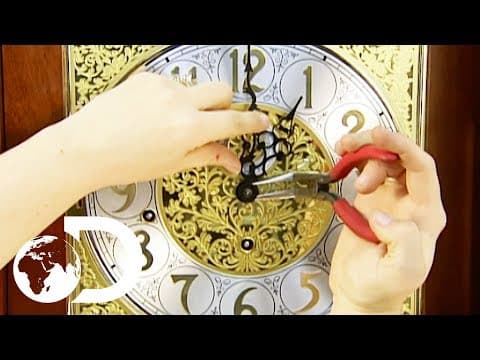
[3:50]Then she installs the clock second hand on a shaft in the center of a miniature dial. On the center shaft of the main dial, the hour and minute hands. Depending on the model, the aluminum hands are painted either black or gold. A decorative nut secures them.
[4:22]Finally, the all important weights and pendulum. The weights are brass canisters filled with lead. Each one weighs almost 4 kg. The pendulum sways from side to side at an even pace. This ensures the clock keeps time consistently and accurately. It also drives the clocks to chime on the hour or fraction of the hour. All you have to do for Grandfather time is wind him up about once a week.


