[0:08]All right, let's go.
[0:15]Any reactions by the SG to Trump's assertion that the UN was not at all helpful in helping broker any peace deals? Where does that investigation stand as of now? Who is going to investigate it? Do you see idealism or pragmatism or idealistic pragmatism? Thank you.
[0:37]My name is Stéphane Dujarric. I'm the spokesperson for the Secretary-General of the UN. I've been at the UN for 25 years. And I'm French, born in Paris, raised here in New York. I went to high school down here, so I didn't go very far, and I'm the most fortunate person at the UN. Here you met people from everywhere. So global. I love this job. There isn't a day that I don't come in and I look at this building and I'm not in awe of what we try to do here. To every UN insider, Stéphane Dujarric is a familiar face, a man who has served three Secretaries-General, Kofi Annan, Ban Ki-moon and António Guterres. Uh, this is my office. This is a film poster that my wife gave me for my birthday. This is a drawing of my dog that my son made for me a few years ago. Oh, he's very good at it. This is kind of my wall of cartoons and silly things. It's very cute. Speaking with him, I sensed the paradox at the heart of the United Nations, an institution defined by commitment, yet often constrained, even frustrated by the very forces it was created to bring together. And a punching ball. When you get pissed off? My dream was to have a big punching bag like they have in the gym, you know that hang. But my assistant said she checked and the pipes are not strong enough. You are gonna pull it off. Yeah, so she gave me this one.
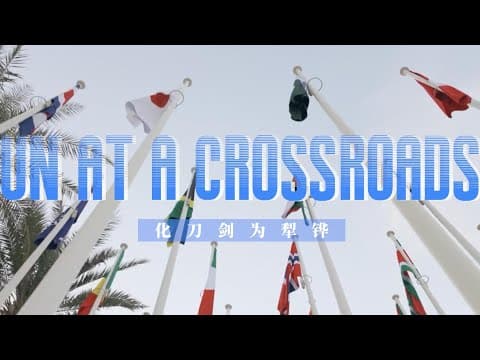
[2:14]When do you usually need this? Like after the press conference? All the time. Where does your pressure come from? The pressure is not so much from the journalists. The Secretary-General personifies or embodies the whole UN, but yet he has no authority. It's only empowered by the Member States. Exactly. And so, the negative narrative about the UN is very simple, right? The UN failed, blah blah blah, right? People need to understand exactly what it is and what it's not. I am Miao, with Xinhua News Agency. For this documentary, I've come to New York City to explore the United Nations, its relevance, its effectiveness and the role it can still play in preventing wars, both regional and global, as it marks the 80th anniversary of its founding in a world once again in flux. We have to deliver a United Nations that is agile, cost-effective, and fit for purpose. The core of the UN is really to prevent the scourge of war. We have come together today to lay the cornerstone of the That is as relevant in 2025 as it was in 1945. That is as relevant in 2025 as it was in 1945.
[3:27]the center of man's hope for peace and a better life. the relationship between states and between people, they need platforms for discussion. You have the UN that is a convening body, you have 193 states, so that's irreplaceable.
[3:47]At its best, the United Nations is more than a meeting place. It's a moral compass, a force for peace and peacekeeping, a catalyst for sustainable development, a lighthouse for human rights.
[4:03]Through hours of conversation with veteran UN officials, both past and present, I could sense a quiet nostalgia for what the UN once was and what it still strives to be.
[4:20]The world was one of of empires and people's rightful claim to be able to determine their own future was constrained time and time again with the support of the UN. the countries of of Africa and Asia achieved their independence. They achieved the the status of sovereign equality.
[4:47]So I was ambassador in Lebanon and I saw the work of the UN on the ground, ending conflicts, saving lives. It was in the time when many refugees were arriving from Syria and the UN was doing this essential work in the field. And so at that point, I looked at it and thought, this is an organization we have to get behind. I have 13, 14 or 15 statements to review and I just cleared one, two, three. There's also a GDI event and I am also going to speak there. I come from a developing country. I come from a graduating LDC. So I'm quite aware of the expectations that are there on the UN. The UN still remains the best hope for the developing countries. It gives them that forum to sit on the same table with many big powers, other partners from the South.
[5:43]There is a very long list of countries that have been successfully supported by UN peacekeeping in returning to peace and stability. They protect hundreds of thousands of civilians every day. They prevent ceasefires from unraveling, hostilities from resuming. It's very tangible, it's very concrete. The achievements are helping lift hundreds of millions of people out of poverty. the transition of countries from colony to independent countries, the end of apartheid, the creation of the Sustainable Development Goals, which are a great benchmark for global development.
[6:24]The regret is that while we have avoided a Third World War, which is no small feat, there's still too many conflicts and too much suffering. I joined the United Nations in my 20s in 1993. And I've devoted most of my life to service to the United Nations. My first day, I was assigned to write a letter to Gaddafi about the Lockerbie case. My first 10 years of the UN were equally exciting, equally fulfilling. I felt very strongly my sense of calling being fulfilled, that I was making a contribution to that better world that I dreamed of, that we all dream of. But then things started changing after the Iraq War. I came to the UN in a moment of great hope in 2000. And at the time, there had been some major disasters, tragedies.
[7:21]the war in Bosnia, the massacre in Srebrenica, there had been the genocide in Rwanda. But there was a sense, in spite of those tragedies, that the UN had a future.
[7:36]Three years after I arrived, there was the Iraq War. Kofi Annan said this war is illegal, which put him in trouble with the United States.
[7:50]I felt that we had broken the system with that war because you had two permanent members, the U.S. and the U.K., invading a sovereign country under a false pretext. When they violate the Charter, they erode the credibility of the United Nations, and it's a very, very serious matter when those who are meant to be the guardians of the peace and security of the world are the most consequential threats to peace and security. Then then really the system is broken.
[8:30]The world needs the United Nation and it needs it more than ever. But I do think there had been a kind of steady decline that goes back decades. The terrorist attacks against the United States in 2001, it launched the so-called global war on terror.
[8:51]It changed the parameters on the use of force. It extended the concept of self-defense in a very dangerous way. And more and more, you see a unilateral use of force. Oftentimes, we say, oh, the conflicts of the Middle East, as if the conflicts in the Middle East are born out of the people of the Middle East. But how many times have foreign forces invaded? The U.S. and U.K. not only invading Iraq, but bombing at least 10 other countries in the region, from Libya to Yemen, to Iraq, to Iran, all of which are illegal. So what accountability has there been? When countries turn their backs on the UN Charter and the rule of international law, they shake the very foundations of the global order. Too often, the Charter is brandished when convenient and trampled when not.
[9:50]Do you want a rules-based international order that upholds multilateralism and the United Nations Charter, or a chaotic world based on unilateralism, violence and disruption? As a strong proponent of the UN and multilateralism, do you feel more optimistic or pessimistic about their future today? I have to be very honest. Not only do we have an erosion of the belief in the functionality and effectiveness of multilateralism, but even more serious is this lack of respect for international law. There are those who are blatantly violating international law, including the Permanent Members of the Security Council. The Security Council, the UN's most powerful body, was created to safeguard global peace and security. A central pillar of this bold effort to renew the United Nations should be a reform of the Security Council. For years, if not decades, reform has been a promise deferred, a debate without conclusion. What should change and what will change remain two very different questions.
[11:15]A lesson learned from the League of Nations were the bigger countries either joined and withdrew and or never joined, precisely because of their supreme national interests. So in order to bring them in,
[11:30]this structural design was there, this veto was there in order to secure their joinder and their remainder as part of the United Nations. And that has survived 80 years. And we have effectively avoided a Third World War. But the primary purpose of the UN is to save mankind from the scourge of war, not just the scourge of World War, but the scourge of war.
[11:58]If you didn't have the veto, it wouldn't have happened. No major country is going to cede their sovereignty to an international body. So you had to have that veto power, but that has made the UN sort of toothless. on the axial issues of the world, the UN is not able to come to a consensus, because the protagonists on both sides are in the UN. But that doesn't mean the UN is worthless in those. At least it's a forum for discussion. And at least if the protagonist parties are at least talking, that's better than shooting.
[12:39]The reform of the Council, it's a very difficult question, but it won't solve the division of Member States. It's not because you will have five more states in the Council that you will have a less divided Council. You may have actually a more divided Council. In many respects, relations in the year 2000 were much better than ones in 2025. China, the U.S., Russia then, uh, the leadership in the G77, the Europeans,
[13:15]had a much closer understanding and were more prepared to cooperate then than we see today. We have global rivalries that put in competition. We have leadership at the very top in our countries who are less committed to the UN's agenda of multilateralism. The Trump administration does not have a commitment to multilateralism. Instead, it's unilateralist by and large, and that is a severe drag on the possibilities of a revitalized UN.
[13:59]Is it true that its relevance and efficiency has diminished? That I think is fallen. The fundamental idea behind the UN was to replace war and confrontation with diplomacy and dialogue. But as trust fades and conflicts multiply, is history about to repeat itself? Can multilateralism still make life better for humanity? And what responsibilities now lie with the UN and its Member States? These are the questions that haunt us all.
[14:36]We need to restore belief in the necessity of fulfillment of the obligations that already exist in the Charter. The fulfillment is, again, it's not a moral issue. It's not even a legal issue. It's a practical imperative. When the founding fathers put these principles in place, it was out of fear that the horrors of WW2 would be repeated. So these were lifesaving, self-preserving national interest decisions by people who are not known for their better angels.
[15:17]It's in our interest to say that the law matters, that the UN matters, that the multilateralism is our pathway to salvation.
[15:26]But if we ourselves diminish those, then we are throwing away our only weapon to defend the world order, to defend peace, to defend human rights, to defend sustainable development. If the UN does not have the higher dream, it will lose its dynamic.
[15:46]If it narrows its ambitions, it will have no ambition at all. You need to want the moon to do a little thing. But at the same time, it has to be practical and know that it's a process, it's a long road. And then the Charter of the United Nations starts with the word, We the People.
[16:09]The world is really about giving every person in the world an opportunity to blossom. The UN, its principles, its institutions, but it's also people.
[16:32]What we don't have at the moment, or at least we don't have enough of that, is more unity of our Member States and more united, strong and committed support to peace efforts. For the UN to lead, it requires that the great powers come together and achieve a cooperative understanding. And it requires that other states in the General Assembly have their voices heard and in shared leadership in shaping an agenda. And that's only been available for short times in the UN, and we're not anywhere close to it today.
[17:15]We are at a milestone where the risk of launching the Third World War is a real one. And this is something which puts such a responsibility on the shoulders of the strongest decision makers of the world. The decision-making procedure should be much more effective and instead of politicizing the debates, a rational, common sense-based, respect-based dialogue should take place. We can only encourage and prod and push and cajole. But the Secretary-General has no authority over the Member States. He has no carrots and he has no sticks. This building is not weatherproof. When the tensions between the big great powers are difficult outside, they're going to be difficult inside. The UN faces yet another test. Under the Trump administration, funding cuts from the United States, once the UN's largest source of support, have left the organization struggling to stay afloat. We've seen the U.S. withdrawal from places like the WHO, the Human Rights Council, cutting back development assistance by enormous amounts, destroying the USAID network, for example. All of that has reduced the funding to UN agencies as well. For the time being, it's clear that the capacity of the UN to help the people in need is severely reduced. So more people dying around the world that unfortunately will be the reality. A huge cut in the budget. That will have a knock-on direct effect on some of the UN's most important activities, helping desperate people, helping refugees, helping children, coordinating humanitarian affairs, funding peacekeeping operations. Real people in the world, those least able to bear it will suffer. The Secretary-General responded with a reform initiative, a call to modernize the UN, cut inefficiencies, and make it fit for today's realities. It's like using this moment to try to change the UN, so it's not as visual, but it's also intellectually very powerful.
[19:42]We are reforming. So we are making ourselves less hierarchical and much more inclusive. For example, in what we call the peace and security pillar, the Department of Peace Operations, my department, the Department of Political and Peacebuilding Affairs, we've been looking at how we could better mutualize our efforts and better work together. A crisis is too good an opportunity to waste. That is, a time of great difficulty can give you the opportunity to make changes. And the UN definitely needs changes. There are many inefficiencies, duplicated mandates, two or three people all supposedly doing the same job, very heavy expenditures in the major UN capitals, New York and Geneva. All of these things are problems that have long needed to be addressed. And I commend Secretary-General Guterres for putting that on the agenda, and much improvement can be made. Whether the improvement will be made and whether in fact it addresses some of the deeper problems is a big question mark.
[20:58]For all the crises that divide us, and all the perspectives that differ, one belief unites all those I met, both inside the UN and beyond. That is, the world needs the UN now more than ever.
[22:11]We live in countries where there is order. When we go to sleep at night, we are not afraid that we're going to be robbed or murdered.
[22:24]And I have seen countries where that is not the case. When you see a policeman, you wonder whether that policeman is going to rape you. When you see a soldier, you wonder whether that soldier is going to kill you. And so the privilege of living in peace, I think people do not realize enough the value of it. Almost all the goals embodied in the UN Charter are goals that the U.S. should support because they're good for the United States in the long run. That is peace and security, sovereign equality, human rights, economic development, social development, health, dealing with climate. Making these the goals, indeed, of all countries would make us all better off. That's compatible with our long-run interest. There are more and more problems that have a global dimension. When you think of climate,
[23:25]no country, even the most powerful country, can solve it alone. Multilateralism is the true realism, why? Because the main challenges of today's world cannot be solved by one country alone or even by a group of countries alone. The future has to be multilateralism because that's the nature of the world. On things that the world needs like sustainable development, anti-poverty, pandemic control, anti-terrorism, all the things that affect everybody without exception in the world. The UN has to continue to play a greater role. One final thought was shared in many of the interviews. That is, amplifying the voice of the Global South is no longer just a matter of fairness. It's a strategic imperative for global peace and development.
[24:23]The Global South has grown in terms of influence and that needs to be reflected, obviously, in the way we work in the way we work towards peace and and also in terms of how multilateral institution should evolve. Do you foresee a wider representation of global South countries and developing countries in the very near future? I think one would hope to see in the very near future a more representative UN institution. And I don't don't just mean this Secretariat, but in terms of all the institutions, including the international financial institutions. Whether it happens or not, it is in the hands of Member States. How do you think the UN today can make the best use of the rising powers, the new economies? I would and many in the UN would welcome increased leadership from countries like Brazil, Nigeria, South Africa, India, Indonesia. All these countries together with the Europeans are the natural constituents of multilateralism. The UN should be important to everyone, but it's especially important to these countries,
[25:44]because it's an arena where they can, if they work together, shape change, and where they can have a global role. And so the more influence they have, those countries, I think the better the international system will be.
[26:18]Excellent. Now, thank you, and I hope to see you guys as colleagues sooner rather than later. Do you think the young people today understand it now? I think what they do understand is that there is a need for global cooperation in order to solve issues.


