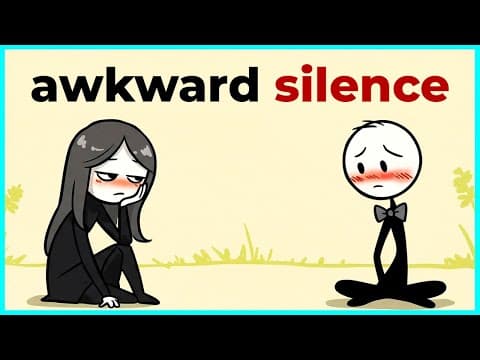
[0:00]Picture this, you're at a party. Someone approaches you and after "Hi, how are you?" Your brain just freezes. That awkward silence stretches forever while you desperately search for literally anything to say. Sound familiar? What if I told you this happens because your brain is actually working too well? Not because you're boring. Stick around because I'm about to flip everything you think you know about conversation on its head. Here's the truth nobody talks about. You don't have a nothing to say problem. You have a too much to filter problem. Your mind generates hundreds of potential responses every minute, but there's a little voice in your head going, nope. That is weird. They won't care about that. That's too random. This internal critic is literally stealing your words before they leave your mouth. But what if there was a way to turn off that critic? What if you could access all those thoughts your brain keeps rejecting? Today I'm going to show you exactly how to do that. Plus give you a complete toolkit that'll make you the person everyone wants to talk to. Let's start with the most game-changing technique I've ever discovered. I call it the five-second decision rule and it's going to sound almost too simple to work. Here's how it works. When someone says something to you, you have exactly five seconds to respond with whatever pops into your head first. Not the second thought, not the better version, the first thing your brain serves up. Why does this work? Because your first instinct is usually more authentic and interesting than anything your filter would approve. When someone mentions they just bought a new car, your first thought might be, oh, I wonder if they got a good deal, or my cousin just got scammed at a dealership. Don't analyze which one sounds better, just pick one and go with it. The scam story might lead to a fascinating conversation about negotiation tactics or family drama. The deal question might uncover their research process or financial philosophy. Both are goldmines, but only if you actually say them instead of filtering them out. Try this today. Set a mental timer, five seconds max. You'll be amazed at how much more natural and engaging your conversations become when you stop trying to be perfect. Now here's something that might blow your mind. The best conversation lists aren't the smartest people in the room. They're the ones who ask the best questions. And the secret to great questions? Strategic ignorance. Strategic ignorance means playing dumb about things you actually understand pretty well. When someone mentions they're a graphic designer instead of showing off what you know about design software, try, that sounds creative. What's a typical day like for you? Or what's the weirdest project you've ever worked on? This technique is powerful because it does two things simultaneously. It makes the other person feel like an expert, which feels amazing, and it gives you insider information you genuinely wouldn't have learned otherwise. I learned this from watching late night talk show hosts. They're talking to A-list celebrities, experts, authors, people way more accomplished than most of us will ever meet. But notice what the best hosts do? They ask questions a curious 12 year old would ask. "How does that even work?" "What's that like?" "Has anything crazy ever happened?" The magic isn't in showing how much you know. It's in showing how much you want to learn. People will literally queue up to talk to someone who makes them feel interesting and important. Here's where things get really interesting. Every story someone tells you contains multiple conversation threads like a spiderweb of potential topics. Most people grab one thread and when it breaks, they panic. I'm going to teach you to see all the threads. Let's say someone tells you I was supposed to meet my friend Sarah for brunch yesterday but she canceled last minute because her dog got sick, so I ended up trying that new Korean place alone. Most people would respond to just one element, maybe, oh no, is the dog okay? But look at all the conversation gold you're missing. The friendship dynamic with Sarah, their feelings about eating alone, Korean food experiences, weekend routine changes, pet ownership stories, restaurant exploration habits. Here's the game changer. Don't just identify these threads, acknowledge multiple ones in your response. Try something like, oh wow, sick dog drama and discovering new food solo, that's quite a plot twist for a Sunday. How was the Korean place? And more importantly, is the dog all right? This technique shows you're actually listening to their whole story, not just waiting for your turn to talk. Plus, it gives them multiple directions to take the conversation, making it flow naturally instead of feeling forced. Now let's talk about the most powerful conversation tool you'll ever master. The Curiosity Cascade. This is where you turn one question into a chain reaction of discovery. Instead of asking one question and then jumping to your own story, you ask follow-up questions that go deeper into their experience. It's like being a detective but for interesting life details instead of crimes. Here's how it works. Someone says, I just got back from a work conference in Denver. Level one, how was the conference? Level two, what was the most surprising thing you learned? Level three, how are you planning to use that in your current projects? Level four, do you think your company will actually implement changes or is it one of those great ideas that disappear situations? See what happened there? We went from surface level small talk to them sharing real insights about their work environment, company culture, and personal frustrations or excitement. That's where real connection happens. The key is genuine curiosity, not curiosity as a technique, but actually being fascinated by how other people navigate their lives. Everyone has developed unique strategies for dealing with common human problems. Your job is to uncover those strategies. All right, let's get practical. Even with all these techniques, sometimes your mind will go blank. It happens to everyone, including professional speakers and comedians. The difference is having a mental emergency kit ready to deploy. Here are five conversation lifelines that work in almost any situation. The environmental observation. Comment on something in your shared space. This playlist is actually perfect for this kind of weather. Or I love how they've decorated this place, it feels like someone's living room. Take something obvious and question it. You seem like someone who has strong opinions about coffee, or I bet you have some stories about dealing with difficult customers. The hypothetical, pose an interesting what if scenario. If you could redesign your job from scratch, what would you change first? Or, what would you do if you won like $50,000 tomorrow? Not life changing money, but enough to be interesting. The callback, return to something they mentioned earlier. Actually, I keep thinking about what you said about your sister's business. How did she even get started with that? The genuine compliment. Notice something authentic and ask about it. You seem really passionate when you talk about teaching. What got you into that field? Keep two to three of these ready at all times. They're not conversation tricks. They're genuine ways to connect when your brain temporarily goes offline. Finally, let's talk about something nobody teaches but everyone needs to know. How to end conversations without making it weird. The perfect exit formula has three parts, appreciation, reason, and bridge. Appreciation, this has been really interesting. I had no idea marketing psychology was so complex. Reason, I should probably grab some coffee before they close. Bridge, I'd love to hear how that project turns out. Mind if I connect with you on LinkedIn? This works because you're acknowledging the value of the conversation, giving a non-personal reason for leaving, and creating a pathway for future connection. No one feels rejected, and you leave the door open. Remember, ending a conversation well is just as important as starting one. It's the last impression you leave and it determines whether that person would be excited to talk to you again. Look, here's the bottom line. Conversation isn't about being the most interesting person in the room. It's about being the most interested person in the room. It's about creating space for authentic human connection in a world that's becoming increasingly digital and disconnected. Thanks for watching. See you.
How To (Mostly) Never Run Out Of Things To Say
ThatGuy
7m 54s1,424 words~8 min read
YouTube auto captions
Transcript source
YouTube auto captions
This transcript was extracted from YouTube's auto-generated caption track. The transcript below is server-rendered so it can be read, searched, cited, and shared without opening the original YouTube player.
Pull quotes
[0:00]That awkward silence stretches forever while you desperately search for literally anything to say.
[0:00]What if I told you this happens because your brain is actually working too well?
[0:00]Stick around because I'm about to flip everything you think you know about conversation on its head.
[0:00]Your mind generates hundreds of potential responses every minute, but there's a little voice in your head going, nope.
Use this transcript
Related transcript hubs
Watch on YouTube
Share
MORE TRANSCRIPTS