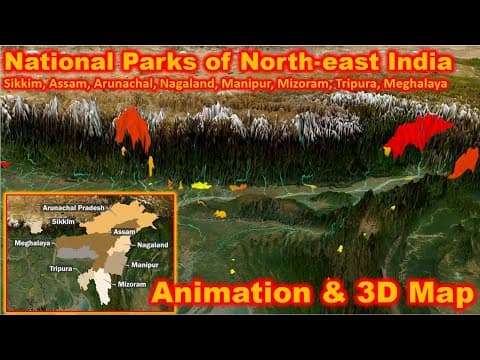
[0:11]Hello friends, welcome to another video of Zeta Axis, and today we are going to discuss the National Parks of North-east India. In this, we will cover the National Parks in all of the states of North-east India, including Sikkim, Assam, Arunachal Pradesh, Nagaland, Manipur, Mizoram, Tripura, and Meghalaya. Now, remember, this is a series of seven videos in which we will cover all the National Parks in India. We've already uploaded four videos related to this series, so do watch them. And in this video, we are going to cover the National Parks of North-east India. So let's start with Sikkim. Sikkim has only one National Park, that is Khangchendzonga National Park, which is located on the western side of Sikkim. The Khangchendzonga National Park was established in 1977. This is a high-altitude National Park. It is also a biosphere reserve under the Man and Biosphere program of UNESCO. It is also a UNESCO World Heritage, but in mixed heritage site, that is it has both natural and cultural importance. This is the only site in India which is classified under mixed heritage category in UNESCO World Heritage sites. It is also a important bird area by BirdLife International. Here, we can see that Khangchendzonga National Park is also a Khangchendzonga Biosphere Reserve under the UNESCO program. The Khangchendzonga National Park of Nepal is adjacent to the Khangchendzonga National Park of India. Here, we can see the landscape of this region, and we can clearly see that it is a high-altitude region where we see lot of glaciers. Here, we can see the 3D landscape of the Khangchendzonga National Park, and we can clearly see that it consists of high mountain ranges. Here is the satellite image of the Khangchendzonga National Park, which is marked by this red line. We can see that Khangchendzonga peak is located within the National Park, and it is the third highest peak in the world. We also have Zemu Glacier within the National Park. On the west of this Khangchendzonga National Park, we have Kanchenjunga Conservation Area, which lies in Nepal, and in the North, we have Qomolangma National Nature Preserve in Tibet. Here is the map of Khangchendzonga Biosphere Reserve. We can see that it goes along the border of Nepal. The Khangchendzonga National Park altitude ranges from 1,220 meters to over 8,586 meters. It is one of the highest altitude National Parks in India. The Tholung Monastery is located within the park's buffer zone. It is considered one of the most sacred monasteries in Sikkim. The vegetation of the Khangchendzonga National Park changes with the increase in altitude. We can see that in the lower margins we have temperate broadleaf and mixed forests, mainly comprising of oaks, firs, and birches, and also maple trees. And at the higher altitudes, we have alpine meadows, that is, they are alpine grasslands. The snow leopard is an important animal living in this National Park. The other important animals living over here are Red Panda, Himalayan black bear, Musk Deer, and Bharal or Blue Sheep. Now let's move on to Assam. In Assam, we have seven National Parks, so let's start with Raimona National Park. The Raimona National Park was established in 2021, so it is a very new National Park. The landscape over here is basically Terai type, that is rivers from the mountains, they come to the plain region. Now, they lose their speed, and they flow into various channels forming marshlands, therefore, it has Terai type climate. Here, we can see Raimona National Park is located on the western side of Assam, right on the border of Assam. We can see that it is located in Kokrajhar district of Assam, and to the western side, we have Saralbhanga River, and to the west side, we have Sankosh River.
[4:30]The Shivaliks are located just north of Raimona National Park, we can clearly see that rivers originate from the Shivaliks, they come to this plain region, and they flow into multiple channels, therefore, it has a Terai type ecosystem. Here is the closer view of this region, and we can clearly see that these are the Shivaliks and these are the plain region. Here, in 3D view, we can clearly see this is the plain region, and these are the mountains. So, rivers flow from here, they divide into multiple channels and form Terai type climate. To the west of Raimona National Park, we have Buxa National Park, and to the east, we will have Manas National Park. To the north, we have Phibsoo Wildlife Sanctuary in Nepal, Sankosh River flows to the western side, and Saralbhang River flows through the eastern side. Here, we can see the Saralbhanga River on the eastern side. It is located in the Himalayan foothills, that is, the Terai region. The ecosystem over here mainly consists of forests, grasslands, wetlands, and riverine ecosystems. So, we know that wetlands and riverine ecosystem is there mainly because of multiple channels of rivers which flow through this region. It has a moist deciduous and semi-evergreen forest because of the large amount of rainfall that occurs in this region. The Golden Langur is an endemic species, together with Bhutan. So, it is also present in Bhutan as well as in Raimona National Park. It is a mascot of Bodoland region. Remember, the Raimona National Park is located in the Bodoland region. Here are the other animals which live over here, that is, clouded leopard, elephant, tiger, chital. The next important National Park is a special National Park because it has many accolades. It was established in 1990. It has a Terai type landscape, just like Raimona. It is a World Heritage Site under the natural category. It is a Tiger Reserve under Project Tiger. It is an Elephant Reserve under the Project Elephant, and it is part of Chirang Rupu Elephant Reserve. It is also a Biosphere Reserve, however it is not recognized by UNESCO, so it is in the Indian Biosphere Reserve category. This National Park is also part of Project Rhino, as well as it is an important bird area classified by BirdLife International. Here, we can see that Manas National Park is located on the northern side of Assam. It is basically on the border of Assam. It is located in the Chirang and Baksa district of Assam, and to the western side, we have Saralbhanga River, and to the west side, we have Sankosh River. It is located in the Chirang and Baksa district of Assam, and Manas River is the important river flowing through it, and National Park derives its name from this river. From here we can clearly see that it is located in the foothills of Himalayas. Here is the closer view of this National Park, where we can see that rivers originating from the Himalayas, they flow out from the hilly region, and then they flow into multiple channels over here, thus creating a Terai type of ecosystem. Here is 3D view where we can clearly see that it is located in the foothills of these Shivaliks. Just in the North of Manas National Park, we have Royal Manas National Park of Bhutan, and Manas River flows through it. The Terai ecosystem here includes grasslands, tropical evergreen forests, and riverine habitats. The tropical evergreen forests are found here mainly because of the large amount of rainfall that this region gets. Indian Rhinoceros were re-introduced in the Manas National Park. They were earlier present over here, but they became extinct basically because of heavy poaching during the Bodo uprising, so they were re-introduced in 2007.
[8:33]The Manas National Park, it is a Manas Tiger Reserve. It is also an Elephant Reserve, as well as it is also a Biosphere Reserve. The Manas National Park is part of Chirang-Ripu Elephant Reserve, which is a much larger Elephant Reserve. The Wild Water Buffalo is also found in this National Park. It has a significant population of this Wild Water Buffalo. Pygmy Hog is another important animal living in this National Park. These are small pig-like animals. The other important animals which live in this National Park are Clouded Leopard, Elephant, Tiger, Hispid Hare, Golden Langur, as well as the Assam Roof Turtle which is critically endangered. Next is Orang National Park, which was established in 1999. This National Park has a riverine marshland-like ecosystem. It is a Tiger Reserve under Project Tiger, and it is also a part of Project Rhino. It is also an Important Bird Area. We can see that the Orang National Park is located in Central Assam. Here, we can see that the Orang National Park is located on the northern banks of Brahmaputra River. Dhansiri River flows through the northern or western side of this Rajiv Gandhi Orang National Park. Remember, there is another Dhansiri River, which flows from Karbi Anglong Plateau, so they are basically two Dhansiri Rivers. This Orang National Park is located in Darrang and Sonitpur district of Assam, and we can see that it is located just adjacent to the Brahmaputra River. Here, we can clearly see that it is located on the north of Brahmaputra River. This is the Brahmaputra River, which gets divided into several braids or several channels, and therefore, this National Park has riverine marshland-like ecosystem.
[10:48]Here is the 3D view of this region. Where we can clearly see that it is basically located in the plains of Assam Valley. To the north, we have Himalayas, and to the south, we have Meghalaya Plateau, and in between this Assam Valley, we see that it is located in a plain area. The rivers which flow, they flow and form several channels in this region, which creates marshland-like ecosystem. Here is the satellite view of this region. We see the Brahmaputra River, we see the Dhansiri River. During the monsoon season, the park becomes a veritable flood plain with the many streams overlapping each other. The National Park has a characteristics of marshlands and grasslands, which is very similar to that of Kaziranga National Park. And therefore, this National Park is also called Mini Kaziranga. It is also a Tiger Reserve, going by the name Orang Tiger Reserve. It is the only stronghold of the rhinoceros on the north bank of the Brahmaputra. The other important animals found over here are Wild Water Buffalo, Elephant, Tiger, Indian Hog Deer, Ganges River Dolphin, which is an endangered species, and Pygmy Hog, which is again an endangered species. Next is Nameri National Park, formed in 1998. It has a Terai type ecosystem. It is also a Elephant Reserve, and it is part of Sonitpur Elephant Reserve. It is also a Tiger Reserve, as well as it is Important Bird Area, classified by BirdLife International. Here, we can see Nameri National Park, which is located on the northern boundary of Assam. It shares its boundary with Arunachal Pradesh. It is located in Sonitpur district, and we see that a river, which can be called as Bharali, Jia Bharali, or Kameng. This river is called by all these three names, it passes through the western margin of Nameri National Park. We see that again this is also located in the foothills of Shivaliks, and therefore it has Terai type of ecosystem. Here, we can see that it is part of Sonitpur Elephant Reserve, which is located on the border of Arunachal Pradesh, and in Arunachal Pradesh, just adjacent to Sonitpur Elephant Reserve, we have Kameng Elephant Reserve. Here is the 3D view of this landscape. Where we can clearly see that this is also located in the foothills of Shivaliks. So, again, the rivers originating from these mountains, they exit the Himalayas and they flow into several channels because they lose their speed, and thus forming a marshland-like ecosystem, which is called Terai ecosystem. Here, we can see the satellite view of Nameri National Park. We can see the rivers which are flowing through this region. It is located in the foothills of Himalayas, hence it is called Terai region. Here is the Jia-Bharali River, which flows through the southern and western boundary. The Terai ecosystem include grasslands, tropical evergreen forests and riverine habitats. The Nameri National Park is also part of Nameri Tiger Reserve. And just north in the Arunachal Pradesh, we have Pakke Tiger Reserve. The important animals which are found over here are Clouded Leopard, Elephant, and Tiger. Next is Kaziranga National Park. This is one of the important National Parks. It was established in 1974. The ecosystem over here is very close to the Orang National Park, that is riverine marshland because of the Brahmaputra River flowing through the northern margin of Kaziranga National Park. It is also a UNESCO World Heritage Site under natural heritage site. It is also a Tiger Reserve under Project Tiger. It is also part of Project Rhino, as well as it is also part of Elephant Reserve, it is part of Kaziranga-Karbi Anglong Elephant Reserve. It is also classified as important bird area by BirdLife International. Here, we can see that Kaziranga National Park is located in the Central Assam. It is located just south of Brahmaputra River. We can see that it is located in the districts of Nagaon and Golaghat. Here, we can see Brahmaputra River flowing through the northern margin of Kaziranga National Park, and we have Dhansiri River, this is the second Dhansiri River, which flows and it meets the Brahmaputra River just north of Kaziranga National Park. This flows through the eastern boundary of Kaziranga. Here on the southern side of Kaziranga, we have Karbi Anglong Plateau.
[15:39]Here is the closer view of this region, and we can clearly see the Brahmaputra River flowing through the northern margin of Kaziranga National Park. And because it divides and flows into several channels, the Kaziranga National Park is also a riverine marshland. Here is the 3D view of this region. We can clearly see that Kaziranga National Park is located in the foothills of Karbi Anglong Plateau. Here is the plain region, but here we can see the Karbi Anglong Plateau. This is the satellite view of this region, this is our Karbi Anglong Hills, this is Brahmaputra River, and this is Kaziranga National Park. Now, it is located on the banks of Brahmaputra River, and the ecosystem consists of marshlands, tall elephant grass, and dense tropical forests. The tall grasslands it comprise about 41% of the area, these grasslands are vital for herbivores animals. The forest mainly consists of tropical moist deciduous and semi-evergreen forests, and then the wetlands have numerous pools and marshlands, providing habitat for aquatic and migratory birds. So, we can see that it is a combination of marshlands, forests, and grasslands. It is also an important bird area, marked by BirdLife International. The Kaziranga National Park has largest population of Indian Rhinoceros. Here, we can see that it is also part of Kaziranga Tiger Reserve. The Kaziranga National Park is also part of the Elephant Reserve, that is Kaziranga-Karbi Anglong Elephant Reserve, which covers a large area including the Kaziranga National Park. The Kaziranga National Park has largest population of each of these three species. It has the highest population of wild water buffalo, which is an endangered species, Barasingha, which is vulnerable, and Indian rhinoceros, which is again vulnerable. Next is Dibru-Saikhowa National Park. It was established in 1999. This again has riverine marshland type ecosystem. It is also part of Project Rhino, and it is part of Indian Biosphere Reserve. So, it is not recognized by UNESCO as a Biosphere Reserve, but Indian Government considers it as a Biosphere Reserve. Then we have important bird area marked by BirdLife International. Here, we can see that the Dibru-Saikhowa National Park is located on the eastern side of Assam. And we can see that it is located in the district of Dibrugarh and Tinsukia. It is located at the intersection of Brahmaputra, Dibang, and Lohit River. The Dibru-Saikhowa National Park is also a Biosphere Reserve, classified by Indian Government, so it is also a Biosphere Reserve. Here is a close-up view of this National Park. We can clearly see that it is mostly surrounded by rivers, and it is like an island, mostly an island between these rivers. Here is the 3D view of this National Park, where we can clearly see that it is located in the Assam Valley, and it is surrounded by mountains both in the North and South, and it is a riverine region where all the three big rivers meet. Here is the satellite view of this region. We can clearly see the rivers flowing on the South, rivers flowing in the North, and this is like an island in between this riverine region. Here is the map of this National Park, and we can clearly see that it is surrounded by rivers on all sides. The park was mainly created to help the conservation of rare white-winged wood duck. This is an important bird living in this National Park. The National Park consists of variety of vegetation types, including semi-evergreen forest, deciduous forest, littoral and swamp forests, as well as patches of wet evergreen forest. So, we see that mostly it has evergreen type of ecosystem, with some patches of deciduous forest. It is the largest Salix swamp forest in North-eastern India where Salix is basically a type or variety of tree. The important animals which live over here are wild water buffalo, tiger, capped langur, and black-breasted parrotbill. Next National Park is Dehing Patkai National Park, which was established in 2020. It has an ecosystem which is a mixture of hills and grasslands. It is also an Elephant Reserve, it is also an important bird area, marked by BirdLife International. If we see the location of Dihing Patkai National Park, then it is located on the eastern side of Assam. This Dihing Patkai National Park is located in the districts of Dibrugarh and Tinsukia. We can see that the Burhi Dihing River flows through Dihing Patkai National Park, giving it its name. This is a tributary of Brahmaputra River. The Patkai Bum Mountains are located just south of Dihing Patkai National Park. Here, we can see the closer up of this National Park, where we can clearly see that this is the Dihing Patkai National Park, located in the foothills of Patkai Bum. Some part of this Dihing Patkai National Park also covers area of Patkai Bum Mountains, and the river flows through it. Here is the 3D view of this region. Where we can clearly see that this National Park has some small mountains, compared to the mountains in the other National Parks, and it also has large plain area. Here is the satellite view, we can clearly see the river flowing through it, and the National Park and the Patkai Bum Mountains. Here, we can see another satellite view where we can see these are the National Parks, these are the Patkai Bum Mountains, and here we have Brahmaputra River. The National Park mainly has tropical evergreen forest and lowland rainforests. Dihing Patkai National Park is part of Dihing Patkai Elephant Reserve under Project Elephant. And here we can see that this Elephant Reserve covers a very large area compared to the Dihing Patkai National Park. And it is located adjacent to South Arunachal Elephant Reserve. The important animals which are found in this National Park are white-winged wood duck, tiger, and clouded leopard. Now let's move on to Arunachal Pradesh. And when we move on to Arunachal Pradesh, we see that the Arunachal Pradesh has two National Parks. Mouling National Park in the North and Namdapha National Park in the eastern side of Arunachal Pradesh. So let's see the Mouling National Park, which has a hilly terrain. Mostly hilly region is there in this National Park. It is also part of Dihang-Dibang Biosphere Reserve, which is part of Indian Biosphere Reserve, that is, it is not recognized by UNESCO, but recognized by Indian Government. Here, it is also an important bird area. This Mouling National Park was established in 1986. So the Mouling National Park is located in the northern side, it is located in Upper Siang district, and the Brahmaputra River passes through the eastern margin of this Mouling National Park. Here is the closer view of this National Park, where we can see that it consists of mountains which are covered with evergreen forests. Here is the 3D view of this National Park, where we can clearly see that this National Park has high mountains. This is the satellite view of this National Park, and this National Park got its name from the Mouling Peak, which is located within this National Park. Mouling is an Adi word which means red poison or red blood, and it is believed that this red latex comes from a tree species found within this National Park. The Brahmaputra River flows through the eastern margin of this National Park. The Mouling National Park and the Dibang Wildlife Sanctuary, they are fully or partially part of Dihang-Dibang Biosphere Reserve. So this Mouling National Park has some area which is part of Dihang-Dibang Biosphere Reserve. The Mouling National Park has rugged mountainous terrain, which we have seen in the previous slides that it consists mostly of mountainous region. It has elevations ranging from 750 to 3,064 meters, and it is characterized by steep slopes covered with dense evergreen and semi-evergreen forests. As the height increases, the type of forest also changes, at the lower elevation, we have tropical evergreen forest, and at the higher elevation we have temperate forest. The important animals found in this National Park are Red Panda, Tiger, Barking Deer, Takin which is a vulnerable animal, and Indian Leopard. The next National Park of Arunachal is Namdapha National Park, established in 1983. This National Park also has mainly mountainous region. It is also a Tiger Reserve under Project Tiger. It is also an important bird area, marked by BirdLife International. Here, we can see that Namdapha National Park is located on the southern or eastern side of Arunachal. It is located in Changlang district of Arunachal Pradesh. This Namdapha National Park is located at the point where the Mimsi Hills in the form of Dapha Bum meets with Patkai Bum. So, it is located by two mountain ranges, the Dapha Bum, which is part of Mimsi Hills, and Patkai Bum, they meet with each other. Here is the closer view of this region, where we can see that it consists mostly of mountains as well as some plain region, and a river is flowing through it. Here is the 3D view of this region. In this view, we can clearly see that there are mountains in this National Park, and in between this mountains, we see a river, which flows in the middle of this National Park. Here is a satellite view of this National Park. We can see the river flowing through this National Park is Noa Dihing River. And the Namdapha name comes from a combination of two Singpho words, nam, which means water, and dapha, which means origin, so the river originates from the Dapha Bum Glaciers, hence Namdapha National Park. It is the fourth largest National Park, and if we see on one side, we have Mismhi Hills, and on the other, we have Patkai Bum Hills. Now, this Namdapha National Park is the northernmost lowland evergreen rainforest in the world, lying at 27 degree north latitude. The type of trees within this National Park also changes with altitude. At the lowermost region, we have tropical evergreen trees, and at the higher, we have temperate broadleaf trees. It is also part of a Tiger Reserve Project, and it is part of Namdapha Tiger Reserve. The Namdapha National Park is also part of South Arunachal Elephant Reserve. There are four important species of big cats found in this National Park. It is Indian Leopard, Tiger, Snow Leopard, and Clouded Leopard. So all these four species of big cats are found in this National Park. The other important animal is Namdapha Flying Squirrel. It is a flying squirrel, and it is endemic to Arunachal Pradesh. The other important animals which live in this National Park are Hoolock Gibbon, which is a primate, then Musk Deer, Barking Deer, Takin, and Elephants. Now let's move on to Nagaland. When we go to the Nagaland, we see that Nagaland has only one National Park, which is called Intangki National Park. So let's see Intangki or Ntangki National Park, which was established in 1993. It has a terrain of small hills and grasslands, it is also part of Project Elephant, it is also an important bird area, marked by BirdLife International. When we see the Intangki National Park, we can see that it is located in the southwestern side of Nagaland. It is located in Peren district of Nagaland, and it is located in the foothills of Barail Range. Dhansiri River also flows along the margin of Intangki National Park. Here is the closer of this National Park, where we can see that it consists mainly of plain area as well as some mountains. Here is the 3D view of this region, and we will see that it consists of some small mountains and mostly of plain region. The Intangki National Park is also part of Elephant Reserve, which is called Intangki Elephant Reserve, which is located in Nagaland. Adjacent to the Intangki Elephant Reserve, we have Dhansiri-Lungding Elephant Reserve, and it is located in Assam. The Intangki National Park has variety of vegetation, including tropical evergreen forest, characterized by dense canopies, bamboo forests that provide habitat for various wildlife, grasslands that support diverse plant species adapted to open environments. Hoolock Gibbon is an important animal living in this National Park. The other important animals are Tiger, Sloth Bears, and Golden Langur. Next, let's move on to Manipur. And in Manipur, we have two National Parks. One is Sirohi National Park and second is Keibul Lamjao National Park. So the Keibul Lamjao National Park was established in 1977, and it is a marshland. It is also an important bird area, marked by BirdLife International. The Keibul Lamjao National Park is located in the center of Manipur. And it is located in Bishnupur district. It is located just on the southeastern side of Loktak Lake. And Manipur River, which originates in the Loktak Lake, it flows through this Keibul Lamjao National Park. The Keibul Lamjao National Park is located within Manipur Hills. And here we can see the closer view of this National Park, where we can clearly see this is the Keibul Lamjao National Park and this is the Loktak Lake. Here, we can see the 3D view of this region, where we can clearly see that it is a plateau which is located in between these mountainous regions. The Loktak Lake is located on the north side of this Keibul Lamjao National Park, which is marked by this green line. We can see that Loktak Lake is basically a Ramsar Wetland site. And Imphal River, as well as Manipur River, it flows through this National Park. Here on the southeastern side of Loktak Lake, we see Phumdis. And remember, the Loktak Lake is also a Ramsar site. If we have a closer up in this region, then we will see that it looks something like this. Here we can see some vegetation formations in this lake. And this is a specialty of this region. This is called Phumdis. Here is the original view of this lake. We can see that these are Phumdis, which are floating mass of vegetation, which is actually created by accrual of organic detritus and biomass with soil particles that thickened over time to solidify. This is the only floating National Park in the world. These Phumdis, they float over the water, and that is why this is called a floating National Park. Sangai River is an important animal which lives in this Phumdis, and as it moves over it, it looks like it is dancing, hence it is called Dancing Deer. It is also called as Brow-antlered deer and Eld's deer. This park was mainly created for the conservation of this animal. Next is Shirui National Park, which was established in 1982. It has mountainous terrain, and it is also an important bird area, marked by BirdLife International. Here, we see Shirui National Park, which is in the northern side of Manipur. And this region is also located in the district of Ukhrul and Kamjong. It is located on the boundary of these two districts of Manipur. It is located in Manipur Hills. And if we look at the close up of this National Park, we can clearly see that it has a mountainous terrain. If we see the 3D view of this terrain, then we can clearly see that this is also located on the crest of mountain peaks in the Manipur Hills. Here is the satellite view of this National Park. We can clearly see chain of mountains in this National Park. The vegetation in this National Park at the lower level is of tropical evergreen forest, and at the higher level, we have temperate broadleaf forest. Shirui Lily is an important species, which is endemic to this National Park. It is a rare Indian species of plant found only in the upper reaches of the Shirui Hill ranges. The two important birds which live in this region are Blyth's Tragopan and Mrs. Hume's Bar-backed Pheasant. Indian Leopard and Tiger are also found in this National Park. Now let's move on to Mizoram. And Mizoram again has two National Parks. These National Parks are Murlen National Park and Phawngpui Blue Mountain National Park. The Murlen National Park was established in 1991, and it is having a mainly mountainous terrain. It is also an important bird area, marked by BirdLife International. So, the Murlen National Park is located in the district of Champhai. Here, we can see the close up of this National Park, where we can see that it consists of mainly mountains. Here is the 3D view of this region, where we can clearly see that this National Park is also located in the crest of mountain peaks. Here is the satellite view of this region. The Murlen National Park has tropical semi-evergreen forest, subtropical broadleaved forests, submontane forests, bamboo groves, and a variety of orchids and rhododendrons.
[33:38]The important birds which live over here are Blyth's Tragopan, and Mrs. Hume's Bar-backed Pheasant. The other important animals living over here are Stump-tailed Macaque, Pig-tailed Macaque, Elephants, Red Panda, Hoolock Gibbon, and Indian Bison. Next National Park of Mizoram is Phawngpui Blue Mountain National Park, established in 1992. It is also having mainly mountainous terrain, and it is also an important bird area. The Phawngpui is located in the southern side of Mizoram. It is located within the district of Lawngtlai, and it is having Phawngpui Peak. And it is because of this mountain peak, this National Park is named Phawngpui Blue Mountain. Here is the close up of this National Park, where we can see that it consists of mainly mountainous terrain. Here is the 3D view of this region. We can clearly see that it is also located in the higher regions of the mountains. This is the satellite view of this region. The park bears its name from the mountain Phawngpui, often called the Blue Mountain of Mizoram, which is the highest mountain peak in the state. It features subtropical broadleaf and tropical evergreen forests, bamboo groves, and a variety of orchids and rhododendrons. The important animals which are found over here are Clouded Leopard, Tiger, Stump-tailed Macaque, and Asian Black Bear. Now let's move on to Tripura. Tripura again has two National Parks. Bison or Rajbari National Park and Clouded Leopard National Park. So let's start with Rajbari or Bison National Park, which was established in 2007, and as the name suggest, this National Park is mainly dedicated to Indian Bisons. Having a closer view, we see that this National Park is located in South Tripura district, and here is the close up, where we can see that it is mainly plain with some mountains in this region. In this 3D view, we can clearly see that this region has some very small mountains compared to the mountains in the other National Parks, and it also has large plain area. This is the satellite view of this region. This park was established to restore the natural living habitat of Indian Bisons and their protection. This park has various types of vegetation, including tropical semi-evergreen forest, East Himalayan lower Bhabar Sal, and moist mixed deciduous forest, as well as Savannah woodlands. Bamboo is abundantly available in this National Park. The next is Clouded Leopard National Park, which was established in 2008 or 2007. There is some confusion over the internet, so I have included both the years. The Clouded Leopard National Park is located in the Central or northern side of Tripura, in the Sepahijala district of Tripura. Here is the close up of this region, where we can see that there are some small hills and plain region. In the 3D view, we can clearly see that this National Park has small hills and some plain region. Here is the satellite view of this region. Clouded Leopard is the primary attraction of this National Park, and it is suggested by its name that is Clouded Leopard National Park. The other animals which are found over here are Phayre's Leaf Monkey and Hoolock Gibbon. Now let's move on to Meghalaya. Meghalaya again has two National Parks. The first is Balphakram National Park, and the second is Nokrek National Park. So let's start with Balphakram National Park, which was established in 1986 or 1985, there is again some confusion over the internet. The terrain over here is mainly mountainous. It is part of an Elephant Reserve under Project Elephant of India, and it is also an important bird area, marked by BirdLife International. The Balphakram National Park is located on the southern side of Meghalaya. It is located close to the boundary of Bangladesh. It is located in South Garo Hills, and it is also part of Garo Hills.
[38:21]Here is the map of this National Park, where we can see the Balphakram National Park over here. The Balphakram basically means land of the eternal wind, according to the myth of Garo people, hence the name Balphakram. The vegetation here includes subtropical forests, grasslands, and bamboo. It also has carnivorous plants like the pitcher plant or Drosera plants. The Indian Bison is also having a significant population in this National Park. The important animals living over here are Red Panda, Asian Golden Cat, Tiger, and Wild Water Buffalo. The second National Park of Meghalaya is Nokrek National Park. Again, over the internet, there is some confusion about the date when it was established. So you can verify it on your own. It also has mainly mountainous terrain. And this National Park is also part of Man and Biosphere program of UNESCO. It is recognized by UNESCO as a Biosphere Reserve. It is also an Elephant Reserve and important bird area. Here, we can see that Nokrek is located on the western side of Meghalaya, and it is located in West Garo Hills and South Garo Hills. The Nokrek National Park is located within the Garo Hills. And this Nokrek National Park is also part of Garo Hills Elephant Reserve. The Nokrek National Park is also a Nokrek Biosphere Reserve, recognized by UNESCO. Here is the closer view, where we can see a escarpment over here. In the 3D view, we can clearly see that it has an escarpment, and this National Park is located along that escarpment. Here is the satellite view of this region, and this Nokrek is the highest peak in the Garo Hills, and it rises up to 1500 meters. And this is characterized by rolling hills and steep slopes with dense forests. The Nokrek Biosphere Reserve is added to UNESCO list of Biosphere Reserves in 2009. And 90% of the Nokrek Biosphere Reserves is covered by evergreen forest, and some patches of bamboo forest, it can also be seen in the lower regions of this National Park. The Nokrek National Park is known for eight cat species found over here. And these eight cat species are Indian Leopard, Asian Golden Cat, Clouded Leopard, Marbled Cat, Tiger, Jungle Cat, Leopard Cat, and Fishing Cat.
[41:00]The other important animals living over here are Stump-tailed Macaque, Pig-tailed Macaque, Elephants, Red Panda, Hoolock Gibbon, and Indian Bisons. I hope you like our take on the National Parks in North-east India. If I have mispronounced some names, then do forgive me. If you have liked this video, then do subscribe to the channel and share with other friends, and if you like what we are doing, then you can use the Paytm ID to support us. Thanks for watching the video.


