[0:00]you know, if you're preparing for the UPSC, you're swimming in current events, right? And one issue that keeps coming up, frankly, it's quite alarming, is food adulteration here in India. Absolutely, it's everywhere in the news. It really is. Feels like a constant stream of reports showing how widespread it is, even with laws in place. So, for this deep dive, we're going beyond just the headlines. We want to really unpack the complexities of food adulteration, uh, using the reports and analyses available. We need to understand why it's sticking around and, you know, look at some potential solutions. Exactly. Think of this as getting the core insights you need without getting bogged down. Yeah. Especially important for UPSC aspirants as it touches on public health, governance, economics, the whole lot. Precisely. We'll pull out the crucial bits, show the connections and give that deeper context you don't always get from a quick news hit. Okay, sounds good. So let's start at the beginning. How do we actually define food adulteration in the Indian context? What are we talking about here? Well, the FSSAI, that's the Food Safety and Standards Authority of India, they define it pretty clearly. It's basically any intentional adding, swapping or removing of substances that harms the food's, you know, its nature, quality or safety. Intentional. Okay. But, and this is important, it also includes unintentional contamination, stuff that happens anywhere along the food supply chain. Ah, right. So from the farm, processing, distribution, all of that. Exactly. Things like pesticide residues getting in or contamination during handling or storage. It's broader than just someone deliberately adding chalk to flour, for instance. That really does widen the scope, doesn't it? Makes the challenge seem even bigger. It does, and the numbers, well, they really back that up. They show how serious this is. I bet. What kind of figures are we looking at? So FSSAI data from uh 2018-19 showed about 26.4% of food samples tested were adulterated. Wow, over a quarter. Yeah, and that was actually up from 23.4% just a couple years earlier in 2016-17. Not going in the right direction then. Not consistently, no. And more recently, for 2023-24, they tested around, I think, one and a half lakh samples, over 150,000. Okay. And over 33,000 of those didn't meet the standards, they were classed as non-conforming. 33,000, that's a huge number. So, non-conforming, what does that mean in practice? What are they finding? It essentially means the samples failed on safety or quality checks. Often, it involves adding things that shouldn't be there, maybe bulk up the weight or make it look better. Like using non-food stuff? Sometimes, yes. Things added purely for economic gain, you know, boosting profits, but risking public health. We've definitely seen some big scares. I mean, everyone remembers the Nestle Maggie issue, right? With the lead and MSG concerns. That was a huge one, shook public confidence. And it seems like the recent data isn't much better. You mentioned Rajasthan. Yes, reports from Rajasthan this year indicated nearly 25% adulteration in samples tested there. Led to some pretty big seizures of adulterated products. And it's hitting everyday staples, isn't it? Like dairy? Dairy is a major concern, absolutely. Paneer, for example, in Noida and Greater Noida, tests found a shocking 83% of paneer samples failed quality standards. 83%, that's unbelievable. It is. And even worse, 40% of those were deemed unsafe because they contain harmful chemicals like urea, starch, things they can cause serious kidney and digestive problems. That's a direct health threat right there, scary stuff. And it's not just fresh items, spices, too. About 12% of spice samples across the country failed safety tests. Yeah. Often due to pesticide residues being too high. Which brings us to those recent headlines about MDH and Everest spices, doesn't it? Exactly. The detection of ethylene oxide, which is a pesticide and it's classified as carcinogenic, led to recalls and rejections internationally. Singapore, Hong Kong, the US. Right, I saw that. Big blow to their reputation. Huge blow. And it highlights the risk, not just for export markets, but potentially for us here, too. Think about the anxiety for consumers, the losses for farmers, exporters, it ripples outwards. So, given all this, the stats, the examples like Maggie, paneer, the spices, the big question, the one UPSC aspirants need to grapple with, is why? Why is this still thriving despite FSSAI, despite the laws? Yeah, that's the core question, and it's not one single reason, it's a mix of deep-seated issues. Okay, like what? Well, first off, enforcement. Having the FSSAI since 2006 is one thing, but effectively enforcing the rules across such a massive, diverse country, that's a huge challenge. Resources maybe, personnel? Partly, yes, but it's also about the penalties often being too weak to really deter people. If the reward for adulterating food outweighs the risk of getting caught and fined, then it becomes a calculated risk for some businesses. Precisely. And then there's the structure of the food industry itself. A huge chunk, maybe 80%, operates in the informal sector. 80%, wow. Yeah, these are often small vendors, local markets, operating outside the main regulatory net. Very hard to monitor consistently. Plus, I read somewhere that many businesses aren't even fully aware of the FSSA rules. That's another layer, yes. Report suggests maybe a third of the industry isn't fully up to speed on the regulations they're supposed to follow. Lack of awareness is definitely a barrier. So weak enforcement, a huge informal market, lack of awareness. What else? The lack of a truly joined-up national policy is another factor. We don't have a single comprehensive food processing policy that aligns standards effectively across states and with international norms. How does that cause problems? Well, it makes internal enforcement patchy, for one, but it also hurts exports. If our standards differ significantly from, say, European or US standards, our products might get rejected. Like the spice issue we just talked about. Exactly. Or think about permissible lead limits. India's standard differs from the WHO's recommendation. These kinds of inconsistencies create vulnerabilities. Right, that makes sense. So policy gaps are a problem. What about within the food processing places themselves? Are there issues there? Definitely. Resource constraints are a big one. Many smaller units just don't have the funds or infrastructure for top-notch hygiene and safety. Leading to compromises. Often, yes, like reusing cooking oil way too many times. Saves money, but creates harmful stuff like acrolein and trans fats. Big health risks. Also, proper disposal of waste food and used oils is often inadequate, which can lead to contamination risks down the line. And then there's the human element. Meaning? A shortage of properly trained staff. FICCI identified this as a key challenge. I think they found a 25.53% gap in trained manpower. Lack of skills impacts safety practices. Okay, so vulnerabilities at the processing stage, too. What about earlier in the chain? Food production itself. That's crucial, too. There's often not enough monitoring right at the source, on the farms. Like with pesticides. Exactly. Improper or excessive pesticide use leads directly to residues in the final product. The ethylene oxide in spices is a stark example of this. Regulatory oversight for pesticide use and other basic safety laws at the farm level often isn't strong enough. It seems like there are gaps everywhere you look. Pretty much. And sometimes, the problem isn't even directly in the food initially, but comes from the surrounding infrastructure. How so? Take water pipes. While drinking water standards limit lead now, older building codes, like one from 1957, actually allowed lead pipes in overflow systems. Seriously? Yes. And if those old systems are still connected somehow in places where food is processed, lead could potentially leech into the food or water used. That's a less obvious contamination route. It is. Then you have issues like substandard fortification, maybe adding vitamins to rice, but not mixing it properly, technically that's adulteration because it doesn't deliver the promised nutritional quality. And labeling, can that hide these issues? It can, yeah. Misleading or incomplete labels can definitely mask problems, whether it's poor fortification or other hidden ingredients. Okay, so it's this whole complex web: enforcement issues, the informal market, policy gaps, resource problems in processing, supply chain monitoring gaps, even infrastructure. It's a lot. It really is. Now, India does have laws, right? We mentioned FSSAI, the Act. What's the legal framework meant to do and why isn't it fully working? Yes, the framework exists. The big one is the Food Safety and Standards Act, FSSA, from 2006. That created FSSAI as the single authority to oversee the whole food chain, aiming for safe, wholesome food. Right, the unified body. Then you have specific regulations under it, like for packaging and labeling from 2011. There's also the National Food Security Act of 2013, which mandates safe food distribution, especially for vulnerable groups. And consumer rights. The Consumer Protection Act, 2019, covers that, giving consumers power against unfair practices like selling adulterated food. FSSAI even has things like the DART manual. Detect adulteration with rapid test. It's a manual to help consumers do simple checks at home. Oh, interesting. So the tools and laws are there on paper. They are, but, as we've been discussing, the real-world effectiveness is hampered by all those challenges. Weak enforcement, the scale of the informal sector, resource shortages, they just undermine the impact of these laws on the ground. So the intent is there, but the practical follow-through hits major roadblocks. That sums it up pretty well. Okay. So, looking ahead then. To actually get a grip on this, what needs to happen? What are the key steps India needs to take? It has to be a multi-pronged attack really, no single silver bullet. First, really pushing the formalization of the food industry is key. Bringing more businesses into the official system. Exactly. Schemes like the PM formalization of micro food processing enterprises. That's the right direction. More oversight is fundamental. Makes sense. What else? We desperately need a more comprehensive, unified national food regulation policy. That probably means amending the FSSA, aligning it better with international standards like Codex, perhaps. Why is that alignment so important? Two big reasons. One, it raises the bar for food safety here at home. Two, it helps our exports. If our standards match global ones, fewer rejections, better market access. It also ties into broader goals like the sustainable development goals on hunger and health. Right, boosting trade and public health. Got it. What about resources? Absolutely critical. More funding, yes, but especially more trained people, both for the regulatory bodies like FSSAI and within the industry itself. How do we get more trained people? Leveraging existing skill development schemes like PM Kaushal Yojana or the PM internship scheme could help. Also, much stronger links between industry and universities or technical institutes. Build that pipeline of skilled workers. Precisely. And alongside that, we need tougher surveillance and much stricter penalties. Upping the fines and punishments. Definitely. The cost of getting caught adulterating food needs to be prohibitively high. It needs to be a real deterrent, not just a cost of doing business. Right. Make the risk far outweigh any potential reward. What about the practical side, like testing? We need to scale up things like the Food Safety On Wheels mobile labs, get testing capabilities out to more places, especially remote areas or markets. Take the lab to the food, basically. Exactly. And use more modern portable testing tech, spectrometers, maybe DNA-based tests for certain things for faster on-the-spot checks. And those technical issues you mentioned, like poor fortification or bad labeling? That needs better monitoring and verification systems. Really checking that what's claimed on the label or the nutritional value promised is actually delivered. Okay. What about the supply chain itself, like the waste oil problem? Streamlining the whole supply chain is vital. For waste, promoting initiatives like RUCO, repurposed used cooking oil, is a good step. Collect it, convert it into biofuel, get it out of the food chain. Makes sense, thinking systemically. That's the key, and adopting what's called a one health approach. Recognizing that human health, animal health, and environmental health are all linked. How does that apply here? It helps address both direct adulteration and the indirect stuff like pesticide residues from farming practices, antibiotics in meat from animal rearing, or contamination from environmental sources like lead in water systems. You have to look at the whole picture. Okay, holistic view, any role for technology? Huge role. Mandating traceability for high-risk foods seems essential, using things like blockchain or QR codes. So you can track a product right back through the supply chain. For transparency and quick action if something goes wrong. Exactly. If there's a problem, you can pinpoint it much faster. And finally, never underestimate the power of the consumer. Awareness campaigns. Yes, sustained campaigns. Getting resources like that DART manual widely known and used. Making it easy for people to report suspected adulteration, clear helplines, mobile apps, an informed, vigilant consumer base is a powerful force. So, putting it all together, it's clear food adulteration in India is, well, it's a massive, deeply rooted problem. Driven by this complex mix of weak enforcement, the huge informal sector, policy gaps, resource limits, infrastructure issues, the list goes on. It does. And tackling it requires this really comprehensive approach, stronger rules, aligned internationally, major investment in people and tech, formalizing the industry, cleaning up supply chains, and empowering consumers. Couldn't agree more. It needs action on all fronts. And it's crucial to remember, this isn't just about safe food, it impacts public health directly, our national food security, basic consumer rights. And for you listening, especially those preparing for the UPSC, getting your head around these interconnected issues is absolutely vital for understanding major current events shaping India today. Absolutely. It's an ongoing battle needing sustained effort from the government, the industry, scientists and, importantly, from consumers, too. That's a really important point. Which makes me think, beyond just being careful consumers ourselves, what role can we as citizens actually play? Are we using the reporting channels that exist? How do we push for those higher standards collectively? Something to think about. Definitely something to reflect on. Our discussion today has drawn heavily from various reports and analyses, particularly those featured in The Indian Express, which provide ongoing coverage of this critical issue. If you found this deep dive helpful for understanding this topic, which is so relevant for UPSC prep and just for being an informed citizen, please do hit like, subscribe for more analysis like this and drop a comment below. Yeah, let us know your thoughts or any questions you might have. Your engagement really helps us continue these important conversations. Thanks for tuning in.
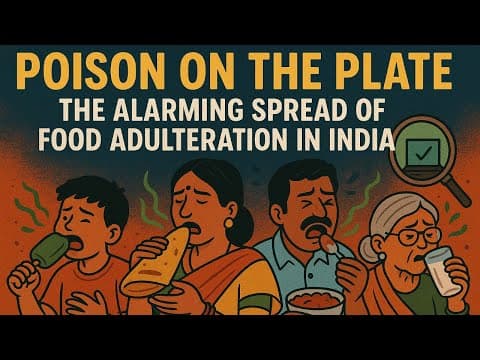
🥫 India’s Food Adulteration Crisis ⚠️Hidden Toxins on Your Plate 🍛Health, Law & Awareness 2025 - 808
ANVESHAN : Knowledge is Key to Success !
14m 54s2,496 words~13 min read
YouTube auto captions
Transcript source
YouTube auto captions
This transcript was extracted from YouTube's auto-generated caption track. The transcript below is server-rendered so it can be read, searched, cited, and shared without opening the original YouTube player.
Pull quotes
[0:00]you know, if you're preparing for the UPSC, you're swimming in current events, right?
[0:00]And one issue that keeps coming up, frankly, it's quite alarming, is food adulteration here in India.
[0:00]Feels like a constant stream of reports showing how widespread it is, even with laws in place.
[0:00]We want to really unpack the complexities of food adulteration, uh, using the reports and analyses available.
Use this transcript
Related transcript hubs
Watch on YouTube
Share
MORE TRANSCRIPTS


