[0:06]Binocs, what's in the box? This kitty is an automated external defibrillator, or AED. It's a special device used in emergencies like cardiac arrest. Wait, isn't that a heart attack? Oh no, it's easy to mix them up, but they aren't. So let me clear things up by explaining what actually causes a cardiac arrest? Zoom in! Imagine you're sitting in a class chatting with friends, when suddenly someone next to you collapses and stops responding. Panic sets in. What's happening? There's a chance they could be experiencing a cardiac arrest, which is one of the most serious medical emergencies. A lot of the time, cardiac arrest is misjudged as a heart attack. But though they're related, they're actually not the same thing. A heart attack happens when the flow of blood to a part of the heart muscle becomes blocked, usually by a clot. Causing that part of the muscle to start dying from lack of oxygen. To know more, check out our video on the same. On the other hand, cardiac arrest occurs when the heart has stopped pumping blood effectively through the body. So oxygen can't reach the brain or other organs. This instantly puts life at risk. But what really causes cardiac arrest? To get there, you have to understand a little about how the heart works. You see, the heart is basically an electrical pump. Tiny electrical signals tell it when to squeeze and relax, so it keeps blood moving. Sometimes, those electrical signals get messed up, plunging the heart into chaos. The most common cause is ventricular fibrillation, where the heart's lower chambers, instead of pumping effectively, start quivering chaotically. This can be triggered by existing heart disease. Inherited electrical disorders like long QT syndrome. Or even a sudden chest blow during activities. What makes cardiac arrest especially frightening is how quickly it can happen. One moment someone might feel perfectly fine or just have mild warning signs like a fluttering in the chest, dizziness or feeling unusually tired. Often though, the first sign is dramatic. They collapse, stop breathing normally, and don't respond when spoken to or shaken. You might notice they're not moving, their skin turns pale or blue, and there's no normal pulse. So, if you ever witness someone collapse and suspect cardiac arrest, what should you do? Firstly, stay calm and shout for help. Get someone to call emergency services immediately. Then, check if the person is breathing and responsive. If they aren't, it's time for action. Doing CPR, cardiopulmonary resuscitation, by pushing hard and fast in the center of the chest at about 100 to 120 compressions per minute. Like the beat of Staying Alive, can double or even triple a person's chances of survival. If there's an automatic external defibrillator, AED nearby, use it. These simple machines deliver a shock to try and restart the heart's normal rhythm and they'll literally talk you through the steps. Every minute that passes without CPR or defibrillation, make survival less likely. So, acting quickly really matters. I know, cardiac arrest is terrifying, but understanding what it is and knowing what to do could help you save a life someday. Trivia time. Did you know, every minute without CPR after a cardiac arrest, decreases the chances of survival by about 7-10%? Also, cardiac arrest can strike anyone, at any age, often with little or no warning. Sketching time. Today's sketch of the day goes to Bentley Edison. Hope you learned something new today. Until next time, it's me Dr. Binocs, Zooming out.
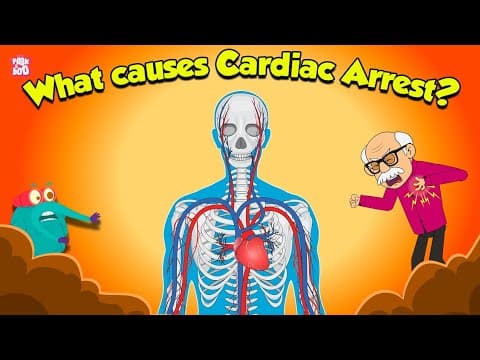
Heart's Electrical System Failure 🫀 What Causes Cardiac Arrest? | Heart Conditions | Dr. Binocs
Peekaboo Kidz
5m 23s590 words~3 min read
YouTube auto captions
Transcript source
YouTube auto captions
This transcript was extracted from YouTube's auto-generated caption track. The transcript below is server-rendered so it can be read, searched, cited, and shared without opening the original YouTube player.
Pull quotes
[0:06]Imagine you're sitting in a class chatting with friends, when suddenly someone next to you collapses and stops responding.
[0:06]There's a chance they could be experiencing a cardiac arrest, which is one of the most serious medical emergencies.
[0:06]A heart attack happens when the flow of blood to a part of the heart muscle becomes blocked, usually by a clot.
[0:06]On the other hand, cardiac arrest occurs when the heart has stopped pumping blood effectively through the body.
Use this transcript
Related transcript hubs
Watch on YouTube
Share
MORE TRANSCRIPTS


