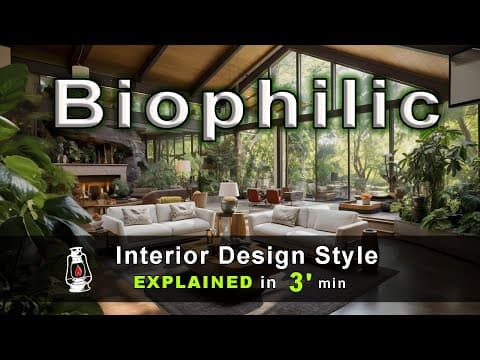
[0:01]The biophilic interior design style. Bridging nature and space. The biophilic interior design style embodies an inspiring fusion of nature and architecture, emphasizing the connection between humans and the natural environment within the spaces we inhabit. This intriguing approach harmonizes aesthetics and functionality, placing natural elements at its core. Biophilic design strives to create a balanced environment that enhances emotional well-being, productivity, and sustainability. Through thoughtfully placing plants, using natural materials, and crafting fluid, organic shapes, this style achieves a subtle equilibrium between modernity and the natural world. The union of nature and space through the biophilic interior design style embarks on a journey towards a more sustainable, aesthetically pleasing, and functional environment that profoundly influences our connection with nature and inner harmony. Key elements of the biophilic style. Natural presence. This style underscores the integration of natural elements such as plants, stone, wood, and water within interiors to establish a refreshing atmosphere. Natural light. Maximizing natural light through windows and creating open spaces that facilitate light entry, connecting the interior with the outside world. Use of sustainable materials. Employing eco-friendly materials like recycled wood, natural fabrics, and low-impact paints to minimize environmental footprint. Organicity and fluidity. Creating soft lines, curved shapes, and fluid transitions between different areas within the space to evoke harmony. Sensory stimulation. Incorporating various textures, sets, and sounds of nature to encourage comprehensive sensory experiences. Conclusion. Uniting humans, space, and nature. The biophilic interior design style is not merely an aesthetic approach, but also a philosophy that imparts deeper meaning and functionality to spaces. By connecting us with nature, this style supports emotional stability, creativity, and productivity. Its sustainability underscores responsibility towards the environment and future generations.
[2:30]Thank you for watching. We hope you enjoyed it, so a thumbs up helps in creating new content that you might also like.


