[0:00]Podrías hacerte rico vendiendo tacos al pastor en la antigua Roma. Día 1. Llegas al foro con un trompo de cerdo marinado, piña y tortillas de maíz. Montas tu estación, ollas de barro con salsas, cebolla picada y cilantro fresco. Enciendes el fuego, el olor del pastor y la piña asada atrae la mirada de muchos. Un gladiador se detiene, 20 legionarios frenan en seco tras él. Cortas la carne, la piña vuela, le entregas su primer taco de los dioses. Día 2. La voz se corre por todo Roma, tienes fila antes del amanecer. Todos babean viendo cómo preparas sus taquitos. Dos monedas por taco. Para el mediodía has ganado el sueldo de un mes. Día 3. Desastre. El calor del Mediterráneo pudre tu carne y marchita el cilantro. Cruzas el Tíber al amanecer, buscas un criador de cerdos en las colinas. Encuentras carne fresca y especias locales. Crisis resuelta. Día 4. Sócrates viaja a Roma por uno de tus tacos. Te pregunta si la tortilla es tu poder. ¿Qué eres tú sin ella? Le das un taco con salsa roja extra, sus ojos casi explotan. Día 5. Un asesor del emperador muerde un taco al pastor. A la mañana siguiente eres convocado al Palatino. Ahora sirves banquetes privados, el oro sustituye a la plata. Día 30. 12 puestos, trompos de carne en cada distrito de la ciudad. Copias baratas por todas partes, pero nadie tiene tu salsa. No les diste comida, les diste una nueva religión.
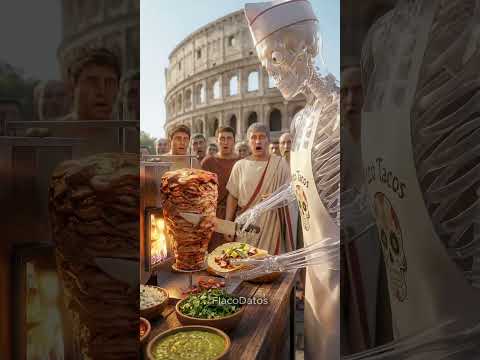
Podrías hacerte rico VENDIENDO TACOS AL PASTOR EN LA ANTIGUA ROMA?
FlacoDatos
YouTube auto captions
This transcript was extracted from YouTube's auto-generated caption track. The transcript below is server-rendered so it can be read, searched, cited, and shared without opening the original YouTube player.
This narrative describes a hypothetical scenario where one could become incredibly wealthy by introducing tacos al pastor to ancient Rome. On the first day, the vendor sets up shop in the Roman Forum, attracting immediate attention and delight from a gladiator and legionaries with the unique flavors of marinated pork, pineapple, and tortillas. The success is instant, with long lines forming by day two and significant profits being made.
The venture faces a challenge on day three when the Mediterranean heat threatens to spoil the ingredients. The quick-thinking vendor resolves this by sourcing fresh meat and local spices from outside the city. The fame of the tacos spreads so widely that even a philosopher like Socrates travels to Rome to try them. By day five, the tacos catch the attention of an emperor's advisor, leading to an invitation to serve private banquets and a substantial increase in earnings, switching from silver to gold as payment.
Within 30 days, the business has expanded to 12 stands across Rome, despite the emergence of numerous copycat vendors. The key to the original vendor's continued success and differentiation lies in their unique salsa, which competitors are unable to replicate. The story concludes by emphasizing that the vendor didn't just provide food, but introduced a new culinary sensation that was akin to a new religion for the Romans.
Key Takeaways
- Introducing tacos al pastor to ancient Rome would lead to immediate and widespread popularity.
- The initial success would generate substantial wealth, earning a month's salary in half a day.
- Challenges like food spoilage due to climate can be overcome with resourcefulness, such as sourcing fresh, local ingredients.
- The unique and delicious flavor profile of the tacos would attract a diverse clientele, from soldiers to philosophers and even imperial advisors.
- Royal patronage would elevate the business, transitioning from street vending to private banquets and increasing profits significantly.
- Rapid expansion would occur, leading to multiple stands across the city within a month.
- Maintaining a unique selling proposition, like a special salsa, is crucial for fending off competition and preserving brand identity.


