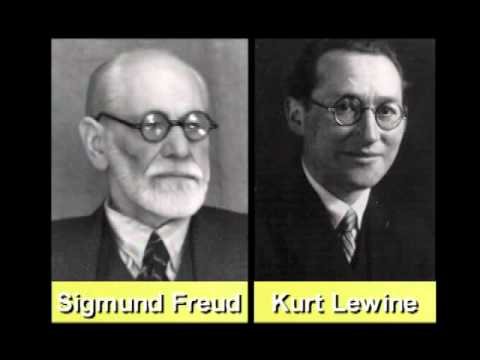
[0:07]Where did all the attention to human factors really start? Again, that question has multiple answers depending on which human factors discipline you're really talking about. We can go all the way back to Leonardo da Vinci as one of the first to study human factors. That would have been in the late 1600s. He drew the Vitruvian Man with all the anthropometric measures of strength and size. By the way, his drawings are unbelievable, and you should see them if you ever get the opportunity. In the early 1900s, industrial engineers, such as Frank and Lillian Gilbreth, were trying to reduce human error in medicine. They were using callbacks when communicating in the operating room. Scalpel, scalpel. That same procedure is used with most aviation communications today. At the same time, the Wright brothers were figuring out how to fit a human into the first aircraft. Shortly after that, the US Army was determining the required physical and mental characteristics for flight training candidates. They were also considering human factors as contributing causes to accidents. Jump to the 30s when a lot of interesting psychology was going on in Europe with the likes of Sigmund Freud and the famous organizational psychologist Kurt Lewin. But I should really move to modern human factors and especially to maintenance human factors history. So onto the 1940s during World War II, the military in many countries began to notice a lot of training and operational accidents were caused by human error. Those errors were often a result of poor aircraft cockpit layout and non-standardized displays and controls. On the maintenance side, it became obvious that maintenance was neglected because the aircraft design did not give proper attention to maintainability. And you can be sure those old piston engines turning complicated propellers needed a lot of maintenance. That led to efforts to design and build aircraft not only for flying, but also for fixing. The industry has come a long way in design for maintainability. Continuing on this rapid history lesson, the Human Factors and Ergonomic Society was established in 1957. So it has been going on for 50 years now. There are 5,000 members today. I can make another 30-year jump to 1988 when the top blew off an Aloha Airlines 737 over the Pacific. That event drew the attention of North America and the entire world. It caused the FAA to increase focus on the issues of aging aircraft and also on maintenance human factors. By 1989, the FAA, as well as Transport Canada, appointed personnel to dedicate themselves to maintenance human factors. Since then, this type of activity has continued throughout the world. Some regulators have set strict standards for establishment of maintenance human factors programs. The FAA stands as a leader in their investment in research and guidance materials on this topic. But I can assure you that the maintenance human factors regulations are on the way at FAA as well. That topic is excellent for discussion in these maintenance human factors presentations. Because the FAA is going to listen to public ideas before any human factors rules are enacted.
The History of Human Factors - FAA Human Factors
FAASTeam - Safety Videos Archive -Unofficial-
3m 34s520 words~3 min read
YouTube auto captions
Transcript source
YouTube auto captions
This transcript was extracted from YouTube's auto-generated caption track. The transcript below is server-rendered so it can be read, searched, cited, and shared without opening the original YouTube player.
Pull quotes
[0:07]Again, that question has multiple answers depending on which human factors discipline you're really talking about.
[0:07]We can go all the way back to Leonardo da Vinci as one of the first to study human factors.
[0:07]He drew the Vitruvian Man with all the anthropometric measures of strength and size.
[0:07]By the way, his drawings are unbelievable, and you should see them if you ever get the opportunity.
Use this transcript
Related transcript hubs
Watch on YouTube
Share
MORE TRANSCRIPTS


