[0:04]Hey everybody, it's coach Eric here with New Patient Group. We're going to take you through a quick journey that's going to help us to set up a format for your new patient call. Right, a lot of things I'm sure you've been learning throughout the context of the new patient phone course, a lot of things that you've learned as you've gone through the art of bragging or so many other skills that are essential. But this is really about just creating a structure as well as an appreciation for what we want to accomplish in each of the steps of our new patient call. Right, so with that we're going to be moving into, as you see here, the six steps to the new patient call. We're going to define what each of those steps are, and again, what it is that we're looking to accomplish in each of those steps. So let's go ahead and get started. Now, before we get into those details of the six steps, I want to remind you of some essentials that we need to have in place. Right, and the first thing here is we got the three essentials to accomplish on all new patient calls. Now you should have gone into great detail on this with your coach. Or as you've gone through the phone training course, in fact, these are the three big chapters of the phone training course, you have control. So getting into and then maintaining control is an essential ingredient that we need to accomplish. Secondly, we've got five-star customer service, right? So remember, five-star customer service is a partnership, a harmony, where both the customer and the business are getting what they want and beyond out of the relationship. Right, and the third one down here is edification and value building. We've got to be able to describe things uniquely, be able to talk about our doctor, our teammates, our practice, and our technology in a way that matters to the listener, matters to our consumer. Because ultimately what we're doing here is we're creating, we're we're accomplishing our primary goal, which is, let me move my little image here, is we've got to be better. We've got to sound better, and we've got to do things differently than anybody else that they're calling, actually, anywhere along the journey of the interactions we have with the patient. But in this case, specifically, as they call our practice, and they're going to call two, three other practices, you got to appreciate their weighing their options. Right, in fact, you might be more expensive than other options, you probably are. And so how we execute this new patient phone call is we've got to accomplish this exactly. So by being in control, by creating five-star customer service harmony and by edifying and value building, we are going to accomplish being better and sounding better and differentiating ourselves then from other people, which ultimately is going to build momentum as we, uh, as we get them into our practice. Right, so here's something that you need to think about as well is what does the patient expect when they make the call? Right, what do they expect? Now, their expectation is probably starkly different than what they actually get out of the new patient call. Right, what does normal sound like is probably quite a bit different than what we would want it to sound like. Right, I know what I would like to have happened when I call a business inside or outside of healthcare. But the reality of what it actually sounds like is probably not anywhere close to that. You might get a receptionist that's very put off, or just they they lack tone, they lack lack genuine sincerity. They they're not really engaged with you, they they clearly don't care about you. Right, so we've got an opportunity to really rise above and be different and give them something that's unexpected by giving them that amazing experience. With that, now we're going to move into the six step call process. We're going to kind of talk about these in detail, but let's just let's just kind of start to put these into some memory here as we go through. I want you to be able to recall these at any given time as you go through this training program, as you work with your coach, or as you're going through the video modules. We need to know these six steps forward and backward, the greeting, step two, identify the call, step three, transition the control of the call. Step four, we move into scheduling the patient, step five, now we collect data appropriate to that patient, and step six, we're going to confirm the appointment and add extra educational value. Right, so again, I want you to actually pause right now with this on your screen, read it through several times, then cover the screen and recite it to one another. These six steps, because again, we've got to internalize these, we've got to integrate these six steps, know so that no matter where we are in the call, we can navigate our way back to these six steps, even as we may get distracted by questions or comments of the patient. So pause the video now, recite these to one another with the screen and then without the screen. Good luck.
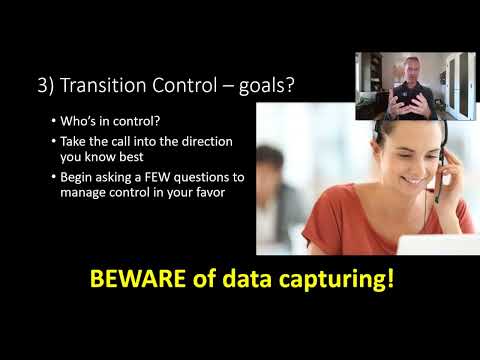
[5:10]Well, let's go ahead and get started with step one here, the greeting, all right, what are the goals that we're looking to accomplish here? Well, first and foremost, I mean, it does set the tone for the call. I mean, this eight, ten seconds of the call, I mean, it's just a sliver of the call, but it can absolutely set the tone. And again, if we contrast with what normal sounds like, we all too often get a receptionist, their tone tells us they don't really want to be there, that they don't really want to be doing what they're doing. They certainly don't make me feel very appreciated or valued. Right, so we are going to set the tone, so you got to be likable, be genuine and sincere. Right, identify yourself, okay, by name, we want to identify our business name, we want to identify ourselves by name. And in doing this, we want to be consistent, right? So that means if you've got five different receptionists, we can't have five different greetings. We need to have one standard greeting that represents our brand, because we have one brand that we're representing. So don't have one person saying good morning, it's a great day, and have another one, you know, uh, Johnson orthodontics. Right, we got to have one consistent greeting, and we should all be answering with a very similar tone, okay? And we got to be efficient. We don't need a lot of wasted words in here. Right, we want to get through the greeting, in a positive, engaging way, but using our time efficiently. So again, like I just kind of used as a reference, we don't need the the good morning, good afternoon, it's a great day, et cetera, et cetera. Business name, your name, how may I help you? Right, Johnson Orthodontics, this is Eric, how may I help you? And the biggest thing that we all recognize in this is tone. Right, now I've got this scratchy kind of deeper voice, right, so I'm not perfect for the for the phone. But even I can make my tone sound engaging and likable. Most of you have much better sounding voices and your tone is it's simply a reflection of your intention and your effort and putting aside whatever else is going on around you to greet this person like they're the only thing that matters right now. Okay, next up we've got identify the call. Right, and this one's pretty easy, right? But there's some things that we've got to do in here that maybe aren't always natural, right? So first, the idea of identifying the call is understand the patient's needs, right, why are they calling? Are they a new caller, are they an existing patient, do they have a problem, do they have a curiosity? Whatever it is, we've just got to spend some time listening to what their needs are. Now, as you do that, I'd encourage you to take some notes. Right, you can certainly take some mental notes, right, but I encourage you, just have your pen, your tablet, whatever's appropriate, and write some things down as they go. Don't interrupt them. Let them tell their story, let them give you the details that they feel are relevant. This is the one stage of the call where they are in control. Right, this is their opportunity to identify what their specific needs are. Now, some people will take five seconds to identify themselves, you may even have to actually come ask a couple more questions to get more out of them. Right, but some people may spend 30 minutes, 30 seconds, excuse me, 30 seconds identifying themselves. But the key here is that you need to be patient and listen. Right, and this is the part that doesn't come naturally to to certain people is to just listen to what they have to say. Don't interrupt them. Even, even saying sure, or okay, or I see, can be an interruption to the flow of what they're doing. Right, because within that two seconds, you may well discover they're not done, and something else has popped into their mind, and we need to still listen more. Right, and if you jump in there too quickly, next thing you know, I'm stepping on their toes, they're stepping on my toes, and we just create this awkward moment that we're trying to avoid. So a two-second pause makes sure that they understand you've been listening, and now you're going to step in at the appropriate moment to engage the caller. All right, here we are at step three now, the transition of control, an incredibly important step, as you know, because control is one of our essential goals we need to accomplish. So what are the goals within here that we're looking for? So, real quick, good good question to ask, who's in control of the flow of the call? How is that determined? And the answer to that question is, it's the person who's asking the questions. Right, so whoever's asking questions is ultimately guiding the call along the way. Right, how do you get from A to Z? It's by asking the questions that are going to take you there. So it's not who's talking the most, that's not who's in control, because often times the person who's talking the most is actually talking in response to questions. So if you've got a patient who's asking you many questions, and you're just in reply mode, and you never transition into asking mode, you're being controlled. Right, so we want to get you into control of the call.
[10:47]Right, and so the what obviously, the the goal is to take the call into the best direction that you know we need to accomplish to get through all the important ingredients and ultimately to the end of the call in an efficient, effective manner. Right, but the the way we're going to do this is by beginning to ask a few questions that are going to allow you to manage and earn the control. But the key in doing this is we need to be aware of data capturing. We need to be aware of data capturing. Right, because you don't want to get into the call early. We're talking here within the first 30 to 60 seconds, that's where the transition usually takes place. You don't want to be asking data capture questions that early in the call process. It's going to come off very off-putting. It's honestly, it's going to come off sounding like everybody else that they're calling, is that we're jumping right into the business of the call. Rather, we want to ask a couple of key strategic questions that are going to come off as engaging. They're going to come off as conversational, as in as though you're an interested person into their life. We can do that, and tone again, is going to be a really important part of that. You'll learn more about this as we get into step three, the transition of control. Step four is scheduling the patient. And there's some goals we want to accomplish here, but the the question I think that's really appropriate to ask is why schedule before data capture? Right, and there's kind of an easy answer to this, actually a couple of answers to this. Number one, the easiest answer is all that data is very personal information. You haven't really earned the right to ask that personal information until you've earned their commitment that they're going to come and see you. Right, this is the close, this is converting for their business. The nature of a phone call, converting for their business is getting them onto your schedule. So you're going to take all this positive momentum that we've been building up to this stage. Steps one through three are all about positive momentum, having them like you and trust you and and connect with you. And we're going to lead that right into the commitment of the of the call, which is getting on the schedule. That's a big reason. So now when we ask the database questions, it feels so much more natural because they've already given you their commitment to come in and visit you. Right, so that's really important that we do that. Additionally, there may be some some information that you need to know that's going to be relevant to scheduling them properly.
[13:39]Right, because there might be different variety of types of appointments, right? So you may, as you go through the scheduling process, ask another question or two that's going to further identify their specific needs so that you can get them appointed properly.
[14:01]And then a really big piece of this puzzle is, is as you go through the scheduling process, you need to stay in control. It's your schedule, not theirs, we're going to mirror up what they want, but it's got to fit within the context of what we have available to meet their needs. So there's some real strategic skills built into scheduling that allow you to maintain and manage that ever important control of the call and the control of your schedule. All right, so here we are now at step five, the data capture, all right, and again, this is going to come after scheduling, virtually all of the time, for the same reasons I mentioned a moment ago. Right, but what are we trying to accomplish as we go through data capture? Well, first question you want to ask yourself is what's essential versus what's optional? Right, are there questions that we can capture in a different format that's not on the phone? None of us like being on phone calls too long, and the data capture is usually where all of that time is chewed up. And most of those questions, when you when you really think about it, they're not incredibly essential. They might be nice to have, you might want to have those questions answered, but honestly, the data capture section needs to be paired down to just the essentials. Those other questions can be answered in other formats, an onboarding document, whatever that may look like. And that's going to help you to keep the call efficient. That's one of our goals is to get on and off the call in an efficient way, while still accomplishing our goals, but it's also one of the goals of the caller. Nobody wants to be on a call for, you know, six or eight minutes if the call could be done in four to six minutes, as an example. Right, also in here as we data capture, we're going to again, demonstrate great customer service skills. We want to sound different, we want to engage our caller differently, so we're going to be coaching you on some specific strategies. And one of those strategies is just simply being polite and being engaging. Don't make the data capture as boring as it could be, and usually is. We're going to be polite and engaging as we go along this. And here's a little pro tip, right?
[16:16]So as you go through the process of the, uh, the data capture, is to ask your questions as statements. Right, usually at questions are being asked, can I have your first and last name? Right, may I have your contact number? Right, those are yes or no questions, right? And again, we try to avoid asking questions in yes or no closed-ended formats. You've learned that earlier. Rather, asking your questions as a statement might sound like your first and last name, please. Your best contact number, please. Your email address, please. You notice how I'm not saying can I have or what is your, or however that question may be asked. But it's a statement. Your contact number, please. Your first and last name, please. Just has a much higher degree of customer service presentation as well as that politeness, and it just sounds unique. So let's take that as a pro tip. All right, let's wrap it up here with step six, the confirmation and education. Now we're going to talk about these goals kind of one by one here, but one of the the primary things we want to do, we're getting ready to end the call, is we want to bring it home with positivity and engagement.
[17:45]Right, we're going to want to make them feel welcome. There's going to be some specific verbage that's going to be built into step six that makes them feel welcome to us. Right, different than they expect, different than they hear elsewhere, we want to build that language. Right, we want to educate them on some important parts of their upcoming visit. You probably have some routines or some policies that mean if we could get every patient to abide by these policies, we're a better run organization. Well, guess what? That's part of the five-star customer service harmony that we're looking for. So we need to verbalize these things in a way that the patient hears it as beneficial for them. Where we know that as they do it, it's beneficial for us as well. So we'll talk about some of those strategies. Right, and then we want to finish up by getting them to verbally commit or verbally confirm their appointment date and time. So you're going to you're going to verbalize it, but ultimately, you're closing them for action by repeating their commitment back to you. And you look at that and go, what, how, what, what's that going to look like? Again, there's a strategy that we're going to have you incorporate because closing for action to end the call commits them more firmly, psychologically, towards attending the appointment. Definitely not no showing you and coming in with more readiness for partnership. All right, I hope you took lots of good notes on the six steps to the call process. Not just the six steps, but those essential ingredients that we want to accomplish through each of those, what makes each step as powerful as it can be. Right, so now it's time to start putting these into action as you move forward and as you begin to build out these six steps uniquely to your practice, and remember, lots of role play involved here. The way that it's going to become a habit, second nature, where it's just normal and natural for you, is repetition, practice, and that comes through role play.