[0:01]My name is Angeline Chew. The topic of my presentation today is Case Study on IU Fandom Charity Mobilization. This presentation explores IU fandom's social media activities such as reports, likes, comments, and hashtags, with analysis supported by key concepts of social media affordances, such as spreadability, searchability, and visibility. This study aims to argue that fans' involvement extends beyond their passion for an idol, as they form network communities that function as active civic participants. Inspired by IU's philanthropy, IU's fandom, called UAENA, is known for organizing online charity projects, especially during IU's birthday or anniversaries and end-of-year celebrations.
[1:15]For example, on 31st December 2025, IU donated 200 million won to four vulnerable groups: Korean Unmarried Mothers and Families Association, National Center for the Rights of the Child, Love's Snail, and Wooyang Foundation. Instead of sending gifts, IU fans coordinate donations to charities such as environmental groups, children's foundations, and disaster relief funds. These campaigns are mainly organized on platforms like X, using hashtags, reports, and fan accounts.
[2:06]They require coordination among many fans, which makes them useful for analyzing how social media enables collective action.
[2:15]This analysis draws on the concept of social media affordances. Affordances refer to what users are able to do with technological features.
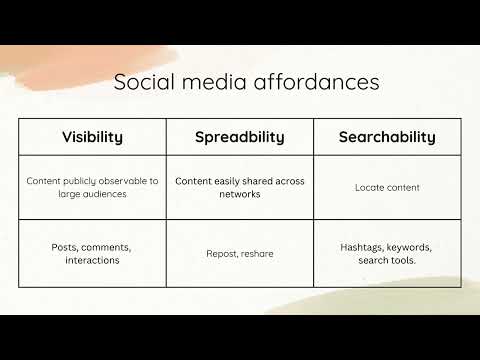
[2:29]For example, hashtags, likes, and reports are platform features, while the ability to coordinate donations or mobilize fans is an affordance. This presentation focuses on three affordances: visibility, spreadability, and searchability, to explain how IU fans coordinate charity campaigns and build online communities. Visibility refers to how social media makes content publicly observable to large audiences. Posts, comments, and interactions are displayed in ways that allow many users to see and respond. Network publics make social interactions more visible, allowing users to see others' participation and respond to it. Visibility helps people recognize shared interests and form communities. Spreadability refers to how content can be easily shared across networks through reposting and resharing. On social media, fans can repost donation campaigns, translate information, and share updates. Searchability refers to how users can locate content using hashtags, keywords, and platform search tools.
[4:04]It allows users to find conversations, communities, and content that would otherwise be difficult to access. This helps users gather around shared topics and interests.
[4:20]The first affordance is visibility. In fan culture, visibility allows fans to see charity campaigns, donation posts, and participation by other fans. When IU fans post donation campaigns publicly, other fans become aware of shared goals and feel encouraged to participate. This shared visibility helps transform individual fans into a connected community. For example, IU China fandom account posts a donation poster with a message, encouraging fans to donate 1000 trees to the Million Forest Plan in Northwest China, in celebration of IU's birthday. As more fans see the campaign post, they begin to interact through comments, likes, and interactions. This interaction helps transform individual fans into a connected community working towards a common social cause.
[5:33]The second affordance is spreadability. Social media content can be easily shared through reposts and reshares. When IU fans share charity campaigns, the message spreads quickly across networks. This allows more fans, including international fans, to participate. For example, a Philippine fandom account posts a donation of learning materials to an elementary school in the Philippines. 896 fans repost it. As the content spreads, participation increases and the campaign becomes a collective action. Spreadability also encourages collaboration. Fans may translate posts into different languages, create new posts, or update donation progress. Through spreadability, IU fans not only share information, but also collectively mobilize charity efforts. The third affordance is searchability. It helps fans track progress of charitable activities. They can see how many people have donated, shared, updated, and encourage others to participate. This ongoing interaction strengthens community bonds. In IU fandom, hashtags such as IU or 12YearsWithIU group charity posts together. Fans can search these hashtags to find donation instructions, progress updates, and participation posts. This creates an organized space where fans coordinate their actions. In conclusion, using affordances such as visibility, spreadability, and searchability, fans are able to organize donation projects, share information, and collaborate with each other. These affordances transform individual fans into a coordinated community. Through shared charity goals, IU fandoms build collective identity in meaningful social action using social media affordances of visibility, spreadability, and searchability. Therefore, this case study shows that fan culture is not only about entertainment, but also about community building and collective mobilization enabled by social media affordances. Thank you.


