[0:00]We know them as man's best friend. And while dogs have endeared themselves to humankind, they are not only great companions, but hard workers. For thousands of years, dogs have been part of the human experience. They have adapted and been bred to assist us in everyday life. They play diverse roles as livestock herders, rescuers, sled pullers, and even work to brighten the lives of the elderly and disabled. Early on in our relationship, dogs found a role within society. Their exceptional abilities to see and run, and their protective nature, made them perfect for herding livestock, fending off predators while keeping the herd moving. Even in the modern age, dogs are used in farm work in places like the rugged mountains of New Zealand. On an open range like this, a handful of dogs can handle thousands of sheep. They work tirelessly and cover up to 50 miles a day routinely. But working the farm isn't the only way they help their human masters. In the frozen lands of the North, indigenous people relied on dogs as a vital means of transportation. The thick fur and strong stamina of dogs like the Siberian husky, made them well adapted to hauling food and supplies to villages in the cold weather. During the Gold Rush of the late 19th century, they were routinely used to haul freight. Years later, sled dogs carried explorers Admiral Robert Peary and Roald Amundsen to find the North and South poles. These dogs still ply the snows of the extreme North, their endurance put to the test in competitions like the Iditarod dog sled race. Dogs often contribute to our lives by working alongside us, but they also save lives. When sudden disasters like an avalanche or earthquake happen, rescue dogs can find people under near impossible conditions. Some qualities of rescue dogs do come naturally, their sense of smell is far superior to humans. But rescue dogs must still work hard with their trainers to hone their skills. And for the dog, it's a game. They learn to sniff out people for the reward of food and toys. In real situations, it's the dog who communicates to the trainer where people may be trapped, and who can then signal authorities. But dogs don't necessarily have to be the strong and sturdy types to be workers. When it comes to helping special needs people with pet therapy, the main qualification is unconditional love. These special dogs spend their days visiting people who could use some attention. For them, spending time with these critters has led to improved communication, better attention with tasks, and what can often be a much-needed lifting of spirits. For all their help, dogs remain some of our closest companions.
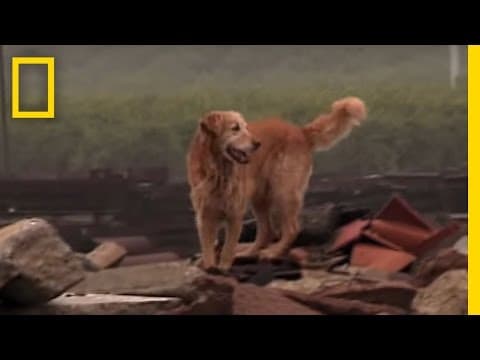
Working Dogs | National Geographic
National Geographic
3m 21s458 words~3 min read
YouTube auto captions
Transcript source
YouTube auto captions
This transcript was extracted from YouTube's auto-generated caption track. The transcript below is server-rendered so it can be read, searched, cited, and shared without opening the original YouTube player.
Pull quotes
[0:00]And while dogs have endeared themselves to humankind, they are not only great companions, but hard workers.
[0:00]They play diverse roles as livestock herders, rescuers, sled pullers, and even work to brighten the lives of the elderly and disabled.
[0:00]Their exceptional abilities to see and run, and their protective nature, made them perfect for herding livestock, fending off predators while keeping the herd moving.
[0:00]Even in the modern age, dogs are used in farm work in places like the rugged mountains of New Zealand.
Use this transcript
Related transcript hubs
Watch on YouTube
Share
MORE TRANSCRIPTS


