[0:00]You may find cats to be mysterious animals, but believe it or not, it's easy to buddy up with a feline, if you know what to do. In this video, we'll show you 10 proven ways, drawn from scientific studies, to get a cat to like you. Let them call the shots. Cats are so adorable that people want to greet them with a big hug. Some people go up to the cat, corner them, and try to pet them to win them over. But remember, this is a common mistake for cat lovers. According to recent studies, it's best to let the cat make the first move. A study conducted in Switzerland has shown that when humans sit back and wait and focus on something else like reading a book, cats are more likely to approach and less likely to withdraw when humans respond. This is why many kitties are attracted to allergic people, as people with allergies don't really seek out to pet cats. Another study from the University of Zurich Ershel found that interactions last longer and are more successful when the cat both initiates an activity and decides when it ends. Cats are very independent creatures. They don't like to be smothered with affection and they need some personal space every now and then. If your kitty displays signs of aggression, just walk away. It's better to end an unpleasant interaction before it leads to a strain in the relationship. Pet them where they enjoy it most. How does your cat prefer being pet? It's a question that has stumped many cat owners for centuries, but science now has an answer. A study conducted by the University of Lincoln in the UK found that cats show more positive behavioral responses like purring or kneading when they are pet between the eyes and ears. And they display more negative responses like hissing, swatting or swishing their tails when they are pet around their tail area. Yes, that's right. Cats don't actually enjoy being stroked at the base of their tail. At least, that was the case for most of the 54 cats in this study. Researchers believe that a cat's tail area is an erogenous zone, and petting this part of their body may overstimulate them. The researchers did not attempt to pet the cat's belly, probably because they didn't want a risk of injury. A cat's belly area is very vulnerable, so touching it may be stressful or even threatening. And remember, cats see petting as akin to grooming or licking, which happens between two friendly cats. Check your scent. A cat's sense of smell is the main way they identify people and objects. Their sense of smell is 14 times better than that of humans. If a cat is afraid of you, make sure to check your scent, as your cat may be staying clear of it. You may have the scent of another cat or dog on your pants, or you may have strong smells like perfume, deodorizers, disinfectants, bleach, garlic, or onions on your clothing. If your cat retreats when they sniff your hands, it may be because they don't like the smell of your hand soap. Make sure to use unscented hand soaps, unscented shampoos, unscented hand sanitizers, and unscented makeup remover wipes. You may think the scents will fade away after a few hours, but your cat will still be able to smell them for a long time afterwards. Approach them like a cat. Cats communicate primarily through scent and body language. Most felines greet each other with a nose-to-nose sniff. And while humans shake hands, cats boop to say hello. To increase your bond with a cat, try approaching them the way they would greet other felines. Mimic the nose-to-nose behavior by gently offering your non-threatening fingertip at their nose level. Your finger acts like a nose substitute and most cats will walk up and sniff or investigate your finger, and chances are you may even get a cheek rub against your finger. Lucky you! That's basically a cat's way of greasing you. Conversely, the cat may back away if they feel unsure about interacting. Mimic feline scents. If you own a dog, you probably know that K9s love nothing more than sniffing around and exploring the new smells of the world around them. Cats, on the other hand, don't like new smells, and any unfamiliar scents can put them off. And this is why most cats are not big fans of change, relocation or strangers, as new environments bring a lot of new smells and signs that they have yet to explore. If you don't want to bring new smells to a cat's home, you may spray yourself with a cat pheromone. Pheromones are a type of chemical communication that all cats use to interact with each other and the environment around them. These messages are released from the scent glands around their body. Different pheromones send different messages to other cats and influence their behaviors. This is why your cat may bump you or rub their body on objects. By doing so, they leave pheromone messages. Oftentimes, cat owners use pheromone sprays to protect a new object or furniture, but if you are the new object, you may want to spray yourself to calm a new cat. Human interaction over food. A 2017 research conducted in the Oregon State University studied what attracts cats the most. The scientists offered cats a choice between food, toys, scent, and social interaction with humans, and watched what happened. Believe it or not, they found that most cats prefer social interaction with humans over everything else, even food. Interestingly enough, some recent studies suggest that what really attracts cats to humans is the presence of interactive toys like a wand toy with feathers, strings or other prey-like attachments that evoke a cat's predatory behavior. Frequent interactive play is an excellent way to bond with your feline and keep them fit. Don't block the exits. Cats are very territorial creatures. If you appear as an imposing, enormous creature in their space, they may perceive you as a threat. Instead, get down and approach them at their level, and make sure not to block the exits. Cats are more likely to bond with you if they feel they are in control of the space around them and can come and go when they want. Blink slowly, but never stare. Cats stare when they are hunting. Their ability to stare without regular blinking helps them keep a close eye on their prey. If you stare at them, you are giving them the same look they give when they hunt. Instead, give them plenty of long, slow blinks. This shows the cat that you are relaxed and friendly, and you don't want to hunt them. Believe it or not, animal experts use this slow blinking technique to calm fearful cats. Retrieve at the right time. There are many signs that a cat doesn't like your actions or feels uncomfortable around you. Some signs are overt like hissing and biting, but some are more subtle, like when they flatten their ears or twitch their tails. If you get one of these signals, it's time to back off. Many cat lovers don't retreat when they get negative feedback, mainly because they love petting and spending time with their feline, so much that they don't recognize that their cat isn't enjoying it, too. You can't force a cat to like you, but when a cat learns that you give them personal space and respect their terms, the more likely they will trust you, and come back when they're ready. Use treats strategically. You can encourage your cat to be near you with a yummy stinky treat. This doesn't mean showering them with treats all day long. Instead, use treats strategically to either reward good social interactions with you, or to entice a shy cat to walk towards you. You can also try talking quietly to the cat as they eat the treats, so they associate your voice with rewards. And while a dog may wolf down any kind of dog food you bring them, a cat will not. Cats are not very food-motivated, so you might have to search for a treat that they like.
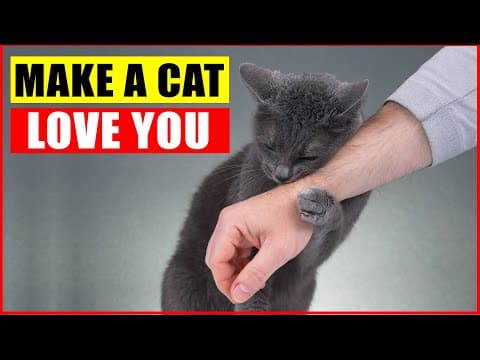
10 Scientific Ways to Get a Cat to Like You
Jaw-Dropping Facts
7m 57s1,386 words~7 min read
YouTube auto captions
Transcript source
YouTube auto captions
This transcript was extracted from YouTube's auto-generated caption track. The transcript below is server-rendered so it can be read, searched, cited, and shared without opening the original YouTube player.
Pull quotes
[0:00]You may find cats to be mysterious animals, but believe it or not, it's easy to buddy up with a feline, if you know what to do.
[0:00]In this video, we'll show you 10 proven ways, drawn from scientific studies, to get a cat to like you.
[0:00]Some people go up to the cat, corner them, and try to pet them to win them over.
[0:00]A study conducted in Switzerland has shown that when humans sit back and wait and focus on something else like reading a book, cats are more likely to approach and less likely to withdraw when humans respond.
Use this transcript
Related transcript hubs
Watch on YouTube
Share
MORE TRANSCRIPTS


