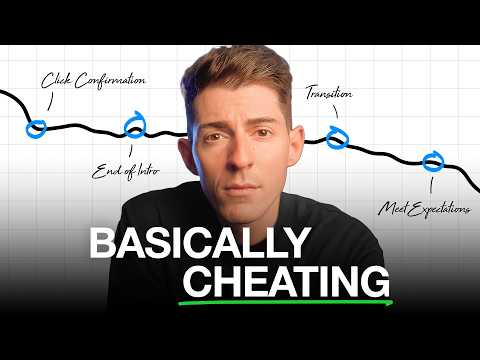
[0:00]Today we're talking about writing killer scripts. The reason winning creators go viral so often is because of their script writing. You might have a great video idea, but how do you actually write a script with a compelling story that keeps people hooked the entire time? This is an art. I've analyzed hundreds of the top creators across every niche, and they all run the exact same script writing process. So in this video, I'm going to break it all down. This is the proven five-step framework for how to write killer scripts that keep viewers hooked. By the way, I'm Kallaway. I've done over a billion views, I've a million followers, and this stuff is all I do all day long. All right, let's dive in. Now, before we get into the script writing framework, there is a critical first piece that you have to understand. And this alone will level up your script writing in a massive, massive way. Winning on social media is all about hacking human psychology. This is the game within the game. It is the most important building block in content. Now, content psychology really boils down to one single principle: expectations versus reality. Expectations are what people think is going to happen. Reality is what actually happens. When reality beats expectations and things go better than expected, people are happy, they keep watching, and you win. But when expectations beat reality and things go worse than expected, people are not happy, they stop watching, and you lose. It really is that simple. This give and take is why you feel so good after giving a public speech. Because your expectations are super low cuz you think you're going to bomb, and then after you go and it's fine, you feel great because reality beat expectations. Now, I start here because understanding this expectation versus reality psychology concept will influence every decision you make when you're writing a script. That really is where the sauce lies. It is the black magic that makes all this stuff really work. And if you understand that, the script writing process that I'm about to go through becomes way easier. Okay, so these are the five script writing steps in the process. Number one is packaging, number two is outline. Number three is intro, number four is body, and number five is outro. I write every single script in this exact same order. Now, let's take each one quickly and break down how to do it. Your job when you're writing the script is to make sure the first few lines of the intro confirm and ideally beat their expectations set by the title. This is called click confirmation. It's one of the most important principles to winning on YouTube. So, if Mr. Beast has a title that says, I spent 100 hours inside the pyramids, then right away in the first sentence and ideally the first intro, he's going to show you and tell you that he's in the pyramids. This would meet expectations. Now, to exceed expectations, he would also add on something like, I have unprecedented access to explore pieces that have never been explored before. And this takes base expectations, the pyramids, and then beats them, unprecedented access. This positive gap of reality beating expectations hooks the viewer. And it turns out this is exactly what Jimmy does in every single video. It's exactly what every winning creator does in every video. So, before you write any script, you need to have your video packaging dialed, so you know what to put in the intro to get this confirmation. And the packaging of the video is made up of the idea, title, and thumbnail. Now, the idea is a one-line sentence describing what the video is about. More importantly, this is the pain point that you're trying to solve for your ideal viewer avatar. Or, it's the rabbit hole you're trying to create so they go down the loop. If you don't have a good base idea that's something they'd actually want to watch, it's going to be so much harder to write a killer script because they're not going to be interested in it. Okay, now next and most important in this packaging is the title. It's critical that you have the title established before you write the intro. I'm not going to cover how to write a good title in this video because that's a whole other psychology can of worms. If you guys are interested in that, let me know in the comments and I'll make a video on titles. But the most important thing to know about the title is that you're trying to trigger a click curiosity loop. Does the title alone get the viewer curious enough about the pain point or problem that they cannot resist clicking and they have to find out what you have to say? And also, based on that title, what expectation should a viewer have coming into the video if they did click? Because slight tweaks in the title wording can completely change the incoming expectation. And again, the whole point is to have reality beat expectations. You don't know what reality should be with the click confirmation if you don't know what that expectation is. Now, again, if you're bad with titles, you could use tools like one of 10, Vid IQ, Spotter Studio, View Stats. There's so many tools that allow you to remix titles and optimize them for YouTube. That's what I'd recommend. I have a full team that kind of does the ideas and titles for me, but if you don't have that, using one of these tools is a great way to do it. Now, when it comes to thumbnails, most YouTube experts will demand that you have the title and thumbnail solved before you even start writing the script. But I don't agree with this. The title for sure, but I think it's okay if you have the thumbnail loose, but not really dialed. And that's because the creative process and back and forth that comes with the thumbnail can be a huge inhibitor to action, agency, and creativity when you're writing your script. If you have to wait and delay constantly because you're waiting for the thumbnail to write the script, it's just going to slow you down. And so, in my opinion, the title is a must, a loose thumbnail idea is fine, that will get dialed in over time. All right, let's move on to step two of the five-step script writing process, which is outline. Now, before I start writing the actual script, I really like to have a bulleted outline on the page first. And this may seem counterintuitive. You would think you'd do the intro first and then the outline and then the body. Why am I doing the outline before the intro? Well, my take is that anybody can learn how to write a compelling intro. It's just a few Lego bricks. I'm going to go through it in a second. Once you know this formula, you can easily print the intro. So, I know in the back of my mind that I can solve the intro. The real moat, the real sauce of videos that goes from good to great, is having something actually unique, differentiated, and novel to say in the body of the video. Are your points actually unique? Could your reality exceed expectations because you're that good? Now, uniqueness in these points can come from the actual tip itself, the process of distillation, how you actually say the tip, or the example that you use to explain what it is. I find that writing these in a quick outline bulleted first is a great way to gut check if you actually have something worth saying or you're just summarizing and regurgitating common things. If you don't have something worth saying that's not unique, before you move forward and waste time writing a script, go research more, go watch other source material, and try to come up with more novel points. I think one of the reasons why my videos work so well is because I'm saying things that nobody else is saying. I am also distilling them down and using different examples, but I'm saying things that I've never heard people say on YouTube. Remember, the goal with script writing is to beat expectations with reality. If expectations are existing base knowledge and you're just repeating existing base knowledge, you will not be able to beat expectations with your reality. So tactically, I like to make a quick and dirty bulleted list, and just write this out and zoom out and just think, is this unique or not? And then for each point in the list, I layer on the what, the why, and the how. The what is what it is, the why is why it matters, and the how is how it fits in the overall puzzle of the story. And again, if I don't have unique points in the outline, I'm not moving forward. I'm not making the video.
[7:06]Okay, let's move on to step three, which is the intro. Now, before I write the full body of the script, I start with the intro. My ultimate goal after establishing the click confirmation is to build a curiosity loop. You want to open a rabbit hole in the viewer's mind that they just can't help but go down. Each line should make them want to go to the next line. Now, I have an intro hook framework that works every time. Short form, long form, it works every single time, and you can just copy it. I'll give it to you. This is exactly how to do it. Okay, so part one is to give immediate context on what the video is about. This is so the viewer can opt in and, of course, confirm the click. So, for example, in this video specifically, the title was, how to write a killer script that keeps viewers hooked. And the first three lines of my intro were, Today we're talking about writing killer scripts. The reason winning creators go viral so often is because of their script writing. You might have a great video idea, but how do you actually write the script with a compelling story that keeps people hooked the entire time? So, this was tailor-made to establish the context and immediately click confirm that the video is about script writing and keeping a viewer hooked. You want to start by bluntly stating this as quickly as possible. Okay, now part two is to establish the common take or belief. So, what I like to do is establish the conventional belief on the topic. People will get more eager to listen when they feel like you're talking about something they care about. The easiest way to build this common ground is by restating the common belief, because chances are, if they struggle with this topic, they also know the common belief, and that is their belief. So, when you restate it, it helps connect in their mind that this is something they should care about, and it also helps set up the contrast, which is critical in part three. So for the intro, for this exact video, I said this. This is an art, and it's one of the hardest things to learn when you're starting out making videos. Again, I'm doing this because people want you to start out confirming the belief they already believe before you offer a way to change it. Now, the next part of the intro, which is critical, is building a contrarian take or contrarian approach against this common belief.
[9:05]You want to offer a contrarian take or perspective that contradicts that common belief. And this will stun them and hold them into needing to hear what you have to say. The best way to exceed their expectation at that EVR moment when they're first listening to the intro, is by stating the common belief, but then that you have a contrarian approach that they may not have heard before. So in today's video, for the intro, I wrote this: But the good news is, there is a right answer. I've analyzed hundreds of the top creators across every niche, and then all run the exact same script writing process. This formula has driven hundreds of billions of views, and it works every single time.
[9:43]This is me contrasting against the common belief that script writing is art. I'm saying it's not, it's science. There is a formula and I have it. Now, right away, I've nailed the click confirmation and I've begin to raise their expectations of what they believe is possible in the video because I offer a different solution than what they've thought of before. The last two steps can be done in either order, but you have to do two things. One, establish proof for why they should trust your new approach, and two, give them a plan, an ordered list or steps for how you're going to do it. So in today's video, I wrote this. So in this video, I'm going to break it all down. This is the proven five-step framework for how to write killer scripts that keeps viewers hooked. By the way, I'm Kallaway. I've done over a billion views, I have a million followers, and this stuff is all I do all day long. So, in this case, I started with my plan and then I laid it on the proof right at the end. By the end of this intro framework, I'm telling you it works for every video. You have the viewer hook, line, and sinker. By the way, I know this is a lot to take in in one shot. If you need help actually tactically doing this, I put together a free five-day email series, which kind of breaks down more of these advanced strategies in a much easier form to digest. It's called The Virality Blueprint. You can grab it at viralityblueprint.com. All right, step four in the script writing framework is the body of the script. And so, what is actually happening in the viewer's brain right at this moment? As the viewer watches the intro, they're compiling all the previous knowledge they had on the topic, plus combining it with the promises that you're making in the intro. And their new expectation is that they're hoping they will learn something slightly different or better than what they already knew. So, for example, if I'm making a video on storytelling, and the title is, How to Become a Master Storyteller, and the intro is, I'm going to share six new unprecedented things that will make you a master storyteller. Then the viewer has a pretty high expectation because they're compiling their mental database of all the things they've learned about storytelling in the past. And they're using those as a baseline knowledge set for what they already know. And so, their expectation is that one of my six things or all of my six things are going to be new, different, or better than what they currently know. That's how I would exceed their expectations. Now, at this exact moment, to really blow their expectations away, the first point in the body that I share, the first thing they hear after the intro, has to be amazing. It has to be so good that it blows their mind. That's how you really create this big gap between reality and expectations. And this is so critical because if your first point of the body of your video repeats something they've already heard or is just not that compelling, immediately they will get disappointed and they will lose interest in the video. This is why when you watch a video that's just a generalized summary regurgitating things that you've already heard, you usually watch one or two points, and then you bounce. Maybe you'll see the first point, not think it's good, scroll to the description, read the time stamps, see if there's anything unique, and then usually there isn't and you leave. And this is super common because creators usually don't take enough time to come up with unique, different, and better points in the body of their videos. If you really think about it, expectations are just the viewer's hope that they're going to learn something new about the topic that they don't already know. And so, if you don't give them something new, there's no way you'll beat their expectations. When you don't beat their expectations, they leave. This is why the first body point of your video has to be something new and different. And my cheat code for this, which is not intuitive, is to put your second best body point in the first slot. I'm going to explain in a second exactly why this works so well. You would think you'd want the best stuff first, because the viewers are decaying off the video. So why hold your best thing for second? And here's why, human brains work in patterns. If you show someone one thing that's amazing, they'll think it's cool. But if you show them two things that are amazing, especially if the second thing is better than the first, it creates a subconscious pattern where they have to stay to see the third because they feel this value continuing to drip up over time. If you show your best thing first and then your second best thing is slightly worse, it trains the viewer subconsciously that the value will be diminishing and it's not worth staying. But if you slightly increase from one to two, it creates this pattern and they have to stay. This is why most music albums put their best songs in the third or fourth slot. Have you ever wondered that? Why did the single, the banger single with a billion streams not go first on the album? You would think when you click the album and the first track is the best one, that would make sense. Well, usually the first track is an intro, but it's never the single in the second slot. Why is that? It's for this same reason. The second track is always a great track, but it's not the best track. And so, when you listen to two and three and four, you're increasing to the point where you climax the best song at three or four. That builds this pattern recognition and makes people stay for the whole project. Now, that is deep, deep, deep psychology that you will not hear anywhere else on YouTube. And if you want to learn more about that psychology stuff, these little tweaks that just make a massive difference, this is all I talk about in my free newsletter, Content Department, and my free community for creators, Wavy World. The links are in the description for those. For each point in the body, you want to include these three things. I call it the Value Loop. One is context. Say what it is and explain it as simply as you can. Two is application. Say how to do it with relevant examples contextualized to the viewer. And three is framing. Say why it matters and how it fits into the whole puzzle of the story. The context part needs to be clear, concise, and digestible. The application has to be interesting enough and easy to digest where they can begin taking action on their own side. And the framing needs to reorient themselves so when they zoom out, they can see why it's worth continuing to watch the video. And this three-step frame for explaining points in the body, it suits really well the way the brain processes information. Base facts first, surface level, and then slowly deepening to add inference and connect different points. Now, as mentioned before, you want to organize your points in the body based on shock value, novelty, and uniqueness. You want your second best point to go first, your best point second, your third best third, and so on. Now, the easiest way to learn how to do this tactically is just study the videos on my channel. I have 23 or 24 videos, every single one of them follows this exact same framework. Study the pacing and the rhythm of how I do this, it'll get you much better. When you watch, you will notice this constant zoom in and zoom out. I'm constantly looking at the big picture, going down for the tactics, big picture tactics. It's kind of like a wave. This is what you want to create. It adds to the comprehension. It allows people to lock into the full story, but then also extract the tactical piece. That's how you want to layer these body points. Now, one power tip here is how to seamlessly transition between the points in the body. And the best way to do this while maintaining max retention is called re-hooking. Now, I talk about mechanically how to do this in other videos, but this is a really, really important concept. You basically want to set up these mini hooks between the end of one point and the beginning of the next one. So, for example, you might say something like, That point was super important, but if you don't also couple it with this one, then the magic is lost. All of a sudden, that makes the viewer have to hold for the next one if they liked what they heard in the first one. And re-hooking really works because people's brains are on an attention delay. As soon as they see something, they'll have max level of interest and that will slowly start to decay, if you don't re-hook them and get their interest peaking, they will eventually just bounce. Okay, step five in the script writing process, the last piece is the outro. And it feels like the outro would be an afterthought like who would be listening to this point, but you can add retention and shares and likes and re-watches at a much higher clip if you just do this at the very end of the video. Leave them with a high note. You want to wrap up the video in a clean way. You want to summarize those points and remind them of the pain point solved that you walked through. This is the final push to remind them that we did, in fact, have reality beat expectations. And this is like the free chocolate that the restaurant gives you when they bring the check. They're doing that on purpose. They're trying to remind you of the good service that they invested the whole previous two hours. It's the same psychology. You want to do this at the very end of the video because you want to leave the viewer with a lasting impression of, wow, that was an amazing video. I just remembered all these tactics that I learned. The reality was much higher than my expectation. And this is where likes, comments, shares, re-watches, all the good stuff that powers the algorithm, it all kind of comes from leaving them with a high note. Now, before we end this video, I want to quickly share one bonus tip that will help you rev up the conversion between that attention and driving leads and actual dollars from your videos. A common question I get around this script writing process is how do I include a call to action in my script without completely disrupting the flow and making it feel like an ad? And my strategy for this is what I call native embeds. What you want to do when you're creating that outline is figure out proactively, which point naturally suits highlighting the free resource you have as the solve. And so, when you're speaking about that point, you want to frame the pain point and then give your own resource as the solve. It'll seem way smoother and more seamless if you do it this way. So, you can either open the loop with a pain point and then give the solve, or you can speed run a framework in a way that's so deep and fast that most people won't be able to absorb. And then you can offer your free resource as a way to recap, to review, or to compress speed of implementation if they need your help. Either way, you don't want it to seem like you're breaking flow in the script. You just want to seamlessly add it in, showing it natively, and then move on. For example, I did this twice in this video. I'm not sure if you picked it up. The first time was when I broke down the super, super deep psychology piece and then I said, hey, if you like the psychology things that I'm talking about and you want to go deeper, I have a free newsletter and a free community where you can learn more. I also went through the full intro hook framework, and then I said if you want to go deeper, I have a free five-day email series called Viralityblueprint.com that you can download. You may not have even picked up that I called those out, but the key is these are free and they actually do solve the pain point or enhance the points that I talked about. And here's one other tip that's super helpful. If you want to get better at script writing, but you're struggling with this, there's so much to organize. The intro, the points, actually writing it and getting the rhythm down, it's a lot. The thing that'll be helpful is if you could organize all your thoughts in a software and just have it do some of that work for you. So I've been looking everywhere for this and I built Sandcastle Sandcastles.ai for doing this. And when you have it, it compresses 60 to 90 minutes worth of this organizational writing work down into 60 seconds. It really is the most magical way to do this. So, if you struggle with the script writing aspect, you should look at Sandcastle's, it's one of the best solves out there. See, I just did it again. That was another native embed. I tried to do that purposely because I wanted to see if you would catch it, but that was me naturally integrating a pain point that we've talked about the whole video in a way that didn't really feel like an ad. But for real, if you want help writing full short form video scripts, 60 minutes down to 60 seconds, Sandcastles.ai is actually legit. You should try it out. All right, guys, that's all I've got for this video. Again, this was the step-by-step formula for how to write killer scripts that keep viewers hooked the full time. I know we went super deep into the psychology, plus we broke down the full framework and that CTA conversion native embed piece at the end. This was a full master class. If you're still with us, thank you guys so much for watching. Leave a comment and let me know what you want me to cover in the next video, but until then, we'll see you guys on the next one.


