[0:01]You can stop saving your money. What am I about to share with you? It's a way that you can buy a house just like this one I'm going to walk you through with no money out of pocket. You can stop saving cash. If you're like me, you think, man, I got to save money to get money. Interest rates, don't know what they're going to do. The price of homes are going up. Listen, all that's over. You've been told wrong. It doesn't need a whole lot of money. I'm not trying to sell you anything and I'm certainly not trying to talk you into buying a house. But I think it's important to know the opportunities that are there. This is called a USDA loan, United States Department of Agriculture. It's overseen by HUD housing and urban development, falls under the same guidelines as FHA. Now listen, my name is Wayne Turner. For nearly 30 years I've bought, flipped, built and I've helped thousands of people and nearly three decades purchase their home. I only share that with you so you can have the comfort and the confidence knowing that what you learn from me is from actual real life experience. So let's get to it. Now this is a 100% loan. You've heard of 100% financing available. That's what this is. They're not giving you the money, the federal government per se. However, they are guaranteeing the loan for you on your behalf. Now, you have to qualify and there's a difference between qualifying and approved. qualification, you're just kind of talking with a lender and telling them what you think your credit score is. Being approved, they're going to fully pull your credit, verify your income, verify your debts and verify your taxes. And they're going to make sure that your debt to income ratio is in balance to where you can actually afford the monthly payment. Now a good question is Wayne, what does that cost? What will it cost me? It doesn't cost you anything. Lenders are happy to approve you because that's how they make a living. That's how they make their money by loaning you money and they charge an interest rate. And they're happy to do it. They're happy to get you approved because of course they want to make a profit. However, there are a couple of hoops that you have to jump through. One, you got to have a 620 or higher credit score. Two, you got to have two years on the job. So they're going to verify income, verify all that. You got a 620 higher credit score, two years on your job, and it doesn't have to be in the same line of work. Now, in order to do these types of loans, it's imperative that you tell the lender that you're going to work with that you need a USDA loan. You're looking for 100% financing. That way they'll know that you need to have your closing cost covered by the seller. Now what I would do personally, before I even contacted a lender or go through that whole process. And listen, if you need an agent, need a lender, you can simply go to contactwayne.com, click the little buying button or go to wayneturner.com, click the little buying button you're looking to purchase a house, tell us what you're looking for. However, before you do that, you need to pull your credit. You need to make sure there's nothing on your credit that could be a negative issue to rise into the future. And you also want to make sure that your credit is a 620 or higher. They're going to pull a trimerge credit report from Equifax, TransUnion and Experian. When they pull that, they're going to look at all three credit reporting agencies. So you need to see when you pull your credit, what they're going to see. Now the homes that you can purchase are USDA homes. And here's how you know if it's a USDA home. United States Department of Agriculture. It has to be 25, 30 minutes outside major city limits. These are homes that are available for sale in what they call the suburban areas. I'm 35 minutes from New Orleans right now where I'm standing. You don't have to be a farmer, you don't have to have a big piece of land. This is a house that's two, three years old on a quarter acre lot. It's a foreclosure I'm going to walk you through here in just a second, 265,000, three bedroom, two full bath, big open kitchen, two car garage. 265, you can buy a house like this for literally no money out of pocket. The bank can pay your closing cost, your payment on this going to run you about $2,200 a month. Now that $2,200 covers your taxes, your homeowner's insurance, principal and interest payment and your private mortgage insurance. Private mortgage insurance is an insurance policy that's not like a homeowner's insurance policy. It's an insurance policy the mortgage company takes out that you have to pay the monthly premium in case you default on the loan. You have to pay that unless you put 20% down. It doesn't matter if it's an FHA loan or conventional loan or USDA loan. The only loans that you can purchase and get like 100% for example, is a Veterans Administration loan. When you do those, if you are a veteran, you definitely want to go that route because you don't have to pay that private mortgage insurance on VA loans. Now something else that you need to know it's really important is you do not have to be a first-time home buyer. You can have owned a home before. You just can't currently own a home. So if you don't own a home and you want to purchase a home, you can buy a home this way. You also have to sign an affidavit at closing that says you're going to make this home your personal residence. So this isn't for investment property. These are people that have owned a home before or never owned a home before. You don't have to be a first-time home buyer, but you can't currently own a home and you're going to live in that home as your personal residence. Now another good bit of information that I want you to be aware of is the price and the ceiling on what you can purchase. It has nothing to do with the price of the house. It has everything to do with your income. You see, if you make too much money, you can't qualify for these houses. The income varies per state and per county. I'm going to put a link below that you can click on it. You can look in your area and you can see literally by county what the actual limit is on your income. For the most part, it's $112,450 if you're a household of one to four. You're a single person, you're a married couple, or you're married with two children. If you're four or more, so you got three kids and you're married, that income jumps to 145, 450. They're going to take that income and they're going to look at your adjusted gross. They're going to back out what you pay in any kind of monthly creditors like a credit card or student loan or a car payment to come up with your adjusted gross income. And your gross income, of course, is before taxes. So before taxes, 112,450, they're going to divide that by 12, they're going to subtract your monthly cost and they're going to give you 31% of that amount to go towards your mortgage payment. Now, as promised, I'm going to walk you through this house, but I have to admit, I told you wrong. I told you that this was a three bedroom house, it's actually a four bedroom house. And listen, for a foreclosure, this thing's in great shape. You can buy houses just like this, bank own. You have bedroom here, bedroom here and a bath. And then, I mean, look how big the open kitchen. So you have this big open kitchen, white cabinets, stainless appliances, granite countertops, undermounted sinks. You got to love that big counter top space. This house is priced at $265,000. Square footage, I think is around 19, 2000 square feet. It does have a walk-in pantry, plus a walk-in utility room. That's the third bedroom there. Coat closet here. Also has a covered back porch. I'll show you that in a second. Now a lot of people will say, Wayne, how long does it take to close these houses? It typically take, yeah, it's a big bedroom, ain't it? I'm just thinking, man, that's a big room. Typically takes 30 to 45 days. Once you're approved, it's like having cash in hand. That's why it's so important to get approved because once you're approved, they're going to send you a copy of that approval letter. And that approval letter you want to give to your real estate agent that you're working with. Walk-in closets, water closet, garden tub, double vanities, stand up shower. Plus it's got a fenced in backyard. So when you buy a house, you got those expenditures. Plus it's got blinds. So you don't have to worry about buying blinds. You don't have to worry about putting in a fence. It's got a nice little covered back porch. These types of homes are typically within walking distance for the most part to like Starbucks and shopping centers and all of that. It's just called the suburban areas. You can't live right in the heart of the city. If you need help, go to contactwayne.com, wayneturner.com. We're not trying to sell you anything. We just want you to know and be educated to the opportunity that is for you on these types of houses if you're looking to purchase a home. I'm Wayne Turner. Thank you for watching. Subscribe to the channel. Give us a thumbs up. Let us know if you have any questions when it comes to real estate.
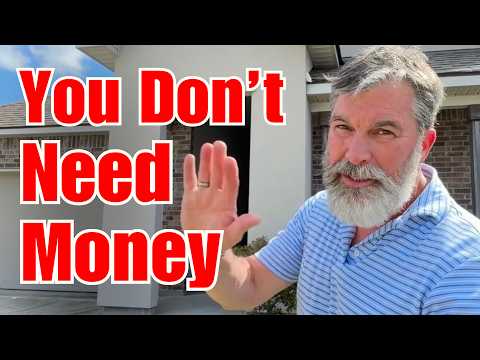
How to Buy a House with $0 DOWN (Most Americans Don't Know This)
Wayne Turner
8m 3s1,708 words~9 min read
AI audio transcription
Transcript source
AI audio transcription
This transcript was generated from the video's audio because no usable YouTube caption track was available. The transcript below is server-rendered so it can be read, searched, cited, and shared without opening the original YouTube player.
Pull quotes
[0:01]It's a way that you can buy a house just like this one I'm going to walk you through with no money out of pocket.
[0:01]I'm not trying to sell you anything and I'm certainly not trying to talk you into buying a house.
[0:01]It's overseen by HUD housing and urban development, falls under the same guidelines as FHA.
[0:01]For nearly 30 years I've bought, flipped, built and I've helped thousands of people and nearly three decades purchase their home.
Use this transcript
Related transcript hubs
Watch on YouTube
Share
MORE TRANSCRIPTS


