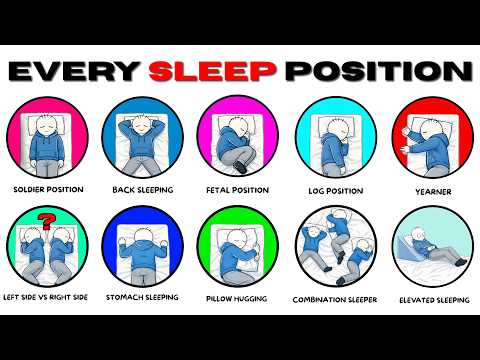
[0:00]Back sleeping, soldier position. You lie flat on your back, arms at your sides, staring at the ceiling like a corpse in a coffin.
[0:08]Sounds grim, but this might be the healthiest way to sleep. The soldier position keeps your spine completely neutral. No twisting, no bending, no weird angles. Your head, neck and back form a straight line, which means less pressure on your joints and muscles. If you wake up with random aches and have no idea why, your sleep position is probably the problem. This one fixes that. There's more. Sleeping on your back prevents your face from smashing into a pillow all night. That constant pressure creates sleep wrinkles over time. Back sleepers age better. Their skin stays smoother longer. Dermatologists actually recommend this position for exactly that reason. But here's the catch. Back sleeping is terrible for snoring. When you lie flat, gravity pulls your tongue and soft tissues backward, partially blocking your airway. If you already snore, this makes it worse. If you have sleep apnea, this position is dangerous. Your breathing literally stops throughout the night. So yes, it's great for your spine and your face, just maybe not for your partner's sanity. Back sleeping, starfish. The starfish is back sleeping's chaotic cousin. You're still on your back, but now your arms are up near your head and your legs spread out like you're making a snow angel in bed. The spine benefits are similar to the soldier position. Neutral alignment, reduced pressure, better posture over time. But the starfish adds a new problem. Your shoulders. When your arms stay raised for hours, blood flow changes. Your shoulders rotate into an unnatural position. The muscles and tendons around your rotator cuff get compressed. Wake up enough times with numb arms or aching shoulders, and you'll realize the starfish isn't as relaxed as it looks. There's also the space issue. Starfish sleepers take up the entire bed. If you share that bed with someone, congratulations. You're now the reason they sleep on the edge, clinging to six inches of mattress while you sprawl like a starfish claiming territory. The snoring problem remains. Back sleeping plus an open mouth equals a symphony of noise that nobody asked for. This position works if you sleep alone, have healthy shoulders, and don't mind waking up with your arms feeling like they belong to someone else. Otherwise, maybe keep those arms down. Side sleeping, fetal position. The fetal position is the most popular sleeping position in the world. You curl up on your side, knees pulled toward your chest, like you're trying to return to the womb. There's something deeply comforting about it. Psychologists say it feels protective, safe, and it does have real benefits. Curling up opens your airway better than back sleeping. Snoring decreases. Sleep apnea symptoms improve. Your spine gets decent support if you have a good mattress. Pregnant women are told to sleep this way because it improves circulation. But here's where people mess it up. They curl too tight. When you pull your knees all the way to your chest and tuck your chin down, you restrict your diaphragm. Breathing gets shallow. Your lungs can't fully expand. You wake up tired even after eight hours because your body never got enough oxygen. The tight curl also stresses your joints. Your spine rounds unnaturally. Your hips and knees stay flexed all night, leading to stiffness and pain in the morning. The older you get, the worse this becomes. The fix is simple. Curl loosely. Keep your body relaxed, not clenched. Let your legs bend naturally without pulling them up like you're bracing for impact. Side sleeping, log position. The log position sounds boring because it is. You sleep on your side with your arms straight down, legs extended, body rigid like an actual log. No curling, no bending, just a straight line from head to toe. This is one of the healthiest positions you can sleep in. Your spine stays aligned. The natural curve of your back is supported. There's no pressure on your internal organs. Breathing stays easy because your airway remains open. Sleep apnea symptoms drop significantly compared to back sleeping. The log position also helps with digestion. Sleeping on your side, especially your left side, lets gravity assist your digestive system. Food moves through more efficiently. Acid reflux decreases because your stomach sits below your esophagus. The downside is arm numbness. When you lie directly on your arm for hours, blood flow gets cut off. You wake up with that dead arm feeling, pins and needles shooting through your fingers. It's not dangerous, but it's annoying. Some people also experience shoulder pain over time. The pressure concentrates on one side of your body all night. If your mattress is too firm, your shoulder takes the hit. Solution? Switch sides throughout the night. The log works, just rotate it occasionally. Side sleeping, yearner. The yearner looks like you're reaching for something in your sleep. You lie on your side with both arms stretched out in front of you, like a zombie or someone dramatically longing for a lost lover. Spine alignment stays decent in this position. Your back remains relatively neutral, and your airway stays open. The benefits of side sleeping still apply. Reduced snoring, better breathing, improved digestion. But those outstretched arms create problems. Shoulder strain is the big one. Your arms spend hours extended forward, pulling your shoulder joints out of their natural resting position. The muscles around your shoulders and upper back tighten. You wake up with stiffness that takes half the morning to work out. Nerve compression is another issue. The arm underneath you gets squeezed against the mattress. Blood flow decreases. Nerves get pinched. That tingling, numb feeling becomes a regular part of waking up. There's also research suggesting the yearner position restricts blood flow to the heart slightly. Though this matters more for people with existing cardiovascular issues. If you naturally sleep this way, try placing a pillow in front of you to rest your arms on. It reduces shoulder strain and keeps your arms elevated enough to maintain circulation. Small adjustment, big difference. Left side versus right side. Not all side sleeping is equal. Which side you choose actually matters, and most people have no idea. Left side sleeping is almost always better. Here's why. Your stomach and pancreas sit on the left side of your body. When you sleep on your left, gravity helps your digestive system work more efficiently. Food moves through your intestines easier. Your body literally digests better while you sleep. Acid reflux is another big factor. Your esophagus connects to your stomach on the right side. When you sleep on your left, your stomach sits below that connection point. Acid has to fight gravity to reach your throat. Sleep on your right, and gravity helps acid travel upward. Heartburn gets worse. For pregnant women, left side sleeping improves blood flow to the uterus and kidneys. Doctors specifically recommend it during pregnancy. So what's wrong with the right side? Beyond the digestion and reflux issues, sleeping on your right puts more pressure on your liver and lungs. It's not dangerous for healthy people, but it's suboptimal. The exception is heart conditions. Some people with heart failure feel better sleeping on their right side because it reduces pressure on the heart. For everyone else, go left. Your gut will thank you. Stomach sleeping, freefall. Stomach sleeping is the worst position for your body. Sorry, there's no nice way to say it. In the freefall position, you lie face down with your arms wrapped around or under your pillow, head turned to one side. It feels comfortable to some people. It's destroying their spine. The problem is your neck. Humans aren't designed to sleep with their head rotated 90 degrees for eight hours. Your cervical spine twists unnaturally. The muscles on one side stretch, while the other side compresses. Do this every night and you'll develop chronic neck pain, headaches and nerve issues. Your lower back suffers too. When you lie on your stomach, your spine loses its natural curve. The middle of your body sinks into the mattress, creating a constant arch. Over time, this leads to lower back pain that never goes away. Breathing is also harder. Your chest presses into the mattress, restricting lung expansion. Your body works harder to breathe all night. The only benefit? Stomach sleeping can reduce snoring because your airway stays more open than when you're on your back. But that single benefit doesn't outweigh the damage. If you're a stomach sleeper, start training yourself to switch. Your future self will thank you. Pillow hugging. Some people can't sleep without holding something. A pillow, a stuffed animal, a bunched up blanket. They clutch it all night like it's going to run away. This isn't just emotional comfort. It actually helps your body. When you hug a pillow while side sleeping, it keeps your arms in a neutral position. Instead of your top arm flopping across your chest or hanging awkwardly, it rests on the pillow. Shoulder strain decreases, spine alignment improves because your upper body stays balanced. There's also a psychological component. Physical contact, even with an object, triggers the release of oxytocin. That's the same hormone released during hugging, cuddling, and bonding. Your nervous system calms down, stress decreases, falling asleep becomes easier. For people who sleep alone, pillow hugging fills a physical gap. The pressure against your chest mimics the sensation of another person. It sounds sad, but it works. Sleep quality genuinely improves. The downside is minimal. Some people grip too tightly and wake up with arm fatigue. Others use pillows that are too thick, throwing off their shoulder position. The fix is simple. Use a pillow sized appropriately for hugging, not your main head pillow. Hold it loosely. Let it support you without creating tension. Combination sleepers. Some people don't stay in one position. They shift constantly, rotating between back, side, and stomach throughout the night. These are combination sleepers, and their bodies might be smarter than they realize. Staying in one position all night creates sustained pressure on specific body parts. Blood flow decreases to compressed areas. Muscles stiffen. Moving throughout the night redistributes that pressure. It's your body self-correcting to prevent damage. Combination sleeping can also help you get benefits of multiple positions. You might start on your back for spine alignment, shift to your side when you start snoring, and end up in a loose fetal position for comfort. Your body adapts. But there's a downside. Frequent position changes can disrupt deep sleep. Every time you move, your brain partially awakens to coordinate the shift. You might not remember these micro awakenings, but they fragment your sleep cycle. You wake up feeling less rested. The key is balance. Some movement is good. Constant thrashing is not. If you're changing positions every few minutes, something else might be wrong. An uncomfortable mattress, unresolved pain, or anxiety keeping your body restless. Listen to your body. Move when you need to. Just don't turn sleep into a gymnastics routine. Elevated and inclined sleeping. Sleeping flat isn't always the answer. Sometimes, raising your upper body changes everything. Elevated sleeping means propping yourself up at an angle, usually between 30 and 45 degrees. You can use a wedge pillow, an adjustable bed, or just stack regular pillows. The goal is keeping your head and chest higher than your stomach. This position is a game changer for acid reflux. When you lie flat, stomach acid can easily flow into your esophagus. Raise your upper body, and gravity keeps that acid where it belongs. People with GERD often see their symptoms disappear just by sleeping inclined. Sleep apnea improves too. The elevated angle keeps your airway more open. Your tongue and soft tissues are less likely to collapse backward. Breathing stays easier throughout the night. Congestion clears faster when you're elevated. Anyone who's had a cold knows that lying flat makes your nose stuff up worse. Inclined sleeping lets your sinuses drain. There are downsides. Sleeping at an angle feels unnatural at first. Some people slide down during the night and wake up flat anyway. Lower back pressure can increase if the angle is too steep. But for the right conditions, elevated sleeping isn't just comfortable. It's therapeutic. Sometimes the best sleep position isn't horizontal.


