[0:31]Good morning and welcome to New Heaven, New Earth. Last year we did a program with Itzhak Bentov, a Boston-based researcher into the relationship between consciousness and the cosmos and and based upon a book which he wrote called Stalking the Wild Pendulum. This book has since become somewhat of a bestseller among people who are interested in the relationship between consciousness and the cosmos and we wanted to once again get an opportunity this morning to speak with Mr. Bentoff. Bentoff is a wonderful, loving, kind man, a brave, courteous, true, all the other kind things you can say. The interesting thing about him is that he has over the years conducted research into consciousness. The subtitle of his book is the mechanics of consciousness, and what we want to try to talk about today is one aspect of it, and that is the evolution of consciousness. Ben, we there's probably no theory that has had more impact on Western thinking than the theory of evolution that Darwin came up with in the mid-19th century. And ever since then all of our thought has been along the ideas that somehow we have evolved as human beings to being who we are today. The place, the question I want to ask you is where do you see us now in that evolutionary development? We can say that if we take Darwin's theories and it's being correct, then we know that we have evolved from the apes towards humans. And now we've finally come to a point where we are humanoid in shape with vertical spines. We are reasonably intelligent, we can push buttons on TV, uh drive cars, etc, etc. And what I'd like to do, I'd like to draw maybe a little diagram, but don't worry, it's not very scientific. Let me draw what is called a bell curve which looks somehow like this. It's being used in in describing random events. And the way this works is the following that if we assume now, let's let's take the following situation. Take a little town that has maybe 1,000 people in it. And we have this great desire to find out what the average height of people in this town is. And therefore we go out with the yardstick and start measuring these people. Well, we find that a very small, very few number of people will be, say, three feet tall, and a very, very few of them will be maybe seven or eight feet tall. The bulk of the population will be right somewhere here, that is the average or mean height of these people would be about five feet and six or eight inches, something like this. Okay. So what we find here is that uh this bell curve gives us a good picture of where most of the population is. That is what typifies a population. We can use this diagram also to describe evolution. The bulk of the population today is this intelligent, more or less intelligent biped, all right? And uh uh with a vertical spine and who pushes the buttons on TV and drives a car, etc, etc. Now there is some back throw, that is there are some people here in this area, very few people who are still gorilla-like. That is they are hairy, they beat their chest when they see their neighbors and few other things. And then we have other people who are here in this corner, very few of them, who are very highly developed, because we say that evolution is now pushing mankind in this direction away from the gorilla types toward the very highly evolved people. This point we are here. What's going to happen maybe a million years from now, half a million years from now? This curve is going to shift. It's going to shift like this. That is the bulk of the population will be very, very highly evolved. We have gone away altogether from the gorilla types, no more gorillas, and what we have here now is the average man is now the retarded person in evolutionary terms. The bulk of the population is extremely, very, very highly evolved, and the cutting edge of evolution here, these are very, very highly evolved people. We can't even imagine what kind what kind of person that will be. He may not have a physical body. Plus the habitat, so to speak, of this group here, well, you just go out and you find them, they they're all over the place. The habitat of this group here, what do you think? What do you think you find these people here, huh? Um, I I suspect you would find them in universities. You'd find the, you know, the people who are very bright, people who are, uh, in the leading edge of professions, that kind. I mean it's an intellectual thing, isn't it? Well, I suggest that you find them in mental hospitals, in nuthouses. And the reason for that is that these people they live in a different reality, in a reality which which is very changed. And few of them are adapted to live in this reality, so naturally they can't function very well. So the only safe place, only good place for them would be the mental hospital, unless they can integrate their their their different view of reality with their daily lives. Now, if they can integrate it, then we have people like like Newton, like Darwin, like like, uh, like uh, uh, Faraday, these are the so-called genius. The the thing that I'm not certain that we have talked about is what is it that is evolving? That's put it this way. The nervous system is the thing that is evolving, and the nervous system is supported by a skeleton of bones and muscles and tissues, etc, etc. Now, uh, the nervous system is that thing that gives us the picture of our realities. That is our realities, that reality which you see all all around you, the flowers and the chairs and the microphones and the teacup is given to us by our senses. We don't see light which is beyond UV and beyond infrared. Uh, we hear only a limited uh, scale of vibrations, like, for instance, we hear anywhere from 52 to 20,000 maximum. In other words, all our senses are limited. So with these limited senses, we naturally are seeing through a very narrow kind of tube or very narrow slit in the total reality that is. Now, as you are evolving, what happens is that that slit opens up, opens up more and more and more. So you see more and more of that reality and we assume that we see different realities. They're not very different realities, but rather an a very extended broad view of one very large reality. The Bible mentions maybe four to six colors maximum. That is what people saw just maybe 4,000 years ago. Uh nowadays, we see hundreds and thousands of colors. That is our visual system has evolved. Our fellow mammoths like cows and horses see only black and white. So this is one example of the evolution of the nervous system. The senses are an extension of our nervous system. Our eyes, our ears, etc, are an extension of our brain, so to speak. Okay, so now you before you were talking about the people who were the mutants either being in the mental hospitals or being geniuses. These are people who have expanded perception and hints they can see a reality which ordinary people at this stage of evolution are not able to see. What is the nature of that reality which they're able to see? Well, that is uh classified as a non-physical reality sometimes. We can take an example, say, uh, oh, let's take a simple example. A family sitting at dinner table and say there's a kid, maybe 15 years old, 16 years old. And he looks up and suddenly he says to his mother, Hey, ma, look at, there's there's our dead grandmother is standing in the corner. Mother looks around, says, no. Oh, there's no grandmother there. And she says, well, you know, there's something wrong with you, you need help. You're crazy. So you're crazy. So she takes him off to the friendly neighborhood psychiatrist. And same thing happens. Psychiatrist will ask him, well, you know, what do you see? Well, you see, don't you see, doctor, over there in the corner, don't you see this person standing there? Well, psychiatrist turns around, no, there's no such thing. Well, then psychiatrist says, oh, young fellow, you're in trouble. And then he writes out a little prescription for Thorazine or electroshock or whatever, and pretty soon, in a matter of two weeks, the kid is back in shape, very normal. No longer sees the No longer sees anything. So the process has been reversed. This is called a psychotic episode, uh, or acute schizophrenic break, or whatever it is. And what you would say is that there's a good chance that that kid is seen. Very good chance that the kid has a spontaneous opening of his senses. So that the evolution has been rushed up, hurried up. Yeah. Now, this actually happens, there are techniques to do this. But, uh, the Eastern, uh, uh, people, the the Yogis have developed systems to to do this, to push the nervous system rapidly. But it happens very often spontaneously without someone trying to do anything about it, and it just happens. And then, naturally, in the olden days, these kinds of things used to be called miracles. Yeah. And and, uh, nowadays, there's no more miracles. Well, let's let's take this, uh, that's it's interesting, isn't it? Because in, uh, you you think of, uh, I mean, what you call the spontaneous opening of expanded awareness. Correct. Right. I mean, that that's sort of a lot of words to say something. But in an earlier time, it was called a miraculous occurrence. Uh, you know, a time of great revelation. God speaking to you. Now, uh, take like this fellow, uh, St. Paul, yeah, going or walking or riding to to Damascus in the olden days. And suddenly this big ball of white light descends and Jesus standing in the ball of light and says, hey, why don't you lay off of my people and stop doing whatever you're doing and all that. And he's very impressed, and he even blinded and falls down and and and wanting and another, but anyway, he makes it somehow to Damascus. And there he starts a big campaign, and and he talks about his experience, the big public relations thing, and and he got the thing going, he got the church built and and the Judeo-Christian ethic came out of this, and bingo, and all the things that, you know, that go with this. So we've got something. Yeah. Now, suppose the same thing would happen, and this fellow, St. Paul, say, is driving down on Route 128. 128 doesn't go to Damascus. Well, that's not to Damascus. It goes to Deadam. It goes to Deadam. So, okay, so, so then, uh, this fellow is driving, and suddenly this big ball of light descends in front of his windshield. And there's Jesus standing in front of in front of him, and he gets very, very impressed. And he's driving naturally, he gets kind of wobbly. And so sure enough, there's a cop behind him, and he says, whoa, you know, gets him off to the side of the road. And he says, sir, may I have your license and and registration and all that? And and this fellow is so impressed, and he keeps babbling something about Jesus and all that. And the cop says, well, uh, you must be driving under the influence, right? So he arrests him, takes him to the station. Then what happens is that, uh, he comes to the station, and then they tell him, well, uh, he's still under the influence, you see. So they call an ambulance and send him off to the mental hospital. So now the the the the reception desk, they interview him, very short interview, and, uh, the guy puts down in the log book that the fellow came in with an acute psychotic or or schizophrenic episode with religious overtones. That's it. And this is what we did to the miracle. So we took the miracle and we ground it down really to gray powder, so no more miracles. Anybody who's complaining during the Bible times, when every page of the Bible you have a miracle or two, and now there's no miracles. This is what we're doing to the miracles. We're just flattening them out. What is it that is evolving? You talked about the nervous system evolving. But is there something else that is evolving that is able to be sensitive to this higher level of reality? We have this notion of a soul. Most people, uh, won't talking about the soul, it's a kind of non-physical thing, highly theoretical. And so when you go to church, you take this soul out of the closet and polish it up a little bit, and then you go to church and you your soul. Then you come back and put it back in the closet till next week. So, uh, that's about the idea of a normal person, a soul. But actually that's not the case. I mean, we don't have souls, but it's just the other way around. The soul has us. So that is that thing that evolves, the permanent, eternal thing is the soul, and the body is a kind of disposable thing. That is you know, you you use a body like a car for 80,000 miles, 100,000 miles and you junk it, and that's it, you get another one sooner or later. So it's the driver is the soul who who uses the body for a while, and then he runs it into the ground, and he gets another one sooner or later. And so it's the soul which is experiencing evolution and not our personality, not our physical existence. That is the soul is the repository of information that we gathered during our lifetime. Well, I'll tell you, maybe we should draw another diagram. Physical bodies are here, and another physical body, another physical body, and this is Joe, and this is Jim, and this is Sarah. Et cetera. Now, clearly on the this is the physical level, yeah? Now on this physical level we're all separate, you sit there and I sit here and we're all separate. Now, let's draw another level, and this level is is slightly higher, and let's call this the level of the soul, yeah? Well, there will be some mingling here. Let's let's draw this person as extending for practically infinite this way. Now look what happens. On the physical level, we are separate, we're separate, and there's this much distance between us. Let's say that on the soul level, this person extends this much, and the other person gets slightly mixed in with him. That is the souls are in a way in touch with each other. Okay, they overlap these two lines. Now, let's go now to a higher level, and let's call this, uh, say, the level of the higher self, which is a kind of a boss of that soul. There what we find is that this fellow's higher self extends this much, and the other fellows extends this much. There is more overlap between them. On a very highest level, which is the high spiritual level, we are basically overlapping completely. Everybody is overlapping everybody else, in other words, we have become omnipresent. This is a state of highly spiritual perfected beings or gods, you may call. Okay? Okay. And so that we exist on all of those simultaneously. On all of those simultaneously. So that we are not aware of that. And in in your view, then if we when we see each other as separate entities, that's only seen on one plane of reality. Correct. And so whether we like it or not, we're all evolving towards Godhood. But you know, it takes eons, so don't hold your breath. Is that the purpose of evolution? Naturally, because at that point, you start understanding how the system works. And one of the good things about this system is that the system wants to teach you about itself. What is it? What does it want to teach you? Well, if you're if you're omnipresent and you're own knowing, that is the state which the system wants you to be in. Because the system is an intelligence or information gathering system. And it's all also freely distributing that information. In your view. Yeah. We all started off somewhere a long time ago in which there was sort of an undifferentiated matter which slowly millions and millions and millions of eons evolved until a very complex organism that we now call a human being. And it has a nervous system which we at this particular point in time understand as being sensitive to certain levels of reality through our eyes, our ears, our nose, other sensory perception, and that's sort of what we call material ordinary reality that enables us to drive cars and do our work every day. However, there is an evolutionary movement that will continue to push us beyond where we are today. And the thing which is going to be pushed is our soul, and that at some point, we will have these experiences of elevated consciousness in which higher realities are not only seen, but lived, and ultimately, we come into perfection. Whether we like it or not. Yeah. Can we speed that up by doing it? Yeah. Well, you use the meditative techniques which push the nervous system a lot faster than the normal evolutionary rate. Those techniques are available, but, uh, you don't need to do anything. It's going to happen anyway. What a view. Very big, bright view.
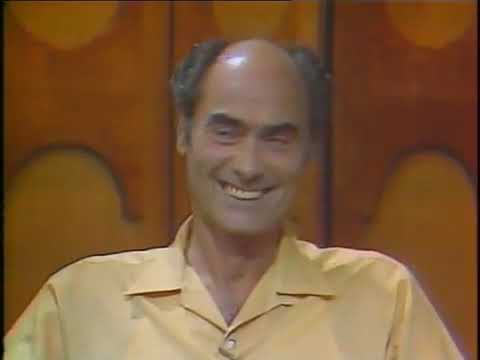
Itzhak Bentov - 1978 interview by Hubert Jessup
hgomez1973
19m 41s3,039 words~16 min read
Auto-Generated
Watch on YouTube
Share
MORE TRANSCRIPTS