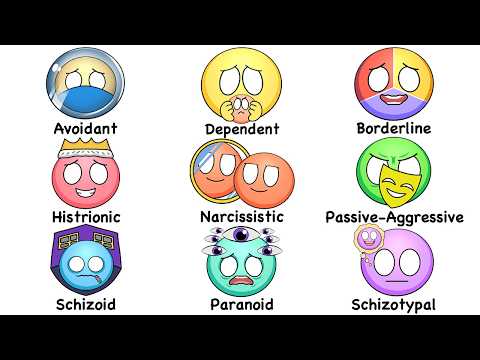
[0:00]Paranoid personality disorder, PPD. Picture this, you're at a family backyard barbecue. Everyone's chilling, flipping burgers and just having a good time. But then there's your cousin, standing off to the side with his arms crossed, darting his eyes around like he's expecting the FBI to pop out of the bushes at any second. He's watching every move, sizing everyone up like the burgers might be a secret weapon. That's the kind of vibe you might get from someone with paranoid personality disorder, PPD. People with PPD don't just distrust others, they're professionals at sniffing out imaginary conspiracies even in the most innocent situations. They're so convinced that everyone, including the neighbor's cat, has a hidden agenda or a sneaky scheme up their sleeve. If life were a movie, they'd be the character muttering, "I know what you're up to," even when you're just opening a bag of chips. They'd even read innocent comments as secret insults or see a casual glance as evidence of a conspiracy. This makes them feel constantly on guard, which makes life very exhausting for them. It's like playing 40 chess with everyone they've meet, while assuming their opponent's goal is to humiliate them in front of the universe. Treatment for PPD is a tough nut to crack because trusting a therapist isn't exactly on their bucket list. But with time, patience and the right support, they can learn to tone down the volume on their suspicion alarm and navigate the world without feeling like they're always one step away from a betrayal plot. Schizoid personality disorder, SPD. Schizoid personality disorder, SPD, is basically like having a big flashing "Do not disturb" sign hanging on your door. Except the door in question is your social life. People with SPD aren't typically rude or hostile, they just genuinely prefer life in the quiet car of the train ride called existence. So, when everyone is busy hosting backyard barbecues, joining group chats or debating the new cat filter on social media, people with SPD are more like, "Nah, I'm good." And head back to finishing that 10-season documentary series alone, perfectly content. Now, it's not like they hate you or the world, it's more like socializing is a flavor they can live without. Their emotional palette can sometimes feel like unsalted crackers, pretty bland and they're fine with it that way. Even when you engage in conversations with them, it could feel one-sided. For example, you might tell them an exciting story about how you wrestled an alligator for your lost flip-flop, and they might just respond with a calm, "Neat." As if you just described the weather. And it's not like they're trying to rain on your parade, it's just they weren't interested in your parade in the first place. Think of them as the human version of airplane mode. They're still around, just not taking calls. Borderline personality disorder, BPD. If you've ever gone on a roller coaster, you already have a pretty good idea of what borderline personality disorder feels like. Except in this case, you're not sure who built the ride, your seat belt keeps coming undone, and the operator has left for a snack break. If you have BPD, you might wake up feeling like it's a perfect beach day, and by lunchtime, it's a category five emotional hurricane of tears, anger, and panic over something that seemed small five minutes ago. Basically, what BPD does to you is that it makes you feel emotions in HD surround sound. When you're happy, you're really happy. And when you're upset, someone might want to pass you a fire extinguisher because your feelings can burn white hot. It's like you have a super sensitive emotional antenna that's always scanning the world for any signal that someone might leave or betray you. This makes all your relationships feel like an intense soap opera. One minute you're passionate, and the next you get so dramatic, it leaves everyone a bit dizzy. Even your identity is a bit like a chameleon, always changing colors depending on who's around or what's happening. Often because you're just trying to feel okay inside. Impulsiveness is another guest at this BPD house party, saying things you don't mean in the heat of the moment, making big decisions on a whim, or going on spending sprees you'll regret tomorrow. It's like having a mischievous goblin whispering, "Just do it! Worry later!" directly in your ear. Schizotypal personality disorder, STPD. Schizotypal personality disorder is like being the funny character in a sitcom, but instead of getting laughs and applause, people are scratching their heads wondering what planet you come from. This is because your interaction with others is far different and unexpected from the norm, and it all boils down to your challenges with connecting with other people. You're eager to connect, but it's like trying to join a group hug when you're stuck behind an invisible force field. So, when you force interactions, you end up looking awkward even though it was never your intention. It's more like your small talk script is written in hieroglyphics while everyone else is using emojis. When it comes to your emotions, others might think you're a little distant or feel nothing. And that's because your expressions don't often match what you're feeling. It's like someone at a surprise party who reacts to the surprise with a polite nod instead of a scream. But you feel just as much as every other person, the only difference is that you're simply operating on a different channel. You probably developed schizotypal personality disorder because someone in your family has schizophrenia or a similar disorder. So they just handed some of it down to you like some twisted family heirloom. Antisocial personality disorder, ASPD. You're paired with the new guy in class to play a game of Monopoly, but he doesn't know the rules. And when you hand him the instruction manual, he flings it out the window like yesterday's leftovers, flips the board, steals the dice, and strolls away whistling. This is basically the life of a person with antisocial personality disorder. They tend to disregard society's guidelines for how to treat others like don't steal stuff or maybe don't lie to your grandma, which were just polite suggestions rather than, you know, moral standards or laws. These are the people who might smirk while you're waving them through in traffic, then rev their engines and cut you off anyway. They're not just acting bad for the thrill, it's more like their empathy switches stuck in the off position. So breaking rules, bending the truth, and treating other people like tools to get what you want can feel as natural to them as breathing. No guilt, no remorse, just what's in it for me? However, not everyone with ASPD is a supervillain plotting world domination. Some can hold down jobs, pay bills, and make small talk, but when push comes to shove, they're more than willing to lie, cheat, or manipulate to get ahead. They're the poker players bluffing with no conscious, the slick talkers who will promise you the moon but vanish once you hand over your wallet. Histrionic personality disorder, HPD. For histrionic personality disorder, think of it like living life on a stage where every day is audition day, every stranger is a potential audience member, and applause is as essential as oxygen. Living with this disorder would always make you crave compliments complete with a standing ovation, confetti cannons, and a marching band to celebrate your new haircut. You love to feel seen and special, and if it's not happening, you don't mind making a grand entrance, whether it's laughing too loud at a joke that's not worth a chuckle or dishing out dramatic stories. It's the mental equivalent of that one friend who would show up to a casual hangout in a red carpet gown. However, underneath all those grand gestures and dazzling smiles, you're terrified of being ignored, forgotten, or cast aside like a Broadway show that's terrified of an empty theater. The exact cause of histrionic personality disorder is unknown, but some studies are saying it could be because you were treated like a star as a kid, receiving so much attention that normal compliments now feel like stale popcorn. Or maybe you grew up in a desert of affection, and now you're on an endless expedition for that sweet, sweet validation. Either way, the result is the same. You're chasing spotlight after spotlight, hoping that this time, the applaud doesn't fade. Narcissistic personality disorder, NPD. Narcissistic personality disorder is like hanging out with someone who's convinced they're Beyonce, front and center on the world stage. Even if the stage is just a PTA meeting about bake sale fundraisers. People with NPD would often seize every moment either to brag, fish for compliments, or remind you how lucky you are to be in their presence. And if you failed to compliment their new shoes just one time, they'd remind you for the 10th time about that one time they had lunch with Elon Musk just to refuel the praise machine. They want the world to revolve around them like they've personally rearranged the solar system. But underneath all that over the top self-assurance often lies deep insecurity. It's like a fancy-looking house that's all glitter and gold on the outside, but a bit shaky on the inside. They're so busy building up their image, they don't want anyone to peek behind the curtain and see their vulnerable side. Keeping a relationship with someone who has NPD can be tricky. At first, they'd sweep you off your feet with charm and confidence, but over time, the constant need for praise, and their lack of empathy can start to feel like a one-sided friendship or romance. It's like being invited to their "I'm awesome" parade every day and expected to cheer the loudest. And that's all because they grew up in a household where achievements were the only way to get love and attention, leaving them with an inflated ego and way too much confidence. It's really a personality built on both shaky foundation and sky-high expectations. Avoidant personality disorder, AVPD. So you're classmate threw a party and they invited the entire class, including you. It's a party you've been looking forward to go, but when you get there and reach for the doorknob, your hand freezes and your brain screams, "They don't like you!" The next minute, you're dashing back the way you came. This is basically what avoidant personality disorder does to those who have it. It's like there's an invisible anti-cheerleader on your shoulder whispering doubts like a broken karaoke machine stuck on a sad tune. Interacting with people can feel like you're trying to walk across a high school cafeteria while balancing a Jenga tower on your head. Unsteady, nerve-racking, and convinced that everyone's watching you waiting for you to slip. Even harmless compliments can make you panic like someone offering you free ice cream, but you're thinking it's poisoned. And when you're finally ready to connect, you want a 100% money-back guarantee that you won't be judged, hurt or ridiculed. Since no one's handing out social warranties, your best bet is often to hide behind emotional sandbags, avoiding parties, job interviews, and even casual chats just in case something goes wrong. It's not that you hate people or want to be alone, it's just that fear has built up a fortress around you, complete with a ditch of self-doubt and dragons named rejection and criticism. Dependent personality disorder, DPD. If you always call your closest friend or partner to help you make decisions, even the small ones, like what to have for lunch, that's a dependent personality disorder in action. It's a personality disorder that puts you in constant need of guidance and approval, as if every choice carries the weight of a life or death scenario. It's not like you're lazy or incapable, you're just terrified of getting it wrong and losing the support of others. And this makes you cling to relationships like it's your emotional lifeboat, doing whatever it takes to keep things afloat, even if it means staying in unhealthy or one-sided situations. DPD stems from the fear of being alone, and it's usually from childhood experiences where independence wasn't encouraged, or you were made to feel helpless. So you just learned to stick close to someone stronger like a social glue that never dries. But this clinginess can backfire. Eventually, people might feel suffocated like they're babysitting the world's biggest toddler. And when they back away, your fears of abandonment erupt like a shaken soda can, spraying insecurity everywhere. Obsessive-compulsive personality disorder, OCPD. Obsessive-compulsive personality disorder is like running life as if you're the CEO of a perfectionist company. And every little thing from the way your towels are folded to how you load the dishwasher is a high stakes boardroom decision. People with OCPD aren't just detail-oriented, they're detail-obsessed. If you think organizing a sock drawer sounds boring, they'll convince you it's an art form. Their way of organizing everything might come out as annoying to you, but that's really not what they're trying to do. It's just that their brains equate orderliness with safety and success. So to them, a cluttered desk isn't just messy, it's a Pandora's box of chaos threatening to undo the universe. Emotionally, they can come across as rigid or overly serious, like they're allergic to fun. They're not party poopers, they just see relaxation as a waste of valuable productivity time. Movie nights might turn into debates over why the script wasn't better organized. But while they don't see it, this obsession with perfection can leave them spiraling when anything is even slightly off. They've spent their lives believing that perfection is the only key to success, and anything less feels like stepping into quicksand. Passive-aggressive personality disorder, PAPD. Let's say you ask your co-worker to help you with a project and they agree, but then they keep losing the files, send you the wrong version twice, and suddenly can't remember how to use the printer. It's like they're sabotaging the mission without ever openly declaring war. What your co-worker is displaying is a typical passive-aggressive personality disorder. People with PAPD are in a constant tug of war between wanting to please others and resenting the fact that they feel pressured to do so. It's like watching someone trying to fight a battle while refusing to pick up a sword. There's no direct confrontation, just lots of emotional shadowboxing. Even when they're mad at you, they never come out plain and say it. Instead, they're dramatic size, exaggerated pauses, and pointed looks become their secret language. It's emotional Morse code for, "I'm upset and you should know why." If you ask them out right if they're upset or why they're upset, you'd get a blatant, "No," complete with a big fake grin and an eye roll fit for an Olympic event. Meanwhile, internally, they're steaming like a kettle you forgot on the stove. They're also kings and queens of giving compliments that's actually an insult. It's almost impressive how they can deliver praise and shade in one breath. It's like dealing with a ninja of negativity, silent, sneaky, and emotionally armed with a double-edged sigh. This disorder is one big defense mechanism, it's a way to shield themselves from actually having to express their rage or anger. But in doing so, they just make everybody around them more resentful, and all because they can't acknowledge the giant, "I am angry" sign around their neck. Sadistic personality disorder. If sadistic personality disorder were a character at a party, it would be that one guest who steals the cake pops, all the balloons right in front of the birthday kid, and then laughs while the kid cries in the corner. People with sadistic personality disorder see human suffering as a twisted form of entertainment. If empathy were a radio station, these guys would have the volume permanently turned down to zero. They would insult you, mock you, or embarrass you in front of a crowd all while wearing a huge smile on their face. It's like their emotional toolbox is missing the caring and compassion wrench, leaving only the cruelty and intimidation hammer. Instead of winning friends and influencing people with charm and kindness, they'd prefer to choose fear and humiliation, leaving chaos and hurt feelings wherever they go. They're the type to light the emotional fireworks, step back with popcorn, and watch the drama explode. Stirring up conflict and pinning people against each other is their version of a Saturday night blockbuster. It's like hosting a fight night, except the fighters didn't know they were signed up. And if you give them even a tiny scrap of authority, they'll wield it like a dictator overseeing a Monopoly game. Bending every rule just to assert dominance. However, underneath all the "I enjoy your pain" performance is often someone who feels powerless in their own life. So they compensate by trying to control or dominate others. It's like a kid on the playground kicking over sandcastles because they don't know how to build their own. Self-defeating personality disorder. Self-defeating personality disorder is like starring in your own soap opera while you're the lead character, the antagonist, and the script writer, all working overtime to ensure the plot never ends happily. Every time life hands you a golden ticket to happiness, your brain pulls a dramatic 180 and veers straight into chaos. As if success feels as out of place as flip-flops at a black tie event. It's like you're allergic to good vibes, but actively seeking out bad ones like they're a long lost friend. For instance, you could be dating a kind supportive partner, but suddenly gravitate towards someone who's emotionally unavailable, distant, or just plain toxic, because chaos feels oddly familiar, like a messed up version of home-cooked comfort food. Or you'd avoid opportunities that could genuinely improve your life because you don't think you're good enough or deserve anything good. It's like having an internal GPS set to avoid happiness at all costs, rerouting every clear path to a dead end marked by self-doubt and disappointment. And it's all because this person has known nothing but conditional love their whole lives. It's like having to pay every single person hundreds of dollars to love you over and over in an eternal loop.
17m 54s3,096 words~16 min read
Auto-Generated
Watch on YouTube
Share
MORE TRANSCRIPTS