[0:00]Now, polar bears in the Norwegian Arctic are getting fatter, according to scientists. All while the sea ice they hunt from rapidly declines. In a study carried out over 30 years assessing the body weight and health of hundreds of polar bears, researchers found that the bears on average had more fat reserves than in the early 1990s. Scientists say the animals have adapted to the change in the environment by finding other land-based prey to hunt. Our science correspondent Victoria Gill has been looking into the Arctic mystery of what exactly the bears are eating. The Arctic's ultimate predator, polar bears are adapted to hunt on sea ice, using it to stalk and pounce on seals. Climate change is melting that ice and eroding their vital hunting platform. But in the Norwegian archipelago of Svalbard, something surprising has happened. The bears here have gained weight. Over 30 years, researchers studied the body condition of 770 polar bears and found that since the early 1990s, the animals have got significantly fatter. But at the same time, rising temperatures mean there are now 100 more ice-free days per year than when this study began. So these bears are now hunting on the land. eating more reindeer, uh, they're eating more bird eggs. Uh, they're likely eating more walruses because there are a lot more walruses around. Why are there more walruses around? Walruses were hunted almost to extinction in Svalbard. Uh, they started to recover. They were protected, so then suddenly the population have increased a lot. This unexpected good news, scientists say, is temporary. As sea ice recedes more, bears may have to travel further between their hunting grounds, using up valuable fat reserves. And across the Arctic, there are 20 different sub-populations of polar bears, each shaped by their environment. All of them have evolved to hunt from the ice. There's a polar bear under our Tundra Buggy right now. When we joined polar bear researchers in Churchill in Canada recently, we saw a very different impact of climate change. Loss of ice here, where there aren't good alternative sources of prey, is driving a decline in the polar bear population. In Svalbard, though, at least for now, polar bears are finding new ways to survive. Victoria Gill, BBC News.
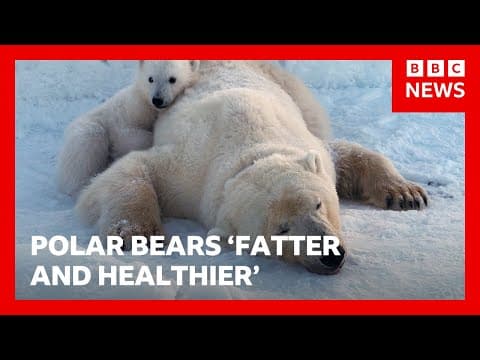
Polar bears on Norwegian islands fatter and healthier despite ice loss, scientists say | BBC News
BBC News
2m 33s381 words~2 min read
YouTube auto captions
Transcript source
YouTube auto captions
This transcript was extracted from YouTube's auto-generated caption track. The transcript below is server-rendered so it can be read, searched, cited, and shared without opening the original YouTube player.
Pull quotes
[0:00]Now, polar bears in the Norwegian Arctic are getting fatter, according to scientists.
[0:00]In a study carried out over 30 years assessing the body weight and health of hundreds of polar bears, researchers found that the bears on average had more fat reserves than in the early 1990s.
[0:00]Scientists say the animals have adapted to the change in the environment by finding other land-based prey to hunt.
[0:00]Our science correspondent Victoria Gill has been looking into the Arctic mystery of what exactly the bears are eating.
Use this transcript
Related transcript hubs
Watch on YouTube
Share
MORE TRANSCRIPTS


