[0:00]Buttermilk pancakes. These are the classic American fluffy pancakes, often served in a stack of two or three, topped with maple syrup or table syrup and butter. It has a slightly tangy flavor that comes from the buttermilk reacting with baking soda in the batter. That reaction produces carbon dioxide bubbles, which is what gives the pancake its height and soft, airy interior. Buttermilk itself used to be the liquid left over after churning butter, but most buttermilk sold today is cultured, meaning it's made by adding bacteria to regular milk to sour it. The American pancake was heavily shaped by the 19th century. Bisquick, introduced in 1931, made pancake batter a pantry staple across the US, by turning it into a dry mix that just needed water or milk added. Many home cooks let their batter rest for a few minutes. The flour hydrates and air pockets form, making for fluffier pancakes. In Canada and the US, buttermilk pancakes are often served with other items like bacon, toast, eggs, or sausage. Crêpes. A crêpe is essentially a pancake stretched as thin as possible. The batter is liquid and poured onto a flat, very hot surface, then immediately spread into a wide, paper-thin circle. Crêpes come from Brittany in northwestern France, a region historically associated with buckwheat farming. The savory version, made with buckwheat flour, is called a galette, and is typically filled with ham, egg, and cheese. The sweet version uses regular white flour and gets filled with butter and sugar, Nutella, jam, or fruit. The batter rests before cooking, usually for at least an hour, which relaxes the gluten and helps the crêpe cook evenly and stay tender. Crêpes Suzette, one of the most famous dessert preparations in French cuisine, involves an orange-butter sauce and a flambé of Grand Marnier or Cointreau. The dish was supposedly created by accident in 1895, when a teenage waiter named Henri Charpentier accidentally set the sauce alight while serving the Prince of Wales. Okonomiyaki. Okonomiyaki is a Japanese savory pancake that is thick, hearty, and built around a cabbage-heavy batter mixed with other ingredients, such as pork belly, seafood, noodles, or cheese. "Okonomi" means "what you like," and "yaki" means grilled. The base batter is made from flour, eggs, dashi stock, and shredded cabbage, which gives the pancake its bulk and a slightly sweet flavor once cooked. There are two main regional styles. Osaka-style mixes everything into the batter before cooking. Hiroshima-style layers their ingredients separately, including a portion of yakisoba noodles folded in, and is generally considered more complex to make. The two cities have an ongoing debate about which version is the original. Okonomiyaki became widespread during and after World War II, when rice was scarce and people needed ways to make filling, cheap food from whatever was available. Hotteok. Hotteok is a Korean street food pancake that is filled, not topped. A yeast-leavened dough is stuffed with a mixture of brown sugar, cinnamon, and crushed nuts, then pressed flat on a griddle and cooked until the outside is golden and slightly crispy, while the sugar inside melts into a hot, sticky syrup. It originated in Qing-dynasty China and was first brought into Joseon Korea during the 19th century. Street stalls in Seoul sell them to lines of people wanting something warm and sweet during cold winters. A savory variant filled with glass noodles and vegetables has also become popular, and a green version made with spirulina or green tea shows up at more modern stalls. The texture contrast between the chewy, slightly crispy dough and the liquid sugar interior is what makes hotteok stand apart from other filled pancakes. Pannukakku. Pannukakku is a Finnish oven-baked pancake poured into a buttered baking dish and cooked until it puffs up, sets, and develops a golden surface with a custardy soft center. It's closer to a baked egg dish than a traditional stovetop pancake. The batter is simple: eggs, milk, flour, sugar, and butter. It bakes at high heat, and the result is a flat, dense slab that's cut into squares and served warm with jam, fresh berries, or whipped cream. In Finland, pannukakku is strongly associated with childhood and home cooking. It's a common school lunch dish, a weekend breakfast, and a camping staple because it's easy to make in large quantities with minimal equipment. The oven does most of the work. The dish is part of a broader Scandinavian tradition of oven pancakes, which includes the Dutch Baby in the US, a dish brought over by German immigrants. Pikelets. Pikelets are small, thick, slightly spongy pancakes common in Australia, New Zealand, and parts of the UK. They're made from a thick batter and cooked until bubbles break on the surface and the edges look dry, similar to an American pancake but smaller in diameter and a bit denser. The texture is soft but springy, and they're typically eaten at room temperature rather than hot, served with butter, jam, and whipped cream as part of the afternoon tea tradition. The word "pikelet" is thought to derive from a Welsh term referring to a dark, pitchy bread, which evolved through usage in the word used today. Dutch Baby. A Dutch Baby is a large oven pancake that puffs up dramatically in the pan during baking, and then collapses as soon as it comes out. The whole thing happens in a cast-iron skillet. The key to the puff is a very hot pan with melted butter already in it before the batter goes in. The sides climb up the skillet walls, and the center stays softer and more custardy. Once it deflates, you're left with a bowl-shaped pancake with crispy, buttery edges and a tender interior. The name comes from a corruption of "Deutsch," the German word for German, reflecting the fact that German immigrants brought over pancake traditions with them when they settled in the United States. A restaurant in Seattle called Manca's Cafe is often credited with popularizing the dish and the name in the early 20th century. Dutch Babies are usually served sweet, with powdered sugar and lemon juice, berries, or fruit compote, but savory versions topped with smoked salmon, herbs, or cheese are also common. Injera. Injera is an Ethiopian and Eritrean sourdough flatbread that functions as both the plate and the utensil for the meal it's part of. It's a large, spongy, slightly sour pancake with a porous surface covered in tiny holes that form during cooking, which makes it good for soaking up stews and sauces. It's made from teff, a tiny ancient grain native to the Horn of Africa that is gluten-free, high in iron, and has a slightly nutty flavor. The batter is fermented for several days, which develops the sour flavor and produces the bubbles that create the open, sponge-like surface. It's cooked only on one side on a large, flat clay griddle called a mitad, and the uncooked side is the one that everything gets placed on. Sharing a platter on injera is a communal dining tradition. Cachapa. Cachapa is a Venezuelan sweet corn pancake made from fresh ground corn rather than cornmeal. The batter is thick, slightly coarse in texture, and naturally sweet from the corn itself. It's cooked on a budare, a flat iron or clay griddle, until golden and cooked through, then folded around a thick slice of soft, white cheese. The contrast between the sweet, dense corn pancake and the salty, creamy cheese is the appeal. It's one of the defining street foods and home foods of Venezuela, eaten at any time of day. Cachapas are of pre-Columbian origins, rooted in the indigenous traditions of corn cultivation that existed in Venezuela before Spanish colonization. The dish has remained largely unchanged over centuries. Fresh corn is essential to the authentic version. Canned or frozen corn doesn't produce the same texture or sweetness, which makes cachapas highly seasonal in their traditional form. Though vendors and home cooks have developed adaptations that work year-round. The dish has become a symbol of Venezuelan food culture internationally, especially among Venezuelan diaspora communities. Jianbing. Jianbing is a Chinese street food crepe and one of the most consumed breakfast items in China. A thin batter often made from mung bean flour and wheat flour is spread in a circle on a large griddle. Then an egg is cracked directly onto it and spread across the surface. It gets flipped, smeared with hoisin and chili sauce, topped with scallions, cilantro, and a crispy fried cracker, then folded into a compact package. The whole process takes about two minutes and is done by a vendor working on a portable cart. Speed and efficiency are part of the culture around Jianbing. People eat it standing up or walking. Jianbing has a history of going back nearly 2,000 years, with origins traced to the Three Kingdoms period, where soldiers are said to have cooked grain batter on their shields over fire when they ran out of cooking equipment. The modern version with an egg and sauce developed much later, but the basic concept of a thin cooked grain crêpe is ancient. Regional variations exist across China, with different provinces using different flours and different fillings. In recent years, Jianbing has spread internationally. Dosa. Dosa is a South Indian fermented crêpe made from a batter of rice and black lentils that have been soaked, ground, and left to ferment overnight. The fermentation develops a mild sour flavor and a light batter that spreads thin and crispy on a hot iron griddle. A properly made dosa is paper-thin, golden, and so crispy it shatters slightly when you break it. The most famous version is the masala dosa, where the inside is filled with a spiced potato mixture before it's folded and served with coconut chutney and a lentil-based vegetable soup. But there are dozens of varieties. Set dosa is thick and spongy. Rava dosa uses semolina for a lacier texture, and pesarattu is made entirely from green mung beans. The dish has been documented in South Indian literature going back to the 8th century. The fermentation step is what makes dosa interesting from a nutrition standpoint. The process increases the bioavailability of nutrients in the rice and lentils and produces B vitamins. It also means the batter needs planning ahead, as fermentation takes anywhere from eight to sixteen hours, depending on the temperature of the environment. Blini. In Slavic culture, blini are more than just pancakes. They are the central symbol of Maslenitsa, the "Butter Festival" that celebrates the end of winter. Their round, golden shape was meant to look like the sun in ancient pagan rituals. With the arrival of Christianity, these rituals became a week of eating and celebrating before the strict 40-day Lenten fast. The traditional blini is yeast-leavened and often made with buckwheat flour, which gives it a slightly nutty flavor and a porous texture ideal for holding butter and sour cream. The classic serving involves sour cream and caviar. In everyday Russian cooking, they're eaten with butter, sour cream, smoked fish, honey, or jam. Poffertjes. Poffertjes are miniature Dutch pancakes that originated in the 18th century as a variation of communion bread in monasteries. Bakers discovered that a blend of buckwheat flour and yeast created a texture that was lighter and more airy than the large flat Dutch pannenkoeken. They're served piled up in a shallow dish, dotted with butter and dusted heavily with powdered sugar. The butter melts down through the pile. It's a dish essentially designed to be indulgent. Vendors cook them in large, specialized cast-iron pans with small, round indentations, flipping each one right in front of customers. The pans are designed specifically for poffertjes and nothing else. You can find these vendors at street markets, fairs, and winter festivals all across the Netherlands. They are considered a beloved national comfort food and remain one of the most recognizable Dutch treats to this day. Apam Balik. Apam Balik is a Malaysian folded pancake that comes in two styles that are almost opposite in texture. The thick version, called apam balik tebal, is fluffy and soft, with a slightly crispy base, cooked slowly in a round pan until the top is just set, then filled and folded. The thin version, apam balik nipis, is crispy and cracker-like throughout. Both versions use a batter made from flour, eggs, coconut milk, and baking soda or yeast. And both are filled with the same classic combination: crushed roasted peanuts, sugar, and butter, with sweet corn sometimes added. The name "apam" comes from the Tamil word for a type of rice pancake, reflecting the South Indian influence on Malaysian food culture that came through centuries of trade and migration. The dish is sold at night markets called pasar malam throughout Malaysia and Singapore, and is one of the most common Malaysian street foods. While traditional fillings include crushed peanuts and corn, modern street vendors offer a "fusion" menu featuring chocolate sprinkles, cheese, and condensed milk. Beghrir. Beghrir is a Moroccan semolina pancake that is cooked on one side only. The batter is made from fine semolina, flour, yeast, and baking powder, and as it hits the hot pan, hundreds of tiny bubbles rise to the surface and pop open. Because of all those holes, beghrir absorbs whatever you pour over it almost instantly. The traditional way to eat it is dipped in or drizzled with a mixture of melted butter and honey, which soaks straight through the spongy surface in seconds. Some people use argan oil and honey instead, which is a distinctly Moroccan combination with a nutty, floral quality. Beghrir is a breakfast and tea-time food, closely associated with Ramadan in Morocco, where it's eaten at the iftar meal to break the fast. It's also called "thousand-hole pancake" in some translations. The name itself is Amazigh in origin, reflecting the Berber roots of the dish before it became a staple across North Africa. The texture is soft, almost spongy, and slightly chewy from the semolina. It's never crispy, never dense, and the side that touches the pan stays smooth. Boxty. Boxty is a traditional Irish potato pancake associated with the north midlands and southern Ulster. The raw potato is grated, squeezed to remove as much liquid as possible, then mixed with mashed potato, flour, buttermilk, and egg to form a thick batter that holds together on the griddle, resulting in a unique, fine-grained consistency that is distinct from other fried potato dishes like hash browns. Modern versions are sometimes served folded around fillings like smoked salmon, sour cream, or stewed meat. Murtabak. Murtabak is a stuffed pancake found across the Middle East, South and Southeast Asia, with many different distinct versions. The common thread is a thin dough that is stretched or folded around a savory filling, and then pan-fried in oil or ghee until crispy on the outside. In Malaysia and Singapore, murtabak is made from a roti-style dough that gets stretched paper-thin, filled with a mixture of spiced minced meat, egg, and onion, then folded into a flat pancake and fried until the outside is crispy. It's served with a thin curry sauce or pickled onions on the side. In Saudi Arabia and Yemen, the version called mutabbak is often thinner and crispier, more like a layered pastry than a stuffed pancake, and sweet versions filled with banana, cheese, or nuts are common alongside the savory ones. The word murtabak is thought to derive from the Arabic word for "folded," which describes the technique of wrapping the filling inside the stretched dough. Qatayef. Qatayef is an Arab pancake that is only cooked on one side, leaving the top surface soft and slightly sticky. Once this pancake is cooked and still warm, it gets folded in half and pinched shut around a filling of either sweet white cheese or a mixture of crushed nuts, cinnamon, and sugar. The filled half-moon is then either fried until golden and crispy or baked, and finished with a drizzle of simple syrup or sugar syrup scented with rose water or orange blossom. Qatayef is almost exclusively a Ramadan food across the Arab world. The dish has been documented in Arabic culinary texts going back to the Abbasid Caliphate over a thousand years ago, which makes it one of the oldest pancake traditions still in active practice anywhere in the world. Serabi. Serabi is a traditional Indonesian pancake with a lineage dating back to the ancient Mataram Kingdom. Originally crafted by royal chefs for nobility, it's made from a base of rice flour and coconut milk. The pancake is traditionally cooked in small earthenware or clay pans over a charcoal fire, which imparts a subtle, earthy aroma. There are two main regional versions that are quite different from each other. Solo serabi from the city of Surakarta is plain and unflavored, served with a thick coconut sugar syrup poured over top. Bandung serabi from West Java mixes the toppings directly into the batter before cooking, incorporating ingredients like pandan, jackfruit, chocolate, cheese, or corn. The Bandung version is more colorful and varied, while the Solo version is more traditional. Serabi is a street food and morning market food across Java, sold by vendors who set up small charcoal stoves and cook the pancakes to order. The combination of rice flour and coconut milk places it in the broader family of Southeast Asian rice-based pancakes, a category that also includes apam in South India and Sri Lanka. Sveler is a Norwegian thick pancake that is slightly tangy, soft, and made from a batter that includes buttermilk or sour milk, which gives it a mild fermented flavor and a tender texture. It's thicker than a crêpe, but not as tall as an American pancake, somewhere in between, with a soft interior and a lightly golden surface. It's strongly associated with western Norway, particularly the fjord regions, where it's been a staple of home baking for generations. You'll find them at ferry terminals and gas stations along Norwegian highways. They're traditionally served warm, folded into a crescent shape with a sweet buttercream and sugar filling, or a slice of brown cheese. Because it's a batter-based cake, it traces its roots back to the 1300s, when farmhouse kitchens would use sour milk or kefir to avoid waste, turning simple ingredients into a Saturday celebration.
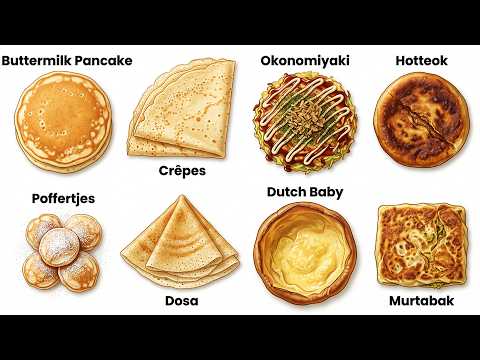
Every Pancake Explained
FooDiscover
15m 34s3,058 words~16 min read
YouTube auto captions
Transcript source
YouTube auto captions
This transcript was extracted from YouTube's auto-generated caption track. The transcript below is server-rendered so it can be read, searched, cited, and shared without opening the original YouTube player.
Pull quotes
[0:00]These are the classic American fluffy pancakes, often served in a stack of two or three, topped with maple syrup or table syrup and butter.
[0:00]It has a slightly tangy flavor that comes from the buttermilk reacting with baking soda in the batter.
[0:00]That reaction produces carbon dioxide bubbles, which is what gives the pancake its height and soft, airy interior.
[0:00]Buttermilk itself used to be the liquid left over after churning butter, but most buttermilk sold today is cultured, meaning it's made by adding bacteria to regular milk to sour it.
Use this transcript
Related transcript hubs
Watch on YouTube
Share
MORE TRANSCRIPTS


