[0:00]There's a house on Cielo Drive in the hills above Los Angeles that became, in August 1969, a kind of wound in the American imagination. A place where the sunlit fantasy of the 60s bled out on the floor in a single night of savagery. Most people know what happened there. Sharon Tate, 8 and 1/2 months pregnant, and four others butchered by the followers of Charles Manson. But within the shockwaves of that slaughter, there is another quieter story. The story of a young actor who claimed to have been in love with Tate, who was 3,000 miles away shooting an epic in Ireland when the news reached him, and who, upon hearing it, began a withdrawal from the world so complete that Hollywood would spend the next four decades trying to explain it. His name was Christopher Jones. He was 27 years old. He looked like James Dean's ghost, and he had the machinery of major stardom pointed straight at him. Then he walked off the set of his life and never came back. This is the story of the Ghost of Cielo Drive, and the Art of Vanishing from Hollywood. Welcome to Hollywood Mysteries.
[1:19]He came into the world as William Franklin Jones on August 18th, 1941, in Jackson, Tennessee. A small sweltering town in the west of the state where cotton was still a kind of formal currency, and ambition was something you generally kept to yourself. His father, J.G. Jones, was a grocery store clerk. His mother, Robbie, was an artist, a woman of some creative restlessness, and by most accounts, the parent from whom Christopher would inherit whatever spark of talent he carried. But the family arrangement was fragile, and it cracked early. When Jones was four years old in 1945, his mother was committed to the state hospital in Bolivar, Tennessee. Accounts differ on the precise circumstances. Some report a breakdown, others, a she dramatically held a gun to her husband's head after discovering his infidelity. She was locked away and she would never come out. Robbie Jones died in that institution in 1960, when her son was 19. It would haunt him for life. With their mother gone, Christopher and his older brother, referred to in various sources as Bobby or Bobby Joe, were placed in Boystown, a children's home in Memphis. It was not a cruel place, but it was an institutional one, and the gap between screen fantasy and orphanage reality must have felt like a canyon. This was a kid who would later admit in a 1966 magazine interview, I adored movies. Everything was so clean and uncomplicated in the movies, all those important people in their big houses, that was my ideal. I wanted to be a movie star. The movies kept me going for a long time. At Boystown, someone told him he looked like James Dean. The executive director reportedly shown him a magazine photo, then took him to see Rebel without a Cause. For a boy with no mother and a father he barely knew, Dean became not just a screen idol, but a kind of phantom older brother. The rebel who got out. Jones left Boystown at 16, and with his father's permission, joined the US Army. He went AWOL almost immediately. Some accounts say within just two days. This was not mere impulsiveness, though it probably felt like it at the time. It was the first iteration of a pattern that would define his entire life, the long store to structure, the violent recoil from it, and then the vanishing. He would repeat this cycle with the Army, with marriages, with the entire motion picture industry. Each time the escape was total, each time the aftermath was silence. He drifted around the country for a while, a handsome teenage fugitive with no money and no destination. One stop, according to his own later testimony, was the home of James Dean's family, the Winslows, in Indiana. The Winslows were very nice people and made me feel right at home, he recalled in a later interview. They took me up to Jimmy's room where his Levis were. Dean's uncle showed him the motorcycle, and the handprint that Dean had pressed into barn cement as a 9-year-old boy. It was a pilgrimage, the runaway orphan kneeling at the shrine of the dead rebel, trying to absorb some residual charge from the artifacts. Eventually Jones turned himself in and served six months in military prison on Governor's Island by some reports, before being released back into civilian life with no plan and no prospects. He was barely 18. He had already been abandoned, institutionalized, enlisted, imprisoned, and set free. Most people do not accumulate that much wreckage before they can legally vote. Before I go on, I'd like to show you all some of the shirts I currently have on offer over at the Hollywood Mystery store, which is linked on screen now and down in the description. These designs are all made in-house and are totally exclusive to us. There are shirts featuring classic stars like William Powell, Theda Bara, Kay Francis, Marlena Dietrich, and Barbara Stanwick. They come in a range of sizes up to 5 XL, plenty of color options, and ship to the US, EU, UK, Australia, and Canada. If you're ordering in the US, you get free shipping on orders over $100, equivalent to four shirts, as they start at 25 bucks a shirt. Every sale is an enormous help to the channel, and I'm grateful to everyone who's bought one. If you have, be sure to let me know which one you ordered in the comments and what you think of it. Thanks again. By the early 1960s, Jones had washed up in New York City where he was living the familiar bohemian grind of the era. Odd jobs, painting, sleeping rough for cheap, haunting the coffee shops and cold water flats of Greenwich Village and the Lower East Side. He was studying visual art and falling in with the kind of loose confederacy of actors, writers and drifters that Manhattan still produced in those years before the rents choked the life out of the scene. He had no connections, no training beyond whatever he had picked up at Boystown, no family to fall back on. What he had was a face. He was by all accounts strikingly good-looking in a way that made people stop mid-sentence and stare, and more to the point in a way that made people say, James Dean. The resemblance was not casual. It was spooky, the cheekbones, the half-litted gaze, the sullenness that could read as either pain or menace. People who encountered Jones for the first time often had to be told that Dean really was dead, and this was a different person entirely. It was in this period that Jones met Frank Corsaro, the acting coach and director who was a significant figure at the Actor's Studio. Corsaro recognized something in the young Tennessean, maybe the rawness, maybe the hurt, and encouraged him to audition for the studio. Jones was accepted. Then Corsaro did him one better. He cast Jones in the original 1961 Broadway production of Tennessee Williams, The Night of the Iguana, alongside Betty Davis and Margaret Laton. Jones played Pancho, a Mexican beach boy, a small role, but the origin story was irresistible. Williams himself had reportedly selected Jones from the casting call. Whether that anecdote is apocryphal or precise, it entered the mythology immediately.
[7:38]The orphan from Tennessee, plucked from nowhere by the greatest living American playwright. The Night of the Iguana opened on December 17th, 1961, and though Jones's part was minor, it placed him inside the world that mattered. During the run, he formed a friendship with Shelley Winters, another Actors Studio heavyweight, who would become a recurring figure in his professional life. It was Winters who introduced him to Susan Strasberg, the actress daughter of Lee Strasberg, the patriarch of the Actor's Studio and the High Priest of Method Acting in America. Susan was Hollywood royalty by blood. She was also by her own later account, deeply attracted to the moody young man with the orphan's eyes. Jones began studying under Lee Strasberg, aligning himself with the method tradition, though he would never become a disciple in the way that some of his contemporaries did. I think of acting as only a means to an end, he told the Los Angeles Times in 1968. Acting's just my work. It was the kind of thing that drove method purist crazy, and it was probably the truth.
[8:43]Jones and Strasberg married on September 25th, 1965 in Las Vegas. The union linked him, at least symbolically, to the inner sanctum of American acting royalty, the Strasbergs, the studio, the whole apparatus of post-war theatrical prestige. But the marriage was troubled almost from the start. Both Jones and Strasberg were using drugs. When their daughter, Jennifer Robin was born six months after the wedding in early 1966, the baby was diagnosed with a congenital heart defect. It's how not knowing, she wrote.
[9:28]The marriage became a furnace of guilt, volatility, and drugs. It would last barely three years and according to Strasberg, it ended because of Jones's mental instability. Professionally, though, Jones was moving fast. In 1965, he landed the title role in The Legend of Jesse James, an ABC television series that ran for 34 episodes across the 1965-1966 season. The show cast him as the mythic American outlaw, a role that fitted his screen persona like a holster fits a gun. He was the romanticized rebel, the beautiful bad boy, and the mail came in by the sack load. Thousands of fan letters every week, the kind of deluge that, in the mid 60s, was the industry's signal that a television actor was ready to be groomed for the big screen. He also made guest appearances on The Man from Uncle, and Judd for the Defense, racking up the kind of credits that built a bankable name. When Jesse James was canceled, Jones leapt to film with the confidence of a man who had nothing to lose, because in a sense, he never had. His first feature lead was Chubasco, a 1967 melodrama in which he played a hot-headed young drifter forced into hard labor on a tuna boat. Strasberg played his love interest, making it one of the more combustible on-set marriages in the history of low-budget cinema. The film was minor, but it kept him in the pipeline. Then came the role that would define his brief, incandescent moment in the cultural sun. Wild in the Streets, released in 1968, was one of the strangest and most prescient films of the decade. Produced by Samuel Z. Arkoff for American International Pictures, the outfit that had perfected the art of making cheap movies for young audiences. It told the story of Max Frost, a rock star who leverages his fame into political power, gets the voting age lowered to 14, and becomes president of the United States at 22. His first act is to dose the nation's water supply with LSD and intern everyone over 30 in re-education camps. It was satire, but the kind that left a bruise. The film did not so much predict the future as identify a current that was already running through the culture. The collision of celebrity, youth worship, and political power, and push it to its absurd, terrifying conclusion. Jones played Frost with a feline, dissociated cool that was either brilliant or vacant, depending on your reading, and which, in either case, was precisely what the role demanded. Roger Ebert, reviewing the film in May 1968, framed its core conceit as an exploration of what he called the fascist potential of pop music. The idea that idol worship could be mobilized as a mass political force, and that media charisma was just coercion wearing a better outfit. The film's supporting cast was remarkable in retrospect. Shelley Winters is Frost's shrieking mother, Hal Holbrook as a senator out of his depth, and a young Richard Pryor in one of his earliest screen roles. The film was aimed, Ebert noted, squarely at teenage audiences, and it found them. Jones became a counterculture pin-up overnight, the face of generational revolt, or at least the face that AIP could sell on a poster. That same year he starred in Three in the Attic, a sex comedy about a collegiate womanizer who gets his comeuppance when three girlfriends discover his deception and lock him up in an attic, subjecting him to an exhausting regime of enforced sex as punishment. Ebert reviewed it as a film that was partially effective but ultimately collapsed into exploitation. It was a picture that flirted with social critique while cashing in on sexual provocation. The line was blurry, and nobody in 1968 much cared.
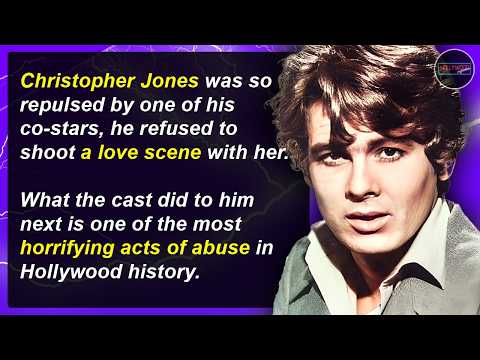
[13:25]Jones was 27. He was bankable and the studios were circling. He had made three films in a single year, each of which had turned a profit. In the calculus of late 60s Hollywood, that made him a commodity worth investing in. The question was whether anyone, including Jones himself, understood what they were investing in. Jones's next move was toward prestige. He made two films in Europe with the Swedish actress Pia Degermark, who had won the Best Actress Award at Cannes for Elvira Madigan. The first was The Looking Glass War, a 1969 adaptation of John Le Carre's espionage novel, in which Jones played a civilian recruited by British intelligence for a dangerous mission behind the Iron Curtain. The second was A Brief Season, a Dino De Laurentiis production about doomed lovers in Rome. Jones and Degermark were involved romantically off-screen, but the relationship did not survive the Italian shoot. Jones would later dismiss his earlier pictures with the airy contempt of a man chasing something bigger. He wanted to do serious work, he said, and dismissed his previous movies as junk. It was during this period, while shuffling between London, Rome and the continent, that Jones's personal life became entangled with two figures whose fates would stamp his own forever. The first was Jim Morrison. Jones and Morrison ran in overlapping circles. Both had been residents of the Chateau Marmont at various points. Both were associated with the same women, and both embodied a particular late 60s archetype, the beautiful, self-destructive young man running on charisma and narcotics. Morrison's girlfriend, Pamela Courson, once propositioned Jones in the Chateau's parking garage, reportedly in retaliation for one of Morrison's own infidelities. During the London shoot of The Looking Glass War, Courson joined Jones briefly, but stormed out in a jealous rage when she found a letter he had written to his ex-wife, Susan Strasberg. Morrison had to fly to London to bring Pamela back to Los Angeles. The 60s were swinging, all right. The second figure was Sharon Tate. Jones later claimed in a 2007 interview with a British newspaper, and in a rare 1996 conversation, that he and Tate had been having an affair. They had met in Italy where Tate was filming 12+1. According to Jones, the relationship was serious enough that he told Sarah Miles, years later, that Tate had been preparing to leave Roman Polanski so that she and Jones could be together once his next film wrapped. This claim rests almost entirely on Jones' own late life testimony. There is no independent, contemporaneous documentation to confirm it, but the observable wreckage of his career after her death lends to it the weight of something real, whatever that something was. On August 9th, 1969, Tate was, of course, horrifyingly murdered. Charles Manson's followers killed her and four others at the house on Cielo Drive, the one that she shared with Polanski, who was away in Europe. Jones was in Ireland on the windswept set of a film that was supposed to make him an international star. Ryan's Daughter was supposed to be a coronation. David Lean, the man who had made Lawrence of Arabia, The Bridge on the River Kwai, and Doctor Zhivago, was coming off a run of global epics and had chosen Jones for the role of Major Randolph Doryn, a shell-shocked British officer who has a passionate affair with a married Irish woman during the First World War. The role had originally been written for Marlon Brando, who dropped out due to production problems on another film. Peter O'Toole, Richard Harris, and Richard Burton were all considered. Then Lean saw Jones in The Looking Glass War, and decided he possessed that rare Brando Dean quality he wanted on film, a smoldering physical presence that the camera could not stop watching. He cast Jones without ever meeting him in person. It was a decision that would prove fateful for both men. The production, set up on the Dingle Peninsula in County Kerry, Ireland, and what followed was a 12-month ordeal, double the originally planned schedule, which has since entered film industry lore as a case study in epic scale dysfunction. Lean, a perfectionist of nearly pathological proportions, would halt shooting for days or weeks, waiting for the right cloud formations or the perfect Atlantic storm. A glass disc spinning in front of the camera lens kept the spray at bay, while Lean chased meteorological grandeur. Robert Mitchum playing the school teacher husband, clashed with the director openly and had his own colorful assessment of the working conditions. Sarah Miles, who played the title character, Rosie Ryan, was married to the screenwriter, Robert Bolt, who had penned Dr. Zhivago and A Man for All Seasons. The entire production was a sealed ecosystem of ego, weather, whiskey, and waiting. The crew became a kind of traveling circus in the dying days of studio era filmmaking, a sprawling camp of technicians and actors marooned on the western edge of Europe while their director waited for God to arrange the sky. Jones arrived on the Dingle Peninsula carrying a grief that no one around him fully understood. The news of Sharon Tate's murder had reached him during the shoot, and by multiple accounts, his own, his manager's, his co-stars, it shattered him. Sarah Miles later reflected on what she observed. Christopher Jones was an enigma and a deeply troubled soul, she told the London Mirror. She added that at the time of Tate's killing, Jones was distinctly disturbed about something, so much so that he could hardly perform at all. His former manager, Sherry Dodd, would later describe Jones as shattered, saying he had suffered a breakdown and lost all interest in films. Jones himself in a rare interview years later, put it plainly. I had absolutely no desire to do anything for a long time. The tensions between Jones and the production were multifaceted. He could not master a convincing English accent for the role. He was openly hostile to his co-star Miles and made no secret of his lack of physical attraction to her. I just didn't have any eyes for Sarah, he said later. He refused for weeks to film the central love scene in the forest, a sequence that was, narratively, the emotional core of the entire picture. Lean grew furious. The young actor, half-destroyed by grief, dug in. I don't know why I was refusing, Jones said in retrospect with a bewilderment that may have been genuine. And then something happened that would remain buried for years, surfacing only decades later in memoirs and production histories. According to Sarah Miles' autobiography, A Right Royal Bastard, then corroborated in Olivia Hussey's memoir, The Girl in the Balcony, as well as in Paul Benedict Rowan's exhaustive production history, Making Ryan's Daughter, Jones was secretly drugged. Miles conspired with Robert Mitchum to spike Jones's breakfast cereal with an unspecified substance, variously described as a sedative or an aphrodisiac, intended to loosen him up enough to perform the love scene. Mitchum, by multiple accounts, overdid the dosage. Jones was rendered near catatonic. He did not know he had been drugged. He believed he was losing his mind. He was also involved in a car crash during this period, again without knowing he was under the influence of whatever had been put in his food. The director and producers never told him what had been done. Hussey, who was present on set as Jones's new girlfriend, later wrote that members of the production asked her to continue administering the pills by crushing them into his cereal. She assumed they were some kind of tranquilizer. Jones began to have his suspicions, but no one confirmed them. When he was confronted with Miles' published account of the drugging years later, Jones was furious. Sarah's out of her mind, he said. For her to come out and say that they drugged me, she must be nuts, for her to admit it. He had been made to believe he was breaking down while being chemically manipulated by the people around him, gaslighted in the most literal sense. The production's driver, Walter Shee, later said that one of the managers, Stewart Cohen, confessed to putting a sedative in Jones's breakfast cereal every morning. The full extent of the drugging and how many people on the set knew about it remains unclear. What is not unclear is the effect. A young man, already grief-stricken and disoriented, was pushed further into a psychological spiral by the very people who were supposed to be making a film with him. The finished film bore another scar. Lean, dissatisfied with Jones's vocal performance, the flat American cadence, the emotional hollowness that may have been grief or may have been sedation, or may have been both, made the decision to have all of Jones's dialogue re-recorded in post-production by the British actor, Julian Holloway. When audiences walked Ryan's Daughter in cinemas, the face was Jones's. The voice belonged to someone else entirely. It was the ultimate act of erasure, a star unmade in the editing room, his very words taken from him. And yet David Lean, for all of his frustration, never denied what he saw in the young man. He had this extraordinary quality of screen personality, Lean later said, according to Kevin Brownlow's biography. The contradiction was the whole story. Jones had the thing, and the thing was not enough to save him, no matter how much they tried to poison him into shape. Ryan's Daughter opened in 1970 to mixed reviews but strong box office, earning a reported 30.8 million in North America. John Mills won the Academy Award for Best Supporting Actor. Miles was praised. Mitchum was surprisingly affecting. Jones was largely ignored by critics or dismissed. Sarah Miles later said that at the end of the shoot, Jones was taken off to a mental hospital. If Jones's connection to Sharon Tate is the hinge on which his career story turns, his relationship with Olivia Hussey is the hinge on which something much darker pivots. Hussey, the Argentinian-born British actress who had become world famous at 15 as Juliet in Franco Zeffirelli's 1968 Romeo and Juliet, was Jones's girlfriend during and after the Ryan's Daughter shoot. She was young, she was beautiful, and she had walked straight from Shakespeare into the wreckage of Christopher Jones's psychological collapse. What she later disclosed about the relationship placed Jones in a light far removed from the romantic mythology of the doomed young rebel. In a 2018 interview with The Guardian, and in her memoir, The Girl in the Balcony, Hussey alleged that Jones had raped her. The assault she said took place in an utterly shocking locale, in the house on Cielo Drive, the same address where Sharon Tate had been murdered only weeks earlier. Jones had been living in the house after Tate's death, and Hussey had moved in with him. I never felt afraid in the Manson house, Hussey told The Guardian, not of the ghosts anyway. The horror, she said, came from the living. In People's coverage of the memoir, Hussey described the attack in stark terms, saying that during the assault she did not know if he was going to kill her. She said the relationship had been abusive, a pattern of violence, not an isolated event, and that she ended it as a result. She would later rush into a marriage with Dean Paul Martin, the son of Dean Martin, shortly after leaving Jones. It is important to note at this point that this allegation, though made publicly and on the record, was not followed by criminal proceedings or legal adjudication in any reporting. It stands as Hussey's account, conveyed through memoir and interview. What the disclosure does is collapse the symbolic geography of Jones's story into a single, unbearable point. Cielo Drive, the house of Tate's murder, the address that had become a shorthand for the death of the 60s, became, in Hussey's telling, the site of another kind of violence. One act committed by strangers in the night, another allegedly by an intimate behind closed doors. The public memory of Christopher Jones can no longer be assembled without reckoning with both events, the one that he suffered, and the one that he allegedly inflicted. After Ryan's Daughter, Christopher Jones quit acting, not temporarily. Not in the usual Hollywood sense of the word, where retirement is a press release and the comeback is already being negotiated in the next room. He simply stopped, then vanished. He returned to California and for the better part of 25 years, he did not appear on a screen, did not give interviews, did not engage with the industry in any observable way. He was 29 years old, besieged with offers. He ignored them all. The explanations, such as they are, came in fragments over the decades. His manager, Sherry Dodd, attributed the withdrawal to the Tate murder and the breakdown that followed. Jones himself in one of his rare later statements, told the Chicago Tribune in 2000, simply, I am happy. Three words, offered without elaboration or apology. In a 1996 interview, his first in roughly a quarter century, he was slightly more expansive. I'd had a nervous breakdown over Sharon Tate's death. I had done three pictures in a row in Europe and had so many love affairs, I was exhausted. I was tired, man. He added with the kind of disarming openness that only a man who truly does not care about his reputation can produce. But you know, I love David, and he liked me, and we got along great most of the time. Just a few times it was head-to-head, but I totally respected him, a brilliant director, the best there was. There was also Morrison. Jones and Morrison had become close friends despite their frequently crossing romantic paths, and they shared the aura of beautiful ruin that late 60s Hollywood manufactured and consumed in equal measure. When Morrison died in Paris in July 1971, at 27, Jones was devastated. The death of Jim Morrison really fucked me up more than anything else, he said later. I felt empathy for him, and I identified with what he was saying. The fact that he died that young really affected me. He once noted that he and Morrison were similar here, pointing to his head, and we kept going with the same chicks. Between Tate and Morrison and the trauma of Ryan's Daughter, Jones had hit a wall, or the wall had hit him. He did not build the mythology of exile that other vanished stars cultivated. He did not write a memoir. He did not grant confessional interviews or construct a narrative of Hollywood betrayal. He simply withdrew. First into the Sunset Strip drug scene, by his own account, and then gradually into something quieter. He cleaned up. He took up painting and sculpture. He lived the Southern California Beach life, Seal Beach, the kind of anonymous coastal existence that is, in its way, the opposite of the Hollywood machine, just a few miles inland. He had accumulated roughly a million dollars during his brief career, and he lived on it, modestly, while the industry he had abandoned kept churning out new rebels and new victims. Some things are better left unsaid, he told one interviewer, and proceeded to leave them unsaid.
[29:16]In 1976, Jones married Carrie Abernathy. They divorced in 1983. That same year he began a long-term partnership with Paula McKenna, who would become the most enduring presence in his adult life, and the mother of five of his seven children. McKenna served as a kind of gatekeeper and translator between Jones and the world he had left behind, fielding offers from producers and directors who kept coming, decade after decade, chasing the ghosts of the young man from Wild in the Streets. The most famous of these overtures came from Quentin Tarantino. In the early 1990s, Tarantino, then an ascendant force in American cinema, not yet the cultural monolith he would become, offered Jones the role of Zed in Pulp Fiction, the psychopathic rapist who meets his end at the hands of Bruce Willis's boxer. It was a small but ferociously memorable part, the kind of role that could have launched a second act, or at least generated enough industry attention to open doors that had been closed for two decades. The script arrived at Jones's home like a message from a world he no longer recognized. Jones turned it down. By his own account, he did not even know who Tarantino was. McKenna, for her part, described the role as disgusting, and said she preferred that Jones not take a part involving sexual violence, especially with their children in the picture. Tarantino, by various accounts, was gracious about the refusal. The role went to Peter Greene. Jones went back to his paintings. It was the most famous no in a career made almost entirely of refusals. He did, however, make one concession. In 1996, Jones accepted a small role in Mad Dog Time, a crime comedy directed by his old friend Larry Bishop, who had appeared alongside him in Wild in the Streets nearly three decades earlier. The cast was extravagant. Gabriel Byrne, Richard Dreyfuss, Burt Reynolds, Jeff Goldblum, Ellen Barken, Diane Lane, Billy Idol, and the film was barely seen. Jones appeared briefly as a character named Nicholas Falco. He later described the decision with perfect insouciance. Just something to do. It was his last screen appearance, one final favor for an old friend, and then the door closed again. In his final decades, Christopher Jones lived the life he had chosen, or depending on your reading, the life that the accumulated trauma of his 20s had forced upon him. His works included an oil painting of Rudolf Valentino that was displayed at the Hollywood Forever Cemetery. A fitting tribute, perhaps from one ghost of Silent Era magnetism, to another. He raised his children. McKenna described him as a devoted father who was determined to give his kids the stability he had never known. He served, he sat in the sun. He was by his own account, content. I am happy, he had once said. And by the evidence of those who knew him, it was not a deflection. It was a fact stated by a man who had weighed the alternatives and chosen simplicity. I never took the resemblance and comparisons to Dean too seriously, he said in 1996. I felt that I had talent in my own right. Whether that talent was ever fully realized is a question that answers itself. Six feature films, one television series, a voice erased from his most prestigious role, and then four decades of silence. Jones was diagnosed with gallbladder cancer in December 2013. The disease moved fast. He died on January 31st, 2014, at Los Alamitos Medical Center in Los Alamitos, California. He was 72 years old. The obituaries came from the Los Angeles Times, the New York Times, the Hollywood Reporter, the Boston Globe, all of them struggling with the same essential problem, how to write the obituary of a man who had been famous for disappearing. He is buried at Hollywood Forever Cemetery, not far from Valentino, the man whose portrait he had painted, another figure of dangerous beauty whose image outlived the person who wore it. He was survived by seven children, and also survived too by Paula McKenna, who had shared his life for three decades of deliberate, unrepentant obscurity. Christopher Jones's legacy is defined by the paradox at its center. He is remembered for what he refused to do, and by the one terrible thing he's alleged to have done. What remains, finally, is a kind of negative space, the shape of a career that should have been, cut out of the fabric of Hollywood history. He had the face, he had the moment. The New York Times in its obituary noted that Jones had seemed poised for stardom before abruptly abandoning his movie career. That word, abruptly, does a lot of work. It contains the bewilderment of an entire industry confronted by a man who simply did not want what it was selling. Whether that walking away was an act of self-preservation, repentance or self-destruction, whether it was courage or collapse, or simply the only move left to a man who had absorbed and given more damage than any 29-year-old should have to carry, is a question that Christopher Jones characteristically never bothered to answer. Thanks for listening. I hope you enjoyed this look back at a less remembered star. And big thanks to our Patreon supporter Kim for the fantastic suggestion that I cover Christopher Jones. If you'd like to suggest an episode or tune into my weekly exclusive podcast show, be sure to check out the Patreon page down in the description. I have recent episodes on the mysterious and uncanny world of the Forgotten China girls, and on the unforgettable romance between Jack Nicholson and Harry Dean Stanton, which ended in one of the most sickening practical jokes of all time. For only $3 a month, you get all of that and more. Thanks to all the YouTube members and Patreon supporters. You guys are the best. I've been Ava. Until next time, sweet dreams.


