[0:03]In order to prepare for an interview, it's important to research in three areas. First area that you want to research is you. You want to research yourself, basically a summary of your qualifications, your relevant qualifications. You want to ask yourself how you can meet the employer's needs, what you bring to the table and how you can add value. Then you also want to make sure that you research the position. You want to have a clear understanding of what XYZ does. Okay? Again, meeting the needs of the position. You also want to research the employer. So they might say, why do you want to work for us? What do you know about us? So, who's the CEO, history, products, services, competitors, etc. And then finally, I would say that you want to research the industry as well. So you, the position, the organization and the industry. You want to make sure that you've prepared a series of short relevant stories. Okay? About yourself. It's something called the show and tell method. So you don't just want to say, like, these are my skills. You want to be able to demonstrate to have short relevant stories that have a beginning, a middle and an end. I would recommend that you practice at the very least, lock yourself in a room with a mirror and practice uh responses to commonly asked questions. You don't want to script it. You're not an actor. You want it to be conversational, but you want to hear yourself uh, say these responses out loud. And if possible, I would recommend that you set up a mock interview with a professional career counselor. You want to make sure that you arrive on time. I generally say arrive 30 minutes in the vicinity, but about 10 to 15 minutes to announce yourself in the reception area. Then once you meet your interviewer, first impressions matter, and studies say it takes about seven seconds. Um, a prospective employer is immediately sizing you up. He or she is deciding, do they like you? Are you intelligent? Are you kind? Okay? Um, you want to have good eye contact. You want to have a nice strong handshake, and you basically want to be positive, confident, and upbeat. So watch your energy level. You want to be authentic and genuine, but most people need to turn up the volume slightly. There are basically three types of interviews. Um, some common interviews are now behavioral interviews. They begin with questions like, tell me about a time when. Tell me about a time when you were in a team and things went really well or things didn't go so well. You might have a technical interview. This might be, perhaps you're going for a software engineering position. You might walk into the interview and they say, don't sit down and they direct you to a whiteboard, give you a marker and they want you to solve some algorithms. Perhaps you will have a case interview if you're interviewing with consulting firms. So you want to be well prepared for those in terms of practicing case questions. Telephone and Skype interviews are becoming more and more common, particularly for initial interviews with a telephone interview. If you can get a landline, that's best. If not, make sure everything is charged up. You also want to make sure that you're in a quiet environment and that no one is going to disturb you. So the advantage is you don't have to worry about what you're wearing or what you look like, and you can have lots of notes. But you want to be organized. You want to make sure that you pace yourself, the tone, your articulation, that the energy comes forth within the telephone call. With a Skype interview, again, you want to test your equipment, make sure everything is working properly. You need to think about what you're wearing because you're going to be on camera. Have something colorful. Watch the whites, the blacks, the patterns, etc. Um, watch the lighting in terms of like uh fluorescent lighting with a Skype interview. And even though it might be your natural inclination to look at the screen, it's important to look at the camera. That's how you'll be making eye contact. And then finally, with a Skype interview, I would watch your background, be very much aware of your background. So at the end of the interview, I would recommend that you establish next steps. Some employers will tell you what the next steps are, but if they don't, it's perfectly fine to ask what are the next steps. I would also recommend that you have a closing statement at the end of the interview to let the interviewer know that you're very interested in the position and why you would be a great fit and match. Then in terms of once the interview is over, of course you want to send some type of thank you. It, it's probably going to be an email, but depending upon your audience, could be a short thank you note. In your thank you, you want to make sure of course that you thank the interviewer for their time, but also it's an opportunity to reiterate your interest and your qualifications. And I recommend that you send the thank you within 24 to 48 hours.
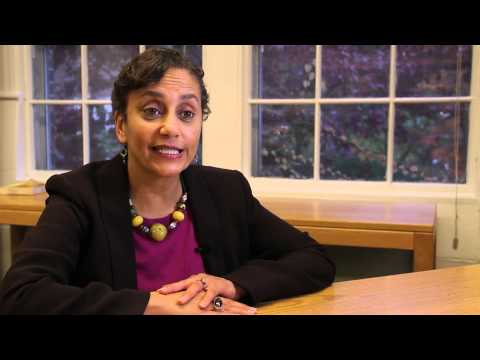
How to Ace an Interview: 5 Tips from a Harvard Career Advisor
Harvard Extension School
5m 9s901 words~5 min read
YouTube auto captions
Transcript source
YouTube auto captions
This transcript was extracted from YouTube's auto-generated caption track. The transcript below is server-rendered so it can be read, searched, cited, and shared without opening the original YouTube player.
Pull quotes
[0:03]In order to prepare for an interview, it's important to research in three areas.
[0:03]You want to research yourself, basically a summary of your qualifications, your relevant qualifications.
[0:03]You want to ask yourself how you can meet the employer's needs, what you bring to the table and how you can add value.
[0:03]You want to be able to demonstrate to have short relevant stories that have a beginning, a middle and an end.
Use this transcript
Related transcript hubs
Watch on YouTube
Share
MORE TRANSCRIPTS