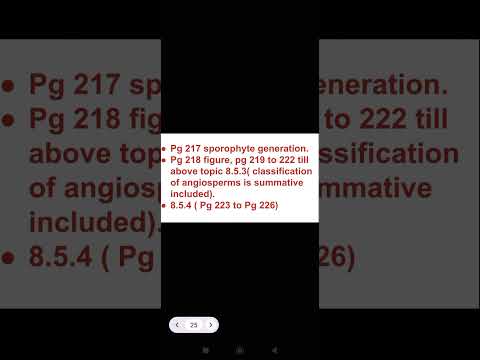
[0:00]Formative and summative topics of biology (HSSC-1) for 2025-2026. What is formative? Formative assessment is the one which would not be included in board exam. Means no questions about that certain topics would be asked in board exam. What is summative? Summative assessment are topics which are included in board exam. Means questions about those topics would be asked in FBISE exam. I'm going to tell formative topics (excluded topics for FBISE exam). The one I will not mention are summative topics (included in FBISE exams). Chapter 1: Cells and subcellular organelles. Formative topics: 1.1: Cells - The Basic Unit of Life. 1.2: Cell theory (Validation of cell theory, exceptions of cell theory too). 1.3: Microscopy (Electron microscope too). Table 1.1. Plasma membrane. Cell division (mitosis, meiosis). Chapter 2: Biological Molecules. Formative topics: 2.1: Biochemistry/Molecular biology. 2.2: Different types of bonds and interactions found in biological molecules. 2.4: Condensation and 2.8: Isomers and stereoisomers of glucose. 2.24: Chemical nature & role of ATP & NAD. Central dogma of life. Chapter 3: Enzymes. Formative topics: No topic in chapter 3 is formative, you have to prepare whole chapter. Whole chapter is included. Chapter 4: Bioenergetics. Formative topics: 4.14: Photosynthetic pigment & their major types (chlorophyll, carotenoids). 4.17: Arrangement of pigments (photosystems). 4.29: Importance of G3P. 4.2.10: Cellular respiration of fats and protein. 4.3: Photorespiration (4.3.1, 4.3.2, 4.3.3, 4.3.4). Chapter 5: Acellular life. Formative topics: 5.5: Viral diseases (In hepatitis only hepatitis C is formative, rest of the hepatitis are included). 5.5.2, 5.5.3. Cotton leaf curl diseases. Chapter 6: Prokaryotes. Formative topics: Page 167 use of bacteria in research. Page 168 to page 170. Chapter 7: Protists & fungi. Formative topics: 7.2.4: Fungi like protists: myxomycota & oomycota MYXOMYCOTA: slime molds. 7.2.5: Oomycota. 7.2.6: Importance of protists to human. 7.4: Diversity among fungi. 7.5: Importance of fungi + table 7.6. Chapter 8: Kingdom Plantae. Formative topics: 8.2.2: Life cycle of polytrichum (a moss plant). Page 212 life cycle of ferns, sporophyte generation, gametophyte generation, fertilization, figure 8.10. Page 215 8.5.1: gymnosperms. Life cycle of Pinus. Page 217 sporophyte generation. Page 218 figure, page 219 to 222 till above topic 8.5.3 (classification of angiosperms is summative included). 8.5.4 (Page 223 to Page 226). Chapter 10: Animalia. Formative topics: Class Amphibia (Pg 288). Class reptilia (Pg 289). Class Aves (Pg 290). Page 291 to Page 292. Chapter 11: Reproduction. Formative topics: No topic is formative. Whole chapter is summative (included in FBISE exam). Chapter 12: Inheritance. Formative topics: Page 311 to Page 316. Page 320 (starting from various blood group systems to Page 321 till above 12.3.2 topic means 12.3.2 topic is summative included in FBISE exam). 12.3.4: Erythroblastosis foetalis. 12.7: Sex linkage + 12.7.1 + Morgan's conclusions. Page 399 linkage can be observed if the number of progeny too large. Page 340. Chapter 13: chromosome & DNA. Formative topics: Page 364 fate of synthesized protein + table on same Pg. Page 365 methods of regulation of gene expression. Lac operon (example of both positive and negative control of gene expression). Chapter 14: Evolution: Formative topics: No topic is formative. Whole chapter is summative (part of board exam). Chapter 15: Ecology. Formative topics: Page 392 15.1.4: Primary productivity. Page 393 15.2.2: Ecological pyramids. Page 395 15.3.2: water cycle. Page 400 15.5: population growth + 15.5.1. Page 404 (from coral reefs to Page 410).
#Biology hssc 1 new book (2025-26). #formative topics according to latest assessment framework fbise
FBISE preparation guidance
2m 44s559 words~3 min read
YouTube auto captions
Transcript source
YouTube auto captions
This transcript was extracted from YouTube's auto-generated caption track. The transcript below is server-rendered so it can be read, searched, cited, and shared without opening the original YouTube player.
Pull quotes
[0:00]Formative topics: No topic in chapter 3 is formative, you have to prepare whole chapter.
[0:00]Formative topics: 4.14: Photosynthetic pigment & their major types (chlorophyll, carotenoids).
[0:00]Formative topics: 5.5: Viral diseases (In hepatitis only hepatitis C is formative, rest of the hepatitis are included).
[0:00]Formative topics: 7.2.4: Fungi like protists: myxomycota & oomycota MYXOMYCOTA: slime molds.
Use this transcript
Related transcript hubs
Watch on YouTube
Share
MORE TRANSCRIPTS


