[0:00]Now, Indian officials have denied reports that New Delhi is planning to actively seek the restitution of artifacts taken by the United Kingdom during the colonial era. Despite legal impediments and political sensitivity, some objects in British museums are gradually marking, making their way back to the countries where they originated. Julia Chapman reports from Glasgow. Britain's museums are full of treasures. Many were gifted to the institutions, but others were taken by force. The Scottish city of Glasgow has started a process of returning some of its objects. The Kelvingrove Museum is the first in the country to repatriate looted items to India, a former British colony. There is certainly a feeling that there's a moral obligation to return these objects where the the the circumstances were really forcibly being forcibly removed. Um, but I think beyond that it it's, it's part of establishing a relationship of equals. Um, internationally and allowing Glasgow to move forward, um, in a modern 21st century relationship. And to do that, we have to start by addressing historic wrongs. It's a long and painstaking process. Researchers closely examine an object's origins and determine who the rightful modern owners are. History museums by their very nature contain objects that reflect the past, including the worst atrocities and thefts of empires. But while Glasgow's collections are owned by the city and the city controls their fate, not all British museums have that power. The country's biggest cultural institutions are restricted by law. It prevents them from disposing of any item of cultural value. The government says it has no plans to change that. That stands in contrast to the approach of France. In 2017, President Emmanuel Macron triggered a process of returning objects to former French colonies. He called African heritage the prisoner of European museums. Well, the amount of stuff which is actually genuinely plundered and looted by the museum is is really tiny. I think people get carried away with the scale of the perceived scale of objects which have been plundered. Actually, it probably represents only 1% of the holdings. I mean, remember there are 9 million objects in that museum. And the trouble is that 1%, some of that 1% are extremely important objects. Those objects draw thousands of tourists every year. Critics of repatriation argue these items should have a wide audience. They say without so-called encyclopedic museums, visitors would be left with only their own narrow history. Glasgow's Kelvingrove Museum says the floodgates haven't opened. Only a handful of items are currently under review, but the conversation continues about who has the right to display fragments of the past. Julia Chapman, CNA, Glasgow.
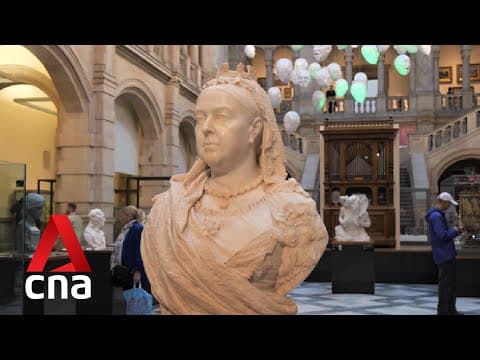
British museums grapple with returning prized, looted artefacts to countries they came from
CNA
3m 18s444 words~3 min read
YouTube auto captions
Transcript source
YouTube auto captions
This transcript was extracted from YouTube's auto-generated caption track. The transcript below is server-rendered so it can be read, searched, cited, and shared without opening the original YouTube player.
Pull quotes
[0:00]Now, Indian officials have denied reports that New Delhi is planning to actively seek the restitution of artifacts taken by the United Kingdom during the colonial era.
[0:00]Despite legal impediments and political sensitivity, some objects in British museums are gradually marking, making their way back to the countries where they originated.
[0:00]The Scottish city of Glasgow has started a process of returning some of its objects.
[0:00]The Kelvingrove Museum is the first in the country to repatriate looted items to India, a former British colony.
Use this transcript
Related transcript hubs
Watch on YouTube
Share
MORE TRANSCRIPTS


