[0:00]You may not realize this, but one of the best tools that you have to boost your thyroid is literally at your fingertips. What is it? The food that you put into your mouth. Will it take the place of your thyroid medication? Probably not. But will it help you feel better, lose weight and have more energy? Absolutely. If you like the idea of being less reliant on thyroid medication, here are the foods that you want to eat more of. 70% or greater dark chocolate. This is one of my all-time favorite foods, period, but it also has plenty of benefits for your thyroid. Here's why. The first is that it contains plenty of magnesium, which your thyroid needs to create thyroid hormones. The second is that it is loaded with antioxidants in the form of epicatekins, which are flavonoids. These enhance nitric oxide production, which improves blood flow throughout the entire body. The third is that it contains the compounds theobromine and tryptophan. Both of these have a calming effect on the brain, which is great if you suffer from thyroid related anxiety. But let's be real, one of the main reasons and best benefits of eating dark chocolate is the fact that it just tastes amazing. So really, the most difficult part about eating dark chocolate is not eating too much of it. If you want to maximize the benefit that dark chocolate has on your thyroid, you need to eat only 1 to 2 ounces of 70% or greater dark chocolate every day. But make sure that whatever dark chocolate you're eating is minimally processed and preferably does not have any dairy or artificial flavors or sweeteners. And remember to keep your intake to a minimum! Dark chocolate is naturally high in fat, which means it is calorically dense. And if you eat too much of it, it may cause you to gain weight. Number two are Brazil nuts. These are hands down the single best food source of selenium out there. But they're not perfect and I'll explain why in just a minute. Selenium provides huge benefits to your thyroid by supporting deiodinase enzymes. These are the enzymes that your body uses to activate thyroid hormones and help your body turn inactive T4 thyroid hormone into active T3 thyroid hormone. They are also used by your thyroid gland to protect against iodine induced damage. Their use has even been shown to reduce thyroid antibodies in patients who have Hashimoto's thyroiditis. If you want to move the needle the most, try 1 to 2 Brazil nuts per day. But here are a few things to remember if you try them. The first is that the selenium content within each nut can vary dramatically depending on where they are grown. The average Brazil nut has around 40 to 50 micrograms of selenium. As a thyroid patient, you really only need about 100 to 200 micrograms of total selenium intake each day. So, if you are getting your selenium from Brazil nuts, you can see how it would be really easy to accidentally take more than you need. And this is a problem because excess selenium can cause symptoms that mimic thyroid problems. If this happens, it can confuse your picture and make treatment much more difficult. For this reason, if you're going to have Brazil nuts, have only one to two each day. Number three is broccoli. Some experts and even thyroid patients will tell you that you should avoid cruciferous vegetables like broccoli if you have a thyroid problem. They might even tell you that eating them could be dangerous or make your thyroid function worse. But I'm here to tell you that one of the worst things you could do would be to follow this advice. Why? Because broccoli contains an incredibly helpful compound called sulfophane. This sulfur containing compound has powerful anti-inflammatory and antioxidant effects. And if you look at the number one cause of thyroid dysfunction in the developed countries, you will find that it all stems from an autoimmune disease and from chronic inflammation of the thyroid gland. But beyond this, eating broccoli also helps your body to naturally detoxify. This is great for thyroid patients who have a hard time sweating and therefore eliminating extra toxins. But what about the critics? Why do they think that broccoli is so harmful? This has to do with the compounds found in veggies called goitrogens. These compounds block the uptake of iodine that you eat in your diet into your thyroid gland. And if you can't uptak iodine into your thyroid gland, you cannot create T4 and T3. But here's the thing, this doesn't have to be a problem because simply cooking or steaming your veggies almost entirely removes these goitrogenic compounds. So, you can get all of the benefits that we just discussed without any of the negative potential downsides to T4 and T3 production. The key is all about correctly preparing your broccoli or other veggies that contain these goitrogens. And if you're someone who is still worried after hearing about this, all you need to do is increase your intake of iodine by just a little bit. That extra iodine that you consume in your diet or in supplement form will outcompete the goitrogens and still force iodine into your thyroid gland. As far as volume goes, my recommendation for thyroid patients is one to two servings of broccoli each and every day. Number five are pumpkin seeds. Thinking about a midday snack, throw away your protein bar and grab a handful of pumpkin seeds instead. Why? Because they are an excellent source of both zinc and magnesium. In fact, they are one of the highest plant sources of zinc out there and they contain more zinc than turkey and pork. But where they really shine is their magnesium content. Each serving contains up to 150 mg of magnesium, which is absolutely incredible. This super dose of magnesium from food will give your thyroid everything it needs to create more thyroid hormones. To help calm you down at night and to help relax your brain. One serving is about 28 grams, but if you want to eyeball it, aim for about a handful. One to two handfuls of pumpkin seeds each day will give your thyroid all of the magnesium that it needs, but not quite all the zinc that it needs. Number six is Greek yogurt. Yes, Greek yogurt is considered a dairy product and yes, going dairy free may be helpful and beneficial to many thyroid patients. But it's included here for a few reasons. The first is that it's one of the single most calorie efficient ways to increase your protein intake. One serving of non-fat Greek yogurt has around 18 grams of protein for around 100 calories. This ratio is nearly as efficient as protein powder, except in this case you are eating a whole food and not a processed powder. And increasing your intake of protein is incredible for thyroid patients because muscle mass is a major site of thyroid hormone action. The more muscle mass you have, the more active your thyroid will be. Greek yogurt is low in sugar, low in lactose, high in calcium, and high in probiotics. You can also dress it up with other healthy foods like fruits, nuts, and nut butters for variety. If you aren't already eating Greek yogurt every day as a thyroid patient, give it a try. 1 to 2 servings per day will do the trick. Number seven is wild-caught salmon. Speaking of protein with an added bonus, let's talk about salmon for a minute. Salmon is an incredible source of omega-3 fatty acids as EPA and DHA, which both have powerful anti-inflammatory effects. It also happens to be a great whole food source of protein. One serving of salmon will provide you with up to 40 grams of protein and 1.2 to 2.4 grams of DHA and EPA. This combination provides benefits to your immune system, mood, muscle mass, and thyroid gland all at the same time. As far as quality goes, make sure you get wild-caught salmon and not farmed salmon. Wild-caught salmon has fewer contaminants, a more balanced omega-3 to omega-6 fatty acid ratio, and it just tastes better. One fillet two to three times per week will give you all of the benefits we just discussed without increasing your risk of heavy metal over exposure. Never forget that the food that you put into your mouth can have either a positive or negative effect on your T4 and T3. All you need to do is to eat more of the right foods and less of the wrong foods. And by the way, changing your diet isn't the only thing that you can do to increase your T4 and your T3. If you want to see what else works, make sure you check out this video next.
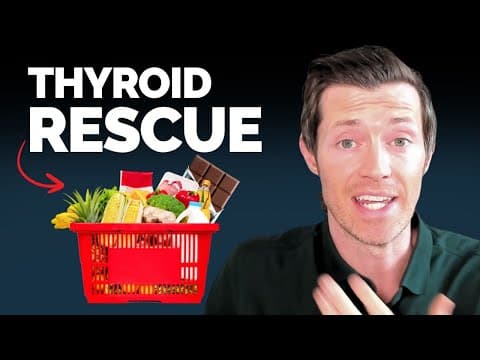
7 Foods Your Thyroid Needs Every Day (Doctor's List)
Dr. Westin Childs
8m 42s1,495 words~8 min read
YouTube auto captions
Transcript source
YouTube auto captions
This transcript was extracted from YouTube's auto-generated caption track. The transcript below is server-rendered so it can be read, searched, cited, and shared without opening the original YouTube player.
Pull quotes
[0:00]You may not realize this, but one of the best tools that you have to boost your thyroid is literally at your fingertips.
[0:00]If you like the idea of being less reliant on thyroid medication, here are the foods that you want to eat more of.
[0:00]This is one of my all-time favorite foods, period, but it also has plenty of benefits for your thyroid.
[0:00]The first is that it contains plenty of magnesium, which your thyroid needs to create thyroid hormones.
Use this transcript
Related transcript hubs
Watch on YouTube
Share
MORE TRANSCRIPTS


