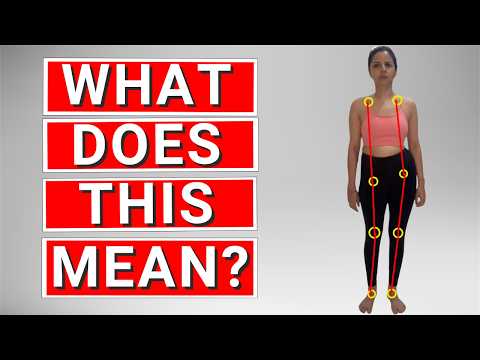
[0:00]In this assessment, we're going to talk to Manu. Now, Manu is in India and has a severe scoliosis. What we're going to do is look at areas in her body that could be affecting her ability to really get the most out of the scoliosis specific exercises that she's already doing. So we're going to look at her feet, her knees, her hips, the way she can squat down, the way she can forward fold, the way she walks and the way she runs. We're going to put all that information together so that we can give her some specific exercises to help the rest of her body, which will then complement the exercises she's doing for her scoliosis. Hey, if you wouldn't an assessment like this, totally for free, no strings attached, then just click the email in the link below. Or you can write to me team@scoliosiscorrectionprotocol.com and I'll set up a time for you to have an assessment just like this one with menu. Okay, Manu. What we're meeting about today is looking at the whole of your body because you're feeling as though the curve still might be progressing, that the rotation might be getting worse, and so we're going to take a wider look and see what else could be happening here. Okay? Yes. All right. So this is you standing. And then what we're going to do is just have a quick look at the way you move.
[1:13]All right. And the way you're stand Okay, so I mean, obviously, we've got this shift of the hips here. And that's due to the the scoliosis. That's kind of that's kind of obvious. But also, we've got this foot that's turning out on the right side and not so much on the left side. Interestingly, the shoulders, even though you've got scoliosis, they're not too bad, and the knees are roughly the same height as well. What we're looking for when someone's standing like this, we're looking for an alignment between the ankles, the knees, the hips, which are actually sort of slightly inside here. And this place in the mid collar bone here. And that should be a straight line. And you are not too bad, but obviously, you are off on this hip here. Okay. So let's have a look at the way you move to the side. Okay, so the side there. Now, this is interesting. So when you turn, you turn like this, and your butt here. Okay, your hips are backwards. But watch this, as you settle in, you slide your hips forwards. And so that sliding hips forwards can cause a little bit of back pain, okay? This slightly posterior or anterior movement in the hips. All right. Next, we're going to have a look at the alignment. So we've got your ankle bones, knee joint, hip joint in here somewhere, shoulders, and just just behind the head. And what we're looking for is a straight line pretty much coming up through here, and it's not too bad. To be honest, it's not too bad. What we would like to see is maybe a little bit more um movement backwards with the hips. All right, just getting the hips just a little bit more backwards and the head a little bit more backwards. But there's something interesting happening in your feet. I don't know if you can see this, but this foot now is pointing outwards and this foot's pointing straight. So we need to figure out why this is going on, okay? And let's just go back a little bit to uh you standing in the front here. I'm going to zoom in on the feet. All right. What I'm looking for here, I'm just trying to see whether or not this arch is up, or this arch is up. They look they look pretty good. You've got no bunions, which is great. And I'm also looking to see if these ankles are in, and they're not. Now let's just spin you around here. Okay, this one, when you're from behind, that ankle goes in a little bit. You can see this one is slightly different here compared to here. So I'm interested in that left ankle a little bit more. Yeah, it moves in a little bit there. Okay. Let's get you back to facing behind and have a look at you from here. All right, this this uh obviously the scoliosis is um we can just draw that scoliosis on actually. So it's it's like this. Okay. So we can see it there a little bit. And it's pushing your hips out to the side. Now when you do exercises and things, do you notice if one hip is stronger or weaker than the other? No, okay. So I'm interested in this hip here to see how strong it is, but I'm also interested in the muscles on the side of this hip because these ones, the muscles here should be able to push the pelvis across this way. All right. And for some reason they're not. It might just be the spine is pushing the hips, but that's something you can definitely work on. All right, let's have a look at you from the other side. So you do you see again, when you step, let's take you back here. So you're stepping through. You've got this line coming up through your body, which is pretty good. You see here right now your ankle, knee, just, hip, just, shoulder, and ear are all aligned, right? So this is good as you're stepping, it's good. Then what happens? You put your foot down, and wait for it. There. All that hip movement forward. You see that? That is all compressing through that back. Yeah, just let's look at that again because it's kind of interesting. When you it happens with many people. When they turn, it's good, but when you sort of get into your resting posture, you end up pushing your hips forward like this. Okay?
[5:37]So now we're going to have you standing. Again, we've got this foot coming out, so we need to work on the hip muscles to try and fix that. And then you should be doing just a little squat. All right. So you know what you're doing here. So I've asked you to squat, right? And so you're like, okay. And you shift your feet, which is interesting. Look how far apart they go. Whoa, even further. So you shifted three times. You know, your body knows you can't do it here. It tries it here. Then it thinks about it, and you and it says no. I can't do it here. I'm going to have to turn out here. And so as you squat down, you're getting this big movement inwards on both your feet here. And that puts a lot of pressure on your knees, and it also tells me that your hips, in these muscles in here and here, are very tight. Because you're trying to get movement from your knee joints when it should be coming from your hip joints. All right, so this is this is something that we can clean up, which is great. Something to work on. Yeah. And now we're going to look at that from the side. And so from the side, what we're hoping for is that your hips go back more than your knees. That's what we're hoping for. Okay? Actually, that's not too bad. So your hips go backwards, your knees go forward. That this movement is really good. But the foot's turning outwards and the knees going wide is not so good. Okay, at the bottom there. Uh, your back is relatively straight, which is good. But I think we can work this a little bit more. Ordinarily, could you squat all the way down to the ground, which you put your heels on the ground or not? Yeah, I can. So why didn't you do that in this picture, do you think?
[7:29]Don't know. Okay. But that's something for us to look at. But if you were to squat down, I'm guessing you'd have to put your feet like this, right? You have to turn your feet outwards to go all the way down? Yeah. Okay. And that just tells me that the hips need a little bit of work. All right, let's look at this from the back now. Okay, so here we can see it a bit more clearly. I love the feet. Look at your feet here. It's like, your body goes, na, na, na, I can't go here. And then it says, can't go here. Then it says, I got to go all the way out here. All right. So it's obviously something you've done before because your body knows how to do it, but we've got this shift across to the side, which is what we see when you're standing a little bit. Now we're going for the forward fold. Here your feet interestingly are in a better position. So this is good. So the more you do something, the better you're getting at it, which is excellent. We're in this forward fold position. And here you can really see that rib hump here, and that is now that's the scoliosis rotation as well. So something that we want to to look at with the way you're doing the exercises, but generally you got pretty good flexibility. We perhaps be looking for you to go a little bit further, almost to get your hands flat on the ground if that's possible. And what we're looking for here is your ability to slide your hips backwards. All right. So, yes, your hips do go backwards, but there's a lot of stress on your back here doing this motion. We want more movement coming from the hips and less coming from your back. Yeah, so that's something you can work on as well. All right. And then from behind, yeah, we just see that rib hump again. And then from the side. Okay, good. Now we're going to have a look at you walking. So you're starting here. And let's just have a look at how your head moves. Okay? What we want is the head to move over the foot that's landing. So we're looking for a little bit of side movement left and right. So the left foot's going forward. We're getting a little bit of movement on your head. But here's the interesting thing. So I'm looking at this, uh, this thing here, right, your the door behind. When you step forward with your left leg, here, you go towards it, and then the the right you don't move very much. Then you go left, left. Let's have a look here. So this is you on your left leg. Boom. Right leg. Big movement. Uh, it's a little bit difficult to say. If if we get you walking straight to the camera, back and forth, that would be easier for us to to say if there's a difference between the two sides. On that, but I it looks to me looks to me like you you your head stays over on this left side. You like being on the left leg. So on the right side. The right leg. Boom. And you don't really load too much onto this right side. It's probably to do with your hip being out here. All right, let's have a look at your feet. So both your feet are pointing outwards. I'd really the feet would be pointing forwards when you walk.
[11:08]And this is actually, ah, okay. Wait, wait, there it is. All right, so your ankle bone here. We want this ankle bone to stay nice and high. We don't want it collapsing in too much. And yours stays pretty good until there. Now it starts collapsing in. All right, let's have a look at this one here. It's high, high, high. Good. Good. Ah, we don't get to see it at the end. So I'm just going to rewind. That's your right side we're looking at. Here we go. We'll look at it here. Okay, so the right one is high, and there's a little roll in at the end, but it stays high, okay?
[11:54]Whereas the left one, yeah, the left one rolls in a bit more. Even though you're sort of I can see that you're walking to straighten yourself up here, so it's a bit different. But we've got a difference between the ankles. I'm just going to look at it here. Yeah, there's the roll in. There. And then on the right side, not so much. So we'll work on your ankles as well.
[12:20]So there's there's definitely differences in the feet. All right. The spin, spin you around again. So we're looking for like I was saying, we're looking for that load over the foot of the head, which is kind of what we're getting here.
[12:37]And we're looking for the ankle to stay high. We're looking for this leg to be actually. At the moment your heel is pointing this way. We're actually looking for it to point the opposite way. And that's the ideal way of walking is actually to have that back. Hip turning inwards and this hip coming outwards a little bit. So you're doing the opposite with this back leg, which is very, very common. A lot of people do it. They walk with their feet turned outwards like this and that's due to tightness in the hips here and here. Okay. And if we if we look at you from behind again, what I'll just describe what I'm talking about. That That movement here, with the foot pointing in was like this. We actually want it the other way around. We want you coming off your big toe and little toe and your heel pointing outwards. Okay? So the foot uh let me see if I can draw just draw this. The foot here, big toe, little toes, should be that way, not that way. Does that make sense? Yeah. Yeah. And that's just tightness in the hip. All right, so that's the right foot and then the left foot. You can see here, the left foot actually, there, is a little bit less. The right foot really points out here, and the left foot a little bit less. So there's there's definitely differences in the feet.
[14:10]All right. Now we're going to have a look at you running. So running tends to bring out the patterns even more because it's harder to do.
[15:20]Or sometimes actually, you know, it can weirdly enough, it can do the opposite. It actually sometimes makes you move better because your body's got no choice.
[15:29]But let's have a look. All right, so we've still got this same ankle being out to the side here. I'm looking at this ankle now. Ooh, almost. Do you see the way this foot here is almost pointing that way?
[15:47]You can see it comes up, starts pointing outwards and then flips inwards. Whereas this one comes up and never even never even thinks about pointing outwards. But the left side does a little bit. So there's there's differences there. When you load, we're looking at the way your head moves from side to side.
[16:11]So you're going to face me. We're going to do it this way. Okay, so here is that line. So you're generally better at loading on the right side. And let's see. The left. Yeah, so again, you're not loading your head's not going over to that left side. So this hip. We know this hip is out this way, okay? But at the same time, your body, your head is this way, which is going to be counterbalanced by this. And that is a little bit to do with, you know, the way your your spine is. I get that, right? It's like this. But if we can start to strengthen this hip, we should be able to push the the hip backwards or inwards like this, and then the exercises you're doing on your spine can help lengthen it. That's the plan there. All right. I'm going to give you some advice and some exercises to do, and then you can start doing those to help correct that hip and your feet and so on. Hey, if you wouldn't an assessment like this, totally for free, no strings attached, then just click the email in the link below. Or you can write to me team@scoliosiscorrectionprotocol.com and I'll set up a time for you to have an assessment just like this one with menu.


