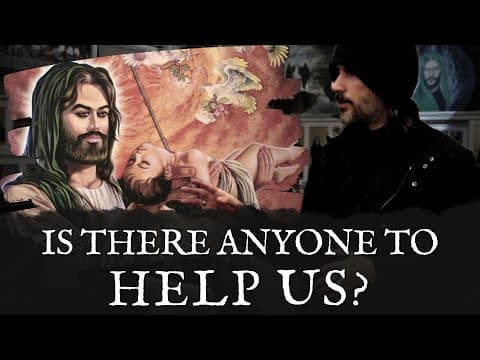
[0:00]Verily the one who hears our cry for support and doesn't give us support, he is in hellfire. So even if you believe in the Imam and even if you pledge allegiance to the Imam, but you know that the Imam needs your support and you don't support the Imam with everything that you have, then you are in hellfire. And this is according to Muhammad and the family of Muhammad.
[0:46]I seek refuge in Allah from the accursed Satan In the Name of Allah, the Abundantly Merciful, the Intensely Merciful O Allah, send Your prayers upon Mohammed and the Family of Mohammed, the Imams and the Mahdis.
[1:00]Peace, mercy and blessings be upon you all. Peace, mercy and blessings be upon you. Insha'Allah you guys are doing okay. Alhamdulillah. Tonight, I want to talk to you guys about the idea of a covenant with Allah Subhana Wa Ta'ala. There's a there are a lot of religions that exist on the planet right now. And each and every one of them has their idea of how it is that a person can obtain attain salvation. Okay? How they can obtain or attain salvation, how they can be saved, how their soul can can be sure that in the hereafter once it passes away that it's going to be in a place of peace and prosperity, that they are good with Allah Subhana Wa Ta'ala. For Jews, in Judaism, for Muslims, in Sunni Islam especially, the idea of the covenant that exists between man and God is one where God delivers a set of laws, rules, things that he wants mankind to abide by. And so long as the human being is abiding by these rules, keeping these commandments, um, the person will achieve everlasting peace, they'll be saved, they'll attain salvation. For Christians and for Shia Muslims, it is a little bit different. The focus is less so on the commandments. They see that human beings are inherently fallible and inherently sinful and prone to committing acts of sin and don't really have the ability in most cases, um, to be perfect human beings that are consistently abiding by the commandments of God.
[3:26]And so they see that and they teach that what's more important than keeping the commandments of God is belief in a particular person. In the case of Christianity, a Christian can attain salvation merely by believing that Jesus Christ is their Lord and savior. By acknowledging this fact, by belief in Jesus and accepting him as your savior, it doesn't matter if you were a killer, it doesn't matter if you were a child molester or a rapist or if you were convicted of all the crimes that exist on planet Earth, you will still be saved by the blood of Jesus Christ. In Shia Islam, because the Sunnis abandoned the will of the Prophet Muhammad and his appointment of Ali ibn Abi Talib, Shia believe that the only way that a Muslim can attain salvation is through the belief in Imam Ali ibn Abi Talib and his sons that come after him. As long as you do so, you will be saved. Even if you came with the sins that that reached to the high heavens above. And that's why they have a very important Hadith that states, the love of Ali is a good deed that no bad deed can harm. And the hatred of Ali is a bad deed that no good deed can benefit. Which means what? Which means that if you accept and you love Imam Ali, no matter what sins you have, it's going to be okay.
[5:31]Because Imam Ali will be your intercessor, he will intercede on your behalf. He will God will replace those sins and give it to the Nasibi, who hates Imam Ali, and he will give you the good deeds of the person whom was a Nasibi or was a person who didn't take Imam Ali as his as his wali or as his guardian. You get the idea? Yes. Now for us, as members of this great religion, as believers in the Ahmadiyya religion of peace and light, we believe that we are part of a covenant with God. And we believe that we are the only people on the planet out of all of the human beings that are on the planet Earth, we believe that we are the only ones that have this covenant with God today. We believe that everybody else has broken that covenant with God. We believe that being under this covenant with God means that God has taken us as his people, that he's with us, he ensures that he protects us, he ensures that he defends us, he ensures that he sustains us and he fulfills the promises that he made to us. And we believe that the most important promise that God had made to us was one that was mentioned in the Holy Quran, where it says, and in the Zabur, in the book of David, in the Psalms of David, it is written that my land, my earth shall be inherited by my righteous servants. And so the promise of this covenant that we're under with Allah Subhana Wa Ta'ala is that in exchange for taking God as our Lord and being in this covenant, God will make us inherit the Earth in the same way that he gave the promised land to the children of Israel, and in the same way that he gave Muhammad and the Muslims in their time, their land.
[8:03]We believe that God had started off his relationship with human beings by making a covenant. This was the first thing that took place. Allah Subhana Wa Ta'ala appoints Adam and he makes a covenant with Adam, and that covenant also is taking place between God and the rest of creation.
[8:35]We believe that that covenant was mentioned in the Torah, in the Hebrew Bible, and also in the Quran. And its essence, essentially what it was, was that God appoints Adam, and he commands all of those who believed, the angels, and the creatures to prostrate to Adam, and prostrating to Adam means obeying Adam, Adam became the Khalif of Allah Subhana Wa Ta'ala. Adam became the Khalif and Hujjah of Allah in the Earth, he became Khalif of Allah, and the king appointed by Allah, the Imam of the time, whom everybody had to obey and pledge allegiance to. And whoever didn't pledge allegiance to Adam, didn't prostrate to Adam like Iblis in the famous story, he ends up being what? Being banished, expelled outside of the Wilaya of God, expelled outside of the paradise where where Adam and all those who obeyed Adam dwelt. And he ends up suffering, being outside of the mercy of God. Adam too broke the covenant with God and he did so by breaking the commandment of God. So we as God's people, we believe what? We believe that the covenant with God can be broken in several different ways. One way it can be broken and forgiven, another way it can be broken and it will never be forgiven, unless a person repents and goes back off of that. The way that a person can break a covenant and still be forgiven is the way that Adam broke the covenant. God tells him, don't do this and he does it anyway, he sins, he goes against God's directive but he never disbelieves in God. This, he is forgiven for. The other way that a person, the more serious way that a person can break his covenant with God is by reneging, refusing to recognize and pledge allegiance to the Imam of the time and that is precisely what Iblis did. When Iblis refused to prostrate to Adam and the narrations are many, which which which state that basically Allah Subhana Wa Ta'ala would never allow a human being to enter into paradise having committed the same sin that Iblis had committed. So nobody that that dies and goes to God having having no allegiance in his neck to the Imam of his time, will enter into paradise because he is thus guilty of the exact same thing that Iblis had done. And the Prophet Muhammad said, he said, whoever dies and doesn't recognize the Imam of his time has died the death of ignorance. And the Prophet Muhammad had made it clear that those who died the death of ignorance ended up in the hellfire. He ended up being outside of the mercy of Allah Subhana Wa Ta'ala. And so we believe that God established creation with this covenant, with Adam, and he he points it out in the story because because that is what is expected of us to do, to find the Adam of our time. The people broke eventually that covenant with Adam by pursuing and killing and refusing to accept the divinely appointed successors after Adam, until we reached to the time of Noah. And in the time of Noah, mankind broke down into two parties, a party that boarded the ark of Noah. And a party that refused to board the ark of Noah. Those people who boarded the ark of Noah became in the garden of Noah, under the Wilaya of Noah, in the companionship of Noah. And all those who refused to were drowned, were destroyed, were killed, were lost, just like those who were banished from the garden of Eden. Iblis and all of his descendants. And the family of Muhammad and his descendants the divinely appointed Imams, they said, we are the ark of Noah. Our example is the example of the ark of Noah. Whoever holds on to us is saved. And whoever abandons us is destroyed. And so they draw this parallel for all human beings to understand and to see that even though they're not living in the time of Noah and their successors of a different prophet and that is the Prophet Muhammad, the matter is the same. In every day and age, there is an ark, which we must board. And that ark is the ark of salvation, and that is the Wilaya of the Imam of the time. And after the Earth was wiped out of the disbelievers and mankind began to procreate once again, little by little, they began to oppress once again the successors of Noah. And they began to pursue them and kill them until we got to the time of Abraham. And the story repeats itself with God taking Abraham and making a covenant with him and promising him a particular land, saying to Abraham, that I will be your God, and you will be my people, and I will I will defend you, and I will sustain you, and I will be with you, so long as you do not abandon my worship. And the worship of the God of Abraham, and the God of Noah, and the God of Adam came in the same way. And that was worship through obedience of the system of rule which he set into place. That is the whole meaning of prayer according to the Hadith of Muhammad and the family of Muhammad. And that's an interesting topic too because here we have narrations from the Ahlul Bayt that state that the prayer, the act of prayer, has a Zahir and a Batin, an apparent and a hidden, an esoteric side to it and an apparent side. The apparent side is this five daily prayers that we do where we stand and we say Allahu Akbar, and we and we bow and we prostrate on the ground. But then there's the real meaning of prayer. The narration state that the real meaning of prayer is to be under the Wilaya of the Imam of the time. That is the prayer itself. And that any prayer they said that occurs without Wilaya is not accepted. It is a condition for the acceptance of prayer that a person have a pledge of allegiance to the Imam of their time. And we see even that the scholars of misguidance have abused this to such a degree and twisted the religion and stole this concept and applied it onto their own selves. Whereby you find many of the Shia in these days saying that a person if he doesn't make taqlid of a particular scholar, his prayers become invalid. Well, where did they get this concept? They got this concept from the words of Muhammad and the family of Muhammad, where they said that whoever prays and basically doesn't have a pledge of allegiance to the Imam of the time, then they die the death of ignorance. And we all remember the Hadith of Imam Ar-Redha, where he stood and he was giving, he was giving a speech to the people and he said, no God but Allah is a fortress, it is a strong fortress, this word. To say and to declare that there's no God but God. That is a strong fortress. Whoever says it will be safe from my punishments, says God. But Imam Ar-Redha said, but this fortress has conditions. The saying of La Ilaha Illallah has conditions. And then he says, and I am from those conditions. Meaning what? So Allah Muhammad Muhammad. O Allah, send Your prayers upon Mohammed and the Family of Mohammed, the Imams and the Mahdis. So the idea of you saying that there is no God but God, proclaiming that you worship Allah Subhana Wa Ta'ala, you can take this and you can throw it into the garbage because it does not work if you're not a believer in the Imam of the time. You can say La Ilaha Illallah, but if you're living in the time of Muhammad and you don't accept Muhammad as Rasulullah, it doesn't work. If Muhammad's gone and Imam Ali is there, if you don't believe in Imam Ali, then the word of La Ilaha Illallah, it's invalid, it doesn't work. The God that you're worshiping is not Allah Subhana Wa Ta'ala, it is the enemy of Allah Subhana Wa Ta'ala. It is Iblis who refused to prostrate and who has made it his life mission.
[19:16]What did he do? He refused to prostrate to Adam. So it's his life mission to ensure that everybody that's living in every time does not prostrate to the Adam of their time.
[19:44]And Allah Subhana Wa Ta'ala establishes his covenant with Abraham, and the same thing happens, the people eventually they rebel against the successors of Abraham, and God ends up making a new covenant with Moses, and each time that he makes a covenant, he brings new laws, and the people end up abiding for a certain time period, but then they abandon. And they abandon in different ways. And one of the ways that a person can abandon their faith is by not giving victory to the person who's appointed by Allah Subhana Wa Ta'ala. So you have to believe in them, you have to pledge allegiance to him, you have to prostrate to him and prostrate means that you're promising to obey, but that obedience has to come with actions. And this is what we saw that the Israelites were unwilling to do with Moses. They pledged allegiance to Moses and they obeyed him in some things. They obey him enough to cross out of Egypt with him. They followed him even though they were mumbling and grumbling and and and whining and complaining and but they broke the covenant with God, and Allah Subhana Wa Ta'ala his wrath came upon the Israelites in several occasions. One of them was when Moses had went away and they decided to take an Imam other than the Imam that was present. They attempted to take a God other than the God that was present. God was still present in their midst through the successor of Moses, and that was Aaron, the Imam of their time. But they rejected Aaron and they pushed him aside and they built for themselves a golden calf, and they took the Samary as a source of obedience and guidance, even though he was a misguided scholar and he was calling them to something which Moses rejected, they decided to go with that, and therefore they broke their covenant. And they also broke their covenant and were prohibited from entering into the promised land when the famous incident took place where Moses had told the Israelites that were with him now it's time, we must enter into the promised land, and they saw that there were giants down there.
[22:18]Big people. They saw that they were intimidating strong people that were down there and they refused to and they say the famous sentence, you and your Lord Moses, go down there and fight, we're going to sit right here. This refusal to support the Imam of the time led to them breaking the covenant. And we see Imam Al-Hussein and the family of the Prophet Muhammad making a point out of this particular issue. And they say in one famous Hadith, they say, verily, whoever, whoever hears our cry for support and doesn't give us support, he is in hellfire. Verily the one who hears our cry for support and doesn't give us support, he is in hellfire. So even if you believe in the Imam and even if you pledge allegiance to the Imam, but you know that the Imam needs your support and you don't support the Imam with everything that you have, then you are in hellfire. And this is according to Muhammad and the family of Muhammad. And that's exactly what happened in the time of Imam Al-Hussein and with this Muslim Ummah. When we saw that the Muslim Ummah they watched as Imam Al-Hussein went out with a small group of his companions and some family members, and he went out to Karbala, and he stood face to face with the army of Yazid, son of Muawiyah, son of Abu Sufyan, the enemy of Islam, when the Muslim Ummah gave horrible, filthy excuses not to support Imam Al-Hussein that were documented in many of the narrations and in the books of history, they said to him, we cannot support you because we're afraid that if we do, they're going to attack our families. We're afraid if we do, that we might get killed. We're afraid that if we do, they're going to abuse our wives or or or plunder our homes and and we're really sorry, or they would turn off the lights and pretend that they weren't home.
[24:42]These people, even though they said that they were Shia of Imam Al-Hussein, they ended up being the reason why Imam Al-Hussein was killed because of their lack of support. And so even though they proclaimed Wilaya, their inaction caused them to be a people that broke the Wilaya, and the Muslim Ummah became a cursed Ummah that was banished outside of the covenant with God. Because it is impossible for a nation that stands by while the son of its prophet is beheaded and trampled on by horses, the successor and the master of the youth of paradise, Imam Al-Hussein, son of Ali ibn Abi Talib, the grandson of the greatest prophet to ever live, Muhammad. So Alayhi Wasallam, that the Prophet Muhammad said, Allah loves whoever loves Imam Al-Hussein. The same Imam Al-Hussein that the Prophet Muhammad said, I am from Al-Hussein and Al-Hussein is from me.
[27:07]The Muslim Ummah convinced itself somehow that even though this horrific act had taken place at their very own hands, at the hands of people who proclaimed Islam as their religion, they still convinced themselves that they are still on a covenant with God. And that it's okay they could still go and fast Ramadan and break fast with all of the great foods in the world and that it was going to be okay. They felt like it's okay that they would give their little 10 pounds or 10 dollars or 10 dirhams or 10 dinars a year to the poor and that it was going to be okay. They felt like if they just beat their chests and let a few tears out and remember Imam Al-Hussein that it was going to be okay, that if they prayed five times a day that it was going to be okay, that it was accepted.
[28:15]But the narrations of Muhammad and the family of Muhammad state the opposite. They they stated that the family of the Prophet Muhammad would make dua against the Muslim nation and would call them a backwards nation. And tried Imam after Imam after Imam to guide them, from Imam Al-Hussein to his son Zainabdin, and after him his son Muhammad Al-Baqir, and after him his son Jafar Sadiq, and then Musa Al-Kazim, and Ali Ar-Redha, and Muhammad Al-Jawad, and Ali Al-Hadi, and Al-Hasan Al-Askari, all the way to Muhammad Al-Mahdi, Alayhi Salam. Each and every one of them seeking to guide this nation that is that is gone astray. And every time, each and every one of those Imams leading up to the 12th Imam, the Imam of the time, that we're in today, there were no supporters to support them. Each and every time the Imam of the time would say, is there anybody who would support me? And each and every time he would be met by silence. Only a few believers in every day and age. And so the narrations of Muhammad and the family of Muhammad spoke about a time where the promised Mahdi would appear. And his successors would arrive. And a great punishment would come down upon the Muslim nation.


