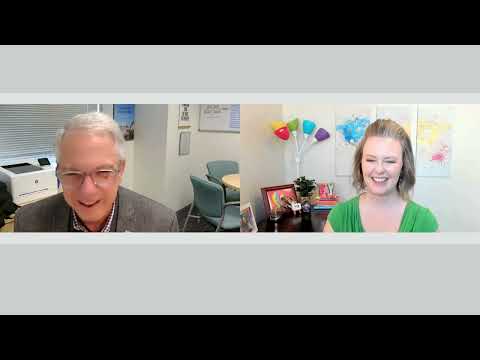
[0:09]Well, hello everyone, and welcome to another episode of the President's Podcast, serving up all sorts of information, value, and connections to you, our members of NSA Houston. And probably our friends beyond that are also now listening and tuning in. Today we have a especially great guest for you all about HR in his field. And our goal is really to help you branch out into other parts of Houston and expose you into really big things you should be paying attention to. So with that said, everybody, give it up and welcome Rod. Rod, go ahead and introduce yourself, my friend. Sure. So, I'm the Chief Human Resources Officer for a company called Arxiss. And we are a builder services organization, so we help home builders build their houses better. We do the engineering and we do the inspections. We don't swing any hammers. But we make houses better in 27 states, and we have about 800 people helping us do that across the business. My first degree was in engineering, then I was a lobbyist for about six years, but I've been in HR for about 30 years and running HR for companies for about the last 15 years, something like that. And I've got a pretty healthy speaking kind of tour route that I do, panelists that I panels I serve on around town, things like that. Um and that's really the fun part of my job. I get to do that stuff because I have great people that work for me here. Um, so yeah, that's that's kind of what I spend my time doing. Yeah, and I have to pause here too, because normally, right, we have we'll talk about lots today, but also on a personal note, so Rod and I met each other at the Gulf Coast Symposium. When was that? 2023, a couple years ago, right? I just started my own thing. I've just was a just a baby. Um, and we had a mutual friend that I worked with and or I work with and he said, you should meet up with Megan and Rod, you should find Megan or and Megan you should find Rod. And so anyway, we've known each other from since then. I think we had some good Mexican food for lunch one time and uh, yeah, so happy to bring in connections just to share with our our members. So thanks for being here. Yeah, and it was magical and I've had such great fun watching your career just blossom ever since. Like I knew her when.
[2:29]Oh, well, thank you. You know, a lot of what I've learned comes from actually National Speakers Association because I know training and development, worked been in HR for 12 years, but the business side of how to run a company, sales is brand new to me, so I'm working on that skill. It's like a little baby muscle right now, so still have some space to go. But uh, but yeah. And I, look, I'm learning the same thing, because I've got this book coming out here in about five weeks. And I've had to learn those ropes, you know, and uh, I mean, I've had an LLC before, but I wasn't selling a physical product that I ordered and inventoried and all that stuff. So, so new to me too. Yeah. Well, um, why don't you tell us a little bit about, you know, give us a history of kind of where you started in a high level. Anything else you want to share with people that might resonate with speakers that are trying to figure out their career, um, with nuggets of what you've learned in yours? Oh, gosh, you know what? Do we have an hour? Yes. How much time do we have? Um, and I'm and I'm not here to promote the book, but I will tell you, in the process of writing the book, I got to know myself a whole lot better. I wrote 52 stories. Oh, I see. 52 stories about true stories about my life and you relive those stories, the good stories and the bad stories. And I learned three major planks that I live by now and it's become a big deal in my keynote speak speaking that I do. One is get in touch with what you love doing and that you're good at. That's number one. Know what those things are, so if anybody asks you in an elevator, you can spew those things out. Second of all is inventory what you've learned from your biggest struggles. Like, what are the disastrous things? I call it wreckage and chaos in your life that, um, that you you come out of, you know, you you come out of it. Well, okay. Well, how did you get out of it and what did you learn about it and what are you not going to do again or what are you going to do again tomorrow? All those things. And then the third thing is curate your network. So, find your personal board of directors and you can surround yourself with people who make you want to be better. And these are knowledgeable people, these are optimistic people, people that give you energy when you're around them. And I find that the general population is not those people. The general population tends to bring you down closer to the average when you're trying to be above average. And so you have to curate those people that influence you in your life and and I I've been very intentional about that over the last two or three years. So I would say those are the kinds of things when you're looking for a motivational speaker, those are the kinds of things that bring the best out in people and give them some practical and easy tool, uh to work with. And um and and I I now after having done a couple of those keynotes have had people reach out and say, we want to do that at our company now. And and so those are um, you know, that I didn't come by them easy, because I I spent a year, you know, I spent a year studying uh myself and I a little known fact is that I went back to school when I when I was 56 years old and got my masters at 59 and between having the new knowledge of the the greatest thinking about leadership development coupled with a great self-examination of myself, you know, and then and then writing the book, um, got me to where I am right now. So much wisdom boiled down and that process of writing sounds like it definitely helped guide you there. Oh, gosh, it uh, some days it was incredibly painful and some days I walked away going, yeah, that was cool. Oh, look what I wrote. Look what I wrote. Well, I know you mentioned you weren't here to promote the book, but if it's all right, I mean, I'd like you to share with what the book is and many of our members NSA you know, a lot of times you summarize your message in a book and then a lot of our members are writing a book, exploring the idea. So, yeah, share with us whatever you think might be of value. So, this is when you see that, that's kind of the the cover of the book and I just got notified just within the hour. So this call is very timely. Okay. That my first physical books, the first proofs arrived Monday afternoon. Oh my goodness. I have not seen it. In in three days? Yeah. In three days. I will see it for the first time after more than a year of working on this project. So, it's a big milestone moment. Uh, the book is 52 weekly reads. So, uh, week minded with two E's. So, um, it's it's meant for you to maybe get over the Sunday scaries, you know, before you start your work week. It's a motivational story. It's a true story, but a motivational story with a life lesson at the end. And uh, we will have a journal type workbook that'll go with it, so you can inventory what you learn, what you're going to do next week, and then maybe talk a little bit about the lesson you learned last week and what you did about that. Uh, so it's meant to be a guided journal thing of continuous learning sort of thing. Um, and it's divided into to four sections. One on discovering yourself, one on, um, sort of naming your struggles and what you learned from them, one on building relationships, because relationships are incredibly important. Uh, if you're familiar with Dan Solev's book, who not how, it's a great book. And then the last section is uh, what your legacy might look like. So, what are you leaving behind that people will, uh, when you leave the room, what do they say about you? That kind of thing. So, uh, it's it was an incredible journey. I'm I'm I'm very proud of it. I've had a lot of people who helped me. Uh, Dr. Tare Marie Stacy who wrote a book called, um, The Five Practices of Highly Resilient people. When she wrote that book and I read it, it gave me the resolve to put some pretty vulnerable stories out on LinkedIn and, uh, that was the impetus for me, ended up writing the book. Well, then I decided, well, gosh, I need somebody to write the forward. So, in a Hail Mary, I reached out to her to say, hey, you don't know me, but I know you're a New York Times best selling author, and I wrote this book and, uh, I didn't hear anything for like a week and then on a Friday afternoon she sent me a note saying, I'd be honored to write your forward.
[9:16]So Dr. Tara Marie Stay School is writing my forward, has written my forward. And Jerry Maxwell, if you're in if you're in marketing, you would know that name, but Jerry Maxwell wrote the afterward. And he actually, he and I've actually done some workshops together since then. So, long answer to a short question, so. Wow. You know, and I think it's such a great example of aim for what you want, go big, and you might just get it. I think that's a very big piece too with a lot of our members are business owners and training, they're they do workshops, they're coaches, they do they're authors. We've a recent comedian just got his best, uh his book has one of the best sellers on Amazon. So we've got all these people that are, you know, writing their own race. But I think it's a good reminder to say, shoot for what you really want, because you may get there. And and the who not how thing should not be underestimated. When you're building a business, when you're building your relationships to do public speaking and get and get gigs. Um, and and I I've been pretty bold about reaching out to people to serve on panels with me and, uh, Sue Brunette, a Brunette specialist is is, um, she wrote a testimonial. She's the first testimonial in the book. Um, Janette Marks, who is now the CEO of Employ Bridge, the largest staffing organization in the world. She wrote a testimonial. Uh, Dr. Juliet Gries, who is the CEO of Next Level Urgent Care. She also wrote a testimonial. So all these people read the the rough version of the book. God bless them. And, uh, and just wrote the most beautiful things, uh, in the book that I just, I just couldn't be more pleased and I'm just incredibly blessed to be connected with people like that. And, uh, yeah, I'm looking forward to the rest of the public getting it getting a chance to look at it too, here in five weeks. Yeah. Okay, well, where do people go to get it if it's coming in five weeks? So, uh, it'll be on Amazon, of course, um, and if you are in touch with me and you wanted an autograph copy, we could arrange for that if, uh, if I know how to get it to you, I will order the book and then and then get it to you. Uh, but Amazon, Barnes and Noble, Walmart. I find that strange to say out loud, but yes, it'll be a Walmart. Um, yeah, it's it's going to be in all the networks. And then there'll be an audible version that comes later. Uh, we're we're just now beginning to work on the hardback, so we'll have hardbacks and and paperbacks on, uh, May 2nd. May 2nd. 52. Oh, I love the intentionality. It's also read across America Day, by the way. Oh, multiple layers. Yeah, lots of layers. If someone in our chapter or listening today is interested in this process, what might you tips might you give them if they wanted to write a book, do the audible, do the hardback, any of that, just get started? Figure out what your passion is, which probably can come from what you discover your red threads are, which are the things that you love doing and that you're good at. And if you're curious about how to get in touch with those, Marcus Buckingham's book, Love Plus Work is a great place to start for that. Um, or if you're, if you've gone through struggles and that's what you want to write about, then Dr. Tam Marie's book is is a great book as well. Um, I was a writer at one time before I was an engineer and then engineering just sort of stuck the writing right out of you, because you become technical and unfeeling and all those things. And then I rediscovered myself, um, quite a while ago and and started writing some articles, but I never thought I would, you know, endeavor to write a book. But then after I got into the writing of the book, it all came back to me. Uh, it's it's enjoyable for me to write the book. Um, there's a there's a thing on my board up here that has been it's been attributed to Ernest Hemingway, but we've found out since then, he did not say that, but he says write drunk, edit sober. So, um, I I find that, um, interesting that you need to write when you are whimsical, when you are creative, when you're not holding yourself back to some grammar and punctuation, you're just writing stream of consciousness stuff. There's a name for it. Um, the crappie first draft, there's a different word for that.
[13:43]And you write it and then later you come back behind and then make sense of it, but you get the creative part out. First, and that's a very important part of it to to not be inhibited when you're writing like that. So then, uh, once you get that done, you need to either decide whether you're going to go try to do commercial publishing, which is through a publishing house, or you're going to do a a private or self-publishing. There's a major difference between the two. Um, the the commercial house owns your book. Sometimes you have to get permission to do your own workshops from your own book, from somebody who owns now your book, because they've give they've paid you upfront some money and then you get a little bit on a book sale. When you self-publish, you own the book soup to nuts forever and ever. You can go in and change the book, you can have different additions. You don't have the national marketing that you get from the other, but it's a less onerous process as well. So, you hire a creative firm. So, I hired Epiphany Creative Services out of, uh, Nashville, and they've been a wonderful guide through the whole thing. It's not it's not crazy expensive to do, um, and then and then you can order the books at cost and you can sell the books or you can put them on Amazon and then Amazon pays you whatever their net percentage is, uh, for the book. So, there is a system and there's a process and it's very understandable. You could probably chat GPT what a self-publishing process looks like. I highly recommend it. Uh, it's been a very enjoyable process for me. Well, it sounds like it. It sounds like it was, um, some very clear distinctions between the big box publisher and the private. So, thank you for mentioning that because, you know, it couldn't make a difference on what you get to get to do with your stuff and kind of what vision you have. Yeah. Yeah, I I really like the control that I ended up with. And and by the way, even though it's not a big box publisher, this the self-publishing creative firm is is very upfront about, but they're very careful with your ego as well. So, you know, my first book cover was this very flowery thing of a view out my the back of my house and the and the lake and the peacefulness of it all. And then and then they say, well, go look at books in your genre and see what their covers look like. And so I go look at them and I'm like, uh. What do they look like?
[15:56]So, so then, so then they say, well, you know, I have one handy here, but, um, so this is, this is Jared Hamilton's book, um, so you want to be an All-Star. And and they all look like that. It's words in a couple of of these symbols or something. Yeah. And so then you come around to, oh, yeah, I got to give up on that whole flowery thing. She said it looks like a novel. You know, and so I end up with with something, you know, much, much cleaner and looking much more like Jared's book. But they're very, they're very gentle with you in in getting there. You know, and then and then at some point when you finally decide, this is it. I love this. This is it. Then they walk you back through from where you started and they take you back through the journey and see how you got there. And so they're guiding you all the time gently. Um, but the creative people are very just wonderful people and, um, you know, they're very supportive through the whole thing, because it can get, it can get testy at times. Because I went through three, six, seven, eight rounds of edits. And that that's a lot. It's 274 pages. So you do that eight or nine times looking for punctuation and grammar. Sounds like a a day with a glass of wine to me. What do you say, whimsical? Whimsical. Yes, right, whimsical. So yeah. Well, it sounds like it's been a great journey. Thank you for sharing all of the tidbits too, because, you know, I think it's just a matter of knowing, sometimes you don't know what to ask. So I think it's good information to share. And if I'm thinking about how we collaborate together, right? Because a big part of this podcast is NSA Houston collaborating with our guests. I mean, from my stance, I can see a wealth of knowledge. You've already sprinkled through so much of nuggets and books or steps even today already. Any other thoughts on how we may collaborate and support each other? Yeah, yeah. So I serve on the board of HR Houston and, you know, we hire keynote speakers. We, if you want to practice your trade, it's a great place if you got anything related to HR to get on the speakers, uh, list either for HR in your neighborhood or for the symposium. It's a great place to practice your craft.
[18:21]And that's kind of what I've done over the years, and it's my favorite thing to do. It is absolutely my favorite thing to do. So, I usually say yes before I ask what the topic is. So, uh, Well, we'll figure it out. I'm sure. I can do that. Yeah, so, you know, um, I I have served as a center of influence for a lot of the vendors that I do business with and because I've been in Houston a long time now, 37 years and know a lot of people in human resources and we have a lot of networks. And these networks are great places, uh, for me to have your name and what you do and what NSA does, if the topic comes up that they need, uh, need some, um, you know, some support or speakers that way. Yeah. Well, hey, thank you. Um, how would you like us to reach out with those kind of names? Um, would it be our our list of speakers on our website or I hate to drop your email and say everybody pounce on Rod, but I mean what would you like? Well, my I do a lot of communication through LinkedIn, so my LinkedIn profile is you can put that anywhere you want. Uh, I connect with a lot of people that way. I'm getting better on Instagram. Um, me too. That one's hard. I'm starting to do I'm I'm still a recovering engineer, you know. So, I, but I'm starting to do more video and things like that that that, uh, will put me on different platforms. But LinkedIn is probably the best place. All right, sounds good. And I think in return, you know, if as far as NSA supporting you, I would say to the audience, find Rod on LinkedIn, connect with him, go out and look at his book, and if you're looking at Arxiss or HR Houston, you know, get involved, follow those pages. If you have any questions, you know, Rod's a great source of information with a very kind giving heart. So, that's probably why we're still connected. Just good people like good people. Absolutely, why we're connected. All right, so my last question, I would like to like end it on a little bit of a laugh usually or something interesting. So, for those people that don't know you, what is a hidden talent or a talent, whatever you like, that most people don't know about you. Um, so I'm self-taught with guitar and, uh, and mostly learned how to sing a Capella, uh, in in church. But became a professional musician in Houston about 25 years ago, something like that. And, uh, during COVID, I live on a little lake and about 100 homes can hear me when I play from my dock. And so I entertained the the neighbors from my dock one day, and then they said, well, well, can you play Wednesday? So, I'm like, okay. So, I played Wednesday and then, can you play Sunday? So, I played about twice a week. I played 26 shows from my dock during COVID, and during that time they wanted to tip me and they kept putting alcohol on my dock. And I said, you know, I got plenty of alcohol. Thank you. And yes, we do consume a lot of that during COVID. But, uh, yeah. But why don't we donate to the food bank? And so, uh, they just use the little QR code and when I sent the invitation out and sure enough, I looked up one day and we had collected enough money for the food bank that we fed 18,000 people a meal during COVID. So, uh, that was just and that's my neighbors doing that. That's just they were just grateful to have the entertainment and I had nothing to do with that except that they donated on behalf of me playing music as a tip. So, uh, it's heartwarming and, uh, I'm glad we did it and we had fun doing it and other people benefited too. Oh, and by the way, I I live streamed it so my mom could see it. So. Oh, and where did she live at so she could be in for Oh, COVID. Yeah. Rod, it's been a pleasure and I really love this story about how you showed the impact and I think that's what you've brought to NSA Houston today, not just a legacy of a career, but also thinking bigger, aiming high, and really just investing in our city, which is what the podcast is really designed to do. Yeah. Well, I've certainly enjoyed the time with you as always, and I look forward to more of these later. Absolutely. And if you are waiting for his book, check it out when it launches. This podcast will come out April 1st. So, if you have any questions, where are you going to find him? LinkedIn. LinkedIn. That's right. All right. Well, thank you for tuning in. Watch us next time for another episode with another senior executive leader that is shaping the city of Houston and bring bringing more value to you and your career, however you choose to plug it in.


