[0:00]I think that my relationship with the fans has been so vital to all of this. And I think like what you do for them and how you make them feel is what's going to be the most impactful and rewarding for you and for them.
[0:16]Hi, I'm Billy Eilish, and this is a timeline of my career so far.
[0:32]Ocean Eyes was the start of everything. I think within about a week it had a thousand streams, which is not many now, but was a lot then. Just stuff was just changing really fast and I'd never really seen anything like that. And it was alarming. I was like 13. I think it was my my birthday was like the next month and I just remember things were just like building around me and I felt I just was like, what? What is going on? My parents were super cautious about it all of it, hesitant and kind of making sure that I felt comfortable in every step of the way. And I remember my mom being like, you don't have to do this. You don't have to do this. You can at any time you can you can get out of this, you know? My little excited, you know, determined ambitious self wasn't going to listen to anybody.
[1:23]Right after Ocean Eyes came out, I got injured in dance that was like very, very intense injury that just completely just took me out of all things dance and that just shifted my whole life. Dance was really like the thing that I loved the most and that I saw myself doing forever. And not being able to, I mean, it was really hard. Music really came in handy for me and got me through all of that. I got injured and then we made like belly ache and hostage and my boy and the songs that then would become Don't smile at me that then came out later.
[2:10]We wrote many of the songs from Don't smile at me in 2016. That whole year we were doing like tiny little shows. And I remember there was a moment in 2017 where I got an encore for the first time. And I remember them being like, play another one. And I was like, I don't have another one. I literally don't have another song. Like, I played all of them. For the first time and the last time, we rented out a studio because we thought, maybe it'll be good for us to have a studio. Maybe it's bad if we make music at home. We should just have a studio and like decide that we're going to make the EP in a studio. And it was like hell. It was literally hell. Yeah, and then it came out in 2017, while I was on a tour with my choir in Canada. I remember like being on the bus with my friends with all of our uniforms on. And we had one of those like earbud like splitter, like the dongle splitter, so we all would plug our our our headphones and our earbuds into the little dongle. And then I would play the new EP through it. And my friends would all always be like, play, I don't want to be you anymore. Play my boy, play this, play that. And it was very sweet.
[3:26]What I really appreciate about that EP, it's like very young people. You know, wrote half of it when I was 13, 14, and then put it out when I was 15, and Phineas was 17, 18, 19. Like young, little babies that had no experience at all. I look back and I'm like, uh, I can't even. But what I do feel about it is that we were so experimental, and we were so eager to try stuff, and we were so eager to do anything. We were, you know, we would have an idea and be like, why don't we just try it, even if it's weird. And I appreciate that about the EP. I was very nervous about a public image though. I didn't know that everything I was doing was going to give me a specific image. I was just doing whatever I was doing. At the time, I remember, I was just like so anxious about how I was being perceived and really wanted to be seen as a certain thing and didn't really know what I was doing. But I think I did a good job. I think I did a good job, given the fact that I was a little girl.
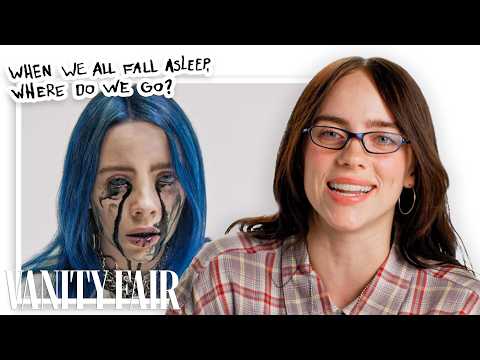
[4:27]I first started recording When We All Fall Asleep, Where Do We Go, when I was 16. Phineas was 19. It was my first studio album. We made a lot of it on tour, in like little hotel rooms with Phineas's laptop. And I remember writing multiple verses of Ilomilo on a plane. I remember like recording wish you were gay in like El Paso. Yeah, wherever we could make it, we we did. In the documentary, there's like a thing I say where somebody said about like, oh, well, your next album this and I was like, I'm not making another album. No way. I really thought that. I was like, I'm not doing this again. I was like, love y'all. Be safe. I'm not doing this again. I didn't feel I was good at it and it and I also didn't know what I wanted. The heavier theme thing in all my earlier music. And now I swear to God I never thought about it one time. It was such a recurring topic for so long, which was like, why are your songs so sad? And I remember hearing that being like, what are you What are we talking about? People seem to forget that when you are a child and a teenager, emotion is the most intense thing in the world. Everything feels like the end or the beginning. I was just talking about this with a friend that like middle school felt like life was over. And that that's how everything felt then. And so, you know, to to be like, how could anyone young understand emotion? Are you stupid? That's all they have is emotion. I've always had a real love and passion for music videos and visuals in general. And I always wanted to direct them, but of course I had no experience and I was a teenager. And why would I know what I was doing? I mean, you know, I can imagine being the adult in the room and me being like, I want to direct it. And it's like, well, you can't, you know. But at the time I was like, You know, why not? Like, I don't I know what I want. I know what I want. Oh my God, I know what I want. And I think that I understood that that wasn't enough to like know how to do it. But I think I convinced them all to let me. Like I think I proved myself is really what I mean. And the first music video that I fully directed was Zanny. Then everything I wanted. And then basically everything after that. But it's a lot of work when I first started. I was like, oh my God. I would love to do it for other people as well, other artists. The reaction to When We All Fall Asleep, Where Do We Go, was so like surreal. And the response to Bad Guy, I mean, that changed my life. Like Bad Guy completely changed my life. That's really what this whole interview should be about is Bad Guy and its effect on my life. And then that, you know, the the awards, you know, the Grammys was like amazing. It was literally like the greatest thing that had ever happened to me and I could not believe any second of it was real. That album really lives on for me. Like that album completely changed my life, so special to me. And it's so pure to me. Like it's so genuine to me. The older I get and the farther away that album is from me, I feel so even closer to it.
[7:40]When we were first making music, Phineas and I used to come up with little challenges to write songs. We'd be like, let's try to write a song from the perspective of this person and this is happening and. Like many times we would be like, let's pretend to write a James Bond theme song because that would be the coolest shit in the world. And we were such big fans of Bond and especially for me, I loved Skyfall and just everything about that. I remember it was like at a certain age where it really like stuck with me for some reason. And that visual that is going on during the song in the movie, and I just thought it was the coolest thing you can do as an artist. So we would joke about it all the time and it was never ever a reality. And then in 2019, Barbara Broccoli, who was working on the film. I remember hearing kind of about the fact that they were looking for someone and looking for a song. And I just remember just me and Phineas being like, whoa, whoa, whoa, like, please. And then it was just like many conversations and meetings and we weren't sure at all. Like we didn't think we were going to get it. And it was also like so not in the bag at all. Like it was very, very much we're auditioning, and maybe we get it, and maybe not. We were sent like the first 10 pages of the script, kind of told the plot ish without like being given any spoilers. And then we wrote No Time To Die in a couple days on tour, in like Texas or something.
[9:01]Recorded it in the bunk in the tour bus. And we didn't even know if we we had the job. We honestly didn't know for a while. And then we already had gotten it and I had no idea. And then, um, yeah, it was the coolest thing in the world. We felt like we made a good song and we really wanted the part. Hans is the best, the most incredible collaborator, and he's such a genius, and he's such a goof. He's such a goofball. I mean, it was just the most magical thing in the world. We went to London, we got shown the movie, and then we spent a few days in the studio with him and Johnny Marr, and this whole orchestra. And it was insane.
[9:49]I mean, the Oscars is just one of those things. It's just like, oh my God, I feel like I snuck in. Like it was very cool and intimidating. And I mean, we watch the Oscars every time when I was a kid and it was like one of my favorite things that we did as a family. So performing was amazing and then the next year I was nominated, and I couldn't even believe. I couldn't even believe I was shortlisted. And then I was nominated and then I went and then I performed again. And that was insane.
[10:24]Happier Than Ever was made with a little too much confidence. And that's not a bad thing. We're a little lazy. But I love that album. I really do. And I loved it at the time and it meant that I grew. Like I wouldn't have been able to get where I am now, had it not been for that album and everything that I did in that album. And it was also kind of a me needing to break free out of a box that I had felt like I put myself in or that the world put me in. From putting out Ocean Eyes when I was 13, and then getting injured, and then being on tour for years, and being in meetings with a million people and a million agents, and, you know, being a 14-year-old in a room with only, you know, grown-ass people, mostly men. And, you know, I wanted to be dancing. I wanted to be doing this. I don't know. I just everything kind of just happened to me and I didn't really have much of a choice. But it's okay. I'm not complaining. But but it was a lot. And then COVID happened. And I was forced to stop. And that I think happened for a lot of people, but of course, I felt like I was the only one that was happening to. I was like, I just I just remember it was it was almost as if blindly doing something that I really wanted to do and felt like I really wanted to do and I was happy doing. And then it was like just taking out just just pulled away from me. And I was just like, oh, Oh my God, I haven't actually thought about anything for four years. And I don't know when I would have gotten to process anything that had happened to me, if it weren't for that. And we wrote all of Happier Than Ever in that period of time. So, it's a COVID album. I mean, that's what it is. The music was a completely different process than the reinventing of the look, coming off of those crazy couple of years, and I had won those Grammys that year. And like, my shit did not stink. I don't know. I just felt good. But then I decided I wanted to go blonde and then I decided that I remembered that I was a girl. And I was like, wait, I want to be other things and not just this one thing that I've been looked at as for all these years. And I remember ordering my like a skirt off of Amazon. I didn't have a skirt. And I was like, I got to wear a skirt. I don't know. I was just having a lot I was Dude, I was 18. Like I was trying to figure it out. I'd been told that I was one thing for many years, and I believed it. Which was definitely a lot. But I think that I needed to do it. I I'm an extreme person. Like I need to have extreme sensation. And I think that that was my way of of expressing myself in the way that I knew how, which was all everything, all at once.
[20:09]The approach of making Hit Me Hard and Soft was so daunting. Never been more doubtful in our entire lives. Never one moment of like, wow, we did a really good job. Like, we loved what we were making, but we really were terrified. Also, Phineas and I, honestly, you know, when you're siblings, you go through like different periods of being on the same frequency. And this was a period where we were pretty out of sync, not to put him, like, tell his business, but, like, he was really not enjoying making music very much. And that was tough for me because I was the one that didn't enjoy making music for all those years, and I kind of finally was enjoying it. And then he would just be like, I have no I would rather be doing anything else. Like I want to be doing something else. And I got it because that's how I used to feel. And it's, oh my God, I was so terrified. I was like, oh no, no. Phineas would remind me mostly, he'd be like, we don't have to put this out, you know. We can make it and not put it out. And I think that's important to remember is that not everything you make has to be amazing and perfect because I think part of the reason it felt so scary is the fact that we were so doing exactly what we wanted to do. And that can be really scary. Being yourself is terrifying. You feel like, oh, they're not going to like me if I'm myself. They're not going to I have to kind of do this or like do this and then they'll like me. And you realize that it's just that you're avoiding the vulnerability of being seen and being known. And I think that this album is like a really good representation of that.
[21:37]And when I think about it, it's really good kind of juxtaposition of like my life, my friendships, and my relationships, and how I've been trying to really make an effort in being exactly who I am. I kind of been saying this for years but never really doing it, which is like trusting my gut and like listening to my body. And it turns out that if you do what you want, and if you are yourself, people actually like you more. It's really hard to accept that. It's scary, and it's vulnerable, and it means that you can have experiences that are more hurtful because it's actually you. But there's more pros than there are cons. I think I'm proud of myself, man. It's hard to process this kind of thing when it's you. It's really hard to see it and see it objectively and know what it looks like to other people because you have your own experience of it. I mean, when I think about my life, I get to do the coolest shit in the world. And I didn't see it for so long, and there's so many times that I really did not want my life. And honestly, I feel like for the first time, maybe I've experienced so much joy. VANITY FAIR


