[0:00]Most athletes trying to level up think the secret is copying what the best do, but the real game changer, quitting certain habits that hold you back. I'm Sam, a mental performance coach for pro athletes. And the athletes that I've worked with, those who have signed their first pro contracts, qualified for world championships and even won national titles, did it by learning what to stop doing. So today, I'm breaking down seven habits ultra successful athletes quit, and how quitting them can unlock your next level. So let's get started. Habit one, sacrifice aesthetic for impact. Okay, so for the first habit, I want to tell you about Cristiano Ronaldo's early career. When he first burst onto the scene at Manchester United, he was unbelievable with the ball. Step over, chops, insane tricks, you couldn't take your eyes off him. Fans loved it. And honestly, his ego loved it too. But here's the thing, most of that flare didn't actually get results. The goals and assists weren't coming. The impact wasn't massive. It looked amazing, but it wasn't helping him and his team win as much as they could. A few years in, Ronaldo made a shift. He stopped doing the stuff that just looked cool. He ditched the tricks, the flashy moves, the stuff that fed his ego, and he became a ruthless finisher. Tap ins, simple goals, things that weren't pretty, but were devastatingly effective. Now let me ask you, which version of Ronaldo do you think became more dangerous on the field? Exactly. See, insanely successful athletes don't get caught up in looking good. They sacrifice style for substance. They stopped doing the things that feel nice in the moment and focus on what actually moves the needle. So think about your own game. What flashy, ego-driven habits are holding you back from making a more meaningful impact? What could you quit to level up? Okay, so the next habit insanely successful athletes quit is feeling like they have to win. Let me tell you about Novak Djokovic in the 2019 Wimbledon final against Roger Federer. This was the longest Wimbledon final ever. Djokovic was up against Federer, the golden child of Wimbledon, and the pressure was insane. Most players would have cracked. But here's the thing, Djokovic didn't overfight it. He wasn't desperate to force the win. He just accepted that it might not go his way. He just focused on everything in his power, every point, every serve, every return, and let the result take care of itself. That mindset, being comfortable with winning or losing, gave him calm. It freed him from the tension that crushes most athletes under pressure. And the result? He won. The points didn't get any easier, but because he let go of the need to force it, he played his best tennis where it mattered most. Now think about yourself. How much pressure are you putting on yourself to win every time? How much of your performance is being held hostage by your need to make it happen? When you quit that obsession with winning, the freedom actually allows you to perform better, and in many cases win anyway. Okay, so the next habit insanely successful athletes quit is social media, or at least they quit letting it control them. Take Letsile Tebogo, for example. At just 20 years old, he became the first African man to medal in the 100 meters at the 2023 World Athletics Championships. But here's what he says made the biggest difference, quitting social media. He said, everybody is saying whatever they feel like saying, so that can affect me mentally. Then I just decided, no, to let go of social media. Now, athletes don't have to quit forever. You can quit during critical points in the season, when you need your full focus, energy, and headspace to perform at your best. No negativity, no distractions, just training, recovery, and sharp focus. And also, as an athlete, I want you to think about, does the good really outweigh the bad? How much mental energy are you giving to opinions, comments, and updates that don't serve your performance? The freedom you gain from stepping away can be absolutely massive. Tebogo also went on to win gold in the Olympic 200 meters in 2024, so there must be something to it. The next habit insanely successful athletes quit is staying in a toxic environment. Let me tell you about Scott McTominay. For years at Manchester United, McTominay was undervalued and often overlooked. Despite his talent and dedication, he struggled to earn the recognition that he deserved. But everything changed when he moved to Napoli. In his first season, he not only helped Napoli clinch the Serie A title, but he also won the League's MVP award, scoring 12 goals and providing four assists. His performances were so impactful that a shrine was even erected in his honor. Fans and teammates alike celebrated his arrival, finally seeing the player he'd always been capable of becoming. Scott's story highlights a crucial lesson. Sometimes leaving a toxic environment is the best decision you can make for your career and well-being. Staying somewhere that just undervalues and discourages you, only will hold you back. But when you put yourself in a place that values, respects, and actually encourages you, your true potential can finally shine, and the results can be extraordinary. Okay, so the next habit insanely successful athletes quit is being so serious all the time. Let me tell you about Arena Sabalenka. Early on in her career, Sabalenka was notorious for emotional outbursts on court, leaving matches in tears, frustrated, and desperate to win. But she realized that the pressure was only holding her back. So she made a shift. Off the court, she started keeping things simple and fun, warming up by trying to keep balloons from hitting the ground, joking around with her coaching team, and even signing her trainer's head with a marker before matches. It was playful, silly, and creative, but it's exactly what helped her approach the game with a new found freedom and sense of joy. The result? Well, since then, she has won multiple Grand Slam titles and remained either number one or number two in the world for over three years. Her performances are more consistent, her mindset sharper, and she enjoys the game more than ever. Now think about your own game. What would happen if you let yourself have a little more fun? Less pressure, more freedom, and often better results. The moment you embrace playfulness and creativity, you unlock a side of your performance that sheer seriousness alone can never reach. Okay, so the next habit is quit relying solely on talent. And for this one, let me tell you about Luka Dončić. For years, Luka was known for his incredible skills and basketball IQ. But after facing criticism over his conditioning, that contributed to a trade to the LA Lakers, he realized that raw talent alone wasn't enough. Determined to elevate his game and improve himself, Luka committed to a rigorous off season regimen. He shed 31 pounds through disciplined training, intermittent fasting, and a high protein diet. His transformation was so striking that it earned him a cover feature in Men's Health, dubbing him Luka 2.0. This shift wasn't just physical, it was a mindset change. Luka understood that in today's game, every athlete is talented. But what separates the great is their commitment to conditioning, recovery, and continuous improvement, doing the work that nobody sees so that their talent can fully shine when it matters most. So think about your own approach. Are you relying solely on your natural abilities? Or are you investing in the behind the scenes work, conditioning, recovery, and all other forms of preparation that truly elevates your performance and unlocks a new level of success? Okay, so next up is quit making excuses. And honestly, I've seen this with every single athlete that I've worked with. The moment they stop saying things like, I'm too tired, my opponent's better, the ref is against me or the weather's bad, their performance sky rockets. Why? Well, because excuses shift the focus away from what they can control. The best athletes stay inside their circle of control. They take full responsibility for everything, even the things that aren't their fault. Even the unfair stuff. They make it a non-negotiable to own their preparation, their effort, and their mindset. And here's the truth. The moment you quit making excuses, you give yourself the absolute best chance of succeeding as an athlete. You remove the weight holding you back and finally unlock your true potential. Because without excuses, you remain a problem solver. You remain in motion, you remain willing to make sh*t happen. And to fully lean into that very best version of yourself as an athlete, you should watch this video next.
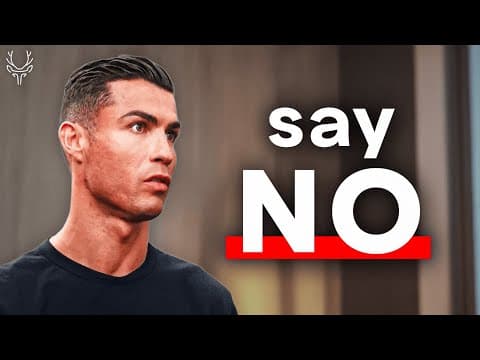
7 Habits Ultra-Successful Athletes Quit
Sam Martin - Peak Performance
7m 15s1,492 words~8 min read
YouTube auto captions
Transcript source
YouTube auto captions
This transcript was extracted from YouTube's auto-generated caption track. The transcript below is server-rendered so it can be read, searched, cited, and shared without opening the original YouTube player.
Pull quotes
[0:00]Most athletes trying to level up think the secret is copying what the best do, but the real game changer, quitting certain habits that hold you back.
[0:00]And the athletes that I've worked with, those who have signed their first pro contracts, qualified for world championships and even won national titles, did it by learning what to stop doing.
[0:00]So today, I'm breaking down seven habits ultra successful athletes quit, and how quitting them can unlock your next level.
[0:00]Okay, so for the first habit, I want to tell you about Cristiano Ronaldo's early career.
Use this transcript
Related transcript hubs
Watch on YouTube
Share
MORE TRANSCRIPTS


