[0:00]There is someone in your life right now who knows everything about you, not everything in the way a stranger knows surface details, everything. The specific fears you have never said out loud, the failures you have carried privately, the ambitions you have shared before they were ready to be shared, the insecurities you revealed in moments of genuine trust, the wounds that are still healing. This person has been present for all of it, and you call them your best friend. You have defended them when others questioned them. You have prioritized them when your time was limited. You have trusted them with information you have never given anyone else. Not because they asked for it, but because the relationship felt safe enough to hold it. Here is the question this video is going to force you to answer. What if it was never safe? What if the person who holds the most detailed map of your interior, your fears, your failures, your plans, your insecurities, has been using that map in ways you have never been able to see directly? And that is precisely what makes what I am about to show you so difficult to sit with. Because the person I just described, the one who knows everything, the one you trusted completely, the one who felt most like an ally, is statistically the most likely person in your life to be operating against your interests right now. Not a stranger, not an enemy you can name, your best friend, or more precisely, the person you have been calling your best friend. The best friend who is actually your hidden enemy is not the person who attacks you, not the person who argues with you, not the person who creates obvious friction that gives you a reason to pull back. It is the person who stays close because the hidden enemy does not need to destroy you actively, they simply need to remain positioned close enough to complicate your progress, close enough to plant the doubts that slow you down, close enough to ensure that the person who knows you best is also the person with the most to gain from your remaining exactly where you are. Niccolo Machiavelli spent his entire career inside the political courts of Renaissance Florence, environments where the most dangerous people in the room were never the declared enemies, they were the closest allies, the most trusted advisors, the men who had been given full access to the Prince's intentions, vulnerabilities, and plans and who used that access not to protect him but to position themselves. He did not write about friendship the way poets did, he wrote about it the way a surgeon writes about a wound with precise unsentimental accuracy about what it contains and what it costs. He documented something about the hidden enemy inside close relationships with a clarity so exact and so exposing that reading it today feels less like history and more like a description of someone currently in your life. He wrote one line that contains the entire psychology of what this video is about to dismantle. There is no other way to guard yourself against flattery than by making men understand that telling you the truth will not offend you. He was not writing about compliments, he was writing about the specific category of person who stays close to you through the careful management of what you hear, who ensures that what reaches you from your own life is filtered through their proximity, shaped by their interest and calibrated to keep you dependent on their presence rather than moving beyond it. The four signs I am about to show you are not dramatic, they are not obvious. If they were obvious, the hidden enemy would not survive in the position they currently occupy. They are subtle, they are patterns, they are behaviors that individually look like personality quirks and collectively look like a systematic operation running against you from inside your closest friendship. By the time this video ends, you will have a name for something you have been feeling for a long time without being able to articulate it. And the name is going to cost you a relationship. Four signs your best friend may be displaying all of them right now. Let us establish something before we go any further. The hidden enemy is not a concept, it is not a dramatic exaggeration for the sake of content, it is a specific, documented, psychologically precise category of person that exists in human social environments and has existed since the first human beings organized themselves into groups and hierarchies. The hidden enemy is the person whose interest requires your limitation. Not your destruction necessarily, your limitation. The specific calibrated suppression of your growth to a level they can tolerate without feeling threatened. They do not need you to fail, they need you to stay within a range that does not make them feel small, and when you threaten to exceed that range, when your growth begins to create a gap between where you are going and where they are staying, the hidden enemy activates. Not with hostility, never with hostility, with something far more effective, with care, with concern, with the specific weaponized warmth of a person who needs you to believe they are on your side while they are systematically working against your momentum. The four signs in this video are not theories, they are behavioral patterns documented across centuries of human social observation in the courts of Florence, in the boardrooms of the modern world, in the friendships you are currently maintaining. And by the time this video ends, you will have a name for what you have been experiencing without being able to describe it. That name changes everything. Sign 1: They celebrate you publicly but diminish you privately. In front of other people, they are your biggest supporter. They call you smart, they call you talented, they tell the story of your success with the specific enthusiasm of someone who is proud to know you. They position themselves as your advocate in public spaces, the friend who always has something good to say about you, the one who references your wins in group conversations. And you have noticed this, you appreciate it. You have probably told yourself, it is one of the things you value most about them. But there is another version of this person that only you have access to, the version that exists when the audience is gone. When it is just the two of you in a car, in a private conversation, in a late night exchange where nobody else is watching, something shifts. The celebration disappears and is replaced by something else, something quieter, something that arrives disguised as honesty. I mean, I told people about it, but I just want to make sure you are being realistic. I am proud of you, but you have to admit you got lucky with the timing. I support you, but you remember what happened last time you tried something like this. Each one of these statements has a public face and a private function. The public face is concern, the private function is recalibration, the specific psychological operation of pulling you back to a position they are comfortable with after the public performance of support has already purchased the social credibility of being seen as the loyal friend. This is called performative solidarity in social psychology, the deliberate public display of support for someone's success that functions not as genuine celebration, but as social positioning while the actual psychological operation of diminution occurs in private, where no one can observe the contradiction. In plain terms, they perform being your champion in public to protect their reputation as a good friend and then do the actual work of holding you down in private, where no one is watching. Think about the specific feeling you get when you share a win with them, one on one, not in a group, just the two of you. There is a specific quality of their response, not hostile, not obviously negative, but something slightly muted, something that arrives with a qualification attached, something that starts with that's great, but or ends with a reminder of a past failure that was not relevant to the current conversation. You have noticed this feeling, you probably dismissed it as your own insecurity. You told yourself you were being too sensitive or too needy or too focused on their reaction when you should just be happy about your own thing. That dismissal, that specific self-gaslighting move where you explain away the pattern as your own problem is exactly what the hidden enemy's behavior is designed to produce. Because as long as you are focused on whether you are being too sensitive, you are not focused on whether they are being too strategic. Machiavelli spent his career in the Florentine courts watching this exact dynamic operate at its most refined level. He watched princes receive public declarations of loyalty from men who were privately building the architecture of their replacement. He documented it with the precision of someone who understood that the most dangerous behavior in any political environment is the behavior that maintains a positive public appearance while executing a private agenda. He wrote, everyone sees what you appear to be, few experience what you really are. He was not writing about the people being observed, he was writing about the people doing the observing, the ones who know the difference between your public performance and your private reality and use that knowledge strategically while maintaining the appearance of genuine friendship. Your best friend celebrates you in public because the public celebration costs them nothing and purchases enormous social credibility. The private diminution is where the real transaction happens, where your position in the hierarchy they have constructed in their mind gets corrected back to the level that makes them comfortable. The test is simple, watch what changes when the audience disappears, not what they say, what changes, the energy, the enthusiasm, the specific quality of their engagement with your success when there is nobody watching who can judge them for the way they respond. The response they give when no one is watching is the honest one every time. Now let us go one level deeper into why this sign is almost impossible to identify in real time. The public celebration creates what psychologists call a halo bias, the cognitive tendency to assign positive attributes to everything associated with something you already perceive positively. They celebrated you publicly, your brain marks them as a supporter, and now every subsequent interaction is filtered through that marking, including the private diminishment that should register as contradictory. Your brain does not register the contradiction because the halo of the public celebration filters it out. They praised you in front of people. So when they question your judgment in private, your brain files it under honest feedback from someone who genuinely supports me, rather than under a pattern of diminution from someone who needs me smaller. They have purchased a filter inside your own perception, and they purchased it with the public praise. That is not accidental, it is the most efficient psychological operation available to someone who wants to limit you without appearing to do so, and it works on almost everyone, because the human brain is extraordinarily bad at processing contradictions between public and private behavior in people it has already classified as allies. The exit from this filter is not suspicion, it is observation. Start tracking the private responses with the same attention you give the public ones. When the private pattern is consistent, when the qualifications always arrive, when the enthusiasm always mutes, when the past failures always surface, the pattern tells you something. The public performances are specifically designed to prevent you from seeing. Sign 2: They keep joking about your weaknesses. It was funny the first time, maybe it was even funny the second time. The story about the thing you failed at, the impression they do of your nervous habit, the call back to the moment you were embarrassed in a social situation three years ago. Ha ha, we laughed, it was fine. But here is the question you have never asked out loud, why does that specific material keep coming back, not occasionally, with reliable frequency in groups, in private, in situations where you are doing well, and the joke lands like a small targeted interruption to your current momentum. The call back to the failure right after you mentioned a success, the impression of the nervous habit right before you are about to do something that requires confidence, you dismiss it as their sense of humor, you dismiss it as your own sensitivity. You probably even laugh along, because not laughing would make you seem like you cannot take a joke. That is the mechanism. Humor is the most socially protected weapon in the human arsenal. If you react to it, you are the problem. If you do not react to it, the content lands. If you laugh along, you have participated in your own diminution. The attacker wins regardless of how you respond, which means it is not really humor at all, it is a precision instrument disguised as humor. This is called status degradation through comedic framing, the use of humor to deliver attacks on a target's status, past failures, or vulnerabilities in a socially acceptable format that prevents the target from defending themselves without appearing over sensitive or incapable of taking a joke. Here is the dark psychology underneath it. Every time your weakness is brought into the room, every time your past failure is referenced, every time your insecurity is named out loud and laughed at, a specific social record is being maintained. The people in the room are being reminded of a version of you that exists below your current position. They are being anchored to a historical failure that your current progress has been quietly dismantling. The hidden enemy is performing maintenance, maintenance on the perception of you that keeps you in the position they need you to occupy. Think about this as an anchor. You are moving forward, you are building, you are becoming a different, more capable, more successful version of yourself. Every time that anchor is thrown into the room, every time the old failure is referenced in a casual joke, your social perception is pulled back toward the thing you are trying to move past. Your friend who truly wants you to rise never throws the anchor, because a real friend understands that your past failures are not comedic material. They are territory you have already paid for and should be allowed to leave. The friend who keeps throwing the anchor does not want you to leave that territory. The anchor is the mechanism of keeping you there and humor is the cover that makes the mechanism invisible. Machiavelli documented a specific court manipulation in Florence where powerful men use their gestures not for entertainment but for targeted social degradation of rivals, delivering through humor what could not be delivered through direct confrontation without political consequences. The jester could say what the political rival could not say directly, the humor gave the attack social immunity, the target could not respond without appearing to have no dignity. Your friend is not a jester, but they have understood, consciously or not, that humor gives their attacks the same social immunity. You laugh along, the room laughs along, the anchor lands and the maintenance is complete for another week. The response to this is not anger. Anger gives them exactly what they need, evidence that you cannot take a joke, evidence that your old wound is still accessible, evidence that the anchor holds. The response is a calm, specific observation delivered once. You come back to that a lot. That is all, no anger, no extended conversation, no defense, just the naming of the pattern out loud in front of whoever is present. The naming is the only thing that breaks the social protection humor provides. The moment you name the pattern without emotional charge, the humor loses its cover. The room now sees what you see, the attacker now has to justify a pattern, rather than defend a joke. They will call you sensitive. That is the expected response. Let them. Because the man who can name a pattern without flinching is not sensitive, he is precisely the opposite of what the anchor was designed to keep him believing about himself. Sign 3: They compete in ways you did not consent to. You are not competing with them, you have never been competing with them, but they are competing with you. Every time you share something good, they respond with comparison. That's nice, but I already did something like that. You just started, I've been doing it longer. Notice the pattern. You speak, they redirect. You achieve, they equalize. You grow, they reposition. This is not coincidence. This is silent rivalry, and it is one of the most dangerous dynamics because it operates without agreement. You did not sign up for competition, but they are keeping score. This is called involuntary competitive framing, the psychological pattern in which an individual, unconsciously or deliberately, reframes every interaction with a specific person as a competitive exchange, evaluating their own position relative to that person's position in every domain that carries social or emotional significance. Your friendship is not a partnership to them, it is a ranking system and in that ranking system, every success you have is not something they celebrate, it is something they calculate. Not because they are evil, because your growth threatens something fundamental to the psychological architecture they have built around your relationship. When they met you, there was a specific distribution of status, capability and achievement between the two of you. That distribution was comfortable, it assigned each of you a role, and their role explicitly or implicitly carried a certain advantage. When you started growing, when your trajectory started creating a gap between where you were going and where they were staying, the distribution shifted, and they cannot process the shift. Not because they are consciously malicious, because the human ego does not process relative decline gracefully. The brain does not experience your success as neutral, it experiences your success as their loss, a comparative diminution of their own position, and it responds with the involuntary competitive behavior you have been experiencing without knowing what to call it. Think about the specific energy in the room when you share good news with them versus when you share good news with someone who genuinely has no stake in your relative position. One response carries a specific quality of openness, the energy of someone who can receive your success without calculating what it costs them. The other carries something slightly compressed, the energy of someone processing a comparison before they respond. You have felt both. You know the difference. Julius Caesar, who operated in an environment where the stakes of miscalculating arrival were far higher than in your friendship, understood this dynamic with surgical precision. He reportedly kept close counsel with men he observed to be genuinely uninterested in his relative position, men who had enough of their own, enough purpose, enough identity, enough self-defined success that Caesar's wins did not produce the comparative calculation that makes allies into covert competitors. The man who has built enough of his own does not compete with yours. The man who has built nothing of his own or built it entirely in relation to you cannot stop competing. The question is not whether your friend is competing, you already know they are. The question is what you do with that knowledge. Stop sharing wins before they are complete. Stop disclosing plans before they are executable. Give them the result, not the process. Results are harder to compete with, because by the time they receive the information, the achievement is already complete, already sealed, already incapable of being undermined by the doubt and hesitation that early disclosure produces. You are not hiding from your best friend, you are protecting your momentum from someone who has demonstrated through their own behavior that they cannot be trusted with your momentum in its most vulnerable state. Now let us address the dark mechanic that most people never examine, because it is operating in your social network right now, and it is far more extensive than you realize. Your best friend has a best friend, not you, a different best friend, someone in a different part of their social world who receives a specific version of your story, your failures, your insecurities, your past, your current vulnerabilities, filtered through your best friend's competitive framing. And that best friend has a best friend. This is called social triangulation through proxy networks, the mechanism by which information disclosed in a private relationship travels outward through successive friendship networks, each transmission carrying the specific framing of the transmitter, rather than the accuracy of the original disclosure. In plain terms, what you tell your best friend does not stay with your best friend. It travels with their framing through their network to people you have never met who now have a specific curated impression of you that your best friend constructed and distributed. You are not managing one relationship when you manage your best friend, you are managing the entire network that flows outward from them. And the competitive friend, the one who keeps score, who needs you smaller, who processes your growth as their loss is not a neutral transmitter of your story, they are an editor. Their competitive framing shapes every version of you that moves through their network. The people in their network who have never met you already have an opinion of you. That opinion was constructed by someone who needed you to be a specific size in order to feel comfortable about their own. This is not paranoia, this is the documented mechanics of social information flow in competitive friendship dynamics. Guard your intelligence accordingly. Sign 4: They are the first to warn you about your ambitions. You shared something real with them, not a casual thought, something you had been building toward, a plan, a business idea, a career move, a life decision that required courage to name out loud. Something that in the moment you said it, felt significant. And before anyone else had a chance to respond, before you had even finished describing it, they were already listing the reasons it might not work. I just want to make sure you have thought through the risk. That market is really competitive right now. What if it does not work out the way you are expecting? I am just looking out for you, and you received it as care, because they framed it as care. Because of course a best friend would want to protect you from a bad decision. Of course they would ask the hard questions that other people are too polite to ask. That is the performance. Here is the function. The moment they planted those seeds of doubt, the specific questions, the specific risks, the specific historical failures they referenced, your enthusiasm contracted, not eliminated, contracted. The specific expansive energy that exists in a human being when they are moving towards something real, became slightly smaller, slightly more qualified, slightly less certain. That contraction was the goal, not the questions, the contraction. This is the most sophisticated sign on this list because it is the most difficult to identify as hostile. Concern and sabotage can be executed through identical behavior. The questions that produce contraction are the same, whether they are motivated by genuine care or strategic diminution. The difference is in the pattern, not the single event. Does this happen every time you share an ambition? Is the response always concern rather than enthusiasm? Is the list of reasons it might fail always longer than the list of reasons it might work? Does the conversation always end with you feeling slightly less certain than you felt before you shared it? If the answer is yes, if the pattern is consistent, you are not receiving honest feedback from a protective friend. You are receiving strategic interference from someone who has understood, consciously or not, that your ambition is a threat to the comfort they derive from your current position. This is called anticipatory undermining, the preemptive delivery of doubt producing information to a target who is building momentum toward a goal for the purpose of disrupting the momentum before it becomes difficult to interrupt. In plain terms, they get to you first, before your own confidence can solidify, before anyone else can support you, before the plan has enough structural integrity to survive the doubt they are about to introduce. The timing is the key. A genuine friend who has concerns about your plan waits until they understand it before raising concerns. They ask questions first, they engage with the vision before engaging with the vulnerabilities. The hidden enemy does not wait, they move immediately to the vulnerabilities, because the vision if received fully and uninterrupted, might generate enough of its own momentum to become unchallengeable. They intercept the momentum before it builds. Machiavelli was perhaps the most precise documenter of this specific manipulation. He wrote extensively about the advisors who surrounded princes, men who positioned themselves as the wise, cautious voice of reason, while systematically ensuring the prince never moved in a direction that would reduce the advisor's own influence. The advisor's most effective tool was not opposition, it was concern. Opposition creates conflict. Conflict can be won or lost. Concern cannot be opposed, because it arrives wearing the face of loyalty. The prince who rejects the concern looks reckless and ungrateful. The prince who accepts the concern becomes manageable. Your best friend is not a political advisor, but the mechanism is identical. I am just looking out for you is the most effective sentence in the hidden enemy's vocabulary. It positions them as the protector while performing the function of the saboteur. The response to this sign is a very specific quality of selective disclosure. Stop sharing ambitions before they are executable. Not because you distrust them, because you understand that your ambitions in their early stage are vulnerable. They require protection, not exposure. They require the internal environment of your own belief before they are strong enough to survive the external environment of someone else's doubt. Share the launched version, not the launching version. The launched version cannot be undermined. The launched version exists, it has already survived the moment of maximum vulnerability. It no longer requires anyone's belief to sustain it, because it has its own evidence. The launching version, the early, fragile, still forming version that requires your own momentum to become real. Protect that version. The way you would protect something that cannot defend itself, because it cannot, and they know it cannot, and that is precisely when they arrive with their concern. Now step back and look at all four signs together. Public celebration, private diminution, weaponized humor, covert competition, strategic concern. Four behaviors, one function. The function is the management of your position in the hierarchy they have constructed around your relationship. Each sign is a different tool for the same operation, keeping you within the range they need you to occupy in order to feel comfortable about their own position relative to yours. They do not need you to fail, they need you to stay, staying small enough, staying uncertain enough, staying grateful enough for their support that you do not examine whether the support is real, staying close enough that they can continue monitoring the distance between where you are and where they are and making the small ongoing adjustments that keep that distance manageable. Robert Green, who spent decades mapping the mechanics of power with the same unflinching accuracy Machiavelli brought to the courts of Florence, wrote in The 48 Laws of Power, never outshine the master. He was not advising you to stay small, he was documenting the specific dangerous reality that the people who feel outshone by you will never announce it, they will manage it quietly. Through the four mechanisms in this video, through the public celebration and the private correction, through the joke that maintains the anchor, through the competition you did not enter, through the concern that arrives precisely when your momentum is most vulnerable, they will manage you down to the level where the light you generate does not make them squint, and they will do it in the name of friendship. Before we close, there is one thing that needs to be said directly, because most content on this topic never says it. The person displaying these signs may not be doing this consciously. Most hidden enemies are not running a deliberate operation, they are responding automatically, instinctively, to the fact that you are becoming something that makes them uncomfortable. The behavior is real, regardless of whether it is conscious. The damage is real, regardless of whether it was intended. A car hitting you at full speed causes the same injury, whether the driver was malicious or simply not paying attention. The result is identical, the appropriate response, getting out of the road is identical. You do not need to hate them, you do not need to confront them dramatically, you do not need to make their behavior the center of a conflict that costs you more energy than the relationship was worth. You simply need to recalibrate the access, what they receive from you going forward is determined not by the history of the friendship but by the demonstrated pattern of behavior in the present. The access to your early stage ambitions, closed, the access to your vulnerabilities, closed, the access to your financial reality, closed. The access to your public self, open, warm, genuine, the same person they have always known. You are not punishing them. You are protecting yourself. The distinction is important because one requires anger and the other requires only accuracy. Machiavelli's final word on this subject is perhaps the most precise thing ever written about how to handle the person whose proximity creates damage. He wrote, keep your friends close and your enemies closer. He was not advising you to embrace the enemy, he was advising you to maintain proximity with full awareness to keep the hidden enemy within observable range, while giving them zero access to the intelligence they need to operate against you effectively. Close enough to watch, too informed to be fooled, too protected to be damaged. That is not a diminished friendship, that is the only honest version of the friendship that the pattern has made possible. If this video named something you have been experiencing without being able to describe it, if even one of those four signs produce the specific cold recognition of watching your own situation described with surgical accuracy like this video, not as a formality, because it means this content found the person it was built for. Subscribe if you have not, this channel delivers the kind of precision that most platforms will not, the uncomfortable truth about human behavior named directly, without the softening that makes it easier to dismiss.
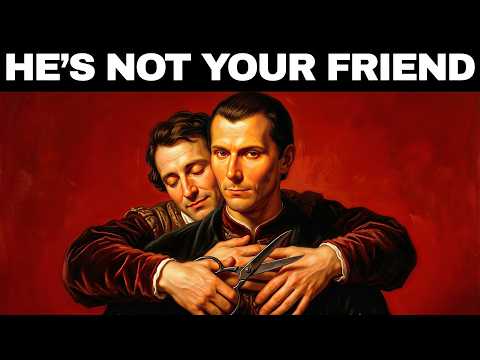
4 Signs Your “Best Friend” Is Your HIDDEN Enemy — Machiavelli
Machiavellian Stoic
31m 7s5,254 words~27 min read
YouTube auto captions
Transcript source
YouTube auto captions
This transcript was extracted from YouTube's auto-generated caption track. The transcript below is server-rendered so it can be read, searched, cited, and shared without opening the original YouTube player.
Pull quotes
[0:00]There is someone in your life right now who knows everything about you, not everything in the way a stranger knows surface details, everything.
[0:00]Not because they asked for it, but because the relationship felt safe enough to hold it.
[0:00]What if the person who holds the most detailed map of your interior, your fears, your failures, your plans, your insecurities, has been using that map in ways you have never been able to see directly?
[0:00]And that is precisely what makes what I am about to show you so difficult to sit with.
Use this transcript
Related transcript hubs
Watch on YouTube
Share
MORE TRANSCRIPTS


