[0:01]My name is Curtis Alsopp and we're here to to show what World War I, like life in World War I was in the trenches. as accurate as possible. Everyone thinks it's gunfire and we need to show them what what like day-to-day life was like. We're going to the trenches. I'm a student from Burnley North. I think we're going to be filming for two months here. But we kind of asked them to think about 100 years ago, what was a student your age doing as opposed to what you're doing now, and could you walk a mile in their shoes? So in the trenches it gets really tight, it's cool, it's wet, we have limited space and um for taller people, we gotta stay lower or we'll get shot. This is where they cook their food here. They would put fire under here and they cook their food there. And then their waste management system, this is where they go to the bathroom. Their privacy is just a simple little like sheet thing. They slept in here. Um they had to sleep with their legs out because if this collapsed on top of them, someone would have to run and grab, pull their legs out. If your head showed in the trench, you would obviously be shot by a by a German soldier or sniper. So they would put this out, look around, see if it's clear, to see if they can do daily tasks and stuff like that, plant mines or something. Um obviously we we they kept like commanding like hierarchies, they didn't salute as much because Germans snipers are on all they salute towards him, and we have to kill him. Um, but yeah, this is the the the front line. This is where they go over the top, they climb a ladder, go right over top, right into warfare. And they they didn't know it at the time, but PTSD, they would climb the ladder, go over top, have a breakdown and then not be able to continue. In World War I, kids my age were serving. Like it's it's it's we have to be grateful for the what they did for us because kids our age were in the war. They were doing great things for our country. And they might not have come home. And I think it's important to know that because we live as freely as we can, we have all these privileges as like food, we have home, we have we have safety. Someone could just die right beside them and they would just think of it as an everyday thing. Someone died next to me, I'd be pretty shocked and scared about that, but these guys they they went through a lot and they were just only like my age, 17, 18, 19-year-olds. And obviously older, but but the the teenagers we need to realize that there were people out there our age serving. Action! I hope in the end that the students themselves break outside that textbook. I hope that they can get rid of all that boring stuff, they want, they always say history is so boring. I want them to bring that alive and see what it could have been like and what it was like for students their age. A lot of these kids were under age, right? Like they lied, they were 16, 17-year-old kids just like these students. And so I hope that they can kind of put themselves in that position and have a different perspective, just even for a minute to see what it would have been like and how grateful we have it today. Cut! Since they've started actually delving into this, I think the excitement levels, the engagement levels, the like they'll talk about it, it'll be like, well yeah, but that's not real, like it would have been like this and when they're in the trenches they're like, no, no, no, like if we're going to do a scene it has to be like this because I read this. So they're actually bringing what they've learned to the set, which is kind of amazing to see because usually it's like on page 425. It's a long time ago and it's it's history, but it's it's something they need to remember. It is something that we need to remember for, you know, for the sacrifices that the soldiers brought. They should not be gone forgotten, but at the same time, this is something that should never happen again. So if they actually learn from history, what a wonderful thing that would be. This is why I'm going to tell my friends to care about about World War I is kids our own age were suffering from gunfire, they were suffering from malnutrition, they were suffering from poor sleep, they were they were scared and they they felt obligated to serve in the war because they had to protect their own country. So suffering happened in the past, so we can live good today.
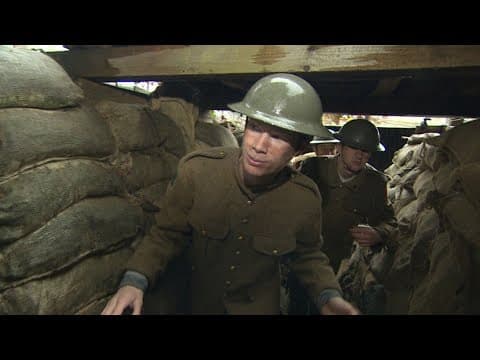
What life was like for World War I soldiers in the trenches
CBC News
4m 15s846 words~5 min read
YouTube auto captions
Transcript source
YouTube auto captions
This transcript was extracted from YouTube's auto-generated caption track. The transcript below is server-rendered so it can be read, searched, cited, and shared without opening the original YouTube player.
Pull quotes
[0:01]My name is Curtis Alsopp and we're here to to show what World War I, like life in World War I was in the trenches.
[0:01]Everyone thinks it's gunfire and we need to show them what what like day-to-day life was like.
[0:01]But we kind of asked them to think about 100 years ago, what was a student your age doing as opposed to what you're doing now, and could you walk a mile in their shoes?
[0:01]So in the trenches it gets really tight, it's cool, it's wet, we have limited space and um for taller people, we gotta stay lower or we'll get shot.
Use this transcript
Related transcript hubs
Watch on YouTube
Share
MORE TRANSCRIPTS


