[0:00]Hi everybody, welcome back to my channel. I hope you've been doing great. I missed you so much. Today we're talking about confidence when learning and practicing a new language. So, if you're an English learner, let me guess something about you. You understand a lot in English, you read articles, you listen to podcasts, you watch videos. You study grammar, you do vocabulary lists, but when it's time to speak, you freeze, everything disappears. You speak perfectly in your brain, but whenever somebody asks you a simple question, it feels like your brain just goes empty. You know the words, you just can't say them. It feels like you forgot everything you knew. Well, if this happens to you, trust me, you are not alone. I get these comments every single day, so a lot of people struggle with this. So I want to show you five things you can do to make your language learning easier and to feel more confident. And this is not just theory, these are the things that I did when I was learning English and that my students do as well. Plus, these are real things that you can start doing today. All right, step one, the everybody's watching me illusion. Most language learners think that everybody is judging them. Everybody's analyzing their speech. Everybody's paying attention to their grammar, their vocabulary, how well they said something, how they structured a certain sentence. So the moment they say one sentence, they immediately start thinking, did I say that right? Did I say that wrong? Did I pronounce everything correctly? Was my grammar okay? Did they understand me? But here's something very funny. Most people are not analyzing you. They are analyzing themselves, just like you are analyzing yourself. They're thinking, what are they going to say next? What is something that they wanted to maybe ask you? What they forgot to buy at the supermarket? In fact, most people are actually impressed when somebody speaks another language. Imagine someone speaking your language with an accent. Do you start judging them or do you think, wow, that's really cool, right? So the pressure you feel while speaking a different language is much, much higher in your mind than in reality. Step two, the silent learner trap. A lot of people spend years learning a language silently. They watch videos, they study grammar, they read books, they analyze complicated articles, but they almost never speak. It's like trying to learn how to swim by watching videos and reading books about swimming. At some point, you have to get into the water, and your brain needs practice turning thoughts into words. And the only way to train that skill is by speaking, even if it's messy, even if you pause, even if you make mistakes. Speaking is not the result of learning, speaking is part of the learning process. And speaking confidence doesn't come from studying, it comes from real conversations with real people. So no matter what you learn and how much you learn, you have to put that into practice. Describe the things around you, talk about what you see, talk about how are you feeling today. Talk about your goals, talk about your opinion on something, start journaling. All of these things you can do by yourself at home, kind of like a warm-up. If you study for five minutes, then spend 15 to practice what you learn. Confidence comes from repetition, and studying for a few minutes doesn't actually give you the confidence that you now own that knowledge. It's just information, it's just something that you read about. You need to build this habit and strengthen your brain and train your muscles just like going to the gym. Unfortunately, we cannot read a book or study about working out and all of a sudden become fit. So there are many ways to practice English, but one of the most efficient and powerful ones is to speak to native speakers, of course. Because that gives you a completely different level of confidence for comprehension, listening, and speaking. And if you're wondering where you can find someone to fit your schedule and your budget, I highly recommend Italki, who is also kindly sponsoring today's video. Italki is an online language learning platform where you can take personalized one-on-one lessons with native speaking teachers from all over the world. This way, you can have conversations that actually improve your listening and speaking skills at the same time. And whatever language you've been dreaming of learning, Italki will probably have it because they offer over 150 different languages. I recently started learning Spanish, so here's a clip from my first lesson on Italki with a native Spanish speaker from Spain. Thank you so much. Gracias. De nada, Rodica, no pasa nada. Okay. Verbos regulares. The verbs that ends with ar No, yeah, it's a lot to learn. Sounds exciting. So we have yo, tu, el, ella. So for example, we have bailar, that is to dance. How can we conjugate it in present for I? Yo bailaro? No. First of all, don't worry. So first thing, we need to delete ar nosotros bailamos. Exactly. Muy bien. As you can see, what makes Italki lessons really effective is that you can get real-time feedback. The teachers can work on your mistakes right away, so you improve as you speak. Plus, you pay per lesson, so there's no long-term commitment. If speaking fluency is your goal, I highly recommend Italki. You can click the link in the description below and use my promo code to get $5 off on your first lesson when you spend $10. But the discount is only available for the first 50 users, so hurry up and grab it. So big thanks to Italki for sponsoring this video and for supporting so many language learners all over the world, including myself. Now, let's continue with the third tip to improve your confidence. Step three, the simple sentence secret. One thing I see all the time with my students is they try to speak in very complicated sentences. And honestly, it makes sense. A lot of English learners think that in order to sound fluent, you have to speak with a very advanced vocabulary. So when they speak, they don't just try to communicate, but they try to impress. They start thinking, okay, how do I say this the absolute best way? How do I make this sound smart? What's the most correct way of saying this? And while they're doing all that mental work, the conversation keeps moving. The other person probably already changed the subject and the moment's gone. And now they feel behind, awkward, and even more nervous to continue. But native and fluent speakers actually do something very different. They do not try to build the perfect sentence every time they open their mouth. They focus on saying the idea quickly, clearly, and naturally, and that's the real difference. Fluency is not about delivering the most beautiful sentence, it's about being able to respond fast without freezing. So instead of saying, I would like to elaborate on my perspective regarding this topic, you say, I think that because. Instead of trying to sound advanced, you choose words that you can deliver fast. And that's such an important shift because that is real fluency. Plus, when your sentences are kept simpler, your brain has less pressure going on. You don't have to search for the perfect grammar structure, you don't have to panic about vocabulary. You don't have to build a giant sentence in your head before you say something. You just speak. And that's where confidence starts to grow. Because confidence doesn't come from trying to sound impressive. It comes from actually being able to open your mouth and express yourself quickly. Simple sentences create fast communication, fast communication creates smoother conversations, and smoother conversations make you feel confident automatically. So if you want to speak a language more confidently, stop asking yourself, how do I sound more advanced? Start asking, how can I say this the easiest, fastest way possible for me? Give yourself permission to speak simply at first. Simple is not bad English, simple is often real English. And simple is what helps you become fluent faster. Okay, step four, your brain needs speaking reps. Confidence in speaking works almost like going to the gym. First time you go to the gym, everything feels awkward. You don't know what you're doing, you don't know any of the machines, your body feels stiff and you're very self-conscious. And even the smallest exercises can feel weird at first. But if you keep going, something changes. After repeating the same exercises over and over again, your body starts understanding them. They stop feeling foreign, they stop feeling uncomfortable, and eventually they start feeling natural. So speaking a language works in a very similar way. A lot of people think that confidence comes first and then they will start speaking more. But it's the opposite. You become confident because you've repeated speaking so many times that your brain starts to feel safe doing it. That's why just studying English is often not enough. You can read grammar, you can watch videos, you can learn vocabulary, you can understand a lot. But if you're not actually using your mouth, your brain will never develop the skill of speaking in real time. And speaking in real time is a completely different skill. Because when you speak, your brain has to do a lot very fast. It has to find the words, it has to build the sentence, it has to move your mouth. You have to listen to yourself, and you have to keep going without freezing. That's a lot. And if you don't practice that process regularly, of course speaking will feel hard. Not because you're bad at English, not because you're not confident enough, but because your brain simply hasn't had enough speaking reps yet. And that's actually good news because that means that confidence is trainable. One of the best things you can do is actually very simple. Talk out loud during your day. Not only during a lesson, not only when you're studying, but in your everyday boring life. For example, I am putting this T-shirt on. I am making a coffee right now. I need to send this email. Oh, I hate this colleague of mine. Oh, they never do their job properly. Oh, it's really sunny outside. I should go for a walk. Mm, I'm a little bit hungry. Let me go make myself a sandwich and so on and so forth. It sounds almost too simple to matter, but trust me, this is one of the most powerful practices you can do. Because what you're training is not perfect English. You're training speed and you're training comfort, and you're training your brain to turn your thoughts into spoken English automatically. Trust me, confident speakers are not always the people with the best grammar. Most often, these are just the people whose brains are more used to producing English quickly. That's it. They've had more repetitions, they've had more moments to open their mouths, more moments of trying, more moments of saying something, even if it was wrong. And every one of those moments taught their brains that it's okay to say that. It's safe. Nothing terrible happens if you open your mouth and speak this language. That's why speaking out loud to yourself is not silly. It's not fake practice. It's one of the smartest, most efficient, and easiest things you can do. Repetition is key. So if speaking still feels uncomfortable for you, don't take this as a sign that you're not good in English. Take it as a sign that you simply need more reps. Because the more often you use English out loud, the less scary it feels and the more confident you become. Real confidence is being able to say what you want, when you want, without freezing, hesitating, or panicking. Step five, prepare emergency sentences. There's one small trick that could make conversations in a new language much less stressful. And that is preparing a few emergency sentences. These are simple phrases you can use whenever your brain freezes. For example, Hmm, that's a good question. Let me think for a second. I love that you brought that up. Mm, I'm not too sure how to explain this. That's an excellent point you made there. So these sentences do something very powerful. They buy you time. Instead of panicking and staying silent, you keep the conversation moving while your brain organizes the next sentence. And native speakers do this all the time, try to pay attention to that. They say things like, hmm, that's interesting. Wow, let me think about it for a second. So if you prepare a few of these emergency phrases, then you'll feel much more confident going into a conversation because you will know how to fill these awkward moments when you're not really sure what you're going to say next. And then because you are a little bit more relaxed, the conversation becomes easier. We don't like nerves around here. We don't like stress. We don't like anxiety. So confidence when speaking a new language doesn't suddenly appear, and people are definitely not born with it. It grows slowly, one step at a time. You're just not there to see everybody's journeys and how they go through it. Confidence grows like a snowball, and every little speaking moment makes the snowball bigger and bigger. So if you want to feel more confident speaking a new language, remember these five things. Most people are not judging you. Don't fall into the silent learner trap. Keep your sentences simple. Train your brain with speaking repetitions and prepare emergency sentences. Speaking a language is not about perfection, it's about communication. And the more you use the language, the more confident you become. Okay, so now I'm curious. What language are you currently learning and what is the hardest part about speaking it? All right, thank you so much for watching and see you in the next video. Bye.
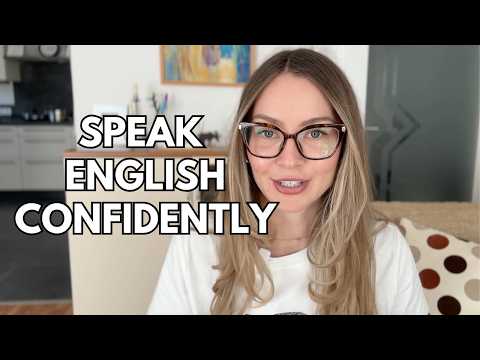
How to Speak a New Language with Confidence
Rodica - The Foreign Sun
15m 5s2,379 words~12 min read
YouTube auto captions
Transcript source
YouTube auto captions
This transcript was extracted from YouTube's auto-generated caption track. The transcript below is server-rendered so it can be read, searched, cited, and shared without opening the original YouTube player.
Pull quotes
[0:00]Today we're talking about confidence when learning and practicing a new language.
[0:00]You understand a lot in English, you read articles, you listen to podcasts, you watch videos.
[0:00]You study grammar, you do vocabulary lists, but when it's time to speak, you freeze, everything disappears.
[0:00]You speak perfectly in your brain, but whenever somebody asks you a simple question, it feels like your brain just goes empty.
Use this transcript
Related transcript hubs
Watch on YouTube
Share
MORE TRANSCRIPTS


