[0:00]Qué pasaría si Albert Einstein apareciera en la antigua Grecia? Día 1. Despierta atado frente a una asamblea griega. Columnas, túnicas, miradas confundidas. Un hombre grita, ¿quién eres? Einstein sonríe. Soy el hombre que entiende cómo funciona todo. Se ríen. Pide una tablilla y carbón. En segundos escribe. Nadie entiende nada. Día 2. Un estratega lo desafía. Demuestra tu valor o no sales de aquí. Einstein ajusta una catapulta. Mueve el ángulo. Espera. Calcula. Lanza. La piedra impacta perfecto. Día 3. Lo llevan con los líderes. Quieren ventaja, quieren ganar guerras. Einstein dibuja líneas. Explica movimientos, dónde ir, cuándo atacar. Día 4. Pulen cristal. Construye algo simple. Luz concentrada. Un barco en el puerto empieza a arder sin fuego. Los soldados retroceden. No es humano. Día 5. Aparece Sócrates. Se acerca despacio. Observa Einstein. ¿Si tu poder son las matemáticas, qué serías tú sin ellas? Einstein no duda. Responde, si no existieran, seguiría el universo siendo el mismo? No responde. Día 7. Einstein ya no es prisionero. Ahora todos lo escuchan. Le ofrecen poder, oro. Él niega con la cabeza. Mira los pergaminos. Prefiere entender antes que gobernar.
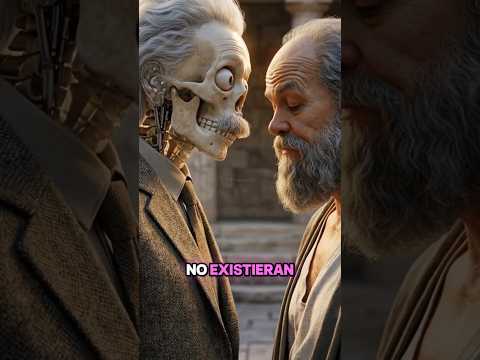
¿Qué pasaría si Einstein conociera a Sócrates? 🤯
SrHuesudo
YouTube auto captions
This transcript was extracted from YouTube's auto-generated caption track. The transcript below is server-rendered so it can be read, searched, cited, and shared without opening the original YouTube player.
This narrative explores a hypothetical scenario where Albert Einstein is transported to ancient Greece. Upon his arrival, he is immediately captured and questioned by the Greek assembly. Initially met with skepticism and laughter when he claims to understand how everything works, Einstein quickly demonstrates his extraordinary intellect. He adjusts a catapult with perfect precision, calculating the trajectory to strike a target flawlessly, thus proving his practical value.
His abilities soon gain the attention of Greek leaders, who seek his knowledge for military advantage. Einstein assists them by strategizing movements and attack timings. He then builds a simple device using polished glass to concentrate sunlight, causing a ship in the harbor to ignite, terrifying the soldiers who deem him "not human." Socrates later confronts Einstein, questioning his identity without mathematics. Einstein counters by asking if the universe would remain the same without mathematical principles, leaving Socrates without an immediate answer.
By day seven, Einstein is no longer a prisoner; he is revered. Offered power and gold, he declines, choosing instead to immerse himself in their scrolls and pursue understanding over governance. The story highlights the clash between ancient wisdom and advanced scientific thought, showcasing the profound impact Einstein's knowledge would have had on an ancient civilization.
Key Takeaways
- Albert Einstein is transported to ancient Greece and initially held captive by an assembly.
- He demonstrates his intelligence by precisely adjusting a catapult, gaining respect for his practical skills.
- Greek leaders seek his help for military strategy, which he provides by outlining movements and attack timings.
- Einstein uses polished glass to create a concentrated light beam, setting a ship on fire and astounding the Greeks.
- Socrates challenges Einstein, prompting a philosophical debate about the essence of mathematics and the universe.
- Einstein rejects offers of power and wealth, preferring to study ancient scrolls and pursue knowledge.
- The narrative illustrates the profound impact of advanced scientific knowledge on an ancient civilization.


