[0:00]This is the United States. Supposedly, it's a democracy, and it's so democratic that we each get three ways to figure who runs the government. We vote for someone in the House of Representatives based on which congressional district we live in. We vote for senators to represent our state. And every four years, we all vote together for president. Except, most of these elections, they are, in a very important way, fake. Take Maryland's third congressional district in the Baltimore suburbs. In every election for the last 100 years, it's voted for the Democrat in a landslide. Sure, everyone cast their ballot every two years, but the result is foregone. Now check out Tennessee's first district in the pointy end of the state. Blowout Republican in every race since 1881. Next door, Tennessee's second district hasn't been competitive since before the Civil War. How common is this? Let's see what happens when we take away the districts that are either guaranteed Democratic or guaranteed Republican and just show the places where both parties have some chance of winning. Here's what we're left with. These are the districts where congressional elections are competitive. Everywhere else, the result is basically predetermined. Senate, not much better. Just 15 of 50 states are competitive. As for President, most of us live in states that because of the Electoral College, reliably go all red or all blue. Which means fewer than one in five Americans live someplace where our vote has a chance of mattering. So, okay, tons of us live in places where our vote doesn't matter for the House, or doesn't matter for Senate, or doesn't really matter for President. Let's see who actually gets the three real elections, President, Senate, and House that they're supposed to. Just these places. Three districts in Arizona, five in Michigan, five in Pennsylvania, three in Nevada, one in North Carolina, two in Wisconsin. Just 4% of Americans. This is weird. We are all constantly voting in these elections that are, in most cases, sort of fake. We go into the booth already knowing who will win, and we're ruled by a government of people elevated by elections that were sure free and fair, but also basically preordained. And no other country works like this, but we never talk about it. Well, I want to talk about it now, because this one thing turns out to explain so much about why our politics feel so broken, are so broken. And because we need to figure out, if voters aren't deciding our elections, then who is? The Bigger Picture by Max Fisher. So one reason I want to talk about this now is that these elections with preordained outcomes are about to become even more common, to the point that we might have to ask whether our entire democracy is becoming in some ways fake as well. And that means answering who is actually deciding all these prefixed votes. We also need to answer why we are stuck with two parties in this country at all, which turns out to be a really important part of the story. But first, we need to identify the moment when our elections became fake and predetermined in the first place. And this all starts with something really basic, the way we hold elections. It seems simple, right? Candidates run for office, you pick between them, the winner becomes your representative in government. And you wouldn't think it, but this is actually a perfect recipe for fake elections. And to see why, we have to go all the way back to the people who set this system up. You know, on some level, you take pity on these guys. Democracy was just an idea. They had to design everything from scratch. How our laws made, who sets taxes, how powerful should the President be? And somewhere in that list of 1000 to-dos, how will our elections work? They were so starting from zero that one of the biggest ideas of the day was an essay by James Madison saying, hey, what if instead of having the entire country vote on every little policy or law, we had a Republic, where citizens delegate those decisions to a small number of elected representatives. But now you have another problem. And let me show you what I mean. You've got millions of citizens, who you want to pick a small number of representatives. Okay, but what's the most effective way for voters to select who represent them? Should they rank those representatives, pick a few, or just pick one? Do voters all pick together from the same big pool of candidates, or maybe you divide people into groups who each get their own representative? But then what are the groups? How do you divide them? This is actually a big subject of debate at the time. And some people argued citizens should vote by trade associations. You know, all the farmers vote for their own farmer representative, then all the carpenters get a carper representative, and so on. Or sorted by social class, or by race, or by religion. But remember the founders were busy. They had all that founding to do. So instead of dreaming up a whole new system, in the end, they just copied the one they already had in Britain, which was dividing people by territory. And I know that seems natural because it's what we're used to, but ask yourself, why territory? Is there some special wisdom behind grouping voters by their home address? Well, the truth is, it happened by accident. Literally 1000 years ago, the English king had this council of top officials, including feudal lords who ruled all the little bits of his empire. With each Lord representing all the people who lived in their swatch of territory on matters before the king. Fast forward a few centuries, and that Council of feudal lords became a Parliament of feudal lords who had the power to pass laws. A few centuries more and the unelected lords got mostly replaced with elected lawmakers, which is still how it works in Britain. People in each district vote for one representative who speaks for everyone in that area. That's it. It's all just a weird relic of British feudalism that the founders copied over out of convenience. But over time it got romanticized as the one natural correct way to do democracy. Communities come together to deliberate, pick the wisest and most upright among them to speak on their behalf in the capital. In the US, we think of this as just democracy, but it's a specific kind. One where every election has one winner, winner-take-all, and where voters pick a single politician to represent everyone within their geographic district. That's what our system is called, Winner-take-all single-member districts. It's a weird, confusing name because it's a weird, confusing system. And we'll break this system down in a second, but you should know that there are lots of other ways to do democracy. Ours is actually pretty rare. You really just see it in Britain and certain former colonies. Newer democracies mostly use different systems because they saw that ours creates big problems. I could spend hours talking to you about what all of those problems are, but let's just look at one of the biggest. Here, let me show you what I mean. Imagine voters in a made up district. And because it's a district that I'm making up, those voters are choosing between the Humans First Party and the Cats Rule Party. If it's a 99 to 1 landslide and Cats Rule wins, look, they're in charge. Fair enough. The voters got the representation that they wanted. But if it's 80 to 20, 70 to 30, 60 to 40, the outcome is exactly the same as if it had been a blowout. Even with just 51% of the vote, the winning party gets 100% of the power. Voters on the losing side get no representation, no say in government, it's like they don't exist. The founders worried about exactly this problem from the start. They called it a tyranny of the majority. Like in our made-up district, what's to stop the dominant 51% from passing a law that says everyone has to eat cat food or play with yarn all day? Now, you might say, well, look, the cats won fair and square, winners keepers. But American democracy is not supposed to be a game of winners and losers. The founders wanted a system of government that would serve the citizens as a whole. Which is why they were so worried about not creating something that just replaced the tyranny of kings with the tyranny of whoever got 51% of the vote. We don't need to get into how the founders tried to deal with this, except to say that one, their ideas for it never actually got off the ground. And two, it was made even worse by the other big problem they created with winner-take-all elections, the two-party system. Nobody likes the two-party system, and everyone has a theory for why we're stuck with it, but the truth is, it's just math. Go back to our 5149 cats versus Human District. Let's say someone starts a new party for cats unhappy with the status quo. Maybe it gets some human votes, but it mostly polls from the other cat voters. Which means, oops, all it did was split the cat vote and put the humans in power. Remember, under Winner-take-all, the humans now get 100% of the power for their district. Get ready for legally mandated banana hats, little kitties, you're going to hate it. And the more parties you have, the weirder things get, and the likelier that everyone gets stuck living under a minority party most voters don't want. Voters get this. So they vote based on who they like and who they think can win. They vote strategically. So let's play that out. Imagine the next election after this travesty. Everyone funnels towards the top, say, four parties. Then the top three. Remember, everyone is trying to avoid vote splitting by coalescing around either the likeliest or the second likeliest winner, which is why you always end up with two parties. It's just a law of nature. Okay, that is unfortunately enough with the cat stuff. So we have this system that will always, over time, converge on two parties, and where winners get 100% of the power for the district, no matter how slight their margin, remember, tyranny of the majority, and all built on that medieval British quirk of voting by territory. And here's the thing though, we had this set up for 250 years and it didn't produce fake elections, right? So why are our elections becoming fake now? Well, something has changed more recently, and that is the last ingredient here. One of the most defining features of modern politics, partisan affiliation as an identity. Partisan identity. Like here, look at this chart, and you will see what I mean. Look at the elections in 2000. This black line is how people voted in that year's presidential election, and each of these dots is a Senate race from that year. So like this blue dot is a state where people voted Republican for president, but picked the Democrat for Senate by plus 20 points. Here's a couple of states that voted Democrat for president, but elected Republican for Senate. There are tons of these. But that was sort of the last gasp of the old era. And as we move forward in time, you can see those dots getting closer and closer to the black line. Like here, most dots at this point are really close to the line, which means those states voted for president and Senate by roughly the same amounts. By 2020, it's a near perfect alignment. People pick one party and voted it for every office. So why did that happen? Well in the past, voting was a lot less rigidly partisan. It was normal to switch back and forth year to year, or you pick one party for president, but the other for Congress. Maybe based on the candidates position on some local issue, or you just liked them. But that's not how it works anymore, right? For most people, you're not looking at the two candidates for some office and sizing them up by their policies, their background. You were looking at whether they had a D or an R next to their name and going off of that. And I get that this is something that also feels normal, like it's always worked this way, but it is actually really new. Here, check out this chart. So start with the 2000s. This is how it still works today. Most elections are overwhelmingly safe for one party or the other, which is a nice way of saying fake. But as recently as the '80s and '90s, that was not how it worked. Most elections were competitive. Instead of every place being a red state or a blue district that always voted the same way, the outcome could go either way. The parties had to compete, and your vote had a chance to matter. So, precisely because there's so much happening right now around US elections, I want to take a second to tell you about Ground News, the sponsor of this video. They are an app and website that aggregates some over 50,000 sources to compare and track coverage across the spectrum. Here, let me show you. Like, with midterms in the US later this year, this recent story about Trump's plan to change how those elections work. Hey, that's relevant for us. Ground News surveys all 147 sources that are covering it, and classifies each outlet's political position along with its typical factuality and who owns it. Scroll down and you can see those articles and compare their headlines. Like New York Magazine, which Ground News codes as left-wing and high factuality, says Trump is trying to refocus attention from the economy. Where Fox News, classified as right-wing and mixed factuality, says Trump could derail his own agenda with the election plan. Ground News lets you see this whole landscape of coverage, which is really helpful for understanding what's happening in the world. The director of the Nobel Peace Center called it an excellent way to stay informed, avoid echo chambers, and expand your worldview. It's completely subscriber funded, and now you can get the unlimited access Vantage plan for 40% off by going to ground.news/maxfisher or scan the QR code on the screen. Thank you again to our sponsors, Ground News for everything that you do. Now, let's get back to the video. So what caused this huge change? Well, a few really important things all around this period of time. TV and radio gave rise to national news shows, which made everyone feel connected to partisan politics in Washington, so that's where people voted on. Even in like little local elections, it became less about which candidate you preferred and more about which party's national brand you felt closer to. The parties got more internally rigid, too. Party bosses got better at making every rank and file lawmaker toe the same party line, regardless of what the politician's voters wanted. Over time, partisanship became an identity. Republican or Democrat is not just a party you might vote for now and then. It's who you are, and your vote is an expression of belonging to the tribe, which collapses all of those local races into one simple choice. Which national brand are you part of? The individual candidates barely matter anymore. And because partisanship is an identity now, it's determined by identity. Race, religion, education, rural versus urban. If you're a white man from the country, you probably vote Republican. If you're a college-educated woman from a city, you probably vote Democratic. You might not feel like your vote is predetermined by your background, but statistically, it is. And you multiply that out by millions and millions of voters, and that is how you end up with a country full of places like this. Where the demographics lopsidedly favor one party, so that party practically always wins. The results are foregone. And it's how you get presidential elections where only these people's votes matter. Because in every other state, the result is already preordained. And a democracy that looks like this, where these are the only places that get real competitive elections for President, House, and Senate. But all of this raises an even bigger question than why we have fake elections. If our elections are fake, as in it's not voters picking the winners, then who is? Who's deciding what two names will go on that ballot that in most cases have a predetermined winner on them? Go back to someplace like Tennessee's first district. We know it's preordained that the Republican will win. So, okay, whoever picks the Republican candidate, that's who's really deciding the election, right? For a long time, it was party bosses who picked who to run in each race. But after protests in the '60s and '70s over this feeling undemocratic, we set up a new system that no one in no country had ever tried before, called primaries. A few months before each election, there's another election where regular people registered with one party or the other vote to pick who will become their party's candidate in the general election. Okay, great. So there is a real election going on, except when we look deeper at how this really works. Like take that district in Tennessee. Imagine all its voters represented by this spectrum. We drew it with more red than blue since this area is mostly Republican, but you still get some voters on the left, and you get a wide spectrum on the right. Everyone here should get to say in elections and who the government is. So in theory, you'll end up with an elected representative who embodies sort of the average of their district, right? Which, here, would be a purplish red, sort of center right. That's the average political position for this area. Except with primaries, remember, it's just Republican voters who get to pick the candidate who's then basically guaranteed to go on to win the regular election. This is a more conservative group, so it's going to produce a winning candidate well to the right of their district's average voter. Except, it's actually even worse than that. Most people don't vote in primaries. Like, this district has about 770,000 people. About half of them voted in the 2020 congressional race. But fewer than one in eight voted in the Republican primary that actually chose the winner, who is, in theory, supposed to represent everyone. So the answer to who is deciding our elections actually looks like this. And primary voters are an unusual animal. They tend to be more engaged, more ideological, and more partisan. So you get candidates who win by representing the average of this tiny sliver, even though they're ostensibly going to the election as the chosen candidate for all of these people. And once they win, they're supposed to speak for all of these other people who didn't even get a say in picking them. Now, remember that 80% of federal elections are like this, and these two tiny factions of voters who hate each other are who decide most of our elections. And this one extremely weird thing turns out to be behind so much of what feels wrong and dysfunctional about our politics right now. Look at this chart again. I want to highlight this moment when this system changed. Because when you know to look for it, you see the effects of this show up everywhere in the 2000s. It's a big part of why our politics got so divided, why Washington gets less and less done, and is so unpopular. Maybe even why faith in democracy itself is declining, with more and more people feeling the entire system is broken. Because in a sense, it is broken. We go to the polls year after year, but most of us have little actual say in a system where the outcome has been predetermined by these two tiny minorities of primary voters. So when your Congressman or Senator decides whether to, for example, maintain the Trump tariffs that cost the average American family $2,300 a year. It is not in their political interest to think about what's best for the voters in their district overall, or the average voter in that district, or even for the average member of their political party. Because those aren't the groups that decide whether or not they'll be reelected. Our politicians are, in most states and districts, only motivated to cater to the average primary voter within their party. They're serving at the behest of maybe 1/6th of the most partisan, ideologically people they represent. And these tiny groups are deciding presidential elections, too. 2016, long shot outsider Donald Trump is deeply unpopular voters, including with a lot of Republicans. But the sliver of Republicans who, as of 2016, vote in primaries, loves him. Only about 13% of the country participated in those primaries, and less than half of even that group voted for Trump. But under our weird system, people had to choose between him and the Democrat who'd gotten a different 7% of the vote. That's how our presidential elections work now. Maybe 12 or 13% of voters pick our two candidates for us, so that a different and even more arbitrary 20% of voters can choose between them to decide who runs the nation of 330 million people who mostly did not get a say in electing their leader. I just don't know how you can call that democracy. Like superficially, sure, we vote in elections, the votes are counted, the winner goes on to power. But those individual acts are not the sum total of democracy as its founders intended it. Democracy meant to achieve representation that speaks for all citizens, elections that are competitive, candidates who have to appeal to the collective good of their district and nation. Instead, what we've got is a system where our leaders are incentivized to ignore most of us and to speak for a tiny few. Where we feel that our vote doesn't count because it often doesn't, and where our collective will is not translating at the ballot box. Maybe that's still democracy in a technical sense, but it is pretty far from democracy as politics by and for the people as a whole. And it's getting worse. Redistricting can be done at any point in time. This is Todd Hunter, a Republican in the Texas State Legislature, back in August, introducing a bill to redraw the state's congressional districts. The underlying goal of this plan is straightforward: improve Republican political performance. The goal wasn't fair representation or clear voice for voters. It was more wins for his party. I'm not reading between the lines here. He actually said this a bunch of times. So I had the lawyers come up with five seats and enhance the Republican performance, and that's what we did. The reason I'm showing you this is that this represents the next stage in our system of fake elections. What Todd Hunter is doing is just one part of an orchestrated, top-down campaign by, yes, both parties, although I want to come back to the both sides thing, because it's a little messy than that. An orchestrated campaign to convert the last remaining real elections in our federal system to all be fake. And up until now, fake elections have been an unintended byproduct of those recent changes in how our politics work that we talked about. But that's not the case anymore. It's becoming a matter of deliberate party policy now, that elections should be fake, that they should be decided in advance by the politicians. Let me show you Todd Hunter's plan in Texas to illustrate what I mean. He took places like Houston, which is a huge city, very democratic, and carved it up so that lots of democratic voters would get shifted into these new districts that have just enough of a Republican majority to ensure that Democratic candidates have no chance of winning. So even though Republicans only won a smidge over half of the Texas vote in 2024, they're now pretty much guaranteed to take 80% of the state's seats in the next congressional election. And we'll face no competitive elections at all. This is called gerrymandering, and it basically means when the people in power redraw districts to convert real elections into fake ones where their party is assured to win. It's not new, but what is new is how widespread it's about to become. Thanks to, one, the Supreme Court's conservative majority gutting laws against partisan gerrymandering. And two, Trump pressuring state Republicans to take advantage of this change and to draw new gerrymandered election maps, even threatening to recruit primary challenges against state Republicans who don't play along. Which remember, is a credible threat precisely because so many of them now run in elections controlled by the party's most diehard primary voters. Democrats like Gavin Newsom, the California governor, are threatened to respond with their own gerrymandering. This is the ballot measure asking Californians to vote on whether the state should gerrymander. It even explicitly says that it's a counterbalance the Republican gerrymander in Texas. Listen to how New York's Democratic Governor Kathy Hochul talks about this. The playing field has changed dramatically, and shame on us that we ignore that fact and cling tight to the vestiges of the past. That era is over. Donald Trump eliminated that forever. And check out Virginia's plan to redraw itself from 6 to 5 Democratic to 10 to 1. Now, look, maybe you think Democrats are right to answer Republican gerrymandering with their own to balance it out. Maybe think it proves that Republicans were justified to gerrymander in the first place. I'm not raising this to play a game of who hit first. My point is that there is something much bigger happening here. This is a whole new political system emerging, one where our government is not determined by voters. It's determined by which party can engineer more fake elections in its favor. Look at how rare competitive elections have gotten in the last 20 years. Fewer than one in five. Now you and I know that the core problem here, more than anything anyone one party is doing is that original sin of single member winner take all districts. It makes something like this inevitable. It's easy to feel stuck in this pattern of faker and faker elections that make our politics feel more and more polarized and broken and out of control. But that is exactly why I think it's so important to see how much of this traces back to this weirdly designed system we have. Because the way that we do things, it's not the only way. In fact, it's pretty unusual. There are these other ways to do things that, look, they're not perfect either, but they just do not have the same set of problems. They don't have fake elections. And there's nothing that says we can't have their system. And in fact, there's a whole movement getting started to bring that about. And if you want to see what America would look like with that different set of rules, how that would even work, how you vote, all of that. Let me know in the comments and maybe we'll cover that in a future video. But until then, I want you to remember this chart we looked at earlier, showing our real elections gradually getting replaced with fake ones. This is not a conspiracy. No one planned it. It's all just a weird accident of a few 300-year-old design flaws. But it is polarizing, unhealthy, and undemocratic. Before you go, there's one other thing I want to tell you about. I'm building this channel because I believe that we need critical, thoughtful, indepth journalism more than ever. But I am not building it alone. I'm part of a team that includes a few people whose channels you might also know. Johnny Harris, Salis, Christoph Hopsbrun, not to mention the people behind the camera. And we're building something larger than any one of us, a new community-driven journalism platform called Newpress. It's a space where you as a member, can see what we're working on, how we bring stories together, can share your own thoughts and expertise, and even directly participate in the project of illuminating and understanding our world. There's exclusive and behind-the-scenes content, including a special conversation between me and Johnny, and we would love to see you there. Just go to newpress.com to sign up, and you'll get a message from Johnny about what's on offer and what's coming next. Thank you again for watching, and hope to see you here again.
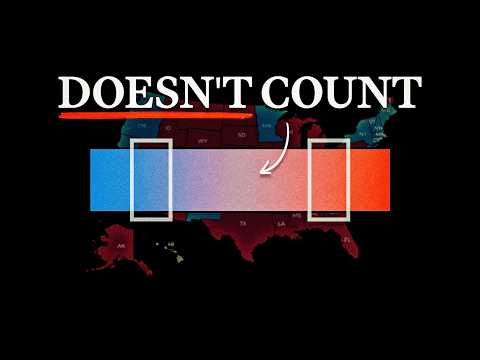
Most US elections don't count
Max Fisher
25m 34s4,881 words~25 min read
Auto-Generated
Watch on YouTube
Share