[0:00]For the last 30 years, one country ran the entire planet. One country, one military, one currency, one set of rules. That country is America and right now that system is dying. The war with Iran, it's not just a war, it's a signal. It's the alarm bell ringing. It's the universe screaming at us. Hey, the world you grew up in, it's over and nobody is talking about what comes next. Not your teachers, not the news, not your parents, but I am, right here, right now. Because what's coming next will change everything, everything, the food you eat, the flights you take, the money in your pocket, the safety of your neighborhood, the future of your country. This isn't fearmongering, this is pattern recognition. This has happened before in history. Empires rise, empires fall, and when they fall, the whole world reshuffles like a giant deck of cards. So buckle up, because by the end of this video, you will understand the world better than 99% of the people walking around on this planet today. Let's go. Okay, let me say that again, but a little slower. Think of the world like a school. For the past 30+ years, America has been the principal of that school. The biggest, strongest, richest principal you've ever seen. Every kid in the school followed America's rules. Every kid used America's money, every kid watched America's movies, ate America's food, used America's Internet. And for a while, it worked great. There was peace, there was money, people were happy, but now the principal is getting old and tired. The principal is making bad decisions. The principal is breaking his own rules and the other kids in the school. They're starting to notice, they're starting to whisper, wait a minute, why are we following this guy again? And the war with Iran, that's the moment where the whisper became a shout. That's what we're going to break down today. Here's the game plan for this video. I'm going to walk you through the entire story, beginning, middle and where we're headed. First, I'll explain how America became the boss of the whole world. How it actually pulled that off, because it's kind of insane when you think about it. One country controlling everything, that's wild. Then I'll show you how that system started to rot from the inside. How the cracks appeared, how the decay set in. After that, I'll connect the dots to the Iran war and show you why this conflict is not just another war. It's the moment that proves the old world is finished. And finally, and this is the important part, I'll show you what the future looks like. What's coming, what countries need to do to survive, and some of it is honestly a little scary. But here's the thing, knowledge is power, the more you understand, the more prepared you are. So think of this video like a map. I'm handing you a map to the future. Let's use it. But before I show you where we're going, you need to understand where we've been, because you can't understand why the world is changing unless you understand the world that was built right before this change. So let me take you back, way back to the year 1989. The year a giant wall came crashing down and everything, I mean everything changed. Okay, so picture this. For decades, like from the end of World War II all the way to 1989, the world was split in two. On one side you had America, land of the free, capitalism, buy what you want, be what you want. On the other side, you had the Soviet Union, communism, the government controls everything, you share everything, you own nothing. And these two big kids, they were fighting, not always with guns, but with spies, with threats, with nuclear weapons pointed at each other. It was scary. People called it the Cold War. Then in 1989, something huge happened. The Berlin Wall fell. This was a real wall in Germany that literally divided the country in half. One side with America's ideas, one side with Soviet ideas, and when it fell, it was like the final buzzer in a basketball game. America won, the Soviet Union crumbled, fell apart, done. And suddenly America was the only big kid left on the playground. A very smart man named Francis Fukuyama wrote a famous paper called The End of History, and what he basically said was game over everybody, we figured it out. The best way for humans to live is with freedom, democracy and shopping malls. America proved it. Everyone else should just copy this model and we'll all be happy forever. And you know what, a lot of people believed him. This created something called the unipolar moment. Uni means one, polar means power center. So it means one power center, one boss, America, and America ran the world through three big pillars. Think of them like three legs of a stool. Take away one leg, the stool wobbles, take away all three, it crashes. Pillar no. 1, Pax Americana. Pax is a Latin word that means peace. So Pax Americana means American Peace. And here's what it means in simple terms. America's military was so powerful, its jets, its aircraft carriers, its soldiers, its spy agencies like the CIA, that nobody dared to start trouble. Imagine you're at school and there's one kid who is the biggest, strongest, fastest kid in the entire school. And this kid walks the hallways and says, nobody fights. If you fight, you deal with me. What happens? Nobody fights. That's Pax Americana and it actually worked. In East Asia, Japan, South Korea, China, Vietnam, countries that used to go to war with each other all the time, they stopped fighting. They started trading. They started building factories and making money instead. Same thing in Europe. Same thing in South America. America kept the peace and peace made everybody richer. The CIA would go into countries and find leaders who would play nice with America. If someone tried to challenge America, they got removed. If a whole country caused problems like Libya or Syria, Special Forces went in, messed things up, and then American air power finished the job. Was it nice? No, but it kept the world mostly stable. America also controlled the Internet. Now, I know what you're thinking, the Internet is for watching videos and talking to friends. And yes, that's what we use it for. But the Internet was originally built for something else, surveillance, watching people. The military wanted a system where they could keep tabs on the entire planet. Know what people were thinking, know what people were feeling, and through social media, Facebook, Twitter, all of it, they could even nudge people's emotions in certain directions. Pretty wild, right? And the third part of Pax Americana was something called the rules-based international order. Big fancy words, let me make it simple. America created organizations like the United Nations, the World Bank and the World Trade Organization. And these organizations made it look like the world was fair. Like everyone had an equal voice, like decisions were made through debate and logic. But behind the scenes, America was pulling the strings, it just didn't look like it. And that was the genius of the system. People didn't feel controlled, they felt free, even though they weren't entirely free. Pillar number two. Science became the new religion. For most of human history, people believed in gods, in churches, in temples, in spiritual leaders. But after America took over, science became the thing everyone trusted the most. Scientists became like the new priests. Whatever they said, you believed it. If you questioned them, people looked at you like you had three heads. Here's a real example. When COVID hit, vaccines came out super fast. Now normally vaccines take about 10 years to develop, and that's for viruses we understand really well. COVID was brand new. It was changing all the time, and vaccines came out in less than a year. Some people asked, hey, is this safe? Shouldn't we wait for more testing? And the response from almost everyone was, how dare you question science? Are you stupid? Did you not go to school? See what happened there? It wasn't a calm conversation. It was like questioning a religion. You were treated like a heretic, a sinner. And here's the sneaky part. Scientists from all over the world, China, America, Europe, they were all loyal to the same system. If you're a scientist in China, you don't get promoted by making China happy. You get promoted by publishing in big international journals, like nature or science. You win international awards like the Nobel Prize. So scientists were loyal to the global system, not to their own country, and America controlled that global system. Pillar no. 3, the US dollar. This is maybe the craziest one. It's a piece of paper, just paper, or really it's just a number on a screen, but the entire world agreed it was valuable. You could take US dollars anywhere on Earth, any country, any village, any market and buy stuff with them. A house, a vacation, a meal, a car, and not just that, people organize their entire lives around collecting as many dollars as possible. Is there a real difference between having $100 million and $100 billion? Honestly, no. You can't spend that much money, but people chase it anyway because the system told them to. So those are the three legs of the stool. American military keeping peace, science as the new religion, and the US dollar as the world's money. And in the beginning, the 1990s, the early 2000s, this system brought incredible peace and prosperity to the world. But here's the thing about power. Power always corrupts. Always. Now if you're sitting there thinking, Okay, this sounds pretty good actually, what went wrong? That is exactly the right question, because every single one of those three pillars, they started to crack, to rot, to fall apart. And I'm about to show you exactly how. Let's go pillar by pillar. Pillar one cracked because America started breaking its own rules. Remember the rules-based international order, those fancy organizations that made everything look fair? America started ignoring them. It bombed Libya without proper approval. It went after Syria, and most recently, it attacked Iran without even asking anyone, without even caring what the rest of the world thought. Think about it like this. Remember that big strong kid who kept peace in the hallways? Imagine that kid starts picking fights for no reason, starts pushing smaller kids around, starts ignoring the very rules he created. What happens? Everyone stops trusting him. Everyone starts thinking, maybe I need to protect myself. There's a word for this, hubris. It means being so powerful that you start thinking the rules don't apply to you. And it's the no. 1 killer of empires throughout all of history. The first generation of leaders, they're careful, they're humble, they know they need allies, they play fair. The second generation, the kids who grew up with the power, they're arrogant, they're reckless, they just want to flex, that's what happened to America. Pillar two cracked because science became about protecting old ideas instead of discovering new ones. Science was supposed to be about curiosity, about asking what if, about pushing boundaries. But over the past 20 to 30 years, science became more about shutting people down. If you asked a question the scientific establishment didn't like, you were silenced, mocked, canceled. And here's the proof. Think about truly massive inventions, the kind that changed the world, the airplane, the Internet, antibiotics, nuclear power. When was the last time we had one of those? A long time ago. Don't tell me Silicon Valley is innovative. You know what Silicon Valley has given us in the last 20 years? Food delivery apps, ride sharing apps, social media where people argue with strangers. That's not innovation, that's decoration. What we've done for the past few decades is take old inventions and spread them around the world, especially to China. We scaled up old ideas, but genuine earth-shattering brand new discoveries, almost none. Science became a religion, and like any religion that gets too rigid, it stopped evolving. Pillar 3 cracked because America printed way too much money. Here's the thing about having the world's reserve currency. If everyone treats your dollars like gold, you can just print more of it. And that's exactly what America did. Need to fund a war, print more dollars, need to bail out banks, print more dollars, need to cover up corruption, print more dollars. But when you print too much money, each dollar is worth a little less, prices go up, rich people who own stocks and real estate get richer, poor people and young people, they get crushed. And this created a really toxic mindset. Young people looked around and said, what's the point? No matter how hard I work, I'll never catch up to the boomers. They have all the money, they have all the houses, the game is rigged. So what did young people do? Some just gave up, quiet quit, lay flat, stop trying. Others started gambling, crypto, meme stocks, sports betting. Maybe if I throw my money at Bitcoin, I'll get lucky. That's not a healthy economy, that's a casino. So here's where we are. All three pillars, military, science, money cracking at the same time. And the Iran war, it's not the cause of the collapse, it's the symptom, it's the fever that tells you the body is sick. Let me be very clear about something. This war with Iran is not just one president's decision. It's not just about Donald Trump being aggressive. It's not just about Israel's interests. This war is happening because the American Empire has become corrupt, self-indulgent, lazy, arrogant, and when an empire reaches that stage, it starts lashing out. It starts making reckless moves. It starts wars it doesn't need to start. This is a pattern that is repeated throughout all of human history. Rome did it, the British Empire did it, the Mongol Empire did it, the Ottoman Empire did it. When you're at the top and you start to feel your grip slipping, you don't look inward and fix yourself. You look outward and punch someone. That's what's happening right now. And here's the key insight. When the biggest kid on the playground starts picking fights, it's not because he's strong, it's because he's scared. He's scared he's losing control, and everyone watching, they can sense it. The world can sense it. China senses it, Russia senses it, India senses it, the Middle East senses it. The era of one boss running the whole planet, it's ending. And what comes next is going to be messy. Okay, so the old world is ending, we get it, but here's where it gets really interesting and honestly, a little intense. Because the question isn't just what's ending, the question is what do you have to do to survive what's coming? And the answer might surprise you, because it goes against everything you've been taught. The single most important word for the future is this, resilience. Let me explain. For the last 30 years, the world has been obsessed with one thing, efficiency. How do you make things as cheap as possible, as fast as possible, and sell them to as many people as possible to make the most money possible? That's efficiency. It assumes the best-case scenario. It assumes nothing goes wrong. It assumes the roads stay open, the ships keep sailing, and the oil keeps flowing. Resilience is the opposite. Resilience says, what if things go wrong? What if the ships stop? What if the oil dries up? What if a war breaks the supply chain? Can we survive? The future belongs to the resilient, not the efficient. And for nations and communities to become resilient, three huge shifts need to happen. Shift no. 1 from stuff to meaning. Right now, governments keep people happy by giving them stuff, cars, houses, cheap food, iPhones. Here, have some stuff. Now shut up and don't cause trouble. But what happens when there's not enough stuff to go around? People get angry, they riot, they rebel. Unless, and this is key, unless you can help people find meaning and happiness in things that aren't stuff. Stuff, purpose, community, faith, spirituality, religion. Countries that can do this will survive. Countries that can't will explode from the inside. Shift no. 2 from me to we. The last 30 years taught us to be selfish. What's in it for me? How does this help my career? How does this grow my bank account? Individualism, the ego, me, me, me. But in a crisis, selfishness is a death sentence. In a crisis, you need teamwork. You need neighbors helping neighbors. You need communities pulling together. You need people who are willing to sacrifice for the group. Countries that build strong communities will survive. Countries full of selfish loners will not. Shift no. 3 from old to young. This one is the hardest, maybe the hardest problem in the entire world right now. In most wealthy countries, America, Europe, Japan, the old people have all the money and all the power. The baby boomers, the generation born after World War, they own the houses, they run the companies, they control the governments. But the future needs young, energetic leaders, people in their 20s and 30s who are hungry, creative and willing to take risks. The problem, these old people are living longer than ever before. The best healthcare, the best nutrition. Some of them will live past a hundred, and they do not want to give up control. They're comfortable, they're powerful, and honestly, many of them are pretty selfish about it. So how do you transfer power from the old to the young? That's the million dollar question. And historically, we've never had to answer it before, because in the past, old people just didn't live that long. Problem solved itself. Not anymore. The country that figures this out first will probably lead the new world. And the best candidate, Japan. Why? Because Japan has the oldest population on Earth. They have to solve this problem. It's life or death for them. And Japanese culture has something special, a sense of duty to the nation. It's possible that elderly Japanese people might voluntarily step aside for the younger generation. It might be the only country in the world where that happens peacefully. Everywhere else, it might take revolutions. Now let me blow your mind with something. Look around whatever room you're in right now. Everything, and I mean everything is made from oil. Your computer, your phone case, your clothes, that pen on your desk, the medicine in your cabinet, the fertilizer that grew the food you ate for breakfast, the truck that delivered that food to the store, the road that truck drove on, all of it, petroleum. The entire global economy is built on one foundation, cheap oil. And you know where most of that oil comes from? The Middle East, the exact region where a war is now raging. Let me show you how the whole system connects. Around 2004, 2005, something big happened. China was building factories like crazy, millions of factories, and factories need energy, they need oil, tons of it. So China started importing massive amounts of oil from the Middle East, from countries like Saudi Arabia, the UAE, Qatar. These are called the GCC countries. This oil money made the GCC countries incredibly rich. Like building skyscrapers in the desert rich. And what did they do with all that cash? They invested it back into American stocks and banks. They also built infrastructure in Africa, built roads and bridges and ports. So the cycle went like this. Middle East oil goes to China. China builds stuff, money goes back to the Middle East. Middle East invested in America and Africa. Everybody wins. This triangle. Middle East oil, Chinese manufacturing, American finance was the engine of the entire global economy. Now imagine that engine breaks. Imagine the war in Iran disrupts oil exports. Imagine shipping lanes get blocked. Imagine oil prices skyrocket. What happens? China can't fuel its factories. The Middle East can't sell its oil. America's financial markets lose a major source of investment. Africa loses its biggest development partner. The whole machine grinds to a halt. That's what's at stake. Now I know what some of you might be thinking, okay, oil is a big deal, but we'll figure it out. We always do. And normally, I might agree with you, but oil isn't the only thing at risk. Let me show you the stuff that should really keep world leaders up at night. After World War II, because of all that peace and cheap energy, something incredible happened. The human population exploded. We went from about two and a half billion people in 1950 to over 8 billion people today. That's more than triple in just 75 years. And here's the brutal truth. The planet cannot sustain 8 billion people who all want to fly twice a year, drive SUVs, eat avocados every day, and have cherries shipped from Chile in the middle of winter. It's just not possible. And when a system gets too far out of balance, the correction is extreme. Think of a rubber band, the further you stretch it, the harder it snaps back. Now let's talk about food. Food seems easy, right? You go to the grocery store, shelves are full, you pick what you want. But where does that food actually come from? Most of the world's farmland isn't great for growing food on its own. It needs fertilizer, and fertilizer is made from what? You guessed it, oil, petroleum. Here's the scary map. The countries that need the most fertilizer, mostly in Africa, Central Asia, parts of South America, are also the countries with the biggest populations and the fewest resources. And the fertilizer, it's mostly produced in the northern part of the world, Russia, Europe, North America. So the north makes the fertilizer, ships it south, the south grows the food. 8 billion people eat. If that trade stops, if a war, a blockade, a financial crisis interrupts the fertilizer shipments, billions of people cannot grow enough food, billions. Let that sink in. Now let's add water. Many of the same countries that have food problems also don't have enough clean water. And water might be even harder to solve than food. You can ration food, you can substitute ingredients, but water, you need water, period. There's no substitute. Whole regions of the Middle East, Africa and South Asia are facing water crises that will get worse, not better. Now let me tell you about mega cities. A mega city is any city with more than 10 million people. And you might think mega cities are awesome, skyscrapers, shopping malls, bright lights. No. Mega cities are traps. They exist because of globalization. You pack millions of people into one place, have them specialize in making one thing, and then trade with the rest of the world for everything else. But if global trade breaks down, those millions of people can't feed themselves. They can't grow food in a skyscraper. They can't find water in a shopping mall. Most of the world's mega cities are in China and India. And both China and India have food and water problems. China imports 25% of its food and 75% of its oil. If the supply chain snaps, hundreds of millions of people in Chinese megacities are in serious trouble. One more thing, the Internet. You probably think the Internet is magic. You open your laptop, boom, you're connected. But the Internet is actually made of physical cables, undersea cables sitting on the ocean floor connecting continents. And guess what? There's a war happening right near some of the most important cables in the world. If Iran or anyone cuts those cables, 20 to 30% of the world could lose Internet access. Africa, India, the Middle East, parts of Europe. And this isn't just about Netflix. The entire global economy runs on the Internet now. Banking, finance, communications, supply chains, all of it runs through the cloud, which runs through those cables. Cut the cables and you don't just lose entertainment, you lose the economy. So let's put it all together. What does the near future actually look like? Mass migration. When people don't have food, don't have water, and their country is at war, what do they do? They move. We're already seeing this. People from Africa and the Middle East moving to Europe. People from Latin America moving to the United States. But what we've seen so far, that's a trickle. In the future, it could be a hundred times worse. A flood of people, tens of millions, maybe hundreds of millions. Desperate people moving toward wherever they think they can survive the aging crisis. But here's the irony. The places where all these refugees want to go, Europe, North America, have a massive problem of their own. They're getting old. By 2050, the entire Northern Hemisphere will have enormous elderly populations. And old people need care. They need someone to deliver their food, someone to clean their houses, someone to work in their hospitals. Young people in those countries, many of them don't want to do those jobs. Their parents have money, they're comfortable. So the only option, bring in immigrant workers, desperate hard-working people from the south who are willing to do anything. But this creates a new problem. The local population starts to feel replaced. These people are taking our jobs, changing our culture, this isn't our country anymore. And that leads to cultural tension, maybe protests, maybe riots, maybe even civil conflict within the richest countries on Earth. And there's no easy solution. The old people need the workers. The workers need safety, and the locals feel threatened. It's a three-way collision with no good answer. Regional trading blocks. Instead of one big global marketplace where everyone trades with everyone, the world will split into smaller groups. Think of it like this. Right now, the school cafeteria has one giant table where all the kids trade lunch items with each other. In the future, there will be separate tables. Each table only trades within its own group. This is actually how the world worked for most of human history. The British Empire had its trading network. The Spanish had theirs, the Portuguese had theirs. They didn't work together, but the system functioned. It was more expensive, less convenient, but it worked. So global trade won't disappear, it'll just shrink a lot. Flights will become expensive again. Vacations will become luxuries. The cheap, easy, fly anywhere world we grew up in, that's fading. A dark historical warning. I have to mention something uncomfortable. When cheap oil disappears and you still need energy to run a society, humans historically turn to the only other cheap energy source available, other humans, slavery. For most of human history, slavery was normal, not good, not moral, but normal. Empires ran on it. And the reference material warns that in a world without cheap energy, there's a risk, a real risk that some form of forced labor returns. I hate saying that, but ignoring it doesn't make it less possible. I know this is heavy. I know some of this sounds like a horror movie. But here's the thing, this isn't fiction. These are patterns that have played out over and over throughout thousands of years of human history. Empires rise, empires fall, the world reshuffles. The question is what does the reshuffled world look like? Let me give you my best predictions. Here's what I think the new world looks like. People will leave cities and go back to the countryside, deurbanization. Young people will need to learn real skills. Not cryptocurrency trading, not making TikToks. I mean actual skills. How to grow food, how to raise animals, how to build things, how to fix engines, how to purify water. The glamour of city life will fade when cities can't feed their own people. Nationalism comes back hard. Countries will focus inward. Borders will tighten. Every nation will ask itself, can we survive on our own? And young people will be expected to step up and defend their homeland. Countries that can inspire their youth to fight for something bigger than themselves will be the most resilient. Resource wars will erupt, water, food, oil, farmland, the things you need to survive. Countries will fight over them, not because they're evil, because they're desperate. And desperate people do desperate things. Japan might lead the way. Japan has the oldest population on Earth. They need to solve the old versus young problem faster than anyone. And Japanese culture has something unique, a deep sense of obligation to the community. It's possible, maybe even likely, that Japan's elderly will voluntarily transfer power to the younger generation. If they pull this off, Japan could become a model for the entire world. But Japan might be the only country that does this peacefully. Everywhere else, the transfer of power from old to young might require upheaval. America is the best positioned to survive. I know I've been pretty hard on America in this video, but here's the truth. Despite all its problems, America is still in the best position of any country on Earth. Why? Geography, two giant oceans protecting it, massive amounts of farmland, enormous energy reserves, control over Canada and Mexico, which means control over all of North America's resources. Plus Americans are creative, entrepreneurial, energetic, they adapt, they hustle, they figure things out. But America will need a new identity. The old global policeman identity is dead. What will replace it? It probably something more focused on community, on nation, on faith. Christianity might become the force that rebuilds American society after the coming crisis. America won't disappear, it'll transform. Israel and Iran might actually make a deal. This sounds crazy, right? They're literally at war right now. But hear me out. The whole point of this war from Israel's perspective is to push America out of the Middle East, so Israel can become the local boss. And if America does leave, Israel and Iran would look at each other and say, wait, do we actually need to fight? Israel doesn't want to control Persia. Iran doesn't want to control Israel. They'd probably split the Middle East into zones. Iran gets the eastern part, Israel gets the western part. And historically, Jews and Persians have actually gotten along pretty well. Going way back, the biggest Jewish population in the Middle East outside of Israel, it's in Iran and they're treated well there. So a deal isn't just possible, it might be likely. Techno Marxism and AI surveillance. Some countries, probably the ones with the most resources and the most authoritarian governments, will use artificial intelligence and surveillance technology to tightly control their populations. Imagine a society where AI decides who gets food, who gets water, who gets to travel, who gets to work, where cameras watch everything, where algorithms rank people. At the top, a small elite with freedom and power. At the bottom, everyone else, basically trapped, modern day serfs. This isn't science fiction. The technology already exists. Some countries are already experimenting with it. So here's the bottom line. If you think this war with Iran is gonna end next week and everything will go back to normal, I don't know what to tell you. You're living in a fantasy. The world is not going back to normal. There is no normal to go back to. The old world, the one built on American power, cheap oil, global trade and the US dollar, that world is over. We're entering a new era, and new eras are messy. They're chaotic, they're painful, but they're also full of opportunity. For the people and communities and countries that see it coming, that prepare, that adapt. The key traits for survival in this new world, resilience, not efficiency, community, not individualism, spirituality, not materialism, youth empowerment, not gerontocracy, real skills, not financial speculation, flexibility, because alliances will shift constantly. Today's friend might be tomorrow's rival, today's rival might be tomorrow's partner. Nothing is permanent, everything is in flux. The nations that cling to the old world will be swept away. The nations that embrace the new reality will thrive. And this doesn't just apply to nations. It applies to you, to your family, to your community. Start building real skills. Start strengthening your community. Start thinking about resilience instead of comfort. Because the storm is already here. The only question is whether you've built a shelter. If this video opened your eyes even a little bit, do me a favor. Share it with someone you care about, not because I want views, but because the more people who understand what's actually happening, the better we can all prepare together. Hit that subscribe button so you don't miss the next part, where we break down exactly how this war between America and Iran might end and what that means for your daily life, for your job, for your savings, for your family. Drop a comment below telling me what surprised you the most, what part made you stop and think. I read every single comment, and I mean that. And remember this, knowledge isn't just power, in the world that's coming, knowledge is survival. I'll see you in the next one.
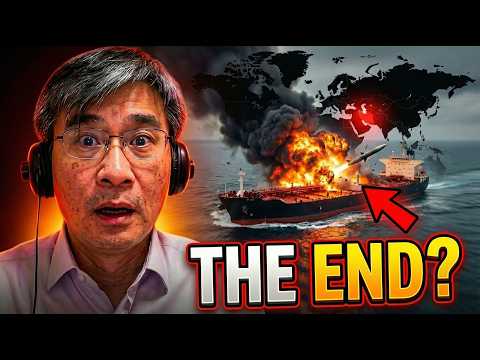
The End of Pax Americana: How the Iran War Signals a New World Order | Prof. Jiang Xueqin
Professor Jiang Explained
31m 3s5,660 words~29 min read
YouTube auto captions
Transcript source
YouTube auto captions
This transcript was extracted from YouTube's auto-generated caption track. The transcript below is server-rendered so it can be read, searched, cited, and shared without opening the original YouTube player.
Pull quotes
[0:00]Hey, the world you grew up in, it's over and nobody is talking about what comes next.
[0:00]Not your teachers, not the news, not your parents, but I am, right here, right now.
[0:00]Because what's coming next will change everything, everything, the food you eat, the flights you take, the money in your pocket, the safety of your neighborhood, the future of your country.
[0:00]Empires rise, empires fall, and when they fall, the whole world reshuffles like a giant deck of cards.
Use this transcript
Related transcript hubs
Watch on YouTube
Share
MORE TRANSCRIPTS


