[0:00]Hello and welcome to my easy to understand guide to The Avengers and audiences. This video is going to be particularly relevant for you if you are studying OCR GCSE Media Studies, as it's currently a set text on that specification. The set episode for study at the moment is series 4 episode 2, so that's what I'm going to focus on here. The show is very similar in style, narrative and genre to James Bond films, which were becoming increasingly popular at the time. And this would have really helped to target those fans of Bond movies, the use of the fight sequences, the use of the story lines about kind of defending Britain from villains and antagonists. Um, that also would have helped to target those quite patriotic British audiences, particularly in that post Second World War period, where people felt very protective of Britain. Obviously, in a post-Second World War period and in a time where there was lots of issues to do with the kind of Cold War, fears about other countries. There was lots of news articles, things in the news at the time in the 60s about espionage about foreign villains and enemies. And so, this show might have seemed quite relatable to a lot of audiences. They would have been used to seeing this kind of narrative in their real news, so seeing it in their fiction programs as well would have been interesting to them. And it may also have offered them a degree of information and education about how the British crime system worked, about the British um spies, about espionage and about conflict with different enemies. It was broadcast in a really prime time TV slot um on ITV on Saturday night at 5 past 9, and that meant that it would have hit that very mainstream family audience. Although the fact that it was on after 9: o'clock means that it was more likely to be watched by adults and actually because of the levels of violence in the show, which were considered quite adult at the time. Um, it definitely would have been more aimed at adults than children. There's quite an enigmatic opening sequence that's designed to hook audiences in quite quickly with this idea of a grave being dug and a mysterious item coming up through the freshly put on soil. Creates lots of unanswered questions for audiences about what is going on. And there's lots of mysterious elements as well that are part of the narrative later on, so lots of elements where they're having to hide from people and sneak around um and look for clues. And audiences would find that quite exciting. Emma Peel is really quite sexualized in the episode, um and the series as a whole. She's often wearing a kind of skin-tight cat suit, which she became quite iconic for. There's lots of shots of her body, um sort of objectifying her and some of the characters they often flirt with her. So, this kind of representation would have appealed to that kind of heterosexual male audience. The flirtatious relationship between Emma Peel and John Steed was quite appealing for an audience as well. Whereas Steed would have offered them this quite strong, traditional, patriarchal role model. Someone that audiences could look up to. Men would have found him quite relatable, the fact that he was in charge, that he was given such power and status and was respected would have been something they would have enjoyed, but also they would have found familiar because that's what life was often like for men in the 1960s. Women, on the other hand, would have potentially um been able to see Emma Peel as a bit of a progressive role model, the fact that she was kind of youthful, quite modern, independent. She's a martial arts fighter. She's represented as very clever, and this might have been quite appealing to a more youthful, progressive audience, particularly those who were starting to embrace ideas about feminism in the 1960s. Although some audiences, particularly those who were embracing ideas about feminism, might have got quite frustrated about the repeated sexualization of her character and the fact that the the episodes were still quite patriarchal with Steed having the most power and female characters often kind of being quite submissive and subservient to him. The fairly traditional gender roles, so for example, the placing of women are being nurses and men being doctors, would have been fairly familiar and relatable to audiences in the 1960s. It would have been quite entertaining for audiences, you know, there's lots of drama, there's fight scenes, there's mystery, the heroes versus the villains, uh the spies. There's also an element of humor in there, which would have added to that entertainment aspect. In the 1960s, because there were only a couple of TV channels, lots of audiences used to talk about what was on TV the previous night because really and truly, there were only a couple of options that they could have watched. So they would be able to find lots of friends and family that would have seen the same program as them. So, it would have provided opportunities for lots of social interaction with others, talking about whether they'd seen the latest episode. The character of Steed actually references World War II quite a lot and how he fought um within various battles within that war. And that would have been very relatable and familiar, especially to men at the time, many of whom would have been fighting during the Second World War, but also to their families, a lot of their male family members would have gone off to war. So, having a character talk about his experiences would have added that layer of familiarity to them. The end chase and fight scene on the miniature train acts as an intertextual reference to a lot of old silent movies that involved a very similar story lines. And intertextual references are a good way of engaging audiences because they would recognize that this was kind of a pastiche of typical stories where women were tied to train tracks and needed a hero to rescue them. The British element of the show would have helped to target a very British audience. So the use of the bowler hat and the cane and the very kind of upper class RP accents would have really helped to target a British audience. But also, I guess helped to target a global audience as well because that kind of representation of Britain and British people is quite popular abroad. So that was my easy to understand guide to The Avengers and audiences. Don't forget to subscribe to my channel for other videos that might be relevant for you. And if you would like a video that I don't already have, leave a little comment below and I'll see what I can do.
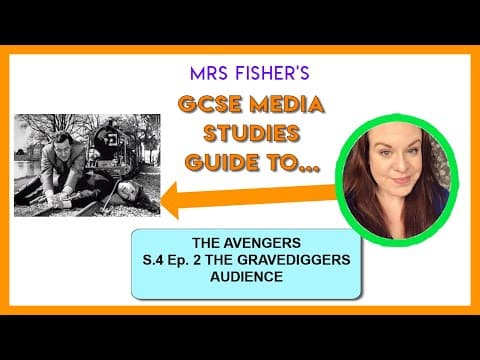
GCSE Media - The Avengers - Audience
Mrs Fisher
6m 28s1,161 words~6 min read
Auto-Generated
Watch on YouTube
Share
MORE TRANSCRIPTS