[0:01]Uh, thank you for the question. I would like to go back and, and address the issue of how this started. The Yemeni people rose up against President Saleh and demanded change. And the GCC countries including Saudi Arabia, worked in order to come up with a compromise that would spare Yemen harm and minimize bloodshed. That was the GCC initiative. The GCC initiative set the stage for the change in government from Saleh to Hadi. As an interim government, it, the national dialogue was established in Yemen among Yemenis in order to conceive and build a better future for all Yemenis. And the national dialogue did tremendous work in terms of the governance of Yemen in terms of the rights of Yemeni citizens, in terms of the government structure, in terms of what kind of constitution they want. And they began to write the constitution. Then what happened? The Houthis moved from Saada to Amran. Then they moved from Amran and occupied Sana'a by force. Not by the ballot box, by force, by shooting people, by killing people, by taking people hostage. Then the government had to flee to Taiz and to Aden. They proceeded to occupy the rest of the country. They surrounded the presidential palace in Aden and they were very close to capturing and possibly killing the legitimate president of Yemen. He asked for assistance under article 51 of the UN Charter, and we responded along with a coalition of 10 other countries in order to protect Yemen from being taken over by a radical militia allied to Iran. What were we facing? We were facing a radical militia, a virtual Hezbollah that was now in possession of a government, a central bank, which they proceeded to loot incidentally to the tune of 100 million dollars a month. With ballistic missiles and with an air force. This became represented a clear and present danger to the Kingdom of Saudi Arabia. We saw ballistic missiles being deployed along our border, we responded. We have no interest in Yemen. We have no claims on Yemen. We want a stable, prosperous, secure, peaceful Yemen. We have a large community of Yemenis in Saudi Arabia. We've had them for a very long time. We have been by far the single most largest provider of foreign assistance to Yemen since 1970. No country has given more to Yemen than Saudi Arabia has. And we are committed to helping our Yemeni brethren. But we responded out of necessity. We responded to remove a threat. We responded to protect the legitimate government. We responded under authority of UN Resolution. That's what we did. In order to protect Yemen and in order to protect ourselves and our borders. What have we achieved? We have liberated territory from the Houthis. We have protected the legitimate government. We have substantially reduced the threat to our border and our, and our, and our, and our people. It's not gone, but it's substantially less than it is now. And we have ensured that Yemen does not fall under the grasp of Hezbollah and Iran. That's what we've achieved. There's more to achieve. And we hope that it can be done through the political process. Keep in mind that the Houthis in a country of 26 million people are less than 50,000. That's their number. 10% of the population of Saada. That's who we have. And they want to take over a country, and they want to have the right to have veto power over that country. Would that be acceptable in any system? I doubt it. So we're saying the Houthis have every right to be part of the political process in Yemen like every other citizen. But they cannot have a privileged position where they have veto rights over a country of 26 million in which they represent less than 50,000. That's what we've done.
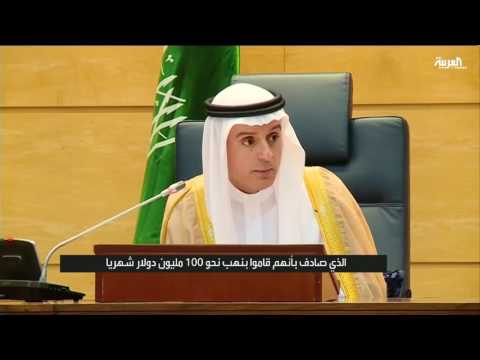
الجبير يلخص الأزمة مع الحوثيين في دقائق
AlArabiya العربية
4m 44s648 words~4 min read
YouTube auto captions
Transcript source
YouTube auto captions
This transcript was extracted from YouTube's auto-generated caption track. The transcript below is server-rendered so it can be read, searched, cited, and shared without opening the original YouTube player.
Pull quotes
[0:01]And the GCC countries including Saudi Arabia, worked in order to come up with a compromise that would spare Yemen harm and minimize bloodshed.
[0:01]The GCC initiative set the stage for the change in government from Saleh to Hadi.
[0:01]As an interim government, it, the national dialogue was established in Yemen among Yemenis in order to conceive and build a better future for all Yemenis.
[0:01]And the national dialogue did tremendous work in terms of the governance of Yemen in terms of the rights of Yemeni citizens, in terms of the government structure, in terms of what kind of constitution they want.
Use this transcript
Related transcript hubs
Watch on YouTube
Share
MORE TRANSCRIPTS


